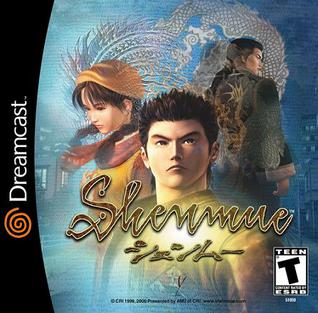
Correct the stub first, because its small errors point at the real story. The 2015 teaser story said Shenmue II had just been revealed at E3. It had not — Shenmue II was fourteen years old. What Sony’s E3 2015 conference revealed was Shenmue III, announced on stage by its creator Yu Suzuki alongside a Kickstarter that would pass its two-million-dollar goal in about nine hours. And the documentary whose teaser followed days later was credited, in early coverage, to Adam Sipione and Randall Lobb. The finished film’s credits tell a broader truth: it is Adam Sipione’s film, written and directed by a fan who started shooting in 2014, made with the team that became Definitive Films together with Fauxpop Media — the Canadian outfit whose earlier work, including a definitive history of the Teenage Mutant Ninja Turtles, Lobb had helped define. A Gamer’s Journey: The Definitive History of Shenmue took the better part of a decade to finish. Appropriately enough, so did everything else about Shenmue.
A Fan, a Camera, and an Impossible Subject
Sipione has told the origin plainly. He came to Shenmue backwards, playing the second game on Xbox in 2001, and never quite recovered. The idea for the film formed in 2014: a short documentary built from fans, a few notable YouTubers and — if luck held — members of the English voice cast, arguing to a world that had forgotten that this series mattered and that its unfinished story deserved an ending. He began the way independent filmmakers on no budget always begin, by travelling to people who would talk to him, camera in hand, spending his own money, while friends and family questioned his sanity. A teaser posted online drew interest from industry figures willing to be interviewed. The project was growing a spine.
Then, in June 2015, the subject of his film came back from the dead without asking him. Shenmue III’s announcement — in the middle of Sony’s press conference, in front of an audience whose reaction became instant folklore — solved the problem his documentary existed to protest, and created a new one. A film arguing that a forgotten game deserved a future is a finished argument the moment the future arrives. Sipione and his collaborators at Fauxpop and the newly forming Definitive Films chose the braver option: keep filming, widen the mandate, and make the definitive history instead — the whole arc, from 1999 to the resurrection and beyond. The teaser released in July 2015, the one this site reported at the time, already shows the pivot: it intercuts the E3 announcement and the fans’ disbelief with the promise of a proper history.

What the Film Had to Explain
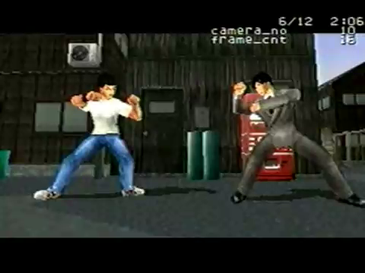
Any definitive history of Shenmue carries a heavy first act. The original game, released for the Dreamcast in Japan at the end of 1999 and in the West through 2000, was Yu Suzuki’s attempt to build a living world rather than a level: a harbour town where shopkeepers kept hours, weather changed, buses ran to a timetable and a teenage martial artist named Ryo Hazuki could spend a whole in-game day asking sailors about a man named Lan Di, who had murdered his father. It pioneered or popularised half the vocabulary of the modern open-world game — and it cost, by the figures repeated ever since, somewhere in the region of seventy million dollars across its development, a budget no single game could repay. It sold over a million copies and was still, by the brutal arithmetic of the time, a failure. Shenmue II followed in 2001 into a collapsing Dreamcast market, reached North America only on Xbox, and ended on a cliffhanger in a cave. Then, for fourteen years, nothing — except the fans.
That is the film’s real subject, and its title is the tell. It is called A Gamer’s Journey, not A Developer’s. The games’ creators, executives, critics and voice actors all appear — the finished film’s cast includes Ryo’s English voice, Eric Kelso, among many others — but the spine of the story is the community that refused the cave ending: the forums and fan sites that kept the lore catalogued, the campaigns and tweetathons that kept the series visible to an industry that had written it off, and the night in 2015 when that faith was repaid so publicly that a documentary already in production had to be rebuilt around it.

The Kickstarter, and the Long Middle
By 2018 the production had reached the limit of what goodwill and savings could shoot. Sipione had established a relationship with Suzuki and Ys Net — the creator had taken an active interest, and Sipione had filmed behind the scenes at the studio in Japan — but the definitive version of the film required a proper expedition: a crew of four to Japan, deep access to the Shenmue archives, and interviews with Suzuki and the people who built the games. So in July 2018, three years after the teaser, the film went to Kickstarter itself, asking for 25,000 Canadian dollars. There is a neatness to that which nobody involved can have missed: the film about the most famous gaming Kickstarter in history, finishing itself with a small one. The community answered as it tends to. The campaign passed its goal and kept going; an interim tally in its third week already showed more than 30,000 dollars pledged from over five hundred backers, and the final count passed forty thousand dollars from over seven hundred supporters, unlocking an extended fan edition with uncut interviews and a Blu-ray booklet chronicling the crew’s own journey.
Then came the part nobody puts in a trailer. Shenmue III itself launched in 2019 to a divided reception, which the film now had to absorb honestly. Editing, licensing, clearing and finishing a feature documentary on a crowdfunded budget is slow everywhere and slower across two countries and a pandemic. Backer updates stretched. Years passed. In the Shenmue community’s forums, the thread tracking the film runs from 2018 optimism through 2021 impatience to something like wonder, when the finished film finally began reaching backers: the verdicts that survive are emphatic, from viewers calling it a credit to the team to the director himself popping in to accept the praise with evident relief.
Hindsight: The Film Arrives
Labelled hindsight, from beyond this article’s original 2015 date: A Gamer’s Journey: The Definitive History of Shenmue was completed at eighty-three minutes and reached its audience in 2022–23 — digital release first, with physical Blu-ray copies working their way to backers through 2023, Canadian supporters first, then British and American print runs. It now sits in the ordinary places films live, on streaming and storefront listings, rated PG-13, catalogued as a 2023 documentary in some listings and 2022 in others, which feels fitting for a project that was always slightly out of sync with the calendar. Sipione, in his later updates, was already talking about future documentary projects and posting behind-the-scenes material from hard drives full of unused Shenmue footage — the fan who set out in 2014 to make a short film had become, by the long way round, a documentarian.
Was it worth eight years? Judged as the thing its teaser promised in July 2015 — an explanation, aimed at the curious, of why thousands of people lost their minds in a conference hall over a sequel announcement — it is that, and considerably more. The 2015 teaser was a question. The finished film is the answer the question deserved: not just that Shenmue mattered, but how it survived — carried, year after year, by people who kept its world catalogued and its story unfinished in public, until the industry had no choice but to finish it. The journey in the title was never only Ryo’s. It was theirs, and Sipione’s, and it took exactly as long as it had to.