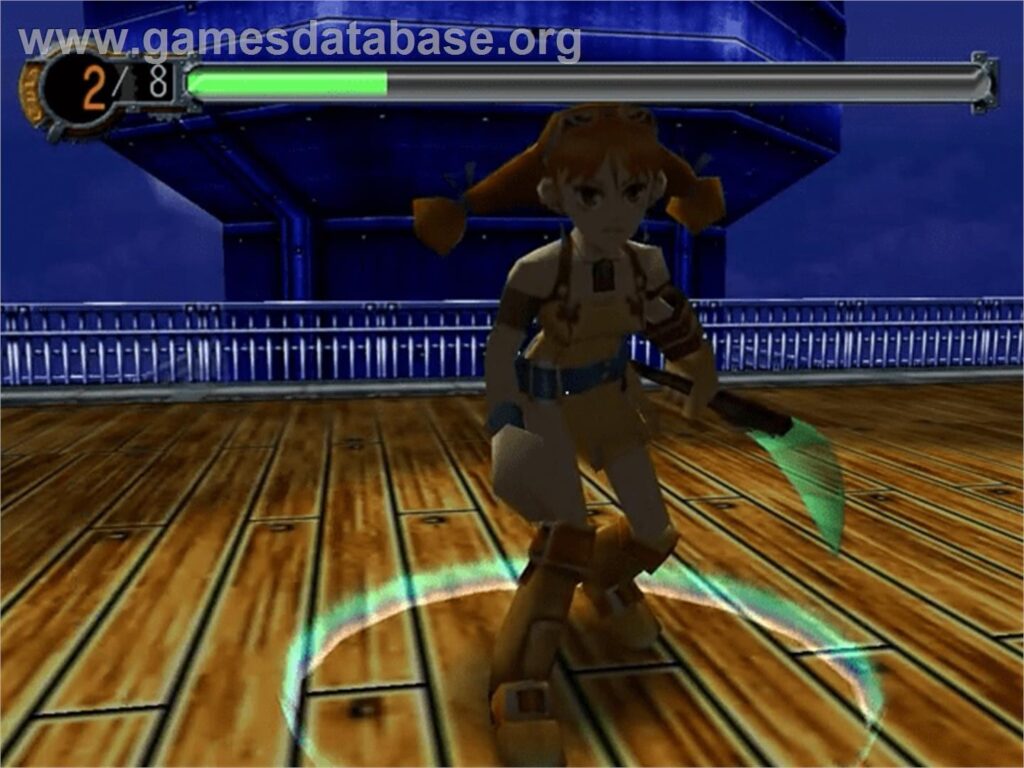
There was a moment, at the turn of the millennium, when the Japanese RPG seemed determined to grow up miserable. Angsty heroes, grey palettes, hour-long summons. Then Overworks — Sega’s studio of Phantasy Star and Sakura Wars veterans — released Skies of Arcadia, a game so bright, warm and fundamentally optimistic that it felt like a dispatch from a better timeline. You play a sky pirate. Not a brooding mercenary — a pirate who flies between floating islands, robs the empire’s tax ships out of principle, and grins at the horizon. It remains the Dreamcast’s defining role-playing game.
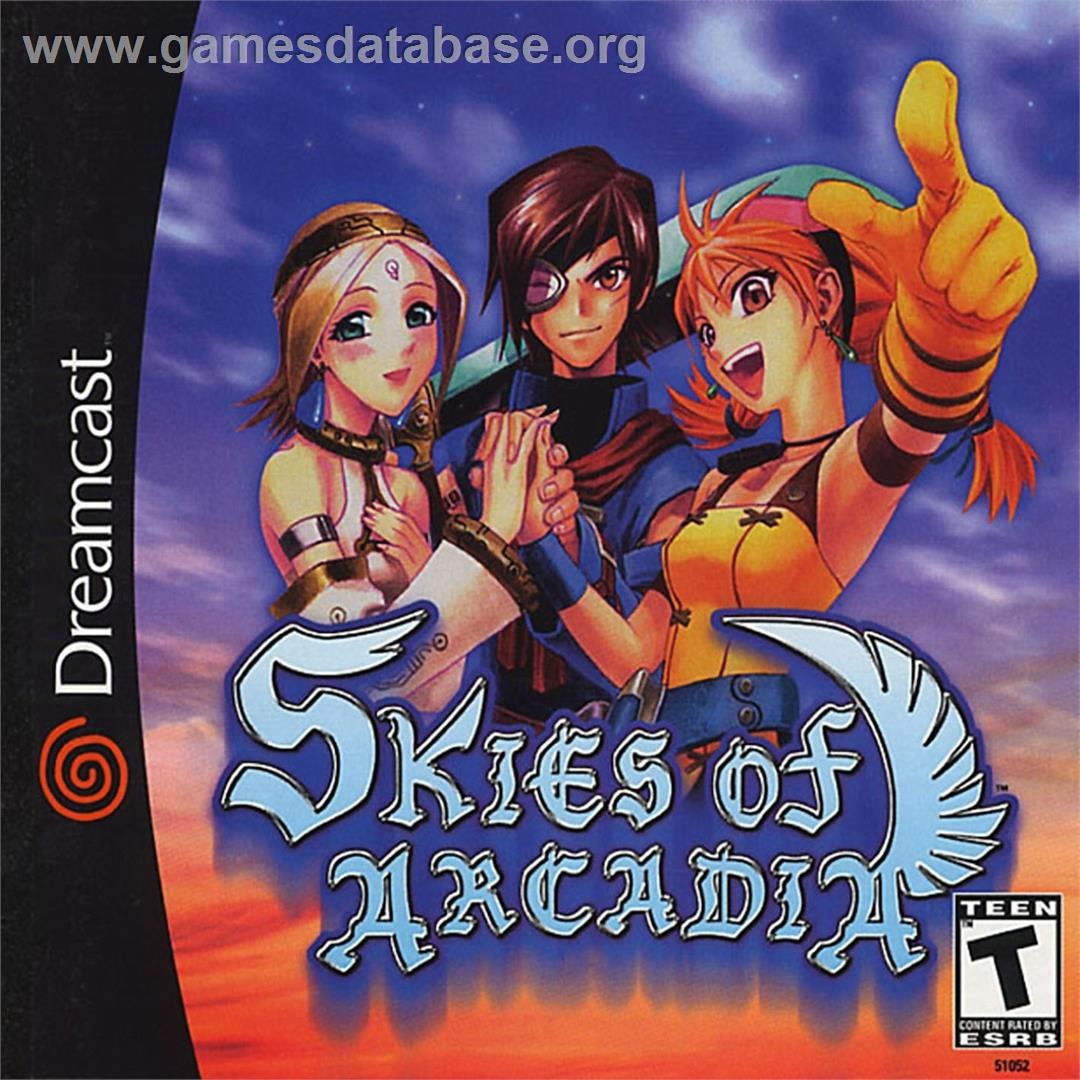
The world of Arcadia is an ocean of sky: continents float beneath six moons, airships sail the winds between them, and an armoured empire — Valua — is squeezing the skies dry in search of ancient Moon Crystals and the gigantic weapons of a lost age. Vyse, a Blue Rogue pirate who steals from the rich, rescues the mysterious Fina from Valuan hands and is pulled into a race for those crystals, alongside his childhood friend Aika and, later, the roguish prince Enrique and the one-eyed captain Drachma. It is a classic structure told with uncommon heart: the villains are hissable, the friendships are earned, and the game trusts wonder more than twists.
Two Games, Both Excellent
On foot, Arcadia is a confident traditional RPG: towns full of gossip and side-quests, and dungeons built around light puzzle-solving and the game’s signature weapon system — Vyse’s cutlasses and every party member’s arms can be attuned to a different Moon Stone colour mid-battle, letting you exploit elemental weaknesses on the fly and learn techniques tied to each colour. The battle system is turn-based and unhurried, the special moves gloriously theatrical, and the encounter rate — the one flaw everyone agrees on — is undeniably high, especially in the original release.
Then you take off. Ship-to-ship combat is Arcadia’s second game entirely: duels fought in rounds, where you plot several moves at a time — cannons, torpedoes, spells, evasive orders — against armadas and continent-sized Gigas that must be fought in your airship. These encounters are slow, stately and completely unlike anything else in the genre, and upgrading your ship from a fishing boat to a flying fortress is one of the great progression arcs in any RPG. Add the discoveries scattered across the sky map — uncharted islands, lost ruins, strange creatures you can log and sell to a sailors’ guild — and the game builds a genuine explorer’s itch: the horizon always has something on it.
Built to Be Loved
Around the campaign sits a little empire of extras: recruiting crew for your ship and island base, bounty hunts against infamous pirates, a wanted-poster ranking that rises as Vyse’s legend grows (and with it, the quality of the insults enemies shout at him), and Pinta’s Quest, a VMU mini-game that puts the Dreamcast’s memory card to work between sessions. The presentation is pure late-Sega: saturated colour, expressive character models, and a score that swings from jaunty port-town themes to full naval bombast. The Dreamcast version spans two discs and dozens of hours, and its only real technical sins are that encounter rate and some long load pauses.
A note for version hunters: the later GameCube release, Legends, softened the encounter rate and added content, and it is a fine way to play. But the Dreamcast original remains where the game’s colours, score and spirit were born, and it holds up beautifully — especially through clean video output on modern displays, where Yafutoma’s sunsets and the Deep Sky’s storms still impress.
Optimism as a Design Philosophy
It is hard to overstate how deliberate Arcadia’s brightness is. The floating continents are golden-hour made geography; the dungeons are ancient and strange but never hopeless; even the Valuan empire’s oppression is drawn in storybook terms, so that beating it feels like opening a window. Vyse himself is the philosophy embodied — a hero whose defining trait is not trauma but appetite: for the horizon, for the next island, for the crew he’ll gather on the way. In an era when RPG protagonists were collecting amnesia and oversized swords, a cheerful pirate captain who looks up was radical, and the game’s enormous word-of-mouth afterlife — it is forever topping “most deserving of a remaster” polls — suggests players have been quietly craving exactly this tone ever since.
The craft under the cheer deserves its paragraph as well. Rieko Kodama’s production pedigree (Phantasy Star runs in this game’s blood) shows in the pacing: towns, dungeons, ship battles and discoveries alternate in a rhythm that rarely lets any one element outstay its welcome across a very long game. The soundtrack, split between sweeping orchestral themes and folk-flavoured town music, is among the Dreamcast’s finest. And the localisation gave the English version a warmth and wit that matched the art — this is a game whose dialogue people quote with genuine affection, which is rarer in its genre than it should be. If any Dreamcast title deserves to be called beloved rather than merely acclaimed, it is this one.
One more mechanic deserves its flowers: the discoveries. Scattered across Arcadia’s sky are dozens of optional wonders — floating ruins, sky fish, lost islands, the occasional very large surprise — that are never marked on your map. You find them by sailing the long way, by following rumour and intuition, and logging one delivers the purest explorer’s dopamine the genre offers: the sense that the world is bigger than the story, and that the game trusts you to notice. Modern open worlds, with their checklists and compass spam, could study how quietly Arcadia does this. It is the difference between a map full of icons and a sky full of rumours — and it is why players still swap discovery stories decades later.
Even its side characters pull weight. The rival Blue Rogue Vigoro, the Valuan admiral Galcian’s cold menace, the crew members you recruit from every corner of the sky — a cook here, a lookout there, each with a tiny story and a mechanical job aboard your ship — the game keeps widening its circle of affection until the final act’s gatherings feel like a family reunion you have genuinely earned. RPGs three times as self-important have casts half as likeable. Add a New Game-friendly structure of bounties and rankings, and Arcadia rewards the second voyage almost as richly as the first.
Length, finally, is a virtue here rather than a warning: this is a full season of television in game form, best played in unhurried sessions across a month of evenings, letting the sky routes and crew faces settle into memory. It asks for your time and repays it with interest — the rarest exchange rate in the genre.
The Verdict
Skies of Arcadia is the rare epic that leaves you happier than it found you: sixty hours of piracy, discovery and friendship under six moons, with two battle systems and a whole sky to chart. If the Dreamcast had produced nothing else, it would have earned its place on this game alone.
Score: 9.5 / 10 — Set sail. The sky is the best ocean games ever gave us.