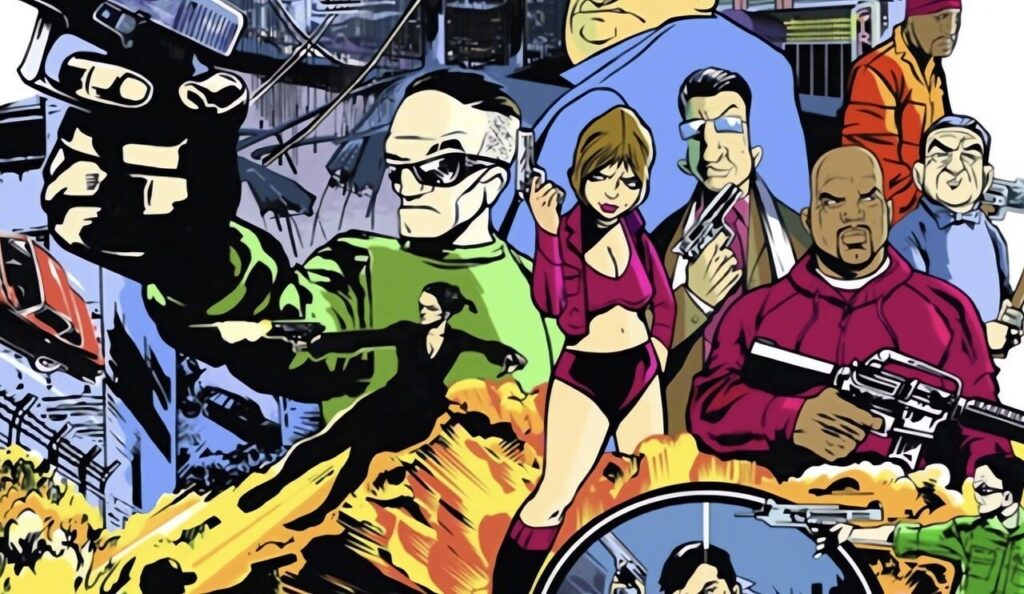
As the original stub of this post put it: this is the part where we say “we got GTA 3 on the Dreamcast before GTA 6.” The joke landed in March 2025 because the fan-made Dreamcast port of Grand Theft Auto III — DCA3 to its friends — took another public step forward: smoother frame rates, less texture pop-in, and a visibly busier Liberty City, all running on Sega’s 1999 hardware. Developer Falco Girgis admitted this build “would’ve previously been a slideshow” before he rebuilt the port’s maths from the floor up. This is the story of the most unlikely port in modern retro gaming: the game the Dreamcast was supposed to have, delivered by volunteers, a quarter of a century late.
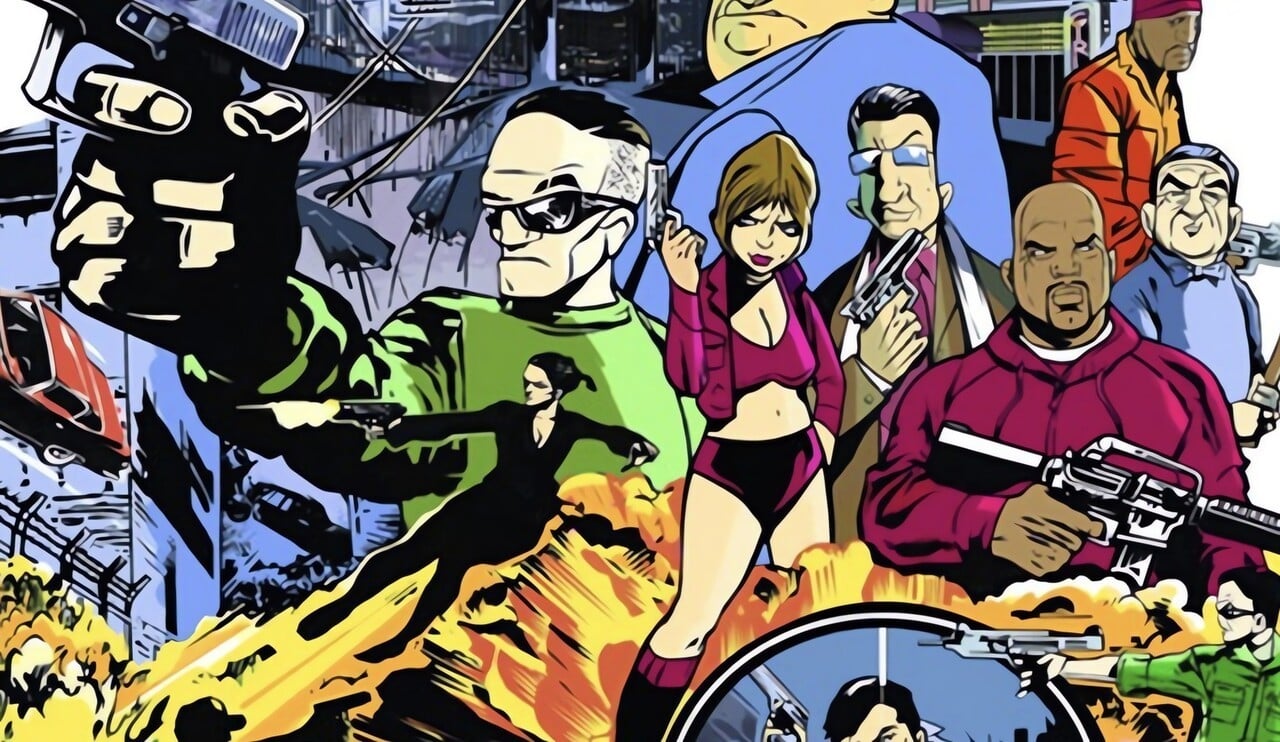
The Game That Was Born on Dreamcast
Here’s the part that makes this more than a novelty. GTA III didn’t just nearly come to the Dreamcast — it started there. “The first months of development of GTA 3 (back in 99/00) were done on the Dreamcast,” original Rockstar developer Obbe Vermeij revealed in September 2024. “For commercial reasons, we switched to PS2. At the time, we did think it was technically possible to pull it off on the DC, and these guys are actually doing it.”
The commercial reasons were brutal: Sega announced its exit from the console business in January 2001, and DMA Design’s open-world experiment went where the future was. The PS2 version shipped that October, sold in the region of 11 million copies on that console alone, and effectively invented the modern 3D open-world game. The Dreamcast got a footnote in history. For 23 years, “could GTA III have run on Dreamcast?” was one of retro gaming’s favourite unanswerable questions.
A Message in a Discord Server
The answer began, as so many modern preservation stories do, with somebody stumbling over source code. “One day, I accidently came across the re3 source code (i.e. the reverse engineered code for the PC version of GTA3) and I immediately thought, ‘why couldn’t this work on the Dreamcast?'” developer skmp told The Dreamcast Junkyard. The message that kicked the project off went out in the Simulant Discord server on 9 July 2024.
Skmp was not a random tinkerer: he’s a veteran of the Dreamcast scene, known for the nullDC and Reicast emulators. Around him gathered an international volunteer crew calling themselves The Gang — Frogbull (famous for impossible tech demos like Metal Gear Solid 2 on Dreamcast), KallistiOS co-developer Falco Girgis, PH3NOM, Esppiral, NaiSan, DreamShell creator SWAT, newcomer jaxyn b, artist Iridon, and more. DCA3 is built on the re3 reverse-engineering of GTA III and the librw RenderWare reimplementation, running on the free KallistiOS development library. Crucially, it ships with no Rockstar assets: you build your own copy from a legitimately owned PC version of the game, following the guide at dca3.net. That one decision is what keeps a project like this on the right side of the lawyers.
Sixteen Megabytes Against Liberty City
Knowing it can be done and doing it are different things. The Dreamcast has 16MB of main RAM — half the PS2’s — and 8MB of video memory, and GTA III is an open world that never stops streaming: geometry, textures, models, music and sound all flowing constantly off the disc. “Streaming assets has proven to be the biggest challenge,” PH3NOM told the Junkyard, “because this is still not a fully solved problem and users playing from CD are unlikely to have a great experience just yet.” Skmp named the twin enemies plainly: “Memory issues, mostly.” On the graphics side, texture compression alone wasn’t enough — the team had to reduce texture sizes to fit VRAM, the alpha’s most visible compromise.

And yet the raw signs were startling from the start. Jaxyn b, who wrote the first fast renderer, recalls bypassing the 3D graphics entirely and finding “the engine itself was running at a locked 27 fps with no changes or DC-specific optimizations to the physics engine or anything. That was the moment I personally realized the port was totally feasible.” When dynamic lighting — street lights washing over passing cars — dragged the game into single-digit frame rates, skmp optimised the code until it ran twice as fast. Esppiral describes the project’s rhythm since: “Each time a new feature was added it tanked performance. Then, all our awesome developers came into action and restored it… this project puts to shame 99% of the software released during the Dreamcast’s lifespan.”
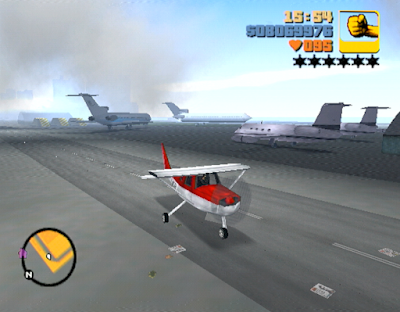
Playing it is the strangest part. This is not a tech demo or a vertical slice: it’s the whole of GTA III, missions, radio stations and all, on a console Sega discontinued in March 2001 — six months before the game even launched on PS2. The Dreamcast Junkyard’s testers reported running the alpha for extended periods without issue, with controls mapping naturally onto the Dreamcast pad and saves living on a VMU, exactly as a 2001 release would have demanded. Alpha caveats apply — bugs and occasional crashes come with the territory, and the team is upfront that CD streaming is the roughest edge — but the shape of the thing is unmistakably a finished port in the making, not a proof of concept.
From Slideshow to Smooth
The alpha release arrived on 30 December 2024 — the full game, playable on real hardware, saving to a VMU, built from your own PC copy. It was rough in places: choppy in busy areas, prone to jaggies. Then, in March 2025, Girgis shared the new look that prompted this post. The improvement wasn’t a settings tweak. “I went through all of the low-level common math infrastructure in both the engine and at the RenderWare driver layer and made numerous optimizations,” he explained, “before slowly working my way up to optimizing individual algorithms at the application layer using the new math routines.” The result: the same scenes that would previously have been a slideshow now run smoothly, with more traffic, more pedestrians and far less pop-in. Skmp has said he believes a locked 30 fps is achievable everywhere if the work continues — the kind of thorough port he estimates would have taken a professional team six months of full-time work in 2001.

Why It Matters
There will be a beta: the team wants better streaming for CD players, better texture quality, and the remaining bugs squashed. They’re also, almost casually, already working on a Dreamcast port of Vice City. But the headline question is already settled. For decades the Dreamcast community argued about whether its console could have handled the game that defined its rival. A Discord message, a pile of reverse-engineered code and a gang of volunteers answered it on real hardware: yes — and with room to spare. The Dreamcast didn’t lose the sixth generation because it couldn’t run the future. It lost because the future was decided in boardrooms. The fans have now corrected the record.