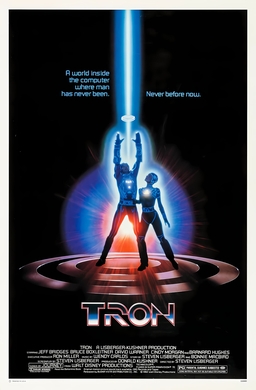
Some game ideas are so pure that no hardware generation gets to keep them for long. The light cycle duel from Disney’s 1982 film Tron, two riders laying unbroken walls of light behind them, turning only at right angles, duelling until somebody’s nerve or geometry fails, was being copied onto home computers before the film had even left cinemas. In July 2015 the idea arrived, beautifully late, on the Sega Mega Drive. Tro-Now, a homebrew light-cycle battler by Spanish developer Pocket Lucho, was created for that year’s bitbitJAM homebrew coding competition and released to the public the same summer. A correction is due at the outset, because the game’s authorship has occasionally been garbled in retelling: Tro-Now is Pocket Lucho’s work, a competition entry built for the joy of the jam, not the product of the Russian development scene it is sometimes lazily assigned to. Credit where it is due, and then, on with the neon.

Three Minutes, Four Riders, No Brakes
Tro-Now’s design, as catalogued by the LaunchBox games database from the release itself, is a model of jam-game economy. The whole contest plays out on a single screen viewed from above. Cycles surge forward at a fixed speed that the player cannot change; there is no acceleration and no brake, only the decision, made again and again under rising pressure, of when to snap ninety degrees left or right. Every rider paints a solid trail in their own colour, and trails are walls. Touch a trail, touch a rival, touch the arena’s edge, and the ride ends in the traditional small explosion of regret. Where Tro-Now departs smartly from the oldest versions of the formula is in its scoring. Lives are effectively endless within the match; crashing costs you time and momentum rather than elimination. Points accumulate simply for staying in motion and staying alive, the match runs for three minutes, and when the clock dies, the rider with the highest score wins. Survival is not merely its own reward; it is literally the scoreboard.
That single rules change transforms the psychology of the game. Classic light-cycle play rewards caution until the arena chokes, then punishes everyone at once. Tro-Now’s endless lives and ticking clock reward controlled aggression instead: you are always better off riding boldly, carving territory and forcing rivals into your trail, because a crash is a setback, not a funeral, and the points only flow while you move. Three minutes is also exactly the right length for the form, long enough for the arena to become a claustrophobic palimpsest of coloured walls, short enough that a losing player is never more than a rematch away from redemption. It is the kind of decision that looks obvious in retrospect and is anything but obvious when you are building a game against a competition deadline.

Four Players, Two Controllers
The feature that lifted Tro-Now out of the jam pack, and the one contemporary coverage singled out, is its multiplayer. The game supports four riders simultaneously, and it does so with an economy of hardware that deserves applause: two controllers, shared. On each pad, one player steers with left and right on the directional pad while their partner steers with two of the action buttons, the same pad-sharing arrangement that Micro Machines had made famous on the same hardware a generation earlier. It is a gloriously social solution. Four friends, two pads, eight elbows, and a great deal of shouting, all without a multitap peripheral that half the audience would not own. Single players were not forgotten either: the game can be played solo against computer riders, with a choice of two or four cycles in the arena, which turns the same code into a respectable score-attack exercise rather than a party game waiting for guests.
Presentation carried its share of the praise at release. Contemporary reports described a game running very smoothly with strong graphics and a soundtrack that put players in the mood for battle, high compliments for a work produced inside a jam’s constraints. Smoothness is not a cosmetic nicety in a light-cycle game; it is the game. When a turn is a life-or-death commitment executed in a single frame’s decision, any judder between intention and outcome feels like betrayal, and Tro-Now’s clean motion is a large part of why its three minutes feel fair even as they become impossible.

The Jam That Gave It Away, Source and All
BitbitJAM, the competition Tro-Now was built for, belonged to a healthy tradition of themed homebrew jams that challenged developers to produce complete small games for obsolete hardware against a deadline, and then gave the results away. Pocket Lucho followed the finest custom of that scene: the downloadable package included the game’s full source code, an open invitation for curious players to become developers themselves. Contemporary coverage explicitly praised the gesture as a treat for aspiring homebrew authors, and rightly so. A complete, working, well-regarded Mega Drive game with its source attached is a textbook that teaches by example, worth more to the next generation of the scene than a dozen tutorials. Tro-Now’s afterlife reflects that openness; the game remains catalogued in homebrew databases, preserved with its rules and origins recorded, still the standard answer to the question of whether the Mega Drive ever got a proper light-cycle game.
The film connection is worth one final look, because Tro-Now understands it better than most imitators. The 1982 arcade machine built around the movie offered several games, yet it was the light cycles, presented from above as a duel of reflexes and nerve, that players remembered and copied for forty years. Strip away the film’s imagery and the design still sings, which is precisely what Tro-Now’s neon-on-black presentation acknowledges: it keeps the glow, the grid and the colours, and wastes nothing on recreating scenes that the gameplay never needed. What remains is the duel itself, the oldest and best part of the inheritance, running at full speed on hardware that Disney’s imagineers could not have dreamed a home machine would one day match.
Hindsight: A Small Game That Understood Its Idea
A decade on, Tro-Now holds up as an argument that scope is a virtue. It took cinema’s most imitated game sequence, identified the two improvements the formula actually needed, a score race in place of sudden death and four-player support without extra hardware, and executed both inside a competition deadline on a console that had been off the market for nearly twenty years. No physical cartridge run followed, and none was needed; the game was a gift, source included, from a scene that measures success in players and imitators rather than units. The light cycle has been reinvented hundreds of times since 1982, and it will be reinvented hundreds more. Tro-Now’s three neon minutes on the Mega Drive remain among the most thoughtful reinventions of the lot, and the Mega Drive, characteristically, looks entirely at home hosting them.