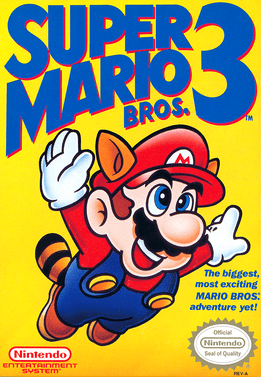
There is a special kind of confidence that comes from growing up with Super Mario Bros. 3. Millions of players can still hum its overworld tune, picture the exact shape of World 1-1, and tell you where the warp whistles hide. Nintendo designed the game in 1988 to welcome everybody in, then gradually teach them its tricks. Kaizo Mario Bros. 3, released into the ROM hacking scene in 2015, takes that same beloved game and removes the welcome mat. Every familiar mechanic remains, but the levels built around them assume you already know the game inside out — and then punish you for trusting what you know.
A quick note on framing, because this article keeps the original 2015 publication date of the short news item it replaces. What follows is a look back at the hack with a decade of hindsight, not a breathless launch report. The hack’s reputation was really made afterwards, on charity marathon stages and speedrun leaderboards, and that later story is the interesting part.
Where the word kaizo comes from
Kaizo is a Japanese word, written 改造 and pronounced kaizō, that simply means a modification or rebuild. In Japan’s early ROM hacking scene it was an ordinary, general label for altered games. It became a genre name because of one specific hack. In 2007 a Japanese creator known as T. Takemoto released Kaizo Mario World, a savage reworking of Super Mario World, and shared videos of it on the NicoNico platform. Takemoto had built the thing to torment a friend, R. Kiba, and the full original title translates roughly as an announcement of exactly that: making my friend play through my Mario hack. Western viewers, meeting the videos through re-uploads, gave it a blunter nickname — Asshole Mario — and the shortened Japanese title stuck to the style itself.
Takemoto’s hack established the design tricks the genre is still known for. There are the invisible blocks, now universally called kaizo blocks, planted at the precise spot where a player’s instincts say to jump, so that a confident leap bonks Mario’s head and drops him into a pit. There are auto-scrolling sections that keep speeding up. There are traps placed after the goal, so that even finishing a level is not safe unless you take one specific action first. And there is an emphasis on frame-tight, rehearsed execution throughout. Takemoto followed it with a second hack soon afterwards and a third in 2012, by which point kaizo had become a recognised philosophy: restrict the player to one intended solution, demand they find it, and treat repeated death as the tuition fee.
Why Mario 3 is different raw material
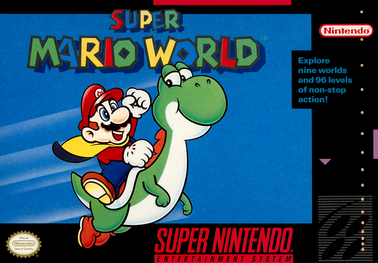
Most famous kaizo hacks are built on Super Mario World, whose engine offers a cape, a spin jump and a forgiving relationship with momentum. Super Mario Bros. 3 is a different beast. Released in Japan on 23 October 1988 and in North America in February 1990, it sold more than 17 million copies and is the third best-selling game on the NES. Its Mario is governed by the P-meter: build speed across open ground and Raccoon Mario can fly, but only briefly, and only if the level gives you a runway. Its famous suits — Frog, Tanooki, Hammer — are rare treasures rather than standard equipment. Its oddest item, Kuribo’s Shoe, the giant wind-up boot Mario can ride across spikes, appears in exactly one level of the original game, World 5-3.
A kaizo designer working in this engine is therefore working with a stricter, more brittle moveset. There is no spin jump to bounce safely across a field of enemies. Flight is a resource that must be earned with a sprint. The shoe, a one-level joke in Nintendo’s hands, becomes a precision instrument: commentary on skilled runs of the hack has singled out moments where the shoe is made to jump again in mid-air, a use Nintendo surely never intended. The hack’s own release notes, preserved in later tool-assisted speedrun documentation, stress that it uses stock game mechanics throughout — nothing in it is a new power or a rewritten rule. Everything you learned playing the original transfers. You are simply expected to use it far beyond the level the original ever asked for, solving each room like a puzzle whose pieces happen to be moving at full sprint.
The 2015 hack and its tangled byline
Here a small act of honesty is required, because the authorship of Kaizo Mario Bros. 3 is recorded inconsistently across the internet, and a responsible feature should say so rather than pick a name at random. Reference tables for the genre, including Wikipedia’s kaizo overview, credit the 2015 hack to a creator named Hunter W. The documentation surrounding the hack’s best-known tool-assisted speedrun, which points to the hack’s long-standing listing on the ROMhacking.net database, credits a creator called Obitus1, and describes the project as a test built for the most skilled Mario 3 players. The two credits may reflect a handle and a name belonging to the same person, or a listing error that has been copied from place to place; the sources available do not settle it cleanly. What is not in doubt is the work itself, its 2015 arrival, and its stated attitude, summed up in its own notes with a grin: this is a game that does not want you to win, and will tease you while you lose.
That attitude is worth dwelling on, because it separates kaizo from simple difficulty. A merely hard level can be unfair by accident. A kaizo level is unfair on purpose, but — in the good examples — unfair in ways that are funny once you see the joke, and learnable once you have died to them. The invisible block gag was already so well worn by 2015 that the hack’s notes joke about everyone having seen it, promising more creative humiliations instead. The design conversation is between creator and player: the creator bets you will do the obvious thing, and builds the level around your mistake.
The marathon stage made it famous
Kaizo’s move from forum curiosity to spectator sport ran through Games Done Quick. A run of the original Kaizo Mario World by dram55 at Awesome Games Done Quick 2015, completed in under 25 minutes, showed a live audience that these hacks could be beaten by unaided human hands, beautifully and at speed. The following January, at AGDQ 2016, the speedrunner MitchFlowerPower took on Kaizo Mario Bros. 3 itself. Contemporary coverage marvelled less at the completion time — under 35 minutes on the day — than at the fluency of it: level after level of traps that exist to kill a first-time player, dismantled in single attempts, with the Kuribo’s Shoe sequence singled out as a crowd favourite.
The numbers since then tell the story of a community refining a route. Tool-assisted runs, which use emulator tools to construct a theoretically perfect playthrough frame by frame, brought the game down to around 14 minutes 42 seconds, at a time when the best unaided record stood near 24 minutes. Human runners kept closing that gap, and leaderboard times eventually pushed below 20 minutes. Each improvement is a small act of scholarship: a jump re-measured, a troll anticipated one room earlier, a suit carried one level further than the designer planned.
What a Mario 3 kaizo really demands
Playing a hack like this, rather than watching one, is an education in how much of Mario 3’s depth the original left on the table. Nintendo’s levels are generous theatres built to make average players feel clever. The kaizo version is an examination paper on the same syllabus. It demands that you know how the P-meter fills and drains, how tail physics behave at the edge of flight, how shells ricochet, how the shoe hops, and how each enemy’s pattern interacts with a screen’s width of space — and then it demands all of that knowledge simultaneously, at speed, with a pit below you and an invisible block, somewhere, smiling.
That is why the genre outlived its origins as a prank between friends. Kaizo Mario Bros. 3 is not really an attack on a classic. It is a compliment paid in the only currency expert players have: total, obsessive fluency in a game they loved enough to learn completely, and then to rebuild as a question only other obsessives can answer.