At a glance: Uncharted 2: Among Thieves · PlayStation 3 · Naughty Dog / Sony Computer Entertainment, 2009 · Action-adventure · Score: 9.5/10
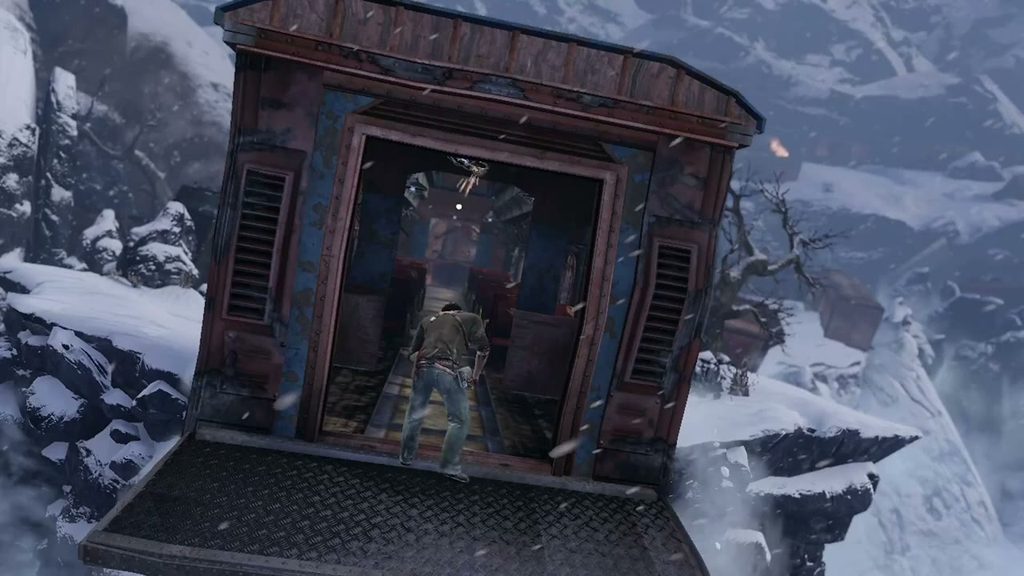
The opening shot is a magic trick. Nathan Drake wakes up bleeding in a train carriage, and the carriage is hanging off a Himalayan cliff, and you are climbing out of it before you have had time to ask how it got there. Uncharted 2: Among Thieves does not build to its spectacle — it starts inside it, flashes back, and then spends twelve hours topping itself. In 2009 this was the game that settled arguments. It was the PS3’s showpiece, the answer to every friend who had bought the other console, and the moment Naughty Dog stopped being a very good studio and became the industry’s benchmark for cinematic action. Sixteen years and several sequels later, it remains the best Uncharted — the one where the formula, the pacing and the charm all peaked at once.
A thief, a warlord and a very old map
The story is pulp handled with unusual care. Drake is hired to steal a seemingly worthless oil lamp from an Istanbul museum, and the lamp points to Marco Polo’s lost fleet, the Cintamani Stone and the hidden valley of Shambhala. Chasing the same prize is Zoran Lazarevic, a Serbian war criminal played entirely straight — a villain with no jokes and no mercy, which makes him the perfect foil for a hero who quips under machine-gun fire. Around Drake orbit the series’ best cast: Sully, Chloe Frazer in her debut — morally flexible, twice as competent as Drake and honest about it — Elena Fisher, and a supporting turn from a Tibetan village that gives the back half of the game its heart.
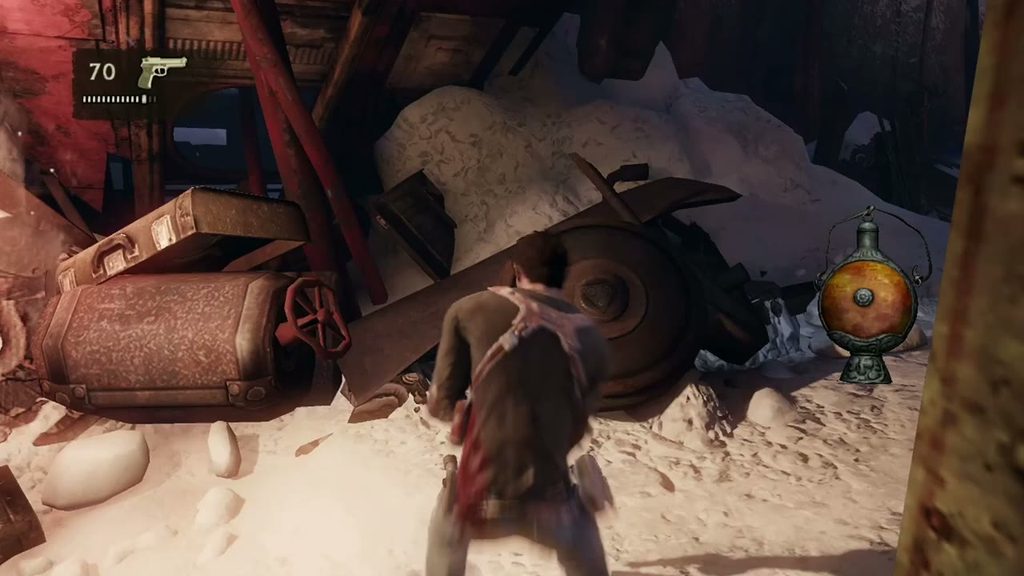
What elevates the writing is structure. The game is built like a great action film — cold open, betrayal, a mid-point catastrophe, a quiet village interlude that recontextualises the stakes, and a finale that pays off everything. The dialogue does the heavy lifting that cutscenes alone cannot: Drake and his companions talk over gameplay, finish each other’s sentences, argue about the plan while you are executing it. It sounds obvious now because everyone copied it. In 2009, conversations that continued seamlessly from cutscene into a gunfight felt like witchcraft.
The set-piece standard
Every chapter contains a sequence other studios would build a whole game around. The museum heist is a stealth tutorial disguised as a comedy double-cross. Borneo delivers the series’ open, sunlit gunfights. Nepal is the high point: a city collapsing in real time under helicopter attack, a running battle across rooftops that ends in a building falling down with you inside it — a scene the engine renders as gameplay, not a film, with the camera never leaving your shoulder. Then the train. A full hour of it, carriage to carriage, through tunnels and across bridges, fighting to the locomotive as the Himalayas roll past — still, for our money, the single greatest level in any action game of its generation.
Uncharted 2 does not have levels so much as it has arguments — each one insisting, at higher volume, that the last one cannot have been the peak. It is always wrong. There is always more.
The miracle is that the spectacle never eats the game. Underneath the collapsing scenery sits a tight third-person shooter: generous cover, vertical arenas, enemies who flank and flush you with grenades, and a melee system that turns a dry magazine into a brawl instead of a death sentence. The PS3’s Cell processor earns its keep in the physics and the sheer density of debris, snow and water the game throws around, and the whole thing runs at a steadiness the first Uncharted never managed.

Gunplay, climbing and the space between
Drake’s climbing was refined from the first game’s slightly sticky ledges into something fluid and readable — handholds are honest, jumps are forgiving in the right way, and the camera quietly frames the route without ever pointing at it. The gunplay similarly found its balance: weapons have kick and scarcity, blind-fire exists to buy space rather than to win fights, and the stealth tools — silent takedowns, hanging drops, throwable propane in the first game’s tradition expanded into a full sandbox of gas canisters and fuel tanks — let aggressive players treat arenas like puzzles. Difficulty spikes exist, notably the final confrontation and the blue-crossbow guardians of Shambhala, whose damage-sponge design is the game’s one real misjudgement. They are a blemish on the last hour of an otherwise perfectly judged campaign.
The multiplayer nobody expected to love
Uncharted 2 shipped with a full multiplayer suite — competitive deathmatches on maps remixed from the campaign, and a co-operative mode that remains some of the most fun the PS3 ever hosted online. The servers are long closed, so today it is a historical footnote, but at the time it proved Naughty Dog’s systems were robust enough to carry other players, not just a script. The single-player campaign is the reason to own it now, and it needs no online help to justify itself.

Why it still leads the series
Later Uncharted games are bigger, prettier and more open, and there is a respectable argument for the fourth game’s character work. But Among Thieves remains the perfectly proportioned one. Its campaign wastes nothing: there is no open world to pad, no crafting to slow the run, no chapter that exists to teach a system the game then forgets. Every mechanic introduced is cashed in — the museum’s stealth returns as a full infiltration in the finale, the train’s moving cover becomes the convoy ambush in the mountains, the yeti that stalks the ice caves teaches you the guardian fights of Shambhala. It is also, not coincidentally, the funniest game in the series, because its humour is structural: Drake’s plans fail constantly, his allies heckle him for it, and the plot is essentially a heist in which every participant is betraying someone. Chloe’s allegiances rotate so often that her final choice lands as character rather than twist. Even the villain benefits — Lazarevic’s famous opening question about how many men Drake has killed, delivered while Drake is literally standing in the wreckage of the player’s last hour, is a blockbuster pausing to interrogate its own body count, years before that became fashionable. The PS3 original, played today, also carries a texture the remaster smooths away: the slightly soft image, the film grain, the sense of a machine at its absolute limit doing impossible things. It is the version that changed the industry in real time, and it still feels like an event.
Housekeeping
For the record of a modern playthrough: the campaign runs around ten hours, the treasure hunt hides a hundred collectibles with the series’ usual generosity of secrets, and the harder difficulties — Crushing especially — are honestly earned rather than padded. All of it is on the disc, complete, forever.
The verdict
Games that define a console usually date the fastest. Uncharted 2 is the exception: its pacing, its cast and its sheer confidence still play like a modern blockbuster, because modern blockbusters are still imitating it. The PS3 original holds up beautifully next to the later remaster — the art direction, all saturated colour and golden light, was built for exactly this hardware. If you own a PlayStation 3 and one shelf of games, this is the spine of the shelf.
Score: 9.5/10 — The greatest action-adventure on the PS3, and the high-water mark of its series. Among thieves, it steals everything.