Here is a sentence nobody expected to write in December 2015: the real Star Raiders II has just been released, thirty-one years late, by the man who wrote it, from a floppy disk that spent three decades in his garage. The Star Raiders II you could buy in 1986 was an impostor — a movie tie-in wearing a stolen name. The genuine sequel, designed and coded single-handedly by Atari programmer Aric Wilmunder in 1983–84, was a few months from completion when Atari’s collapse buried it. In December 2015, after a gentle campaign of persuasion by Kevin Savetz of the ANTIC Atari 8-bit podcast, Wilmunder compiled what he had, wrote up its history, and put it online for the retro community to judge at last. His one anxiety, confessed upfront, was delicious: “I’d hate to wait 30 years to release the game just to get a bad review.”
First, a Small Correction
The original short news item this feature replaces described Star Raiders II as a graphical take on a text-based Star Trek game from the seventies. That pedigree belongs to the first Star Raiders — Doug Neubauer’s 1979 original, which translated the mainframe Star Trek formula of quadrants, starbases and Klingon-hunting into a real-time 3D cockpit simulation and became the killer application that sold Atari 400 and 800 computers. The sequel’s story is stranger than the stub allowed, and it deserves telling properly, because there are two entirely different games answering to the name Star Raiders II — and for twenty-nine years, only the wrong one was famous.
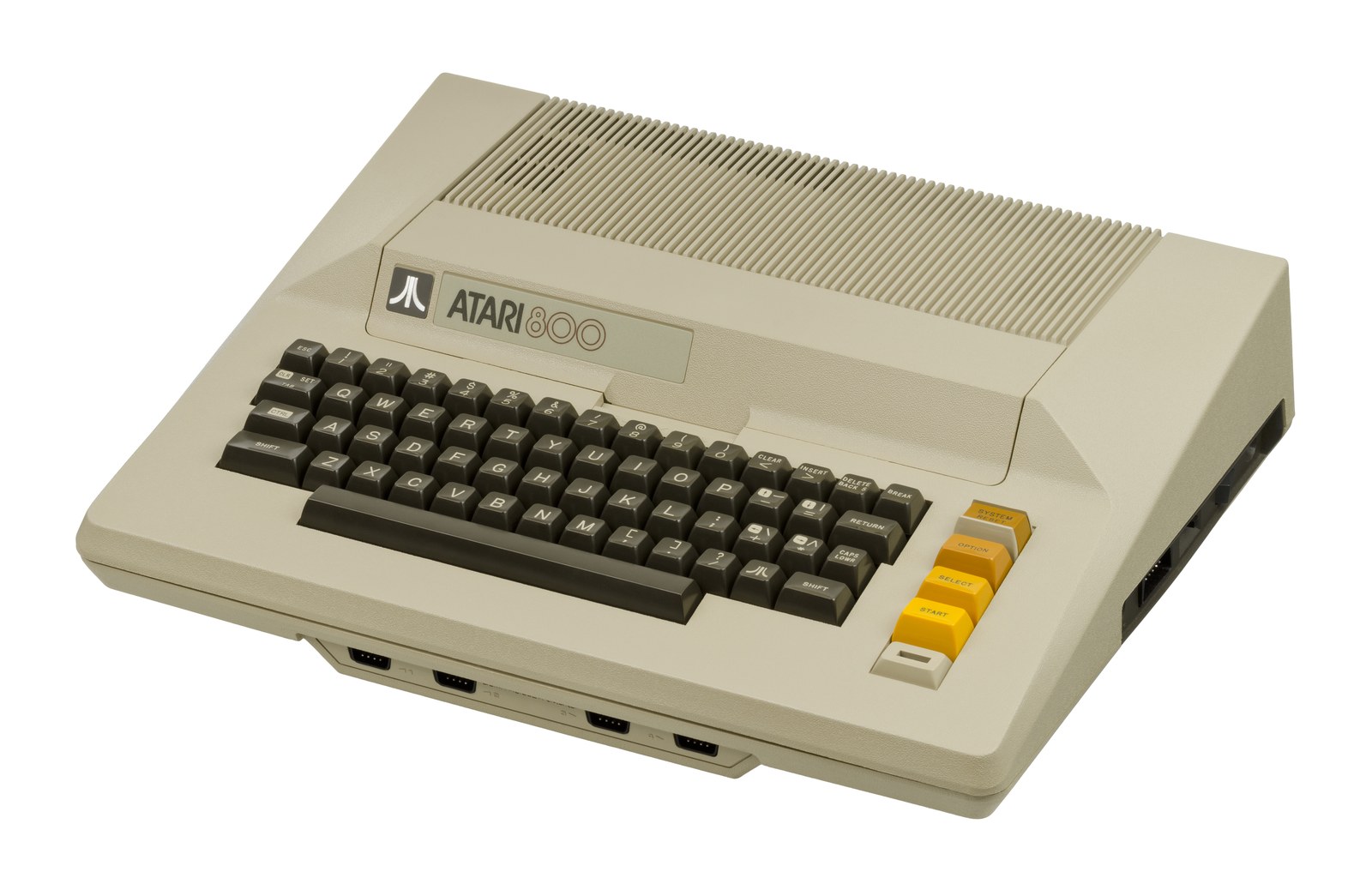
The Atari 800 — home of the original Star Raiders, and the machine both would-be sequels were built for. Photograph: Evan-Amos, via Wikimedia Commons.
The True Sequel, Built in Secret
Wilmunder came to the project with form. He had written Atari 8-bit conversions at Automated Simulations and Epyx — Star Warrior, Crush, Crumble and Chomp!, the Temple of Apshai games — before joining Atari’s corporate research department, where he worked alongside Chris Crawford on the experimental Gossip project. From there he moved to a small, secretive R&D team inside Atari’s coin-op division, led by Lyle Rains, the mind behind Asteroids. The team’s brief was to make home-computer games with arcade-division ambition, and Wilmunder’s assignment was the big one: a real sequel to Star Raiders.
His design kept faith with Neubauer’s original while quadrupling the canvas. Where the 1979 game squeezed into an 8K cartridge, Wilmunder’s sequel targeted the new 32K cartridges, and the expansion shows in every system. The photon torpedoes were replaced by a laser-like weapon that could be aimed semi-independently of the ship’s flight, letting a skilled pilot snap off shots at fast-crossing targets. Enemy ships, flat sprites in the original, became 3D wireframe vessels. The rigid gridded galactic chart gave way to a free-form map in which your home planet sits in the upper corner and the enemy’s whole strategy is to reach and destroy it. And when planets came under attack, the action dropped to a surface-skimming sequence modelled on the trench-and-surface scenes of Atari’s Star Wars arcade cabinet — which happened to be under development just down the hall from Wilmunder’s office.
1984: The Minefield
By early 1984 the game was substantially complete, needing polish — enemy AI tuning above all — rather than major construction. But Atari itself was coming apart. Wilmunder has described the downsizing as walking into a minefield each morning to discover the latest crater: another colleague gone. Eventually the crater was his. Laid off with the code in his possession, he kept tinkering, and when Jack Tramiel’s takeover settled he approached the new Atari in the summer of 1984 to talk about finishing and releasing it. The meetings were positive. The commitment never came. Wilmunder moved on to Lucasfilm Games — where Star Raiders II served, fittingly, as part of his calling card, and where he worked on titles including the XEGS version of Ballblazer — and the sequel went into the garage, unknown even to most Atari historians.
Meanwhile: The Other Star Raiders II
While Wilmunder’s sequel sat unfinished, Atari’s marketing department had bought the rights to The Last Starfighter, the 1984 film about a teenager recruited by an arcade game that turns out to be an alien training simulator. A tie-in game — programmed by Gary Stark and Bruce Poehlman, built around fleets breaching an energy Frontier to attack the Rylan Star League — was developed for the Atari 8-bit and 5200. Then the film underperformed at the box office, the licence lost its shine, and Atari reached for a name it already owned that tested better: Star Raiders II. The conversion was superficial — starbases added, names swapped to Zylon-flavoured equivalents from the original game, shields and a tactical display grafted on, the film’s introduction replaced by a plain title splash — and by the participants’ own later accounts, nobody in the chain appears to have reckoned with the fact that an actual sequel was sitting nearly finished elsewhere in the same company.
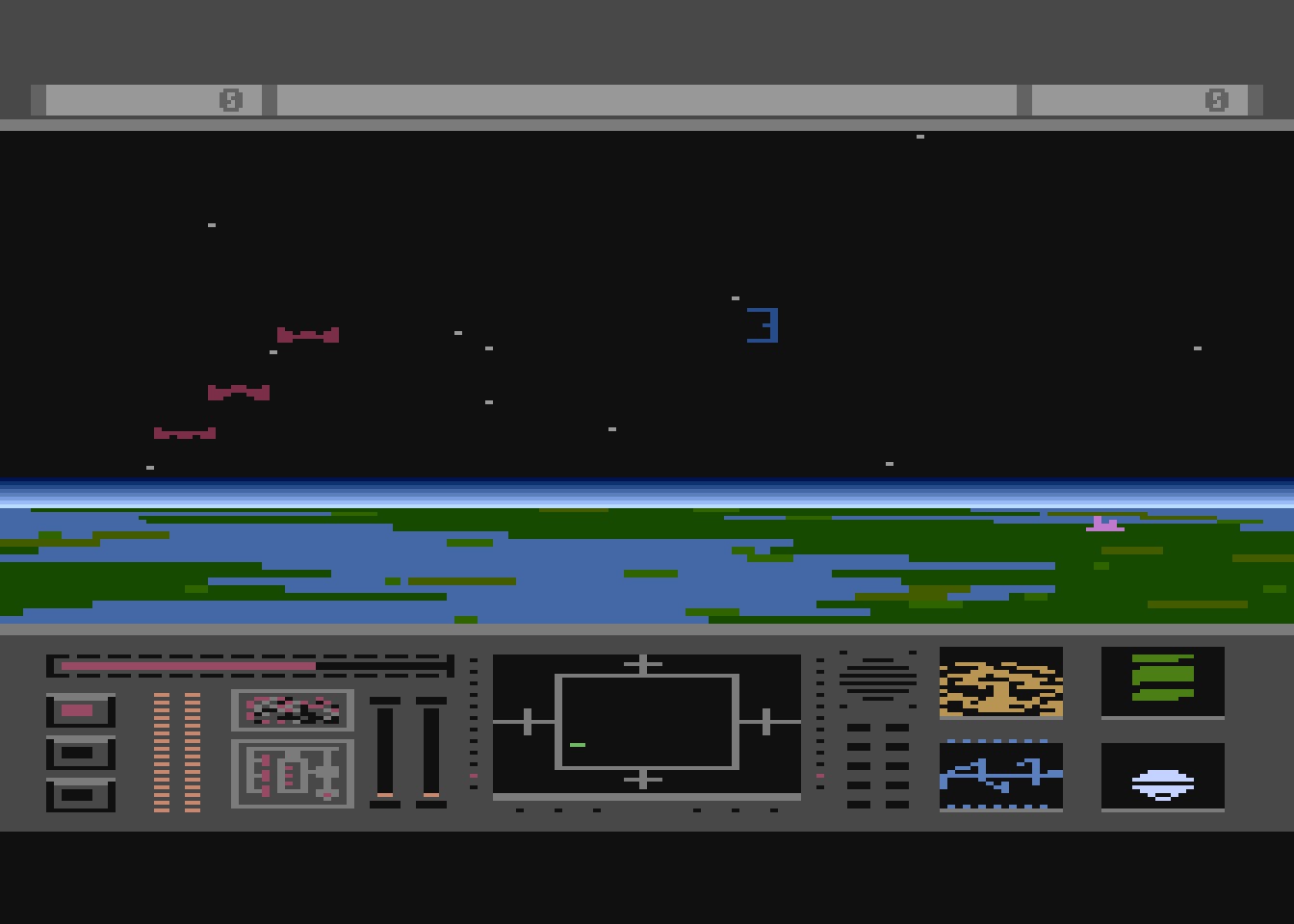
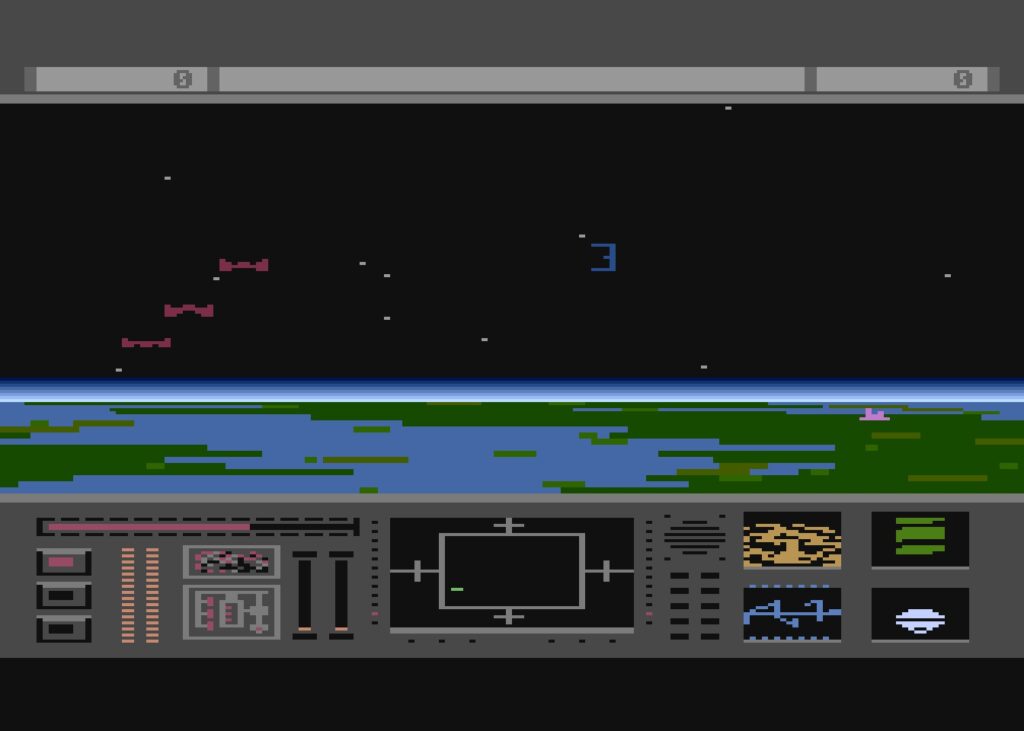
The Star Raiders II that actually shipped in 1986: the converted Last Starfighter game, cockpit view over a planet’s surface with its tactical display below. Screenshot via Wikipedia; upscaled for display.
The impostor shipped in 1986, and history should record that it was no disgrace in itself. BYTE‘s Jerry Pournelle named it his game of the month, calling it the old Star Raiders “died and gone to heaven”; Computer Gaming World was cooler, praising the graphics while finding the design repetitive. Electric Dreams published conversions for the ZX Spectrum, Commodore 64 and Amstrad CPC in 1987 to mixed reviews. It is a perfectly decent space combat game. It simply isn’t Star Raiders II — it shares less DNA with Neubauer’s original than the film tie-in it began life as.
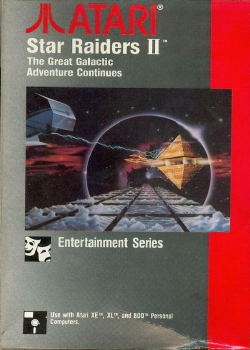
The 1986 release’s box art: a fine game wearing a borrowed name. Image via Wikipedia.
December 2015: The Garage Door Opens
The resurrection began, as so many preservation stories now do, with a podcast. Savetz had been gathering oral history from Atari veterans for ANTIC when Wilmunder got in touch — prompted, he said, by seeing discussion of the original Star Raiders source code — and mentioned, almost in passing, that he had a sequel nobody had ever seen. The interview aired on 10 December 2015, and days later the game itself followed: a compiled, playable disk version, accompanied by Wilmunder’s own written history of the project and a basic manual. He was candid about its state — functionally complete, entirely playable, but untuned, exactly as a game a few months from its polish pass should be. His source disks and design documents were also preserved with the Internet Archive, so the paper trail survives alongside the code. We cover the release here as preservation news, in editorial terms only.
So there the matter rests, with a pleasing symmetry. The 1986 Star Raiders II keeps its box, its reviews and its place in the catalogue. And the 1984 Star Raiders II — wireframe Zylons, free-form galaxy, home planet burning in the corner of the map — finally has players. Thirty-one years late, Aric Wilmunder shipped his game. The reviews, for the record, were kind.