
N64 · RACING · FROM THE VAULT
Thirty years ago this week, Nintendo released its third Nintendo 64 game in North America — and it wasn’t a platformer, a kart racer, or a safe bet. It was a jet ski game. Wave Race 64 splashed into American shops on November 4, 1996 (Japan had it first, on September 27), riding behind only Super Mario 64 and Pilotwings 64 in the new machine’s tiny launch library. On paper it sounds like a footnote. In practice it was a flex: a racing game whose entire point was showing you something no console had ever done convincingly before — water. Real, moving, bucking, race-wrecking water. Three decades on, the strangest thing about Wave Race 64 isn’t how well it has aged. It’s that almost nobody has even tried to outdo it since.
The box that sold a console

Context matters here. The Nintendo 64 launched into a knife fight with the PlayStation, and Nintendo’s early software had one job: prove that cartridges, an analog stick, and a pile of custom silicon could do things CDs couldn’t. Super Mario 64 made the case for 3D worlds. Wave Race 64 made the case for 3D physics. Developed by Nintendo EAD, directed by Katsuya Eguchi and Shinya Takahashi with Shigeru Miyamoto producing, it was a sequel in name to the 1992 Game Boy original — a pleasant little top-down racer — but in every way that counts it was a new invention wearing a familiar badge.
The timing was brave, too. A jet ski racer is a hard sell in November. Nobody is thinking about personal watercraft when the leaves are turning. But Nintendo understood something the rest of the industry kept relearning all generation: in a launch window, spectacle beats genre. People didn’t buy Wave Race 64 because they loved jet skis. They bought it because the water in the demo kiosk looked alive, and they wanted to know what their new machine could do. It went on to sell close to two million copies in the United States alone — for a game about rounding buoys, that’s not a footnote, that’s a hit.
The water is the track

Here is the thing modern racers still get wrong: in almost every racing game ever made, the surface is a texture. It might be slippery, it might be bumpy, but fundamentally it’s a floor with opinions. In Wave Race 64, the surface is a system. The waves are generated, layered, and constantly moving — swells roll through on their own rhythm, your rivals carve wakes that persist and shove you sideways, and the chop on a storm course can launch you clean off your line if you hit it at the wrong angle. You are never racing the same lap twice, because the track literally will not sit still.
That changes how you drive. On tarmac, you memorise. On Wave Race‘s water, you read. You learn to spot the face of a wave and decide — in a fraction of a second, analog stick already moving — whether to carve up it for air, slice through it and keep your speed, or take the long way around and stay dry-side up. A big jump isn’t just spectacle: hang time costs speed, but landing clean on a downslope is the fastest feeling in any N64 game. The famous handling model gives your rider real weight, too. Lean into a turn and the ski bites; overcook it and you’re swimming. Every other water racer of the era — and there were plenty of imitators within a year — treated waves as scenery. This one treated them as the opponent.
Weather and time of day multiply the effect. Courses change character completely between a glassy sunset run and a rain-lashed storm setting: visibility drops, the sea state turns spiteful, and lines you trusted an hour ago become suggestions. It’s a small course list by modern standards, but the conditions system means you’re really learning each venue three or four times over.
Why it feels like the real thing
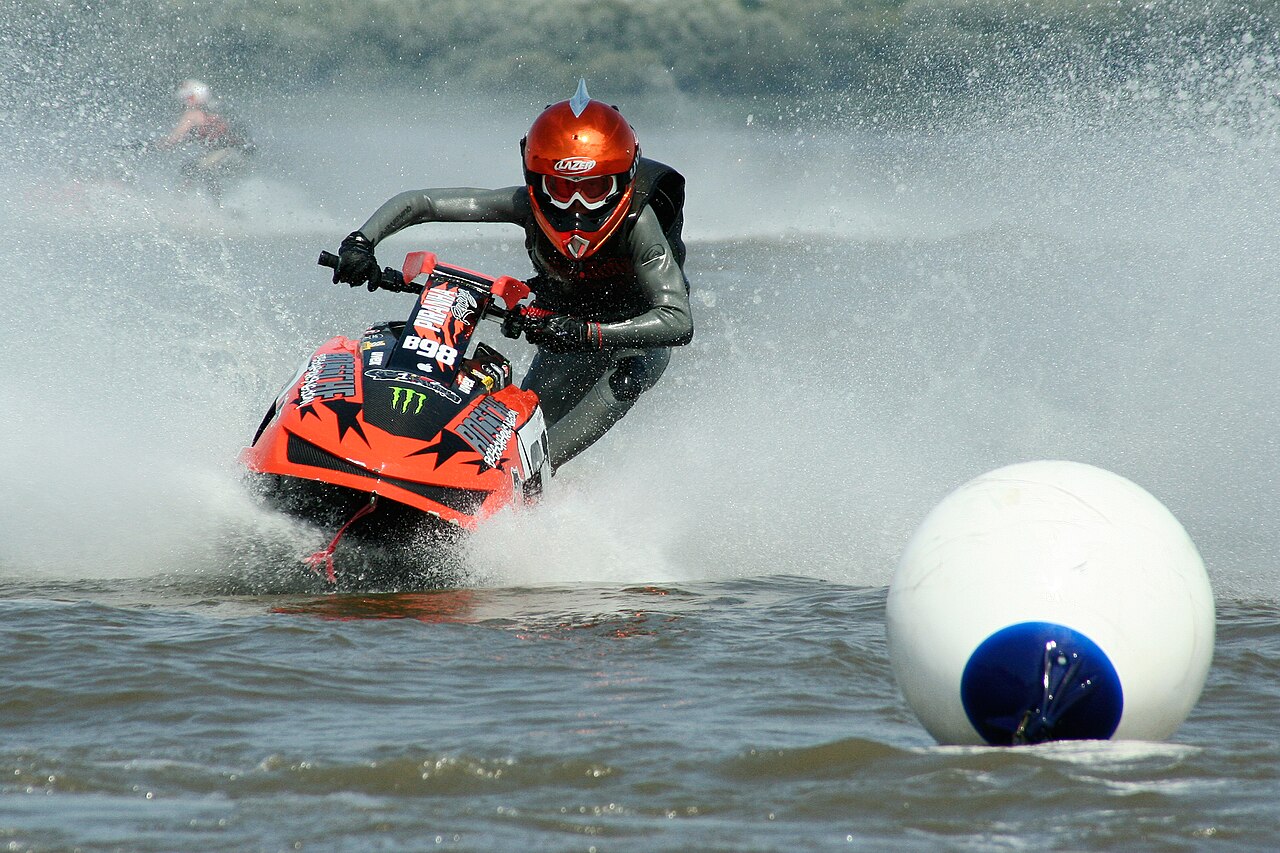
Part of the authenticity was licensed: this is a Kawasaki game through and through, with real Jet Ski branding on the machines, the course banners, and that box art. But the deeper authenticity is in the details Nintendo didn’t have to include. The way a ski porpoises over chop instead of gliding. The rooster-tail of spray that blinds the rider behind you — a genuine racing tactic and a genuine nuisance, exactly as it should be. The dolphins. If you know, you know: the game’s most beloved secret is that its marine life rewards players who treat the water like a place rather than a racetrack, and the training-mode dolphin has launched a thousand playground rumours, most of them true.
And then there’s the presentation, which has aged like a good arcade game should. Kazumi Totaka’s soundtrack is breezy, funky, and criminally catchy — the title theme alone could sell beach holidays. The announcer, meanwhile, is a legend in his own right: every clean pass, every buoy, every mistake gets barked back at you with maximum enthusiasm, and his signature cry when you hit top speed has been quoted by N64 owners for thirty years. Say it with us: Maximum Power.
Four riders, nine venues, endless arguments

The structure underneath the spectacle is pure, durable arcade design. Four riders — from the balanced all-rounder to the heavyweight who accelerates like a departing ferry but never, ever slows down — each with handling distinct enough to start real arguments about who’s fastest. A championship ladder that escalates through difficulty tiers, unlocking reverse courses and nastier weather. Time attack for the perfectionists. A stunt mode that scores tricks and remains, quietly, one of the best score-attack modes on the system. And two-player split-screen, which in 1996 was not a bullet point but a way of life.
Its masterstroke is the buoy system. Slalom gates alternate red and yellow, and you must pass on the correct side — miss five and you’re disqualified. It sounds like admin. In practice it’s the engine of every great Wave Race moment: the racing line is never purely yours, because the next buoy is dictating your approach, and the water is vetoing your plans. Speed comes from negotiating between the two. Plenty of racers since have had better graphics, bigger grids, and licensed soundtracks. Very few have had a mechanic this simple doing this much work.
The controller was half the game

It’s easy to forget that in November 1996, analog control was brand new and unproven. Wave Race 64 was the stick’s second great argument, after Mario. Lean inputs aren’t binary here; the game reads degrees. A quarter-tilt carves, a full tilt snaps the ski around and bleeds speed, and a feathered correction mid-wave is the difference between a record lap and a mouthful of digital seawater. The 1997 Japanese re-release even added Rumble Pak support, putting the chop of the water in your hands — one of the first times force feedback genuinely added information rather than noise. Play it today on a modern pad and it still feels right. That is not nostalgia talking; that’s a control scheme designed around a new input device by the people who invented the device.
The sequel that stalled
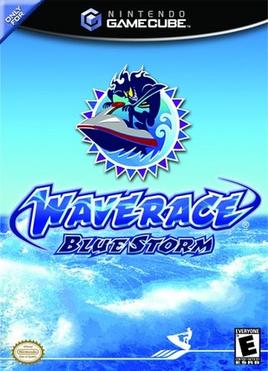
So why is there no modern Wave Race? The series got exactly one console sequel: Wave Race: Blue Storm for the GameCube in 2001, a launch-window game that cranked the weather system into a full storm mechanic, added turbo management and a deeper roster, and reviewed well — before the series simply… stopped. Nintendo’s internal teams moved on, the personal-watercraft boom cooled, and racing games consolidated around cars. Every few years a rumour surfaces, a trademark twitches, and nothing ships. Meanwhile the original sits there, thirty years old, its central trick — dynamic water as gameplay — still barely attempted by anyone else, because doing it properly is hard and doing it badly is obvious.
There’s a lesson in that for the modern retro scene. We talk a lot about games that were ahead of their time as though the industry eventually caught up with all of them. Wave Race 64 is the counterexample: a game that did one thing so completely, so early, that the genre quietly routed around it instead. The water was never bettered. It was abandoned.
How to play it today
The good news: this one is easy to play legally. Wave Race 64 is on Nintendo Switch Online + Expansion Pack’s N64 library, in its later Rumble Pak–support version, with online multiplayer grafted onto that split-screen — possibly the best way it’s ever been served. Original hardware remains a joy and copies are still sensibly priced by N64 standards, because two million American buyers means a healthy supply of loose carts. If you go the cart route, seek out the Player’s Choice or later revisions if rumble matters to you; the launch cart predates it.
However you play it, give it more than ten minutes. The first race will feel loose, slippery, maybe even slight. The tenth race — when you’re reading swells two buoys ahead, cutting inside a rival’s wake, and landing a jump exactly on the downslope — will feel like nothing else in the N64 library. Thirty years on, the water is still moving, the announcer is still shouting, and the best jet ski game ever made is still, somehow, a launch title from 1996. Some games you revisit. This one you re-enter — and it still feels wet.