At a glance: Alien vs Predator · Atari Jaguar · Rebellion / Atari, 1994 · First-person shooter · Score: 9.0/10
There is a moment, about ten minutes into the Marine campaign of Alien vs Predator, when the motion tracker starts to sing and you understand that the Atari Jaguar — the console the industry had already started laughing at — could do something no other home machine of 1994 could do. Sega’s 32X was weeks away, the PlayStation was a Japanese rumour, and here was a full, atmospheric, texture-mapped first-person shooter on a cartridge, built around not one but three completely different ways to play the same nightmare. Rebellion’s Alien vs Predator is not just the best game on the Jaguar. It is the reason the Jaguar is remembered as anything more than a punchline.
Three hunters, one station
The setup is pure early-nineties Fox Interactive gold. The training base Golgotha, orbiting a distant planet, has been overrun. You play the disaster three ways. As the Colonial Marine, you are a lone private with a pulse rifle, a shotgun, a flame unit and a motion tracker, fighting through five decks of air ducts, med labs and hangars to set the self-destruct and reach the escape pod. As the Alien, you cannot use weapons at all — you are the weapon, all claws, tail and jaw, rescuing captured kin and building strength by cocooning marines. As the Predator, you hunt both for honour, climbing a points ladder that unlocks the combi-stick, the wrist blades, the smart disc and the shoulder cannon as your kills grow worthier.
What still impresses, three decades on, is how seriously the three campaigns commit to being different games wearing the same corridors. The Marine run is a survival shooter about ammunition and dread. The Alien run is a melee brawler with a genuinely alien movement model — fast, low, able to scuttle through the vent system that the other two species experience as a threat. The Predator run is a stealth score-attack, where cloaking past a marine is sometimes worth more than killing him, and where your honour score punishes cheap kills. Modern licensed games with ten times the budget routinely do less with the fantasy than Rebellion did here on a 1994 cartridge.
The technology of fear
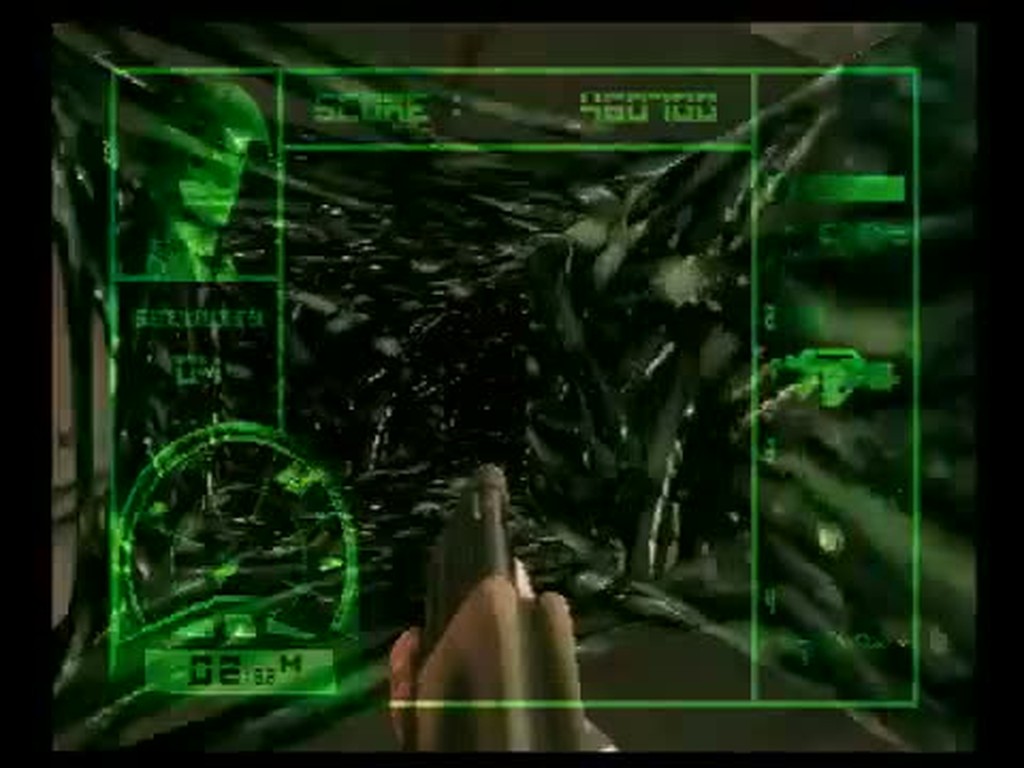
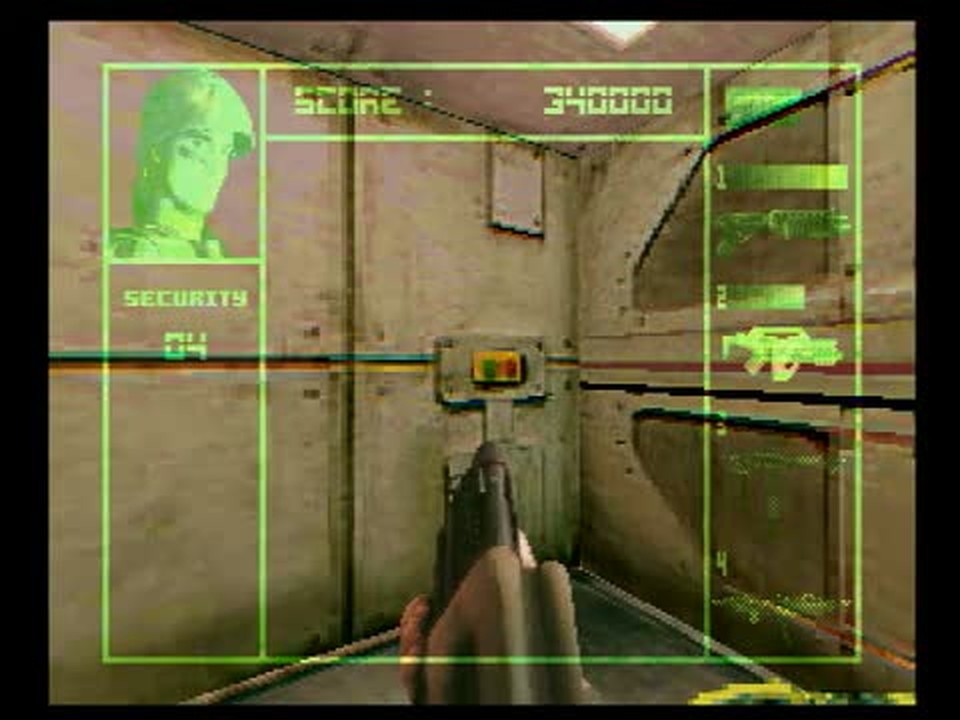
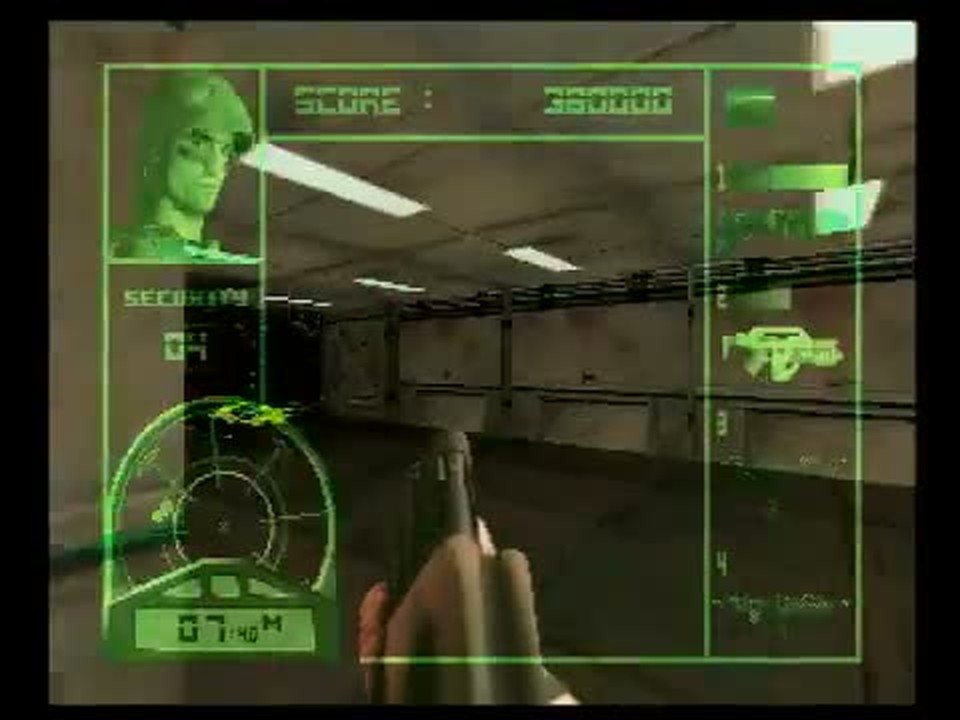
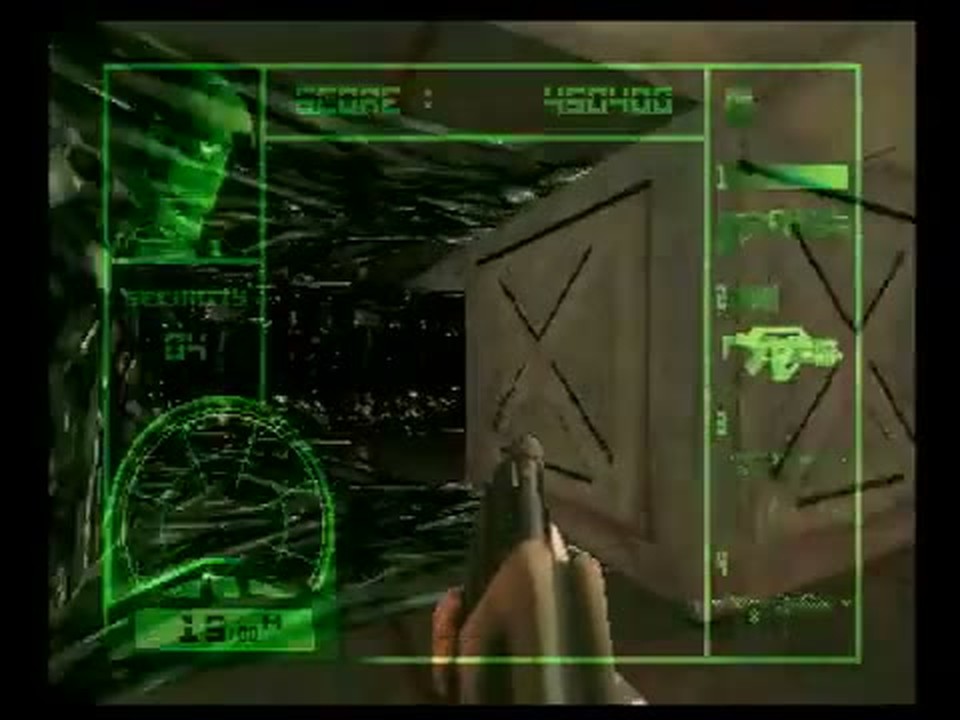
The Jaguar build is the only version of this game that exists — there is no other port to confuse it with — and its fingerprints are unmistakable: the chunky green wireframe HUD that frames the Marine’s view, the face of your marine gazing up from the corner, the security-clearance cards tallying down the side of the screen. The engine draws fully texture-mapped corridors at a pace that shames most contemporary PC shooters running on mid-range 486s, and while the frame rate dips when the ducts fill with Aliens, it never collapses into the slideshow territory of the era’s lesser console conversions.
The sound design does the heaviest atmospheric lifting. There is very little music. Instead you get ventilation hum, distant clangs, the soft blip of the tracker accelerating as something approaches, and then the shriek. The Alien AI is simple by modern standards — they charge, they flank by accident of level geometry, they overwhelm — but the audio sells the fiction that you are being hunted, and the famous tracker is still one of the great tension devices in the medium. Every Jaguar owner of the era has a story about backing down a corridor, tracker screaming, shotgun dry, absolutely certain the next doorway was death. They are all true.
Honest flaws, fairly priced in
It is not flawless, and nostalgia should not pretend otherwise. The levels are maze-like in a way that crosses from atmospheric into genuinely confusing; the five decks reuse their geometry across campaigns, and without a map — there is none — first-time players will spend real minutes walking in circles past the same med bay. The Alien campaign’s cocooning mechanic is fiddly, the Predator’s honour economy is opaque until it suddenly clicks, and saving is handled through a limited in-game system that can strand a bad run. The enemy animation, digitised and sprite-based, reads as stiff next to the smooth corridors.
And yet none of it dents the core achievement. This was a launch-window console, built by a company the market was abandoning, and a small British studio used it to ship the most ambitious licensed shooter of its generation — a game that treated three film monsters as three design philosophies and made all of them work. The PC would not get its own Alien vs Predator until 1999, and when it did, it was Rebellion again, building directly on what the Jaguar game had proven.
Three campaigns, three temperatures of fear
It is worth pausing on how differently the campaigns manage tension, because later AvP games inherited the template wholesale. The Marine campaign is the headline act — roughly the longest of the three, and the only one that uses the full survival grammar of limited ammunition, security clearances earned deck by deck, and health restored at med stations you have to find before you need them. The Alien campaign is the shortest and strangest: no ranged weapons, no health packs in the human sense, and a resurrection mechanic built on your cocooned victims that turns the station’s crew into a resource to be farmed with genuine unease. The Predator campaign, unlocked in spirit by its honour system, is the connoisseur’s run — a score-attack about restraint, in which the cloak is as important as the cannon and the game keeps a running moral account of your kills. That all three share Golgotha’s geometry is usually filed as a corner cut, and it is; but it also produces an effect no modern sequel has matched, in which you learn one haunted place from three directions until you know it the way you know a house you grew up in — and dread it accordingly.
The legacy needs no inflation. When the PC’s Aliens versus Predator arrived in 1999 — Rebellion again, five years on — reviewers treated its three-campaign structure as a revelation; Jaguar owners had been living in it since 1994. This cartridge also carried a commercial weight no game should have to bear: it was, alongside Tempest 2000, the reason a measurable number of Jaguars were sold at all in the system’s final full year, and it remains the first title named in every serious account of what the machine could do. Subsequent re-releases of the era’s AvP games have kept the lineage alive, but the 1994 original is not a prototype for the later games. It is a complete work, earlier than its reputation and better than its hardware’s.
One practical note for new owners: the cartridge rewards a real Jaguar pad and a dark room, and it punishes players who treat its save system casually — plan campaigns in sittings, learn the deck layouts as the Marine first, and let the other two campaigns reinterpret a station you already fear. That order of play, Marine-Alien-Predator, remains the connoisseur’s route through Golgotha.
Verdict
Alien vs Predator is the Jaguar’s essential game: the one that justifies the hardware, the one that still plays with genuine tension today, and the one whose green HUD remains the single most recognisable image the system ever produced. If you own the console, you own this. If you are thinking of buying the console, this is why. Score: 9.0/10