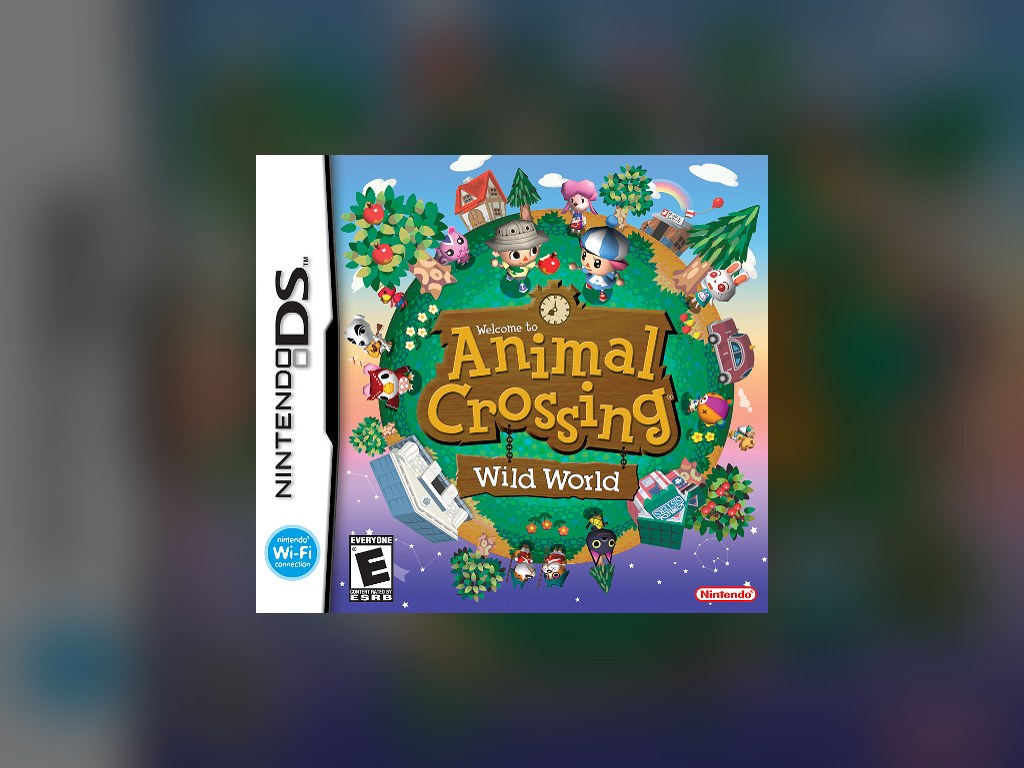
At a glance: Animal Crossing: Wild World · Nintendo DS · Nintendo, 2005 · Life simulation · Score: 8.5/10
The original Animal Crossing had been a cult miracle on the GameCube: a game with no winning, no ending and no agenda beyond living in a village of talking animals, in real time. Wild World, released for the DS in 2005, asked the obvious question — what if that village lived in your pocket, synced to your real clock, and could visit other villages through the internet? The answer reshaped the series forever. Wild World sold in the millions, turned Animal Crossing into a daily habit for a generation of players, and established the handheld as the franchise’s natural home.
The ritual is unchanged and unchangeable. You arrive in a procedurally-named village, take a mortgage from the tanuki tycoon Tom Nook, and then — nothing, gloriously. Fish the rivers, dig fossils, catch bugs for the museum, decorate a house that the Happy Room Academy judges with terrifying seriousness, write letters to animal neighbours who write back with the emotional intelligence of fortune cookies. The village runs on your DS clock: shops open and close, snow falls in your actual winter, villagers celebrate your actual birthday, and K.K. Slider plays the plaza on Saturday nights whether or not you show up.
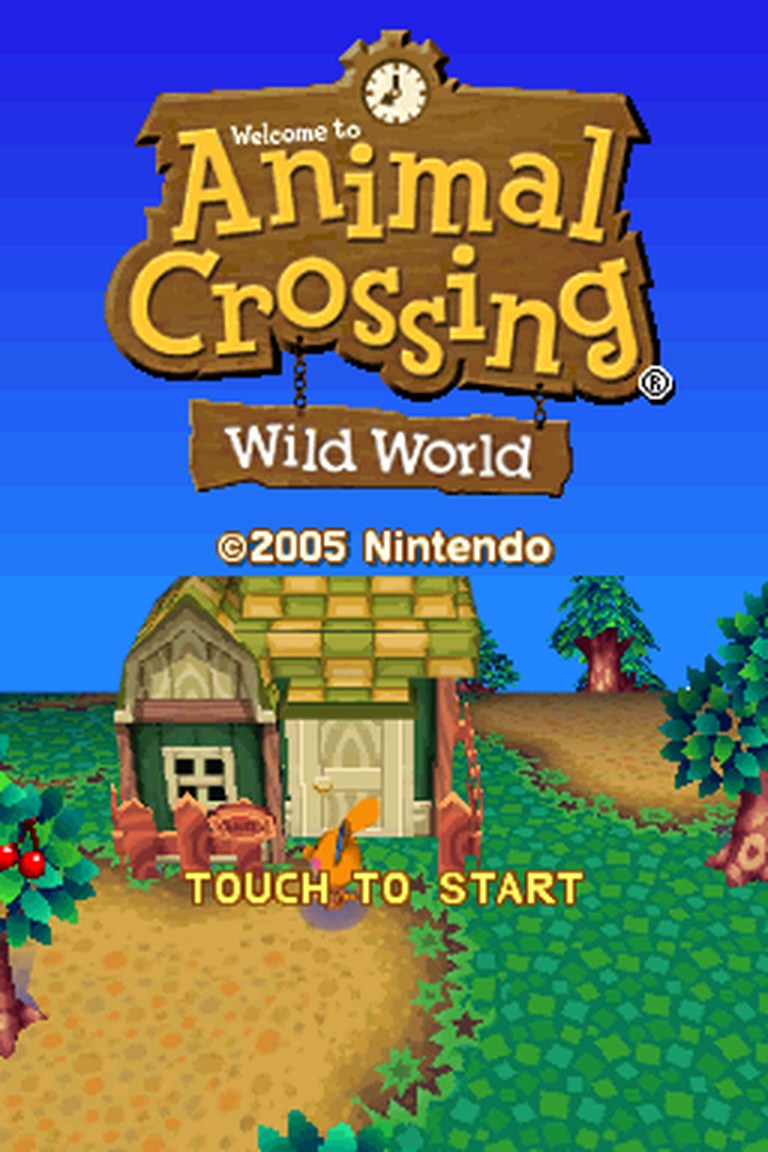
Two screens of sky
The DS hardware quietly perfects the formula. The top screen is mostly sky — rolling clouds, shooting stars to wish on, constellations you can design yourself at the observatory — which gives the village a sense of open air the GameCube version’s boxed view lacked, and makes the bottom screen’s touch interface feel like a natural extension of your hands. Everything can be done by stylus: walking, dragging furniture into place, designing patterns pixel by pixel for clothes and flags. Pattern design alone consumed lives; the Able Sisters’ shop became a gallery of player-made art traded between villages like folk craft.
Wild World was also Nintendo’s gentle Trojan horse for online play. Through Nintendo Wi-Fi Connection — or local wireless — up to four players could visit one another’s villages, fish together, swap items and leave notes on the message board. In 2005 this was radical for a game pitched at everyone, and it defined the social texture of the series: villages became places you showed people. The service’s 2014 shutdown closed that chapter (fan servers preserve some of it), but the design DNA — visiting, trading, showing off your town — runs through every Animal Crossing since.
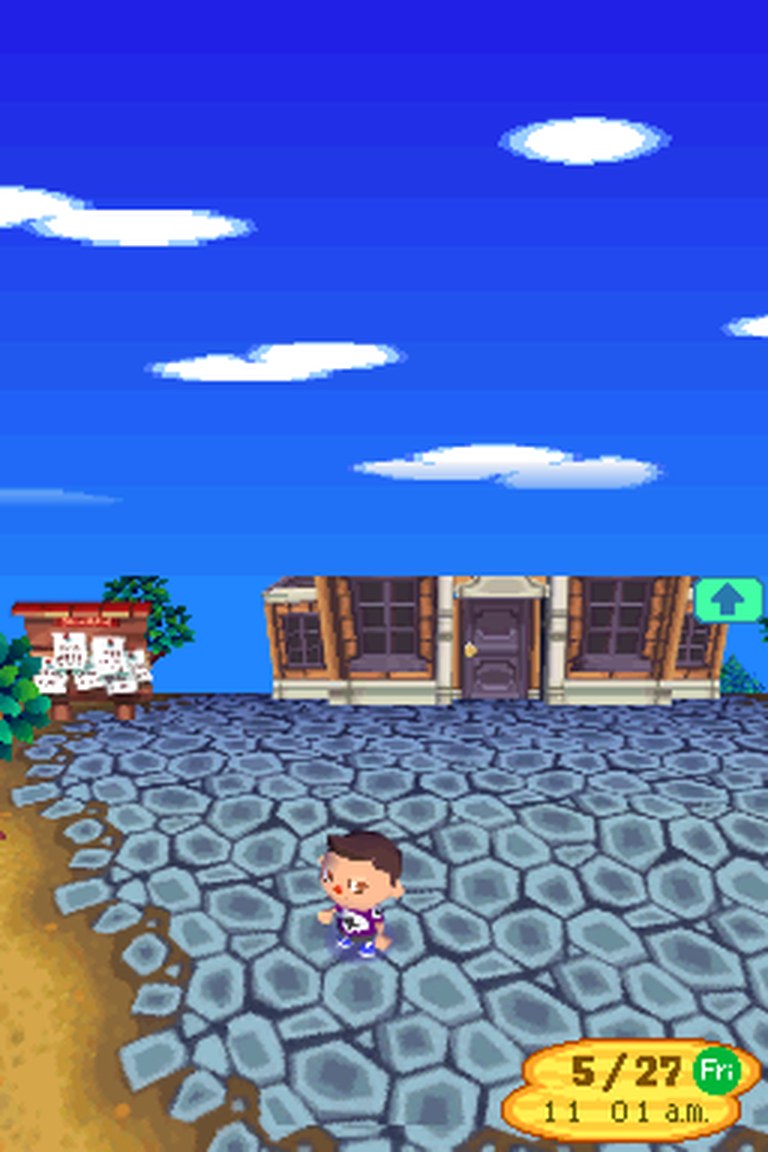
The slow game that never ends
Judged as a conventional game, Wild World is easy to underrate: fewer events than the GameCube original, a smaller village, no NES games to collect, graphics that were modest even then. Judged as what it is — a place — it is close to perfect. The writing of the villagers, hundreds of lines of needy, gossipy, occasionally profound nonsense, remains the series’ high-water mark; the lazy, peppy and cranky archetypes have never been better served. And the bottom-screen inventory, letter-writing and design tools make the daily loop frictionless in a way that keeps the cartridge in the system for years rather than weeks.
Wild World has no final boss, no ending and no fail state — just a mortgage, a museum and neighbours who notice when you have been away.
Time has been kind to its look, too. The soft, low-poly village and its huge sky have the diorama charm of a model railway, and Yasunori Mitsuda-adjacent gentle guitar-and-accordion hourly themes — a different arrangement for every hour of the day — remain a masterclass in ambient scoring. It is a game designed to be lived alongside life, in ten-minute pockets and hour-long Sunday mornings alike.
The neighbours make the game
Everything in Wild World is scaffolding for the villagers, and the writing team gave them material worthy of a sitcom’s tenth season. Each personality type has hundreds of lines, and the game’s systems keep feeding them situations: villagers gossip about each other’s catchphrases, fall out, get fleas, lock themselves out, challenge you to bug-catching contests, spread rumours about your fashion sense and send you letters that range from touching to accidentally avant-garde. They also remember — absences are noted, gifts resurface in other houses, and a departing villager’s goodbye letter is a small, real pang. Later games added polish and features; the fandom’s persistent claim that Wild World’s dialogue is the series’ sharpest has never been convincingly refuted.
The economy of gentle accumulation deserves credit too. Fossils, fish, bugs, paintings (some forged — Blathers and your own eye must judge), gyroids, furniture sets with feng-shui scoring: the catalogue is a collecting game of real depth wearing a cardigan. Seasonal events are modest next to later entries — no island tours, no terraforming — but the calendar’s rhythm, from winter’s Fishing Tourneys to the flea markets where villagers sell their own furniture back to you, sustains the daily ritual without ever raising its voice. Wild World understood that its players did not want more to do. They wanted more to notice.
Practical notes for the modern villager: the cartridge’s real-time clock means Wild World is best owned, not binged — it is a game for the bedside table and the morning coffee, and its pleasures compound at that rhythm in a way no weekend marathon can replicate. The online gates stand closed with the old service (fan servers aside), but everything else — the letters, the constellations, the Saturday concerts — is fully alive offline. For the price of a loose copy, few objects in gaming offer a better rate of quiet joy per minute.
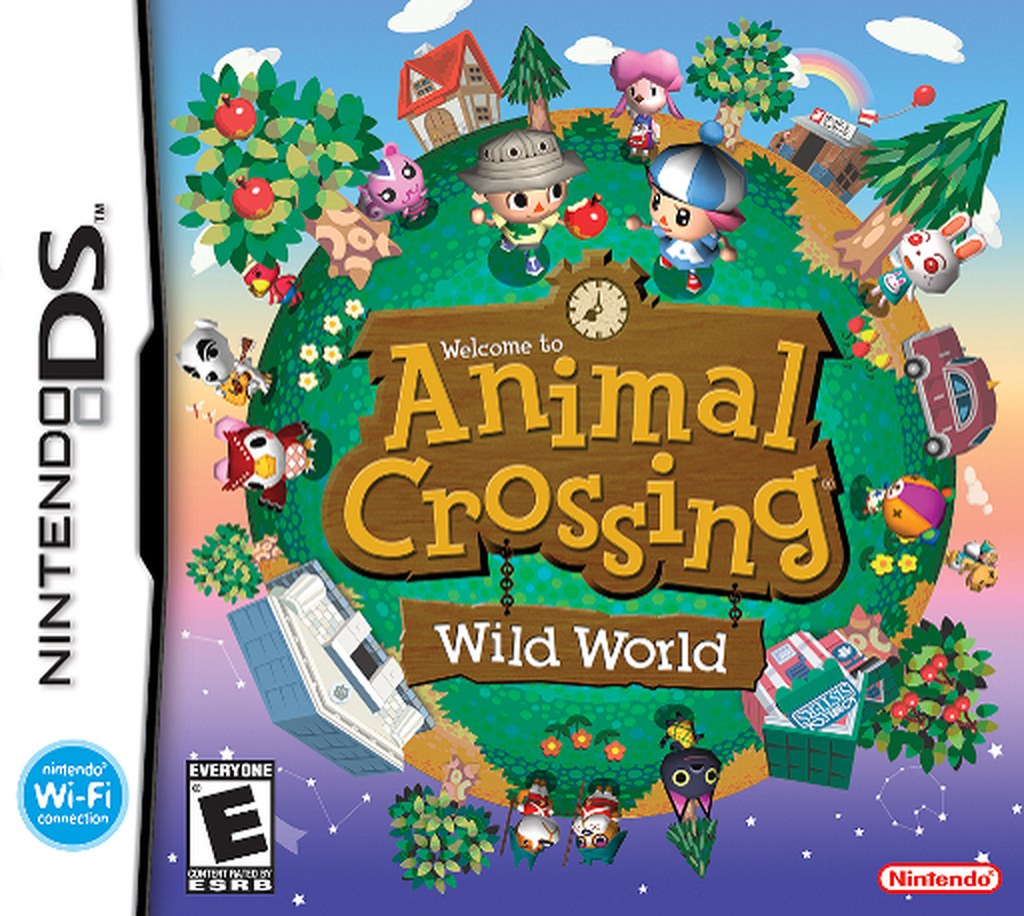
Playing it today
A closing practical thought: Wild World is the rare classic whose ideal platform is still its original one, because its daily ritual presumes a small machine that lives by the bed, keeps perfect time and asks nothing of the internet. A loose copy costs little; a second-hand DS Lite costs little more; together they constitute the cheapest time machine in gaming, set permanently to a gentler decade where your biggest problem was a mortgage held by a raccoon and the museum was missing a coelacanth. Some investments pay in money. This one pays in mornings.
One more modern consideration seals the recommendation: Wild World is the Animal Crossing most insulated from the series’ later service dependencies. There are no seasonal downloads to miss, no online features the offline game begs for, no updates — the village on the cartridge is the whole village, complete forever, exactly as its makers shipped it in 2005. In a medium increasingly rented rather than owned, a game this complete, this gentle and this permanent is not just a classic. It is an argument, made in fishing trips and fossils, for what games used to promise and this one still keeps.
Verdict
Wild World is the Animal Crossing that made the series essential: portable, personal, quietly connected and endless. Its online features now rest in peace and later entries added polish and plenty, but the purity of this village — its sky, its letters, its unhurried days — has never been surpassed on the DS because nothing else on the DS is like it. A gentle masterpiece, best played daily, forever.