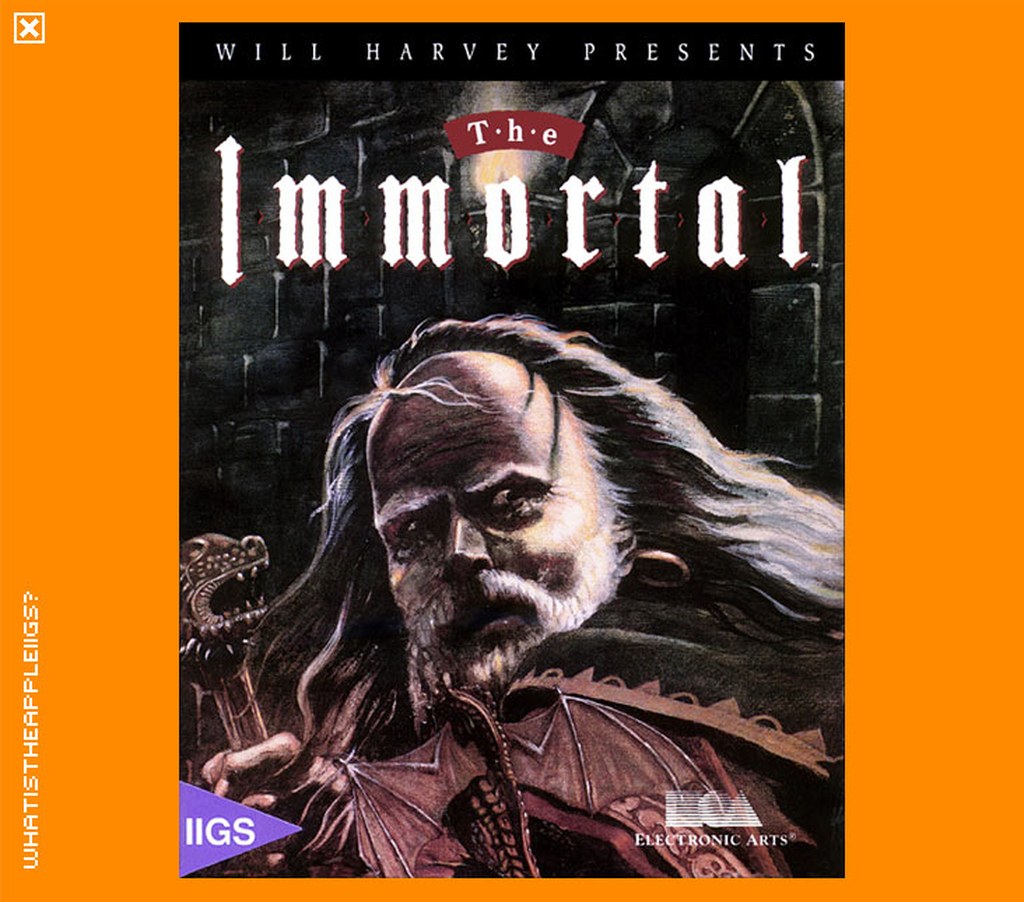
The Apple IIGS library is usually introduced by its famous names — the Cinemaware epics, the Pangea hits, the launch classics. But the machine’s 200-odd commercial releases hide a second shelf: games that were too strange, too late, too quietly released, or simply too unlucky to join the canon, and which reward the explorer enormously. These are ten of them — deep cuts all, each chosen because it does something only the IIGS could do, or does a familiar thing with unusual flair. None of them is a game we review elsewhere in this series; all of them deserve a disc image in your library and an evening of your time.
1. The Immortal (1990)
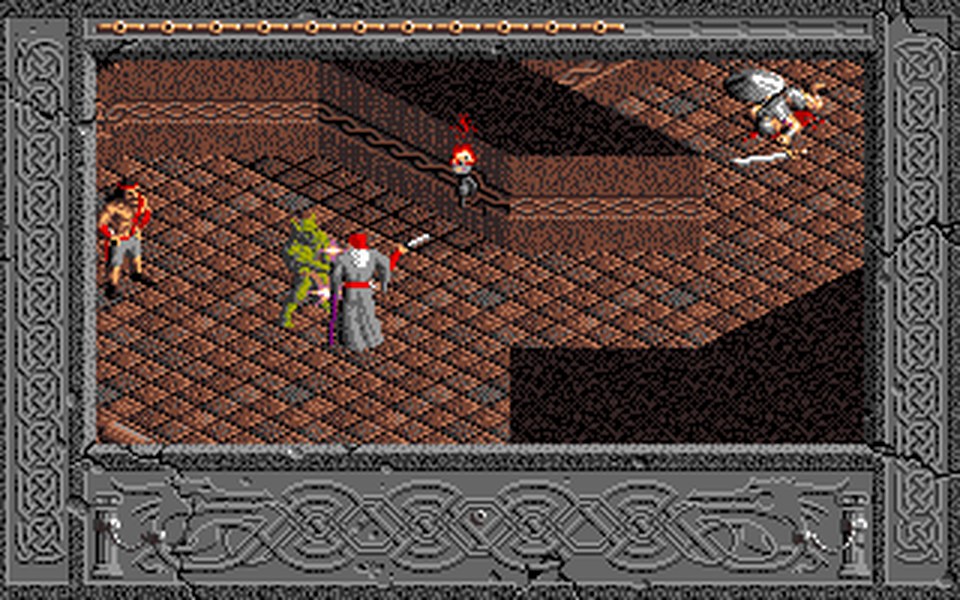
Will Harvey’s dark fantasy — from the same mind as Zany Golf, in a very different mood — sends a wizard into an isometric labyrinth to rescue his master, and it remains one of the most atmospheric games on the machine. The Immortal is famous for its deaths, which are frequent, inventive and spectacularly gruesome, but the cruelty is a delivery system for tension: every room is a puzzle of traps, timing and half-learned rules, and progress feels like burglary in a tomb that hates you. The GS version is a first-class edition — rich colour, a superb score, and combat that resolves in bloody little duels. It sold respectably and is remembered fondly, yet it still sits outside the machine’s usual top-ten conversations, which is a miscarriage. This is an essential IIGS experience wearing a hidden gem’s clothes.
New players should bring patience for its traps and a notebook for its layouts; veterans should bring respect for how much game Harvey fitted into dread.
2. Tower of Myraglen (1987)
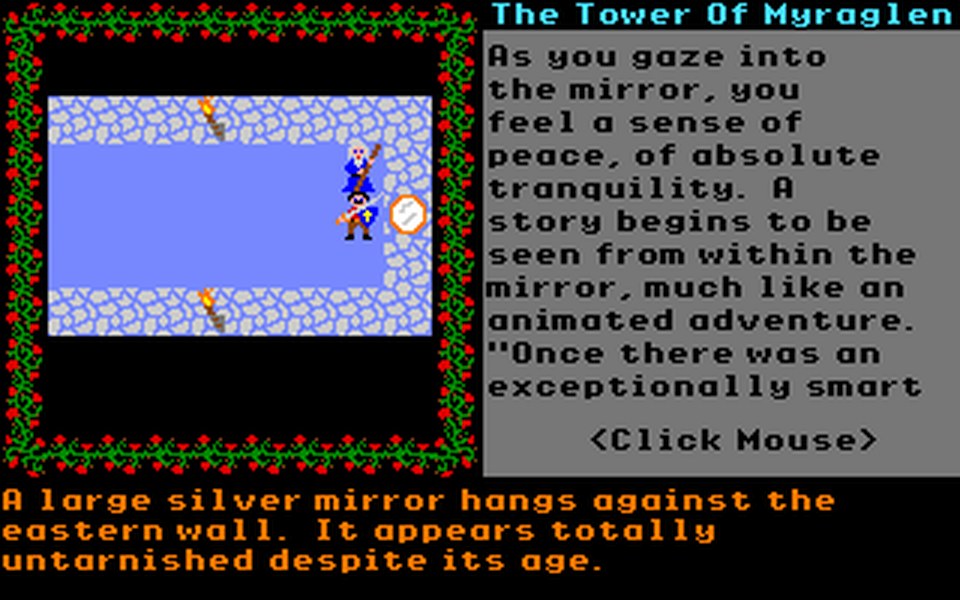
One of the very first IIGS-native role-playing games, Tower of Myraglen is a first-person dungeon expedition built for the machine from the ground up by Pangea’s predecessors in spirit — a 1987 release that treated the GS as an RPG platform before the conversions arrived to prove it could be one. You climb the tower of the title in search of a stolen medallion, through wireframe-turned-solid dungeons that were, for Apple II veterans, a revelation of speed and colour. It is rough in the ways early software is rough, and priceless for the same reason: this is the sound of a platform finding its voice, a homemade epic from the machine’s first year that still plays as a brisk, characterful crawl.
It is also, not incidentally, one of the best-looking adventures of the machine’s first years — a homemade epic that pointed at everything the GS RPG library would become.
3. Shadowgate (1988)

ICOM’s MacVenture adventures defined point-and-click before the phrase existed, and Shadowgate — the fantasy entry, all castles, dragons and imaginative deaths — found a natural second home on the IIGS, whose interface it shares DNA with. The GS version presents Castle Shadowgate in colour and with the machine’s sound behind it, and the game itself remains a masterclass in atmospheric adventure design: a compact castle, a generous inventory of doom, and writing that treats every object as a potential story. Its deaths are legendary and its logic is fair by the standards of its school. If the graphical adventure is your genre, this is the library’s essential deep cut.
Play it with the sound up and a torch lit; Shadowgate’s atmosphere is a team effort between the art, the music and your own imagination.
4. Battle Chess (1989)
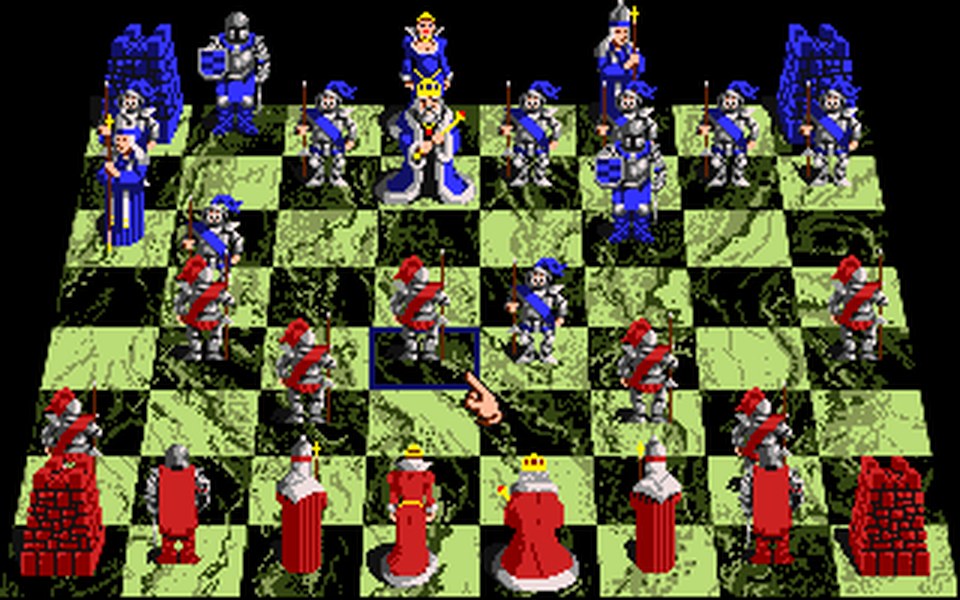
Interplay’s animated chess phenomenon reached the IIGS in fine form. Battle Chess’s idea — the pieces fight, in character, when they capture — sounds like a gimmick and plays like a revelation, because the animations are witty, varied and brief enough never to outstay their welcome across a long game. The chess engine underneath is honest club-level opposition, the board in GS colour is handsome, and the whole production has the polish of a studio at its early peak. It tends to be filed under “novelty” in the library’s memory, which undersells a genuinely good chess game that also happens to contain forty tiny cartoons. Your move, and may your rook’s sword arm be true.
It doubles, happily, as the most social chess game on the machine: spectators stay for the executions, and even the loser gets a show.
5. Marble Madness (1988)
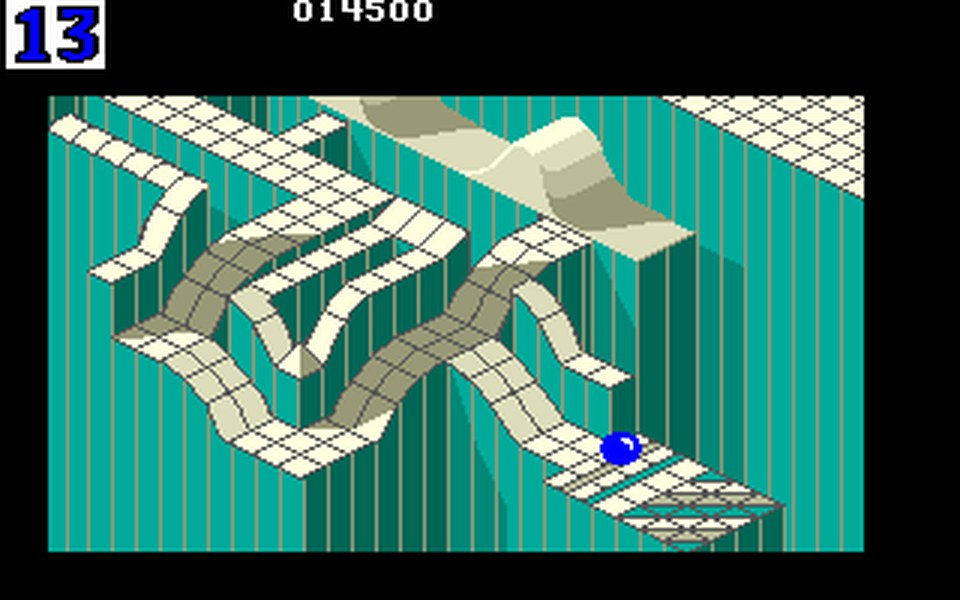
Atari’s isometric marble racer was a conversion challenge for every system that attempted it — the original’s trackball feel and surreal architecture resist imitation — and the IIGS version is one of the era’s honourable attempts, preserving the six courses, the enemies, the everything-is-trying-to-stop-a-marble absurdity. With a mouse standing in for the trackball, the GS game controls closer to the arcade’s spirit than most home editions managed, and its clean isometric rendering flatters the source art. It is remembered, when remembered at all, as a footnote to the arcade — which skips the fact that for IIGS owners it was the race itself, at home, in colour, and still capable of ruining friendships over the aerial course.
Mouse owners in particular should apply; this is the rare conversion that remembered what the arcade’s hands were doing.
6. Rocket Ranger (1989)

Cinemaware’s third IIGS outing is the one the canon forgets, which is outrageous, because Rocket Ranger is the studio’s most purely joyful premise: a 1940s serial hero, a jetpack, a Nazi conspiracy reaching the moon, and a campaign of strategy and action chapters holding it together. The GS version delivers the full Cinemaware presentation — the map game, the fist-fights, the rocket flights, the moon base finale — in the studio’s best pulp manner. Defender of the Crown and The King of Chicago take the IIGS plaudits; Rocket Ranger takes the prize for the game most likely to make a new player grin in the first five minutes. Find it, fuel up, and punch a zeppelin.
Of all Cinemaware’s GS orphans, this is the one whose revival is most overdue. Somebody start a petition; we will sign it twice.
7. Dragon Wars (1990)
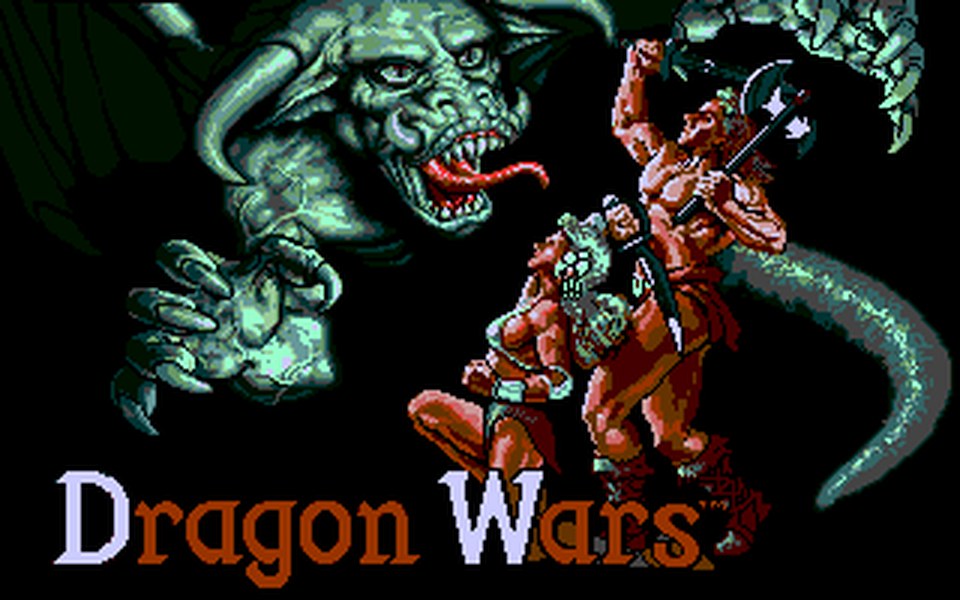
Interplay designed Dragon Wars as the heir to The Bard’s Tale — it began life as that series’ continuation before becoming its own world — and the IIGS version is a heavyweight RPG that the platform’s history keeps mislaying. A drowned, dragon-haunted land, a party built from a flexible skill system, first-person dungeons, and the design lineage of the era’s best role-playing studio: Dragon Wars is a forty-hour epic hiding in the library’s footnotes, quite possibly because it arrived in 1990 when the market’s eyes had wandered. RPG players who make the pilgrimage report one of the machine’s deepest games. The dragons are waiting, and they have tenure.
Bring a party built for the long road — Dragon Wars rewards specialists, punishes dabblers, and remembers everything.
8. Bubble Ghost (1988)
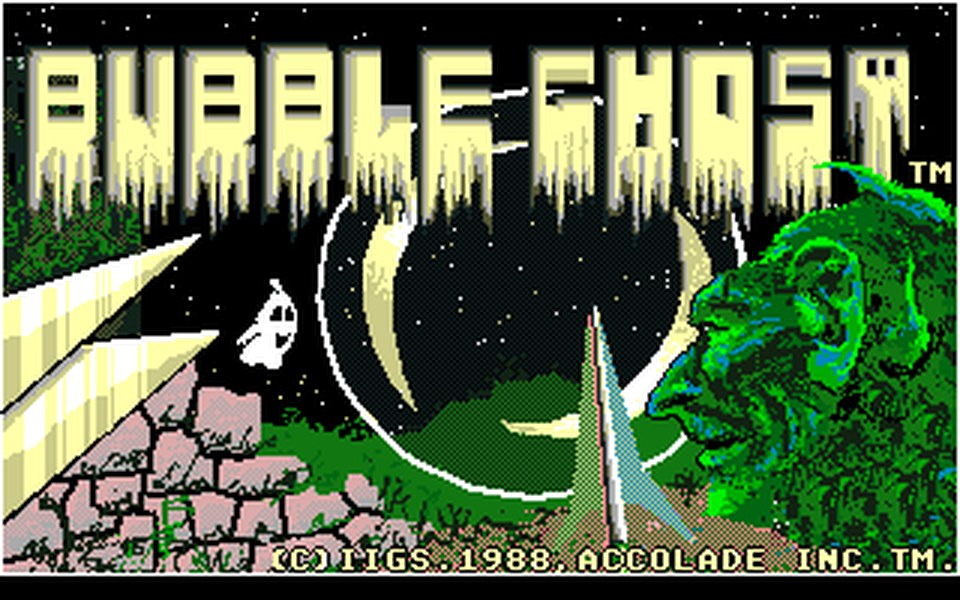
The most delicate game on the IIGS: you are a ghost, your treasure is a soap bubble, and your only verb is blowing. Bubble Ghost asks you to waft a fragile bubble through a haunted house of candles, fans, spikes and draughts, steering by breath in short, careful puffs — a premise so gentle it loops round to fiendish, since the bubble’s physics are honest and the house is not. The GS version is a charming edition of a French-designed original, all pastel menace and precision frustration. In a library of swords and spaceships, Bubble Ghost is the game that proves the machine had range: a deep breath, a steady hand, and absolutely no sudden movements.
It is the thinking player’s party piece: five minutes to learn, a house full of hazards to master, and a bubble with your name on it.
9. Tunnels of Armageddon (1990)

A first-person tunnel racer with a bomb to deliver: Tunnels of Armageddon hurtles you down alien shafts at a speed the IIGS had no business sustaining, dodging defences and hunting the route to the core. It belongs to the small, proud class of GS games whose entire pitch is velocity — the machine’s graphics pushed through sheer programming will into producing genuine pace. The premise is pure arcade, the execution is a technical flex, and the result is one of the library’s best ten-minute games. It came late and quietly in 1990 and has been a word-of-mouth treasure ever since. Strap in; the tunnels are not getting wider.
Speed-runners of the soul will find their church here; the rest of us will find our pulse, somewhere around the third tunnel.
10. Ancient Land of Ys (1989)

Falcom’s action-RPG classic — the first Ys, in which Adol Christin begins a forty-year career of bumping into monsters professionally — reached the IIGS in a handsome edition that the platform’s RPG story rarely credits. Ys’s famous “bump” combat, its melodic score and its compact, perfectly judged quest structure made it a landmark of Japanese RPG design, and the GS version carries all of it with rich colour and a fine rendition of that beloved music through the Ensoniq. It is both a hidden gem and a historical document: Japanese RPG royalty, visiting the Apple II’s last machine, in an edition that does the visitor proud.
Adol’s journey is also the perfect length for a first GS RPG — a weekend’s quest with a lifetime’s soundtrack.
How this shelf was stocked
A word on method, because hidden-gem lists live or die by their rules. Every game here is a genuine IIGS release, verified against the archive; every one is a game we do not review individually elsewhere in this series, so this list is a true second shelf rather than a recap; and every one was chosen for a quality beyond obscurity — a mechanic, a mood, a technical flex or a historical footnote that the famous shelf does not offer. Two honourable traditions governed the final cut: no game survives on rarity alone (a scarce bad game is merely scarce), and no game is excluded for being respected in its own niche, which is why a Cinemaware title and a Falcom legend can share a list with a bubble. The GS library’s depth is the real subject here. These ten are the evidence we would submit.
That is the second shelf: a wizard’s deathtrap, a homemade tower, a castle of doom, a cartoon chessboard, a marble, a jetpack, a dragon-haunted epic, a bubble, a tunnel and a legend from Japan. The IIGS’s famous games will introduce you to the machine. These ten will make you a citizen of it — permanently, and with strong opinions about bubbles.