At a glance: Blue Dragon · Xbox 360 · Mistwalker / Artoon / Microsoft Game Studios, 2007 · JRPG · Score: 7.5/10
Before Lost Odyssey’s thousand-year melancholy, Mistwalker introduced itself to the world with something sunnier. Blue Dragon was the Xbox 360’s first big JRPG hope — a three-disc adventure built by Hironobu Sakaguchi, drawn by Akira Toriyama of Dragon Ball and Dragon Quest fame, and scored by Nobuo Uematsu. It is a deliberately old-fashioned game, a Saturday-morning cartoon of a quest about five kids whose shadows are monsters, and while it never quite reaches the heights of its creators’ legends, its charm is real, its craft is considerable, and it remains one of the friendliest JRPGs on the platform.
Shadows with teeth
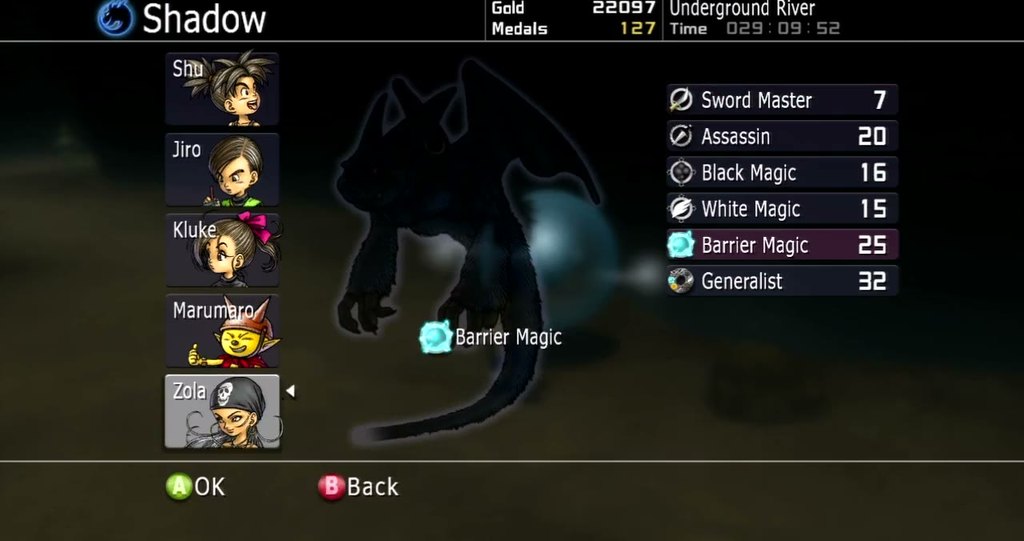
The hook is visual and immediate. When the ancient Nene’s forces attack their village, Shu and his friends don’t gain weapons — their shadows do. Each character’s shadow manifests as a huge elemental creature: Shu’s blue dragon, Jiro’s minotaur, Kluke’s phoenix, Marumaro’s tiger, Zola’s bat. In battle you never see the children swing; you see the shadows do it, which gives Blue Dragon’s combat a toybox grandeur entirely its own. Class changes let any shadow learn any discipline — swordsman, monk, assassin, black or white magic — building the flexible party-customisation that is the game’s deepest pleasure.

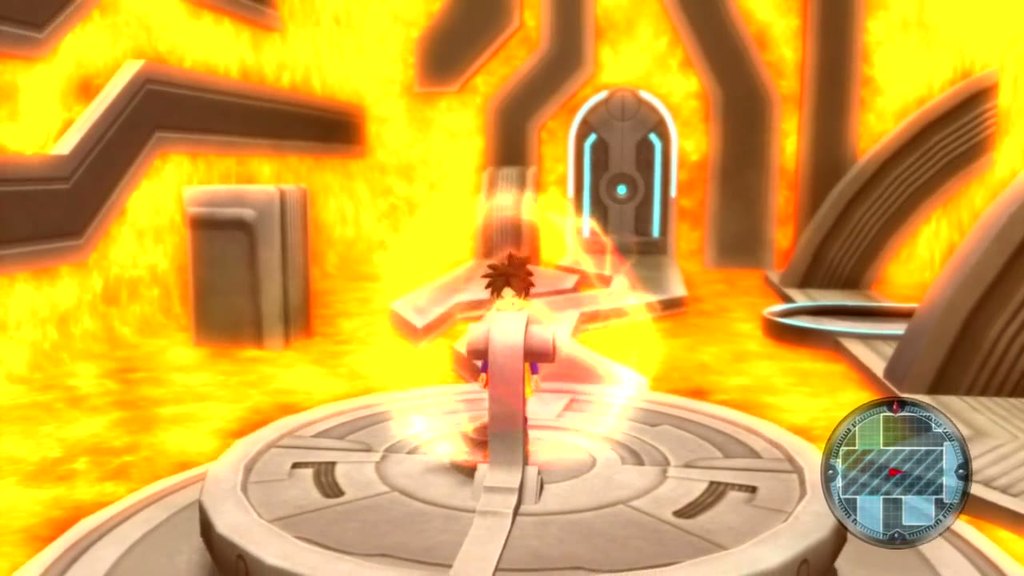
The story that frames it is cheerful, episodic and aimed young: chases across continents, ancient ruins, a robot city, an unforgettable detour through a village of sheep-obsessed eccentrics. Toriyama’s designs carry the whole enterprise — rounded, bright, instantly readable — and the world is rendered to match, all soft light and candy colour that looked like a storybook on 2007 hardware and still pleases the eye.
Encounters you choose
Blue Dragon’s most modern idea sits in its fields. Monsters are visible before you fight them, and the game lets you manipulate encounters in ways that still feel fresh: lure several groups together for chain battles with bonuses, pick fights selectively, or use items to shape what you meet. Combined with the class system’s freedom — and the notorious poo snakes, because Toriyama — progression becomes a game of appetite management rather than random-battle endurance. It was a considerate design in a genre not always known for consideration.
The bosses bring Uematsu in full rock-opera mode, most famously “Eternity,” the boss theme sung with full-throated Ian Gillan energy that became the game’s audio signature — either the greatest boss music ever recorded or a glorious cheese event, depending on the listener, with very little middle ground. Between those peaks, the score does classic Uematsu scene-setting: warm towns, lonely ruins, big sky.
The honest middle
Blue Dragon’s limits are the flip side of its friendliness. The difficulty stays gentle for most of its fifty-plus hours, the plot’s villains scheme at cartoon depth, and the children’s voice acting (in either language) pitches young enough to grate on some adults. Performance, too, can wobble in the busiest battles on original hardware. Players who came expecting Final Fantasy’s drama found a Dragon Quest-hearted romp instead, and the 2007 reviews split exactly along that expectation line.
The little empire
Microsoft believed in Blue Dragon enough to build around it: an anime series followed, manga adaptations, two Nintendo DS follow-ups (a strategy spin-off and a direct action sequel), and in Japan a special-edition console bundle that made the game a genuine system-seller for a season — no small thing for the Xbox brand in its hardest market. The push didn’t permanently crack Japan for Microsoft, but it proved the audience existed, and Blue Dragon’s cheerful silhouette became, for a while, the face of the 360’s ambitions beyond shooters.
For the collector, the 360 original remains the definitive Blue Dragon: the sequels are charming handheld footnotes, the anime a period piece, but the three-disc game is the complete artefact — Toriyama’s art at console scale, Uematsu’s most playful score of the decade, and Sakaguchi working in his sunniest register. It is also, by the standards of its creators, an underplayed game, which makes it exactly the kind of shelf-filler this site exists to champion: major work, major names, minor fame. The downloadable hard mode, offered free in its day, is there for veterans who find the main quest too gentle — a small, telling courtesy from a game that wanted everyone to finish it, and then dared them to come back.
Toriyama’s world, room by room
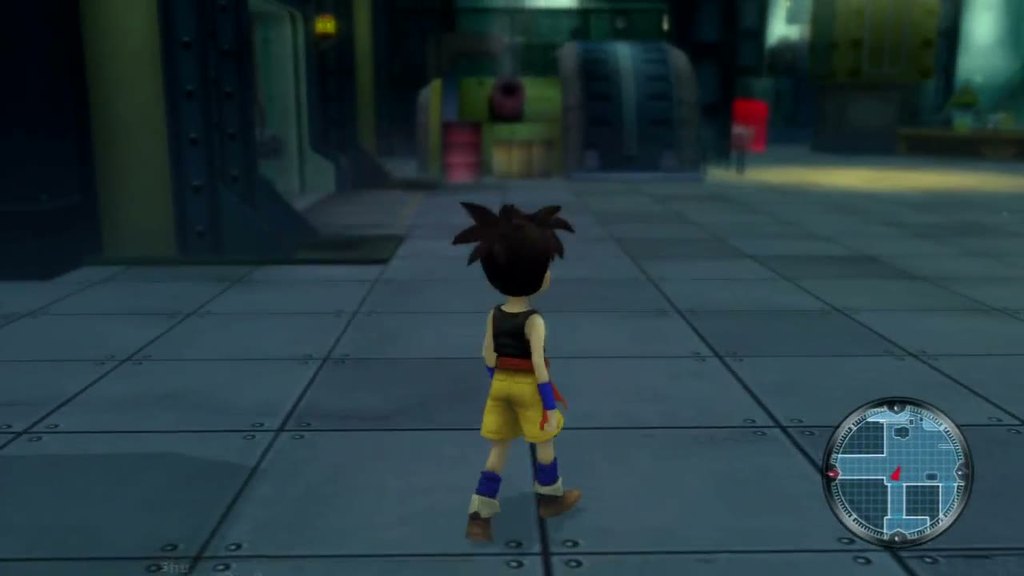
The art direction deserves a slower look, because it does more narrative work than the script. Toriyama’s world is built from rounded shapes and primary colours but textured like a diorama — grass that looks felted, stone that looks carved from soap, machines that look built by a brilliant child. Towns are small dioramas of daily life; dungeons lean into ancient machinery and overgrown ruins; and the recurring motif of the flying fortress and the cubes of the ancients keeps a thread of melancholy technology running under the cartoon surface. Few HD-era games chose this handmade register, and fewer still sustained it across fifty hours and three discs without the style cracking.
The voice performances complete the Saturday-morning illusion, particularly Marumaro — a tiny, excitable cat-creature whose battle cries have divided households since 2007 — and the late-game turns that give the cheerful cast unexpected weight. Blue Dragon’s ending arc, in which the children’s game-long squabbles resolve into something genuinely touching, lands better than its reputation suggests. It is a game about children learning what their shadows mean. That it teaches the lesson at walking pace, in bright colours, to a Uematsu score, is not a failure of ambition. It is the ambition.
The verdict
Sakaguchi, Toriyama and Uematsu building a comfort blanket: not their sharpest work, but their warmest — and the 360’s most welcoming JRPG.
Blue Dragon launched a small multimedia empire of anime and sequels, but the original game is the piece that lasts: a long, kind, beautifully drawn adventure that asks little and gives generously. In a 360 catalogue full of gunmetal and gravel, its colour alone earns it shelf space. Sometimes the shadow you cast matters more than the fight — Blue Dragon understood that.
One final recommendation for the right player: play it in company. Blue Dragon’s colours, gentle difficulty and Saturday-morning rhythms make it the rare long JRPG that works as a shared, pass-the-pad household game, with younger players genuinely catered for rather than tolerated. The genre’s canon is full of solitary epics about the end of the world. This one is about five friends, their enormous shadows, and the long bright road between villages — and on the 360’s shelf, crowded with world-enders, that brightness is precisely its distinction. Seven and a half, then, with the note that for its intended audience — the young, the young at heart, and anyone who believes a game can be both simple and artful — it plays a full point higher.
Collectors should note the three discs are region-friendly conversation pieces in themselves, the manual is a Toriyama art sampler, and the whole package routinely sells for less than a modern game’s cosmetic skin — perhaps the single most lopsided talent-to-price ratio on the entire 360 shelf.
Score: 7.5/10