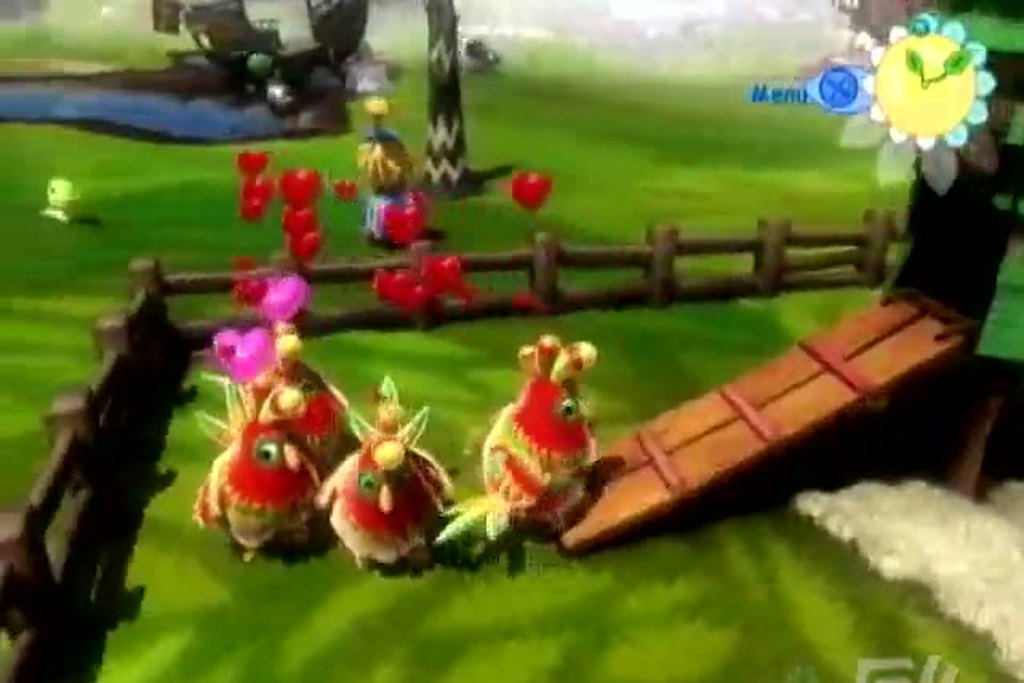
At a glance: Viva Piñata · Xbox 360 · Rare / Microsoft Game Studios, 2006 · Garden / life simulation · Score: 8.5/10
Of all the strange bets Microsoft placed in the 360’s first year, Viva Piñata was the strangest: a first-party garden simulator, built by Rare, in which you landscape a plot of land to attract living piñatas — candy-filled animals who move in, fall in love, get eaten by predators and occasionally get whacked with a shovel by a masked vandal. It was marketed at children and adopted, en masse, by adults who discovered it was secretly one of the deepest and most absorbing simulation games on the console. Nearly twenty years later it remains a one-off: nothing else looks, sounds or plays like it.
Attract, resident, romance
The loop is pure Rare ingenuity. Wild piñatas — Whirlms, Mousemallows, Syrupents — visit your garden when its conditions tempt them: the right plants, the right terrain, the right neighbours. Meet further conditions and a visitor becomes a resident; meet the romance requirements and two residents perform a maze-minigame courtship and produce an egg. Each species has its own web of wants: prey and predators, favourite foods, housing, moods. What begins as a flowerbed with two worm-like Whirlms quietly becomes an ecosystem management problem involving sixty species, sour piñatas to tame, and the eternal question of whether the Horstachio is worth what the Fizzlybears will do to get at it.
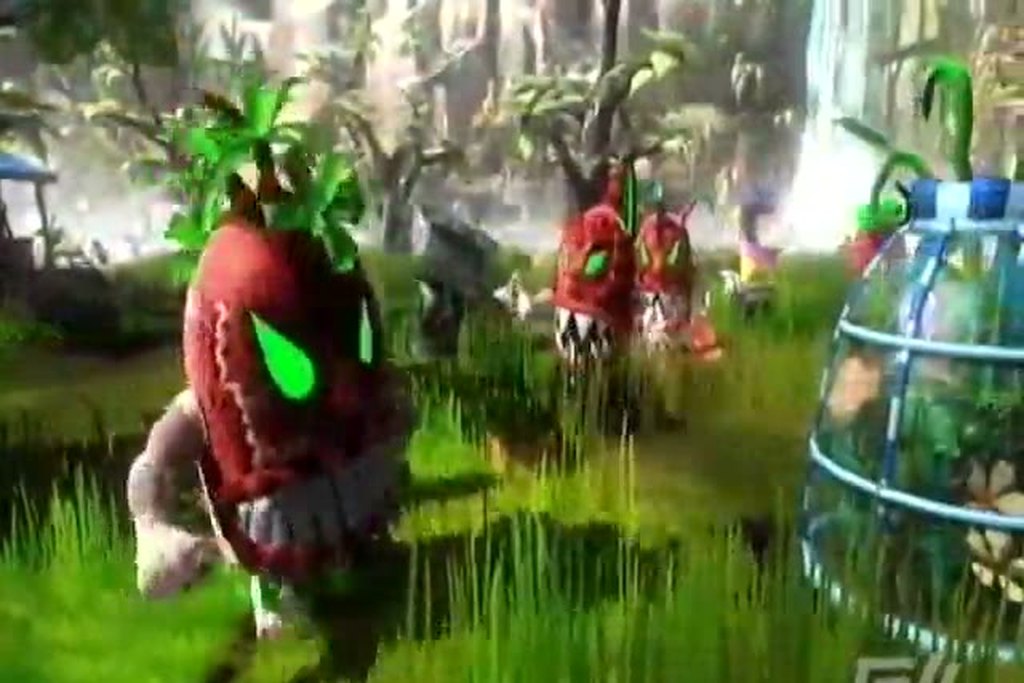
It is, in the best sense, a game about gardening as authorship. You sculpt the plot with water, grass, sand and stone; you plant and cross-pollinate; you commission homes from the village builder and decorations from the shops. The tools are simple — a shovel, a watering can, a packet of seeds, a menu of charming helpers — but the combinatorics are deep, and the garden is unmistakably yours. Rare’s artists render it all in a storybook style with fur-shell rendering on the piñatas themselves that made other 2006 games look asleep: the Fudgehog’s paper coat in evening light is a small miracle of the era’s technology.
Sweetness, with teeth
What keeps Viva Piñata from being a screensaver is its streak of cheerful cruelty. Sour piñatas stomp in to wreck your garden and pick fights until you tame or expel them. Ruffians, dispatched by the unseen antagonist Professor Pester, smash your prized residents. Piñatas fight, get sick, get sold, get sent to parties (the game’s fiction: residents you ship out are off to be burst open at children’s birthdays, a fact the game presents with a wink and never quite lets you forget). The food chain is not a metaphor. Your favourite Bunnycomb exists in a world containing foxes.

The structure wraps around a generous progression of levels, awards and unlocks, a storybook (narrated, in a lovely touch, as tales of the island’s past), and an encyclopedia that fills in with discoveries — variants bred by feeding residents the right foods, wildcards, twin eggs. There is no way to lose, exactly, but there are a hundred ways to spend another hour. Grant Kirkhope’s orchestral score, all pastoral strings and sly woodwind jokes, seals the atmosphere: this is a game that sounds like a summer afternoon.
Who is it for? Everyone it found
Viva Piñata’s original sin was marketing: a children’s Saturday-morning cartoon tie-in wrapped around a systems game that quietly demands spreadsheet patience. The cartoon came and went; the game endured, largely by word of mouth among adult players who’d found in it a rare thing — a simulation with no failure state but limitless depth, colour in a launch library of brown, and Rare operating at their most inventive since the Nintendo years. Its sequel, Trouble in Paradise, added co-op gardening and more species; the original remains the purer, calmer object.

The systems beneath the sweetness
Stay longer and the simulation keeps opening doors. Every piñata species has variant forms earned by feeding it particular items — a Mousemallow turned pink on a thistle, a Swanana blue on a water lily — and the game tracks them all in an in-game journal that becomes a collector’s obsession. Wildcard twins, the rarest breeding outcomes, are prized like racehorses. Tinkering lets you gamble items into upgraded tools and garden furniture through a timing minigame. Helpers — a gatherer, a weeder, a night watchman — automate pieces of the economy as your garden’s complexity outgrows your two hands. And beneath it all runs a full happiness simulation: residents squabble with natural enemies, pine without housing, and sicken in overcrowded plots, so that a mature garden is a living negotiation rather than a display case.
It is also, quietly, one of the great performances of the 360’s early tech. Rare built the piñatas from shells of simulated paper strips that flutter as the animals move, lit the garden with a full day-night cycle, and filled the soundtrack with bird calls and weather. The result was a game used in console showrooms for years to demonstrate high definition’s colour range — a first-party advertisement for the hardware disguised as a gardening toy. That it also became a television cartoon (a frenetic tie-in series that shares little but the cast) is the era in miniature: the licensing ran one way, the legacy the other.
Rare, rediscovered
There is a coda worth recording: Viva Piñata’s reputation travelled the strangest road of any 360 game, from kids’-aisle indifference to adult word-of-mouth to canonical status. When Rare’s own anniversary collection arrived in 2015, this was the title chosen to stand alongside Banjo-Kazooie and Battletoads as the studio’s modern representative — the in-house verdict on what their Xbox years had produced. It reframed the game for a new audience as what it always was: not a licensed toy for children but one of the great British studio’s defining works, made by the same sensibility that built Banjo’s worlds, tuned here to ecosystems instead of platforming. If you know Rare only by reputation and own a 360, this is paradoxically the most Rare game on the entire system.
The verdict
A garden where candy animals live, love and eat each other, built by Rare at their most playful — the 360’s sweetest one-off.
Viva Piñata is the game Microsoft didn’t know how to sell and players didn’t know they needed. As a piece of the 360 library it is irreplaceable: beautiful, deep, funny and faintly savage, with an ecosystem that rewards curiosity for dozens of hours. Plant the seeds. Mind the Fizzlybears.
Bring the right expectations and the score explains itself: this is not a challenge to be beaten but a garden to be kept, and its eight and a half is awarded for depth disguised as innocence — an ecosystem simulation wearing a piñata’s paper smile. Players who need win states and boss fights should look elsewhere on this shelf, and players who suspect they might love a game about coaxing imaginary animals into a garden should not wait for a sale, because there has never been a wrong time to plant the first seed packet. The Whirlms are already watching your plot from the long grass. Let them in.
One warning, issued in friendship: the first hour’s gentle planting has a way of becoming a lost weekend of variants, romances and one-more-species. Clear your schedule accordingly.
Score: 8.5/10