Most video game history books are written about their subjects. The Sega Mega Drive Collected Works book — published by Read-Only Memory in 2014 after a Kickstarter campaign that blew through its goal in under two days — was written with its subject. Officially licensed by Sega, built with access to the company’s own Japanese archives, and assembled by editor and designer Darren Wall, it remains the definitive history of the Mega Drive and Genesis: 352 pages, over a thousand illustrations, and the kind of production values that make it as much an artefact as a reference.
The campaign numbers tell you how hungry the audience was. Read-Only Memory asked for 30,000 pounds on Kickstarter in November 2013 and reached it in under 48 hours; when the campaign closed on December 9, 2013, it stood at 98,725 pounds from 2,242 backers, more than triple the target. Nothing like it existed for the Mega Drive — no licensed, archive-backed, large-format history of the machine that had defined Sega’s golden age and fought Nintendo to a standstill in the West. The book shipped late the following year and immediately became the shelf-piece other console histories are measured against.
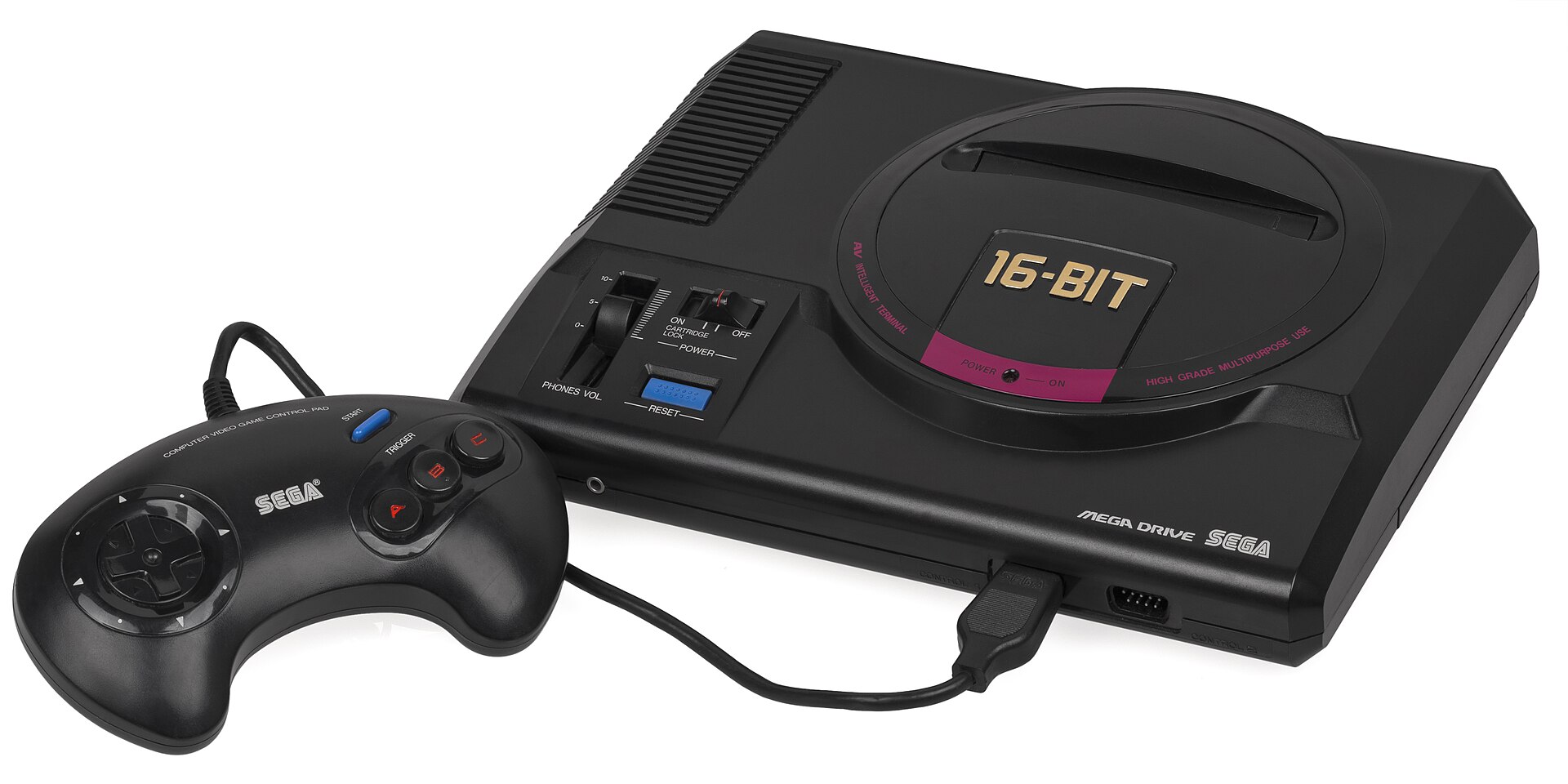
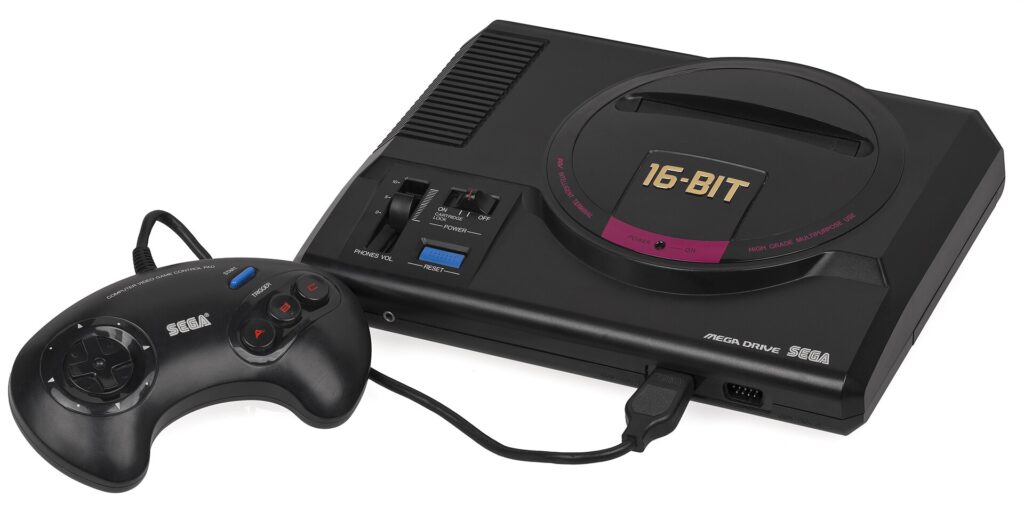
A Japanese Mega Drive: the machine at the heart of the Collected Works project. Photo: Evan-Amos, public domain, via Wikimedia Commons.
Inside the Sega Mega Drive Collected Works Book
The access is the story. Because Sega licensed the project and opened its archives, the book reaches material that fan histories cannot: design documents, hardware photography from the source, and eight gatefold sections unfolding blueprints and engineering drawings of the console itself — the Mega Drive rendered as industrial design, which, in its model-1 form, it genuinely was. The illustration count runs past a thousand, and the layout treats ephemera with the same respect as the hardware: packaging, advertising and photography from both the Japanese and Western launches, letting you watch one machine live its two very different lives as Mega Drive and Genesis.
Then there are the voices. More than thirty interviews run through the book, spanning the whole saga: Sega presidents Hayao Nakayama and Tom Kalinske from opposite sides of the Pacific, Yuji Naka and Yu Suzuki from the creative engine room, and figures like Greg Johnson, Rich Karpp and Michael Latham filling in the Western software story. A foreword by Dave Perry and a scene-setting history essay by Keith Stuart frame the testimony. The effect is oral history with receipts — claims backed by the archive on the facing page.
Two Names, One Machine
A lesser book would have picked a side. Collected Works’ great structural decision is to treat the Mega Drive and the Genesis as what they were: one machine with two biographies. The Japanese story is of a stylish black console from a company finding its identity; the American story is of the Genesis as a street-fighting challenger brand, all attitude and sports games and playground arguments. The book’s archive material makes the duality tangible — the same hardware photographed, packaged and advertised for two different cultures — and the interview list enacts it, alternating Japanese creators with the American executives and developers who sold their work to a different world. For a console whose entire legend is the console war, that binational telling is not a nicety. It is the story.
The Object Itself
Wall’s background as a designer shows in every spread. The book is printed and bound like the coffee-table volumes of the design world, with the gatefolds engineered as genuine reveals — unfolding a hardware blueprint across a double spread is a small ceremony — and the typography treats sixteen-bit hardware with the reverence usually reserved for architecture. This matters to the book’s endurance more than it might seem. Histories of games date as new research emerges; beautiful objects do not. A decade on, Collected Works remains in print in collectors’ minds as the high-water mark, the volume that proved a games console could carry a book of this weight in every sense. Its approach has since been applied to other machines, but the Mega Drive book came first, and it shows the confidence of a team that knew it was setting a standard rather than following one.
Why It Endures
Plenty of crowdfunded game books shipped and were forgotten. Collected Works endured because its makers understood that the Mega Drive’s story is a design story as much as a business one, and produced a physical object worthy of both. It also set the template: Read-Only Memory’s approach — license properly, mine the archive, interview everyone, print beautifully — became the house style for serious console histories afterward, and the Mega Drive volume is still the one collectors reach for first. If your interest in Sega runs deeper than the games, this is where the primary sources live. For the generation that followed the Mega Drive at Sega, our Shenmue retrospective covers the company’s next great swing.
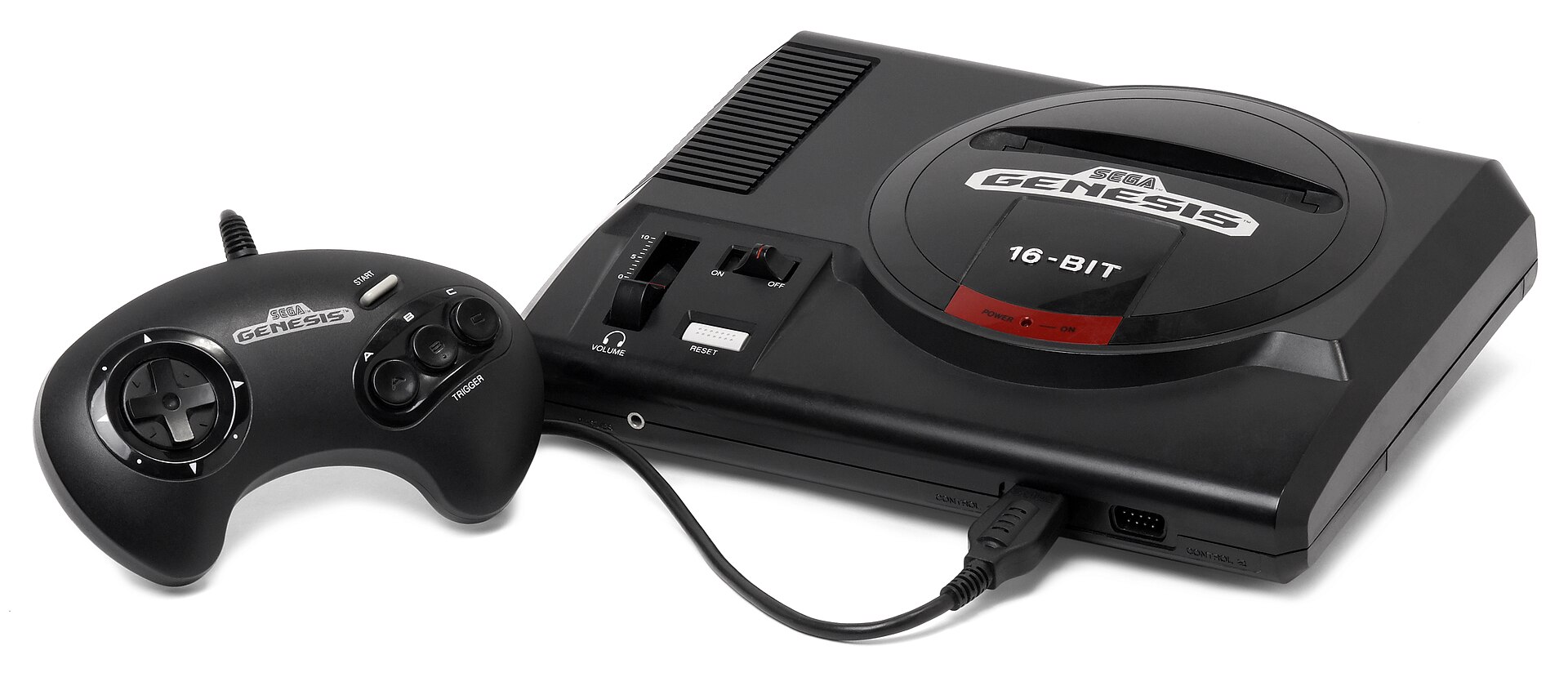
The American Genesis model 1: same machine, second identity. Photo: Evan-Amos, public domain, via Wikimedia Commons.
For Whom, Exactly?
The honest answer is: three readers at once. The collector gets an object that justifies its footprint and a reference that settles arguments about hardware revisions, regional variants and release chronology. The historian gets primary material — interviews and archive documents that will be cited for as long as the Mega Drive is written about, which shows no sign of being a short time. And the merely curious get the best single-volume answer available to the question of how Sega, of all companies, briefly ruled the Western games business. Books in this field usually serve one of those readers well. Collected Works is the rare production with the budget, the access and the design intelligence to serve all three simultaneously — which is, in the end, why the Kickstarter tripled its goal, and why the finished book still anchors the shelf it was built for.
It is also, quietly, a beautiful piece of evidence for the defence of crowdfunding itself. For every vapourware cautionary tale the platform produced in those years, there is a Collected Works: a project that asked its audience for faith, received three times the money it requested, and returned an object better than the pitch. The backers of November 2013 were buying a book. They ended up funding a standard.
The Verdict
As a reference, it is unmatched for its console. As a read, the interview-driven structure keeps 352 pages moving. As an object, it is the rare games book that earns its shelf space on sight. The Sega Mega Drive/Genesis: Collected Works set out to be the only licensed history of the machine, and more than a decade on, nothing has taken that title from it.