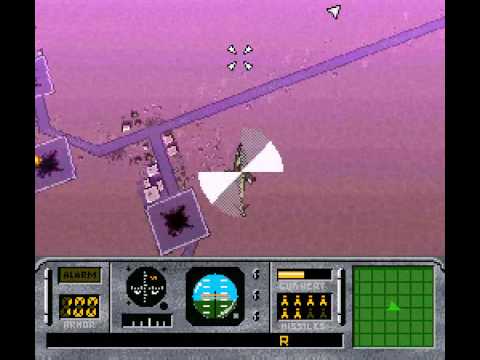
Every Super Nintendo owner remembers where Pilotwings suddenly stops being a flight school. You have spent hours gliding, skydiving and pottering about in a light plane, and then the game hands you an attack helicopter, points you at an enemy-held island and reveals that all that gentle training was leading to a rescue mission at gunpoint. Those helicopter stages are a few minutes of a beloved launch game — and for the homebrew developer Bubble Zap Games, they were not enough. Expanding that one idea into an entire game became Hind Strike: a top-down military helicopter shooter built around the SNES’s Mode 7 rotation, announced by publisher Piko Interactive in the spring of 2015 and released on cartridge that August. In a homebrew scene full of demos that never grow up, it is worth pausing on this one, because it did the rarest thing a retro announcement can do. It shipped.
The announcement, in context
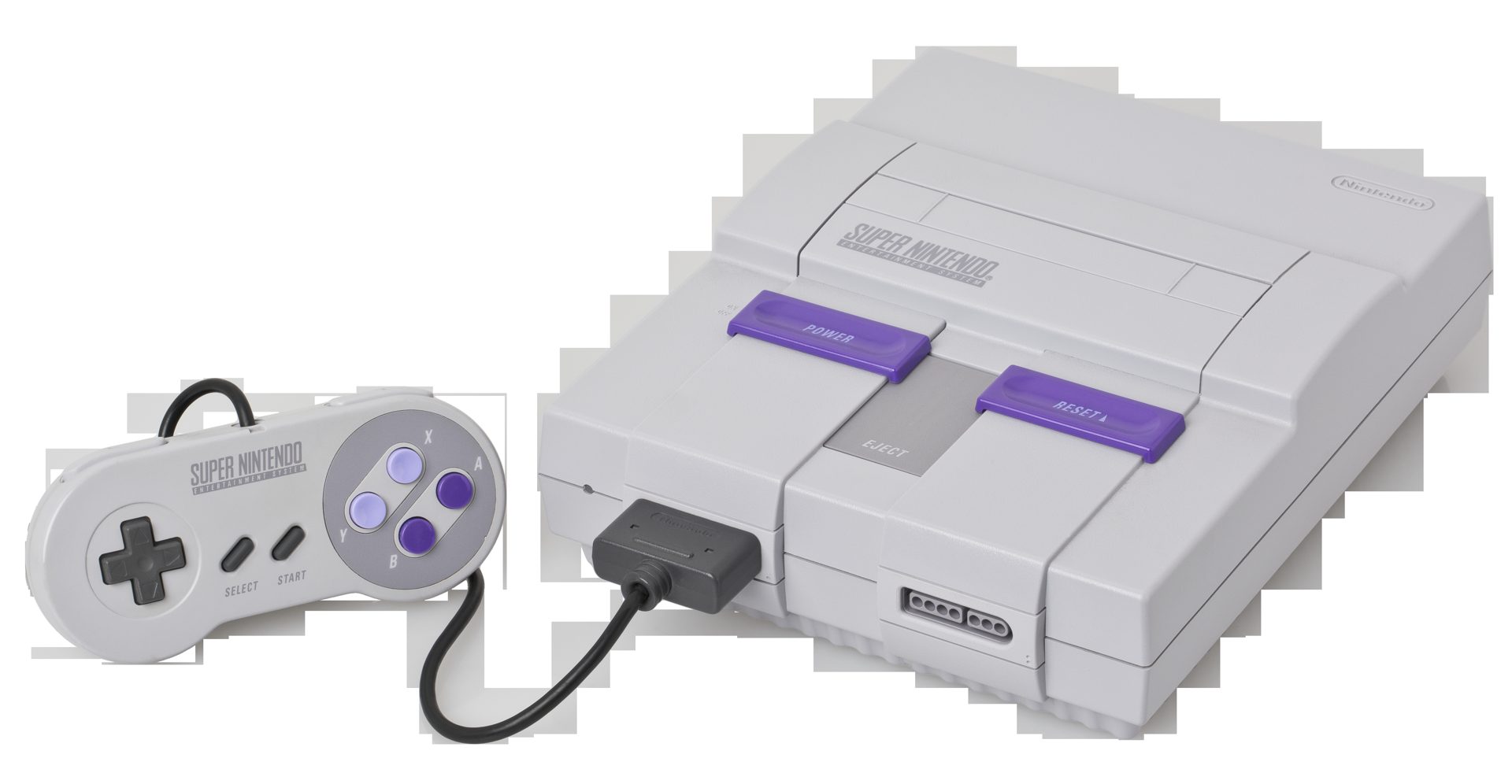
The news arrived in April 2015 as one line in a much bigger slate. Piko Interactive, the Texas publisher founded by Eli Galindo with the express ambition of producing new SNES games, had set out its programme for the months ahead, and among the rescues and reissues sat an all-new helicopter shooter for the 16-bit machine, built on Mode 7. To understand why that raised eyebrows, remember what Piko was in 2015: a young company that had started with a Kickstarter-funded four-in-one SNES cartridge, made its name finishing and licensing unfinished games from the 1990s, and was now claiming it would publish nine new titles. Plenty of those announcements, from plenty of publishers, quietly evaporate. The natural assumption with any ambitious homebrew reveal — a full military shooter, on a dead console, leaning on the SNES’s most recognisable graphics trick — was that it would join the long list of promising projects that exist mainly as a forum thread and a video.
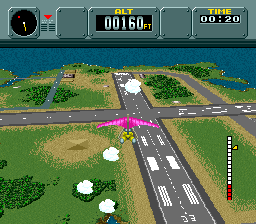
Mode 7 itself deserves a sentence of respect. One of the SNES’s eight background modes, it allows a single background layer to be rotated and scaled on the fly, faking a ground plane rushing beneath the player — the effect that sold F-Zero, Super Mario Kart and Pilotwings in the console’s first year. It is also, a quarter-century later, the effect most likely to make a new SNES game look like a SNES game rather than a modern game in fancy dress. A helicopter shooter is the natural child of that technology: Pilotwings had already proved how good it feels to skim a Mode 7 landscape in a chopper, and the top-down Strike series — Desert Strike and its sequels — had proved how good a helicopter gunship feels as a game. Hind Strike, named for the Soviet Mi-24 Hind gunship, set out to be the baby of those two ideas.
What the finished game actually is
The game that arrived on 6 August 2015 — released the same day as Piko’s Genesis translation of Water Margin, in the first wave of that nine-game slate — is a top-view military shooter in which the world rotates around your helicopter in the full Pilotwings manner, now filled with targets rather than landing pads. Where Nintendo’s bonus stages asked you to rescue hostages against a clock, Hind Strike builds a whole campaign of combat missions on the same sensation: strafing ground targets, duelling with enemy forces and managing the peculiar, lovely disorientation of a Mode 7 battlefield that swings as you turn. Contemporary players who have flown it tend to reach for the same comparison the design invites — Pilotwings‘ helicopter stages crossed with the Strike games’ gunship fantasy — and to single out its polish, which is not the compliment homebrew usually earns. This was not a tech demo stretched over a cartridge. It was a complete, commercial, boxed SNES game, made from scratch in the 2010s.
It was also, by homebrew standards, an expensive object to manufacture, for a reason buried in the hardware. The game’s rotation effects lean on the DSP enhancement chip — the same family of co-processor silicon Nintendo built into the original Pilotwings cartridge to help with its Mode 7 mathematics. Original SNES games that needed a DSP simply had one soldered inside; a tiny publisher making new cartridges in 2015 had to source those chips for every unit, which is why Piko’s physical run of Hind Strike was never a cheap item and why copies commanded respect, and money, whenever they surfaced later. The detail says a lot about the seriousness of the undertaking: Bubble Zap had not merely imitated the Pilotwings trick in software, they had rebuilt the original hardware arrangement to do it properly.

It helps to remember how large the Strike shadow was. EA’s Desert Strike (1992) was a chart-topping phenomenon — at the time the publisher’s biggest seller ever — and it turned the lone helicopter gunship, juggling fuel, armour and ammunition across open sandboxes, into one of the defining images of the 16-bit era. Jungle Strike and Urban Strike followed on the same hardware, and the formula survived into the PlayStation generation with Soviet Strike and Nuclear Strike before quietly retiring. By 2015 the genre had been dormant for well over a decade, which gave Hind Strike a double identity: mechanically it was a Pilotwings tribute, but in spirit it was also the first new Strike-style gunship game in a generation, arriving on the very class of hardware the series had called home.
Hindsight: the announcement that kept its promise
With a decade’s distance, Hind Strike‘s reputation has settled into an unusual place: it is routinely described by SNES homebrew followers as one of the most accomplished original games the scene has produced, the standard against which claims of “pushing the hardware” get measured — praise that tends to come bundled with the wish that its makers, and others, would return to expand the formula further. It also escaped the cartridge. The game was licensed into the SuperRetro16 emulator as a built-in title, an odd and telling second life in which a physical-first SNES homebrew became a digital extra on phones. And the publisher context completed itself, too: Piko grew from that nine-game slate into one of the retro industry’s most prolific rights-holders, eventually licensing its catalogue into collections such as the Evercade’s Piko Interactive cartridges — the announcement-season gamble of 2015 becoming, in hindsight, an early move in a much larger game.
None of which was knowable that April, when the whole thing was a name, a helicopter and a graphics mode in a publisher’s forward plan. Retro announcements are a currency that inflates fast: for every Hind Strike there are a dozen projects that never got past the video. So the real story here is not simply that a talented developer made a fine Mode 7 shooter for a console Nintendo had retired in the previous century. It is that the pipeline worked exactly as advertised — announcement in spring, cartridge in summer, reputation ever since. In the homebrew world, keeping the appointment is the most impressive special effect of all.