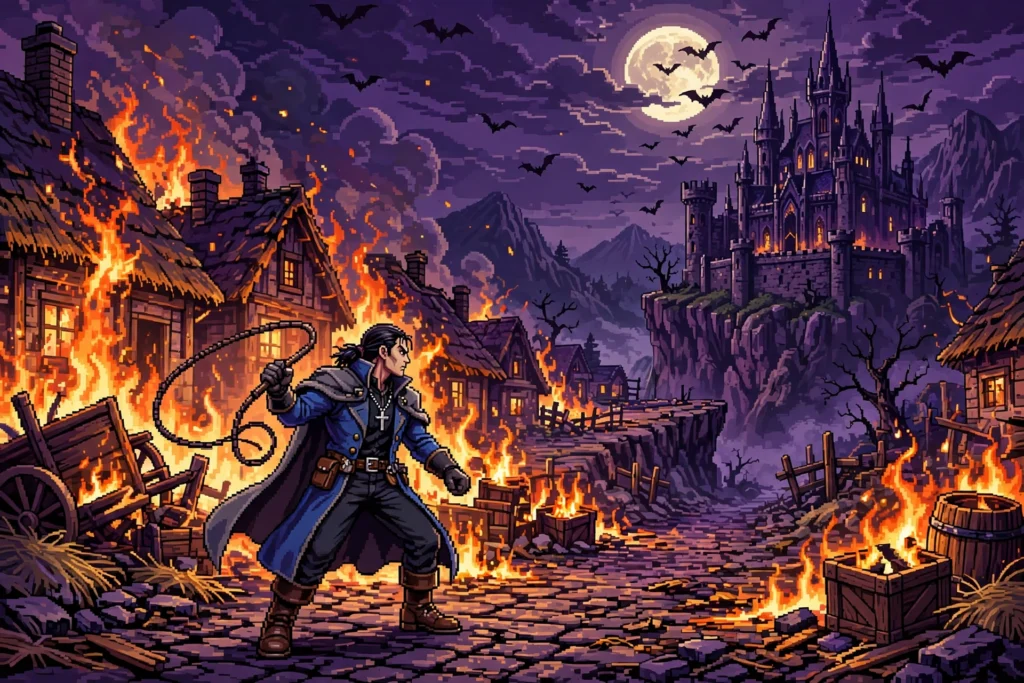
For about fifteen years, the best classic Castlevania ever made was a game most of us in the West simply could not play. Not because it was rare in some romantic, only-twelve-copies-exist way, but because it was released on the wrong machine, in the wrong country, at exactly the wrong moment. Castlevania: Rondo of Blood — Akumajō Dracula X: Chi no Rondo in Japan — came out for the PC Engine Super CD-ROM² on October 29, 1993. Japan only. No North American release, no European release, nothing. If you lived outside Japan in 1993, your options were import it, know somebody who had imported it, or read about it in a magazine and ache a little.
I ached for years. And here is the annoying, wonderful truth: the game was worth the ache. This is no import legend that collapses on contact, all mystique and no substance. Rondo is the peak of the old, linear, whip-and-staircase Castlevania — everything the series had built towards since 1986, clicked into place and polished until it shone, just before it handed the keys to Symphony of the Night and a completely different future. If you have never played it, there is a hole in the middle of your Castlevania story. The good news, thirty-three years on, is that filling it is easier than it has ever been. You just have to avoid a couple of very convincing traps first.
The game that lived on a CD
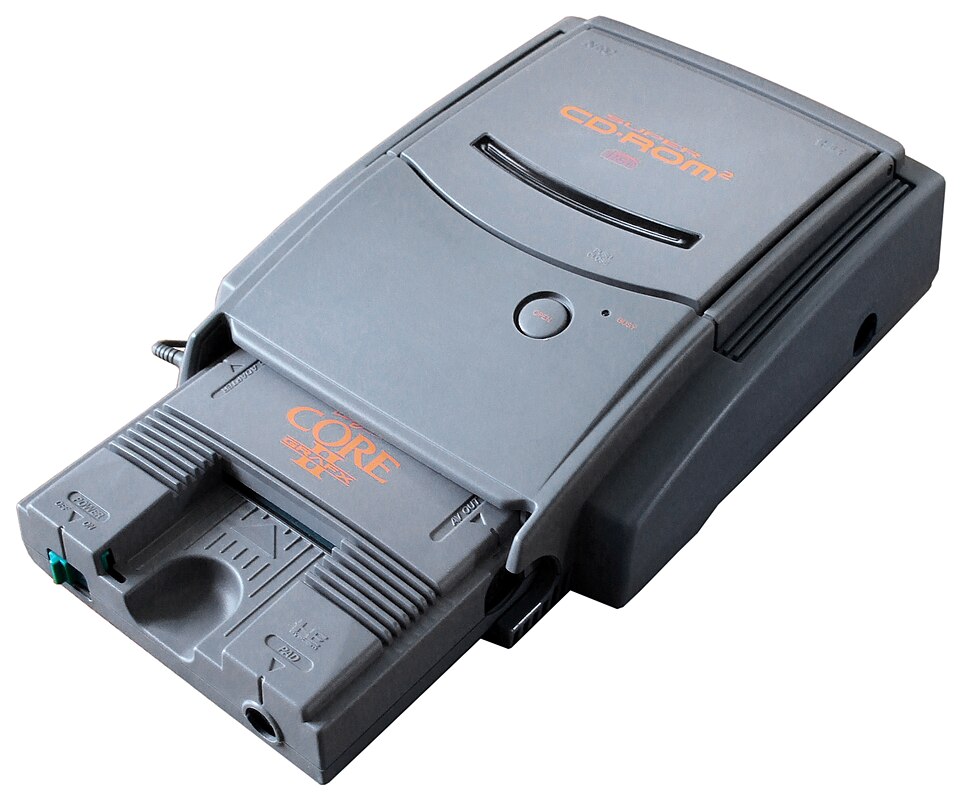
Context matters here, because Rondo was not just a good game on an obscure system — it was a showcase for what a CD could do for a series built on cartridges. The PC Engine Super CD-ROM² format gave Konami room that NES and even SNES developers could only dream about: proper Red Book CD audio streaming straight off the disc, animated cutscenes with actual voice acting, and storage space for a game that sprawls in a way no earlier Castlevania had been allowed to sprawl.
You play Richter Belmont, in 1792, marching into Dracula’s risen castle to rescue his beloved Annette and the other women taken from their village — including Annette’s young sister, Maria Renard. Rescue Maria early on, as you absolutely should, and she becomes a second playable character, and not a novelty one either. Maria is, genuinely, a different game: where Richter is deliberate and heavy, all committed jumps and cracking whip, Maria is quick, double-jumps, and attacks with doves and a menagerie of animal sub-weapons. She takes more damage, and in careless hands she dies fast, but experienced players will tell you she is arguably the stronger character. Two heroes, two rhythms, one castle. Earlier games gave you a Belmont. Rondo gives you a choice of how the castle should feel.
Why this is the best classic Castlevania
Let me plant the flag plainly: of the linear, stage-based Castlevanias — the ones before exploration and RPG stats took over — Rondo of Blood is the best one, and it is not particularly close. Super Castlevania IV is more forgiving and more atmospheric in places. The original is purer and meaner. Bloodlines has its charms. But Rondo takes the whole classic formula and gives every part of it more: more stages, more routes, more music, more ideas per minute than the series had ever managed before.

Start with the structure. Rondo has nine stages, but threaded through them are alternate routes and hidden exits that open four entirely different stages, with different environments and different bosses. Fall through the right pit, find the right hidden path, and the game you are playing quietly becomes another game. Finishing Rondo once is not finishing Rondo. There are maidens to rescue, percentages to chase, and a stage select that fills in like a map of your own curiosity. It is the classic formula, but with the exploration instinct that would define Symphony already stirring inside it.
Then there is the Item Crash. Every sub-weapon — axe, dagger, holy water, cross, and the rest — now has a super move, bought with a big spend of hearts. Holy water becomes Hydro Storm, a screen-filling rain of blessed destruction. The cross becomes a phalanx of crucifixes. It sounds like a gimmick. It is not. It is a pressure valve and a spectacle in one: the moment in a boss fight where you stop surviving and decide, on your own terms, to spend everything you have collected on one glorious act of violence. Later games kept the idea because it is simply too good to leave behind.
And the music. Oh, the music. Because Rondo streams its soundtrack from CD, it sounds like nothing on a cartridge could. The opening stage runs on “Divine Bloodline,” a track so good the series has been remixing it ever since, alongside storming new arrangements of “Vampire Killer,” “Bloody Tears,” and “Beginning.” Add the animated, voiced cutscenes — pure early-nineties anime, dramatic to the edge of camp and completely sincere — and you get the classic series celebrating itself at full volume.
Crucially, it is also fair in a way the earlier games were not always interested in being. Rondo is hard, properly hard, but its difficulty teaches rather than ambushes. Richter has a backflip, and his jump can be worked with in a way Simon’s never could. The game wants you dead — it is Castlevania — but it wants you dead honestly, and that is why its victories feel so good.
You have already played its final boss fight
Here is my favourite fact about Rondo, and the one that usually ends the argument: if you have played Castlevania: Symphony of the Night, you have already played the end of this game. Symphony famously opens with its own final battle restaged — Richter, in Dracula’s throne room, replaying Rondo’s climactic fight as a prologue, right down to Dracula’s immortal “What is a man?” speech. Symphony is Rondo’s direct sequel. Richter’s triumph here becomes Symphony’s mystery: five years later the hero has vanished, the castle is back, and Alucard walks in to find out why.
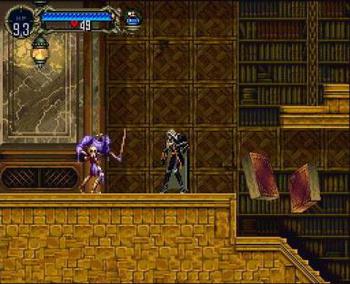
That connection cuts both ways. Symphony, for all its brilliance, assumes a weight to Richter that only Rondo really earns. Play Rondo first and Symphony’s opening hour lands completely differently: the possessed hero in the throne room is not a plot device, he is the man whose whip you held through nine stages. The two games are a pair. Owning one without the other is like owning the second half of a novel.
First, the traps: two games that are not this game
Now the warnings, because Konami’s naming in the nineties has caused thirty years of expensive confusion, and I do not want it causing yours.
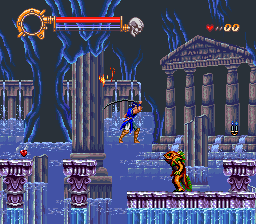
Trap one: the SNES game. In 1995, the West finally got a “Dracula X” — Castlevania: Dracula X on the Super Nintendo. Despite sharing a name, a hero, and some sprites and music, it is not Rondo of Blood. It is a different, lesser rework: new, weaker stage layouts, the branching structure and alternate stages gutted, Maria reduced to a cameo rather than a playable character, and a general feeling of a great game squeezed through a cartridge-shaped hole. It is not worthless — collectors prize it, and as a curiosity it has its defenders — but if you buy it, emulate it, or download it believing you are playing Rondo, you are being short-changed. I have watched people bounce off “Rondo” for years when what they actually played was this.
Trap two: the Advance Collection. The excellent Castlevania Advance Collection includes a game called Dracula X in its line-up, and it is natural to assume the famous one has finally been bundled in. It has not. The collection’s Dracula X is the SNES game described above. Rondo is not in that collection, full stop. Same warning, smaller print: any compilation, listing, or bargain bundle promising you “Dracula X” needs a second look at which Dracula X it means. The name is doing a lot of dishonest work in this series.
Five ways to play Rondo of Blood today, in the order I would try them
1. Castlevania Requiem on PS4 (and PS5) — the easy answer
For most people, the conversation starts and ends here. Castlevania Requiem: Symphony of the Night & Rondo of Blood, released on PlayStation 4 in 2018 and fully playable on PS5, bundles Rondo and Symphony together in one inexpensive package — exactly the pair they were always meant to be. The versions here are based on the retranslations prepared for The Dracula X Chronicles on PSP, so the cutscenes are dubbed, the presentation is clean, and the emulation is solid and fuss-free. No imports, no adapters, no auctions. You buy it, you download it, you are rescuing Maria within the hour. If you own a PlayStation and simply want to play the game this weekend, stop reading the list here and go. The only honest cons are that it is a digital purchase on one platform family, and purists will note you are playing a polished modern port rather than the 1993 original. Both true. Neither matters much at this price and convenience.
2. The Dracula X Chronicles on PSP (and Vita) — the generous one

Konami’s 2007 PSP release is, pound for pound, the most generous Castlevania package ever sold. Its headline act is a full 2.5D remake of Rondo — new polygonal graphics laid over the classic design — which is a fascinating alternate take in its own right. But buried in it as unlockables are the original Rondo of Blood and a port of Symphony of the Night, which means one little UMD, or one digital purchase playable on a PlayStation Vita, contains essentially this entire corner of the series. If you already own a PSP or Vita, this might quietly be your best route: the original game, faithfully presented, on a lovely handheld screen. The costs are friction and age — you have to unlock the original rather than simply selecting it, the hardware is twenty years old, and physical copies have been climbing in price. But as a value proposition, nothing else on this list touches it.
3. TurboGrafx-16 Mini / PC Engine Mini — the living-room route
Konami’s mini consoles — TurboGrafx-16 Mini in North America, PC Engine Mini in Japan, CoreGrafx Mini in Europe — come with Rondo preinstalled, handled with the care M2 brought to the whole project. As a way to play it is delightful: a faithful little machine under the TV, the original game a couple of menu clicks away, no discs, no setup. The catch in 2026 is economic. These minis are out of production, the second-hand market knows exactly what it has, and prices have drifted from impulse-buy into think-about-it territory. If you already own one, congratulations — you own one of the nicest Rondo setups in existence and possibly never knew it. If you do not, buying one solely for Rondo is hard to justify while Requiem exists. As part of a wider PC Engine education, though, it earns its shelf space.
4. Wii Virtual Console — the route that only exists if it already exists
In 2010, the West finally, officially received the original Rondo when it arrived on the Wii Virtual Console as an import release — a genuinely big deal at the time, the game crossing the Pacific under its own name at last. I include it for completeness and for the lucky: the Wii Shop Channel is closed, so this route is only open if past-you already bought it. If you did, it remains a perfectly good way to play, straight original and nothing taken away. If you did not, there is no legitimate way to start now, and no amount of menu archaeology on a second-hand Wii should be mistaken for a plan. Check a Wii you already own by all means. Do not buy one for this.
5. Original PC Engine CD hardware and an import disc — the collector route
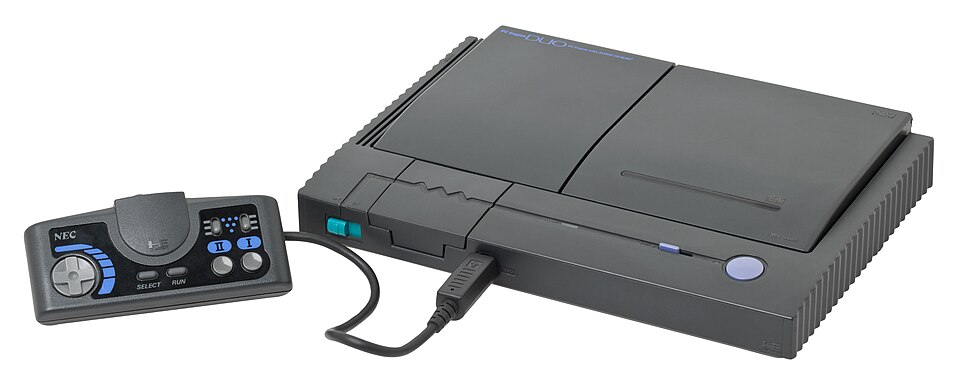
And then there is doing it properly, the expensive way: original Japanese hardware — a PC Engine Duo is the sensible all-in-one choice, with Super CD capability built in — and an original import disc. I will not pretend this is rational. Between the console, the maintenance ageing CD hardware increasingly wants, and a disc that has been a collector’s item for decades, you are spending hundreds before Richter cracks his first whip. But I will not pretend it is nothing either. The Red Book audio rolling off real hardware, the disc in its case on your shelf — this is the game as October 1993 intended, and for the right collector it is worth every penny. Just go in with your eyes open: this is a hobby purchase, not a shortcut.
The verdict
Play Rondo of Blood on Requiem if you want it tonight, on The Dracula X Chronicles if you want everything, and on original hardware if you want the story to tell at parties — but play it.
That is the whole recommendation, really. Rondo of Blood spent fifteen years as a rumour in the West and has spent the years since quietly being available in one form or another, waiting for each new player to discover that the rumour undersold it. It is the best version of classic Castlevania: the branching stages, the two heroes, the Item Crashes, that CD soundtrack, and a final fight so good its sequel rebuilt its entire opening around it. Pick a route from the list above — the first one will do — and go and rescue Maria. The castle has been waiting for you since 1993. It can wait one more evening, but honestly, why should it?