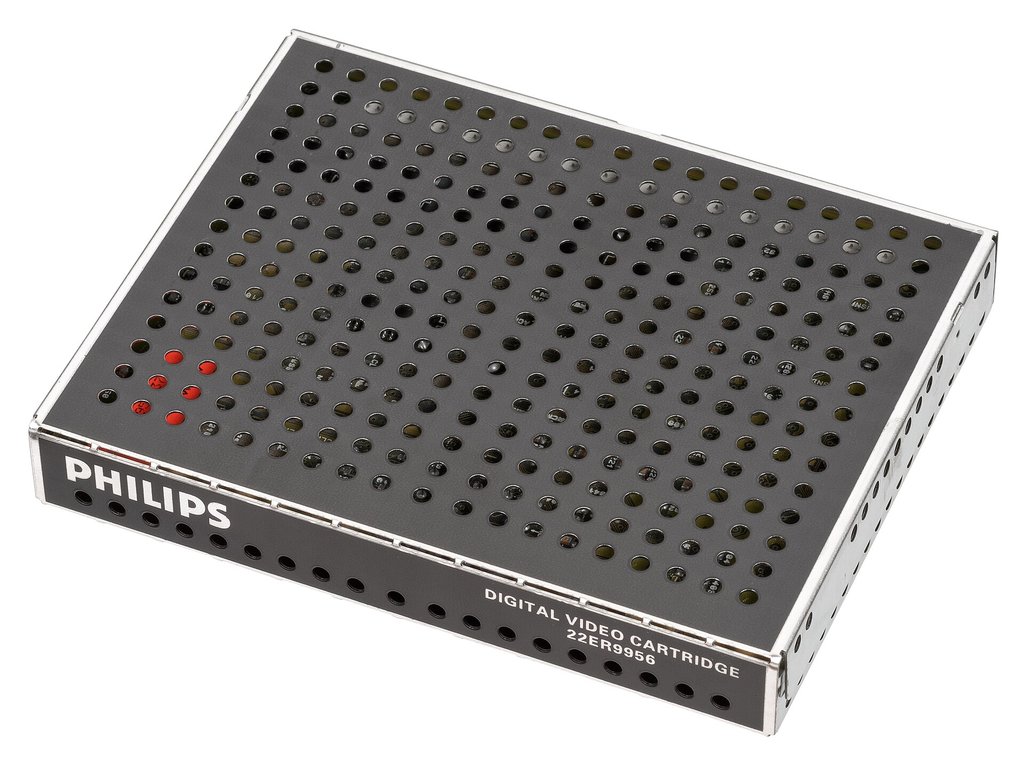
The base Philips CD-i player could do many things in 1991 — interactive discs, CD audio, Photo CD, encyclopaedias that talked — but it could not do the one thing the early nineties wanted most: full-screen, full-motion video. Its graphics hardware was built for sprites, stills and clever palette tricks, not for decoding a movie. Philips’ answer arrived as a cartridge. The Digital Video Cartridge — the DVC — slotted into the back of the player and gave the machine what the decade demanded: an MPEG-1 decoder, an extra 1.5 megabytes of memory on top of the base unit’s one megabyte, and with them the ability to play Digital Video discs and the Video CD format itself. It was, in effect, a second console sold as an upgrade, and the story of the CD-i’s second half — its best games, its movie dreams, its fatal fragmentation — is the story of that cartridge.
Understand what MPEG-1 meant in 1993. The Moving Picture Experts Group’s first standard squeezed a VHS-competitive picture — 352 by 240 at under 1.5 megabits per second — onto the same compact discs that held music. Video CD, the format built on it, became a genuine mass medium in Asia, where it was the dominant movie format of the decade, and a curiosity in the West, where it arrived too late and too soft to fight the coming DVD. Philips, co-author of both CD and Video CD, believed its living-room box could be the West’s movie machine as well as its multimedia one. The DVC was the bet made physical: buy the player for the encyclopaedia, buy the cartridge for the films, and one box would do everything the decade’s entertainment could ask.
The library the cartridge built
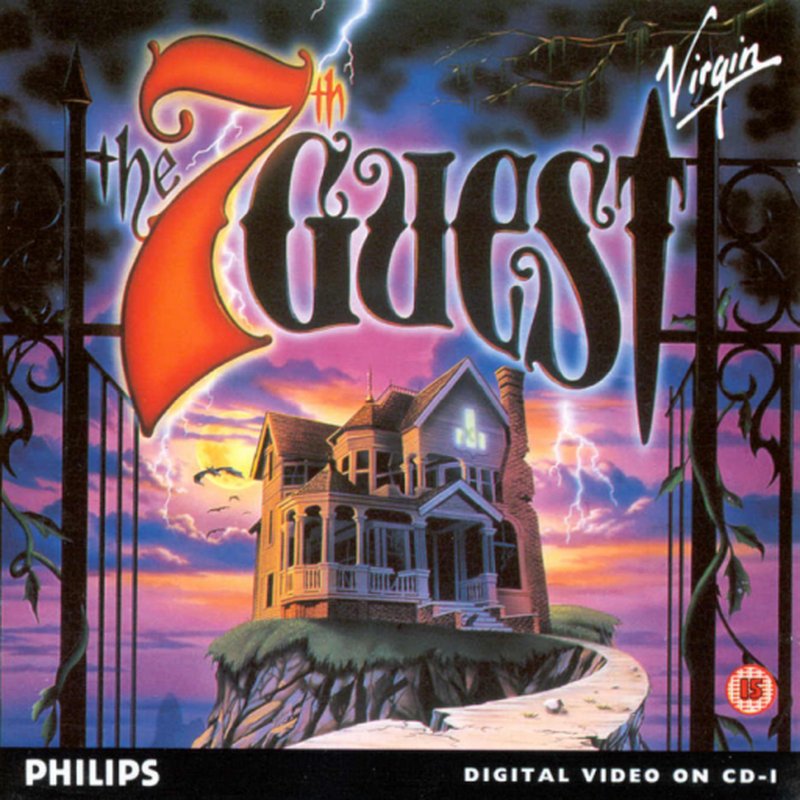
The games tell the story first, because they show the cartridge changing what a CD-i could be. The base machine’s video tricks — streamed pre-rendered imagery, dissolves, palette animation — produced the beautiful stillness of Kether and the streamed worlds of Burn:Cycle, which famously needed no cartridge at all. True MPEG titles were another species: The 7th Guest, whose ghost-filled mansion was essentially a film you solved, required the DVC on CD-i. So did Chaos Control, Infogrames’ full-screen rail shooter, and its sequel Solar Crusade. So did Creature Shock, Mad Dog McCree and the whole gun-game and FMV shelf — every title that asked the machine to be a cinema first and a computer second. By 1995, “requires Digital Video Cartridge” on a CD-i box had become the format’s quality mark and its warning label in the same four words.
The movie library followed the same logic. Philips and its partners released feature films on Video CD and CD-i Digital Video editions — a catalogue of Hollywood titles that played, through the DVC, at a quality contemporary reviewers compared fairly to VHS, with digital sound, chapter access and none of tape’s wear. For a brief window around 1994, this was a genuinely futuristic proposition: films on disc, years before DVD launched, in a box that also played games and encyclopaedias. The window closed from both sides. DVD arrived in 1997 with a picture MPEG-1 could not answer, and the CD-i itself was being wound down — Philips ended active development in 1996 — leaving the movie library as a beautiful dead end that Asia’s Video CD boom proved had been a real road, just not a Western one.
The fragmentation tax
Every upgrade divides a market, and the DVC divided the CD-i’s small one fatally. Developers now chose between the whole installed base and the fraction with cartridges; retailers stocked two kinds of software for one machine; buyers discovered that the “complete” system they had purchased needed a second purchase to play its most advertised games. Philips tried to heal the split the way platform holders always do — by building the upgrade in. Later players and several partner machines integrated digital video as standard: the game-oriented CD-i 450 line courted buyers with movie capability in the pitch, and LG’s GDI 700 — a favourite of modern collectors — carries built-in digital video alongside its other virtues. But by then the format’s identity was set, and the cartridge had become the collectors’ shorthand for the whole Philips dilemma: a machine ahead of its market, upgraded toward a future that arrived wearing someone else’s badge.
The Digital Video Cartridge is the most honest accessory ever sold: it told you, in hardware, that the future had been underestimated. The base machine was designed for a multimedia decade. The cartridge was the receipt for the video decade that actually happened.
For collectors today, the DVC is not optional equipment — it is the key to the library’s best third, from The 7th Guest to Solar Crusade, and to the movie shelf besides. Prices reflect it: loose cartridges trade briskly, later integrated players command premiums precisely because the cartridge is inside, and any CD-i buying decision that ignores the DVC question is only half a decision. Our 2026 buying guide gives the full workings. The history, though, is already complete: one cartridge that turned an encyclopaedia machine into a cinema, split its market doing it, and left behind some of the strangest and best software of the CD era. Full-motion everything was the dream. The cartridge was the dream’s price tag — and, on the evidence of the games it unlocked, a price worth paying then and worth understanding now.

There is a coda worth keeping. MPEG itself won: every stream, disc and broadcast since descends from the work the DVC put under a million televisions. The cartridge failed as a product and succeeded as a prophecy, which is as good an epitaph as the CD-i ever earned.
The professional afterlife
One more chapter belongs in the cartridge’s biography, because it explains the hardware’s survival rate. While consumer CD-i faded, the professional market — training, point-of-sale, education, museums — kept buying players and cartridges for years, and the DVC’s MPEG decoding made it the workhorse of early interactive video installations. A surprising share of the cartridges in today’s collector market began life not in living rooms but in kiosk enclosures and corporate training rooms, which is why they so often surface in lots with 210 and 605 players and why their condition varies from pristine to industrial. The cartridge that was supposed to bring Hollywood home spent much of its working life showing staff-training films in the Midlands. History’s sense of humour is reliable that way.
None of which dims the central fact for the games library: the cartridge is where the CD-i’s best video software lives, and understanding the format means understanding that its catalogue is really two catalogues — the base-case one the launch buyers got, and the MPEG one the committed upgraded into. The second catalogue is smaller, stranger and better. That is the DVC’s legacy in one sentence, and it is why no CD-i collection is complete without the little module that the original box pretended was optional.
Technically, the cartridge’s modesty is part of its charm: it is not a second computer, just a decoder and memory, a specialist hired for one job. Later formats would hide the same silicon inside the base machine and call the result standard — DVD players, streaming sticks and smart televisions all carry the DVC’s descendants as a matter of course. Philips’ error was not the technology, which was inevitable, but the choreography: asking the customer to buy the future twice. The industry learned the choreography from the mistake, which is the most useful thing a failed accessory can teach.