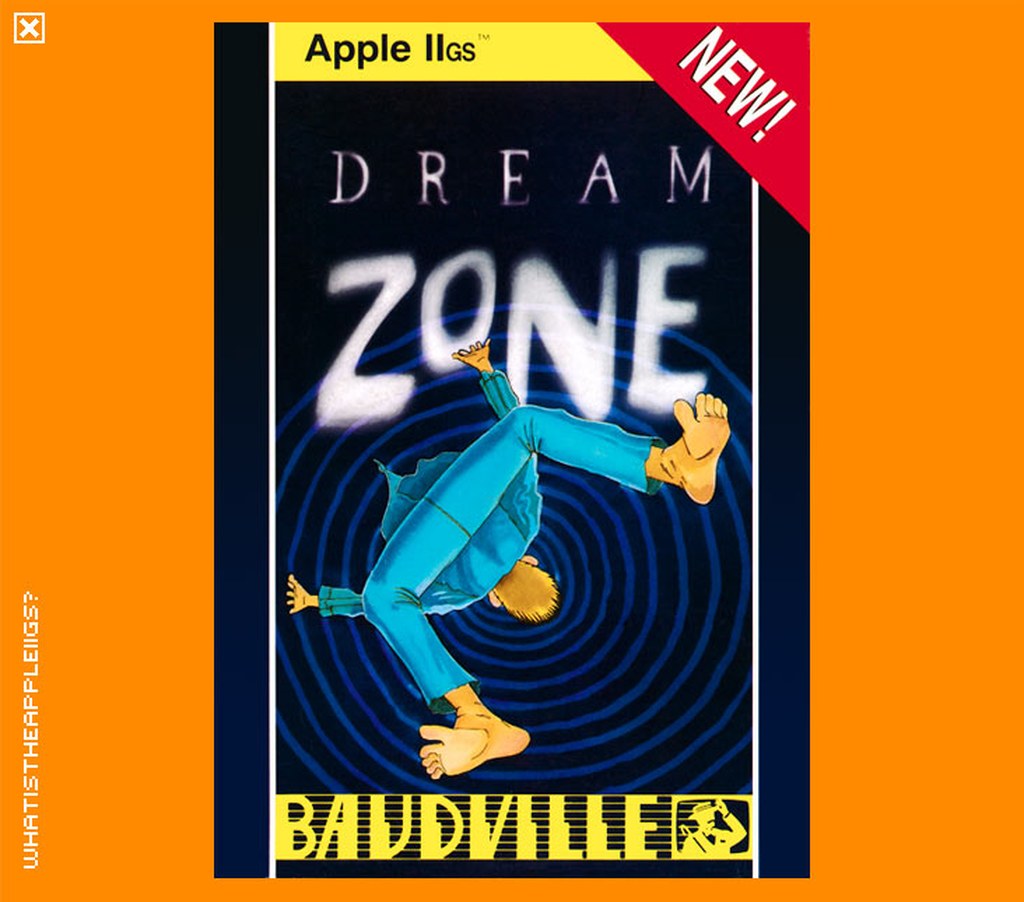
At a glance: Dream Zone · Apple IIGS · Baudville, 1988 · Graphic adventure · Score: 7.5/10
Every games library has its beautiful oddity, and the IIGS’s is Dream Zone. Baudville’s 1988 graphic adventure sends you to sleep — literally: your character’s dreams have turned lethal, a scientist’s sleep serum has made them inescapable, and the only way out is through, across a surreal dreamscape of floating castles, bureaucratic nightmares and dream-logic puzzles, rendered in some of the most striking artwork the super-hi-res screen ever displayed. It is strange, funny, occasionally exasperating, and completely unforgettable.
The premise deserves its fame. A recurring nightmare is killing you by degrees; the sleep clinic’s experimental treatment traps you inside it. What follows is an adventure through the geography of a mind: a dream world with its own customs officials, its own transport systems, its own deeply unreasonable paperwork. The writing leans into the conceit with real wit — Dream Zone’s dream-world runs on the logic of anxiety, where every official wants a form you do not have and every solution is the one you would think of at 3 a.m. It is the rare adventure whose world-building gag is also its puzzle design.
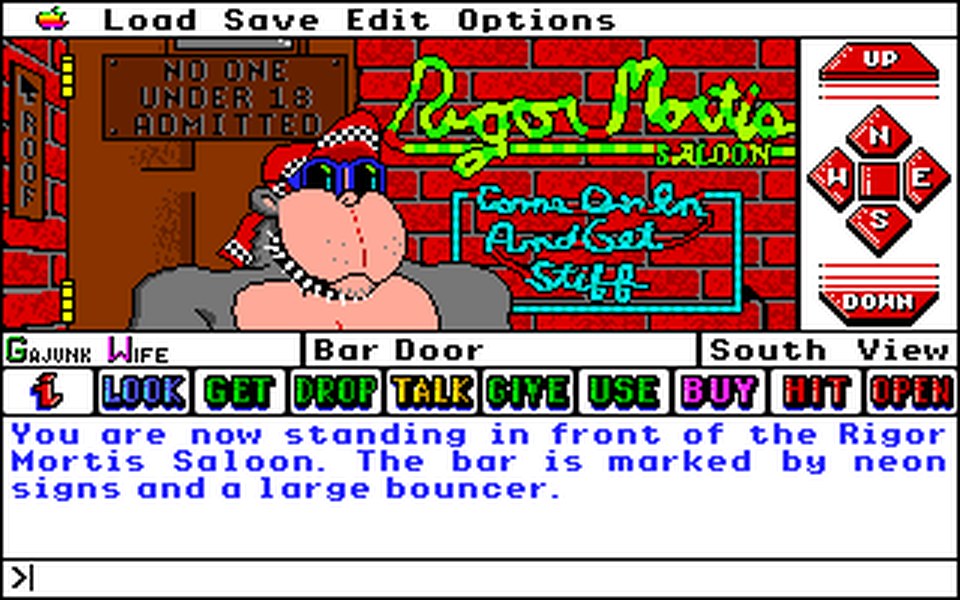
Art you could hang on a wall
Let us be direct about the visuals, because they are the first reason to play. Dream Zone’s screens are among the finest pieces of illustration in the IIGS library — lush, painterly dreamscapes that use the GS palette with a confidence most games never approached. Clouds boil, architecture floats at affronted angles, and the colour work gives the dream a feverish coherence: beautiful and slightly wrong, everywhere. In 1988 this was a showroom game, the disc dealers booted to sell the monitor as much as the computer. Time has not dimmed it. On a modern display the art still stops you mid-puzzle just to look.
The interface is the period’s standard graphic-adventure arrangement — a picture window, text description, and a parser supplemented by icons — and the game is honest about its ambitions: this is a thinking adventure, not an action hybrid. Puzzles alternate between the genuinely inspired (the dream-bureaucracy sequences, where the joke and the solution are the same thing) and the moon-logic that the premise licenses a little too freely: when the world runs on dream logic, any solution can be defended, and a few of Dream Zone’s will have you reaching for hints with a clear conscience. Deaths exist and are usually signposted by the dream’s own menace; the game prefers to strand you rather than kill you, which in an adventure of this vintage counts as mercy.
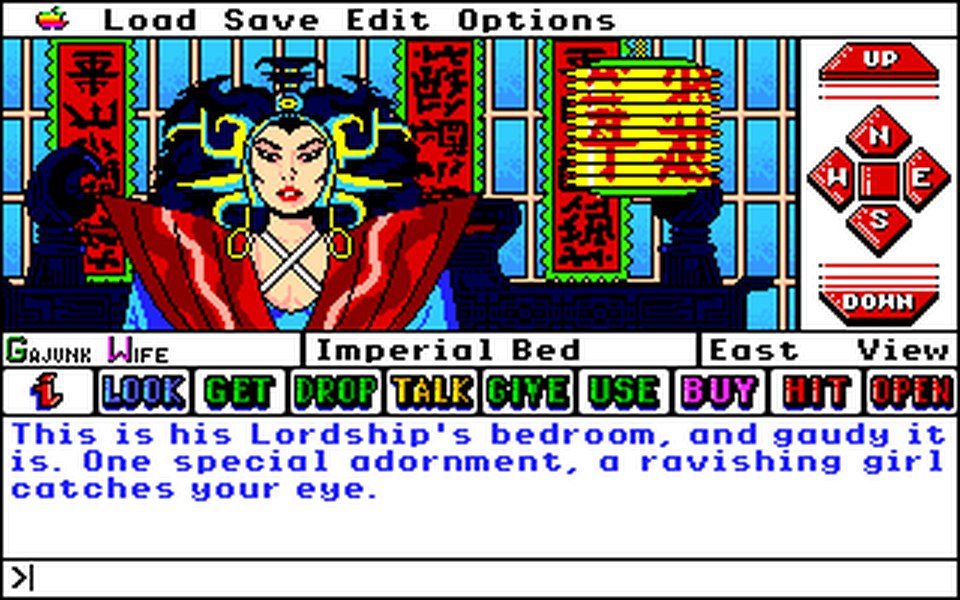
Dream logic, for better and worse
The middle act is where Dream Zone earns its reputation among the faithful — a sequence of escalating dream set pieces that play like a gallery exhibition crossed with an exam you forgot to study for. Without spoiling its best inventions: expect transport that should not work, officials who should not exist, and one or two puzzles whose solutions, once seen, are so perfectly dream-right that you forgive the hour spent not seeing them. The game’s length is modest by Infocom standards, but its density of memorable screens is unmatched on the machine.
Dream Zone is the IIGS’s most beautiful adventure and its strangest: a nightmare with a sense of humour, painted in colours the waking world doesn’t stock.
The debits are the dream’s own. Parser fussiness appears at the worst moments — the game occasionally wants a specific phrasing its own whimsy discouraged you from trying — and one or two puzzles sit on the far side of fair even by dream rules. A hint book, or a modern walkthrough for emergencies only, is recommended equipment for first-time sleepers. Neither flaw is fatal; both are the price of a game this individual.
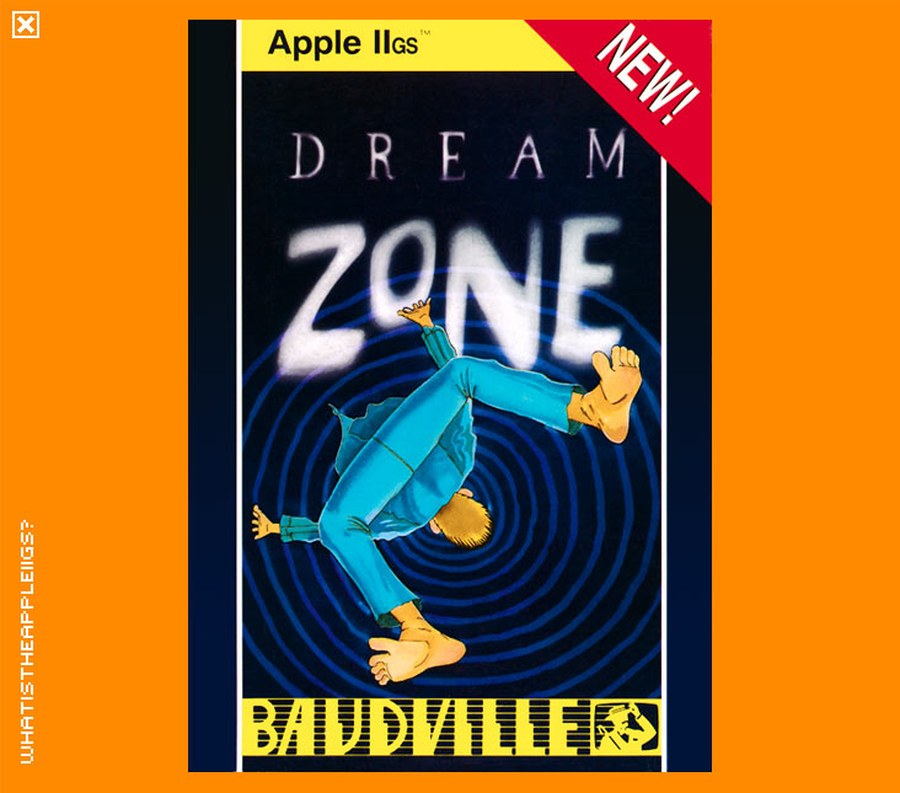
Baudville’s beautiful gamble
Some context sharpens the appreciation. Baudville was not a games giant; it was an Apple II software house known mostly for productivity and education titles, and Dream Zone was its leap into the artistic deep end — a game commissioned around its artwork, at a moment when the IIGS desperately needed software that justified its price to sceptical buyers. That it exists at all is a small miracle of the platform’s early optimism. That it plays as well as it looks is a larger one. The adventure’s surrealism also gave it an afterlife its sales never did: screenshots of Dream Zone circulate to this day whenever the IIGS’s graphics are debated, usually ending the argument.
For the modern player, Dream Zone is happily accessible: it runs under the standard emulation and storage setups without complaint, and its modest length makes it the rare vintage adventure that can be experienced whole, hints and all, in a weekend. Our advice is to play the first half unaided, letting the dream’s logic colonise your own, and to keep the walkthrough for the two or three moments where the dream cheats. You will know them when you meet them. Everyone does. The community has been comparing notes on them since 1988, which is its own kind of tribute.
The dream in the library
Placed in its library, Dream Zone occupies a niche no other IIGS game contests: the art adventure. The machine had funnier adventures, fairer ones, and longer ones, but none that treated every screen as a painting and every puzzle as a small surrealist poem. That ambition is why it survives in the community’s memory out of proportion to its sales — it is the game GS owners describe to people who have never seen the machine, because describing it makes the machine sound like the instrument it was supposed to be. If the IIGS’s story is about a computer that promised imagination, Dream Zone is one of the few titles that promised it back.
The verdict
Dream Zone is a cult classic in the true sense: not for everyone, and absolutely essential for its people. As an IIGS showcase it is art-directed beyond its era; as an adventure it is witty, surreal and just unfair enough to be remembered in detail decades later. Fall asleep with this one. Carefully.
A closing word on the game’s strange duality, because it explains its cult. Dream Zone is simultaneously one of the IIGS’s most welcoming adventures to look at and one of its least forgiving to solve — a painting that occasionally bites. Players who accept that bargain discover the library’s most distinctive world; players who do not will still come away with its screenshots in their memory for life. Either way, Baudville’s gamble left the platform richer, and a library — like a dream — is measured by what you cannot forget from it.
And if the dream claims you — as it has claimed a stubborn, affectionate cult since 1988 — know that you are in good company: Dream Zone’s admirers tend to be the IIGS’s artists and illustrators, the owners who bought the machine for its palette in the first place. They recognise a kindred production when they see one. The rest of the library shows what the GS could do. Dream Zone shows what it could imagine.
Sweet dreams, then — and keep the hint book under the pillow, where it belongs.
Score: 7.5/10 — Baudville’s sleeping beauty: the best-looking adventure on the IIGS, a dream world of wit, paperwork and painterly menace.