Everybody knows the Dreamcast’s headline act: SoulCalibur, Shenmue, Crazy Taxi, the blue skies of Arcadia. But Sega’s final console lived fast and published wide, and beneath the canon sits a second library of oddities, arcade refugees and experiments that never got their due — some because they arrived after the obituaries were written, some because they were only ever released in one territory, and some because there has simply never been anything else like them. These are ten Dreamcast hidden gems worth hunting down, in shelf order rather than rank order: the fun is in the variety, and every entry earned its place here by being unmistakably, defiantly itself.
1. Cannon Spike (2000)
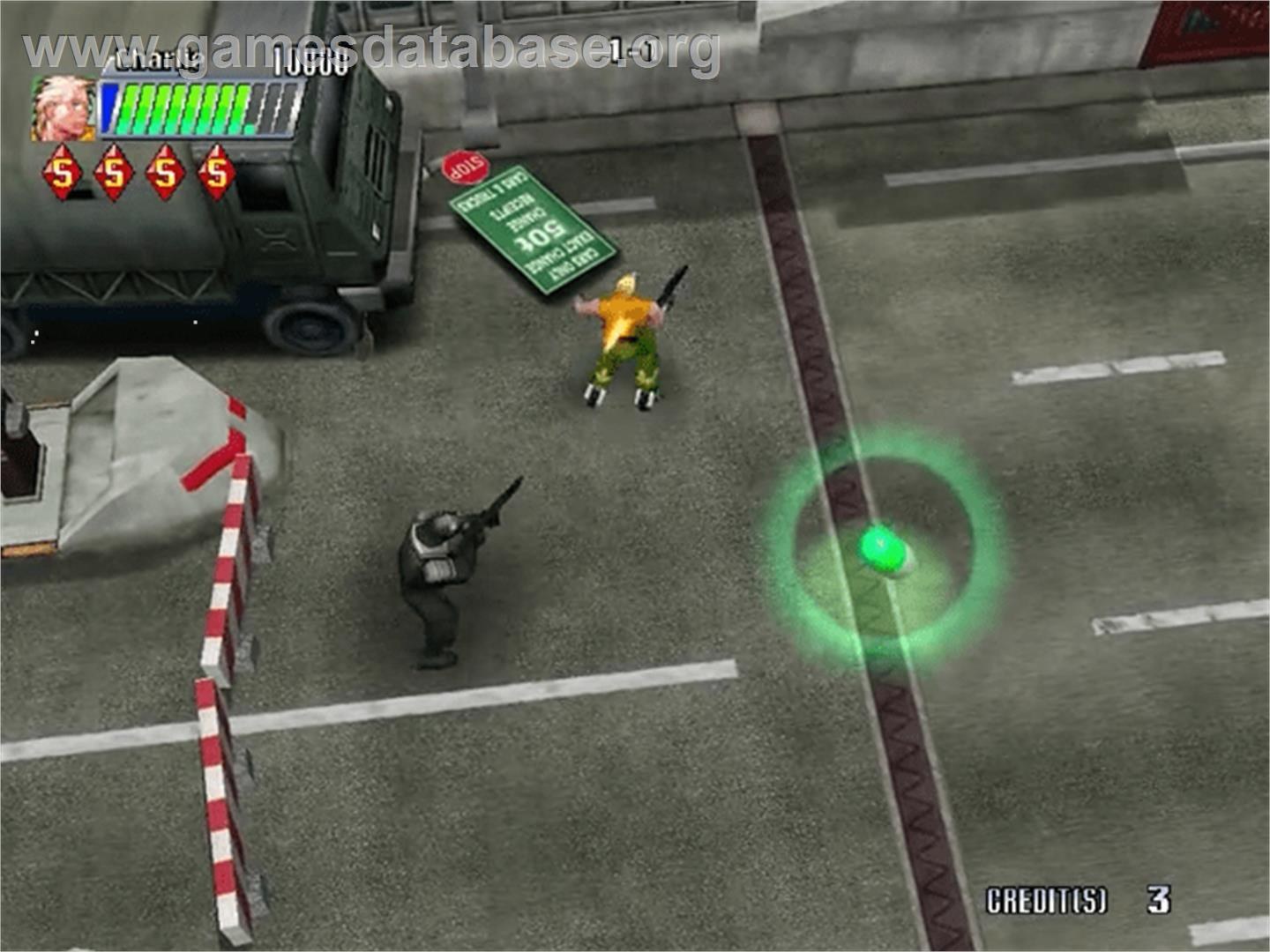
Psikyo, better known for vertical shooters, made this arena blaster with Capcom’s blessing and Capcom’s toybox: Cammy and Charlie from Street Fighter and Arthur from Ghouls ‘n Ghosts join an original cast of roller-skating gunners in fast, twin-stick-style arena stages viewed from above. Each short level floods a single arena with robots, turrets and a boss, and the whole game has the tempo of a coin-op designed to be beaten in an afternoon and replayed forever. It launched late in the Dreamcast’s Western life with little fanfare, which is exactly how gems get hidden. Seek it out for the purity of the thing: no filler, no padding, just escalating arenas, a pounding soundtrack and the constant temptation of one more credit. Two players can share the chaos, and the whole roster plays differently enough — Cammy’s speed against Arthur’s lance-chucking weight — that mastering a favourite becomes its own hobby. This is the arcade philosophy the Dreamcast was built on, distilled into one small, loud disc.
2. Project Justice (2000)

Capcom’s Rival Schools series peaked here: a 3D team fighter where high-school students and their alarmingly combat-ready teachers settle school disputes with three-on-three tag battles and spectacular Team-Up attacks — the entire class piling in for synchronized violence. The story mode plays like a playable shonen manga, the roster tops twenty, and the whole thing runs with a colour and confidence that most of its contemporaries couldn’t match. Overshadowed by Capcom’s own Marvel and Street Fighter output, it quietly became one of the most beloved fighters on the system. It also rewards curiosity: character-specific story paths, a school-year’s worth of unlockable students and teachers, and Team-Up techniques that change with your pairing mean the versus mode keeps giving long after the credits. When Capcom finally revived the series in its modern fighting collections, Project Justice was the name Dreamcast owners cheered loudest — proof that a gem this bright was only ever buried, never dull.
3. Toy Commander (1999)

A launch-window title from French studio No Cliché that deserved a longer life: you command a child’s toy army — planes, jeeps, helicopters — across missions set in an ordinary house made enormous, battling the teddy bear Huggy Bear’s rebellion room by room. Racing pencils, bombing from a toy bomber over the kitchen table, duelling a very large family cat: the scale-play is inventive in a way few games have attempted since, and the mission design keeps finding new uses for the house. A war game where the stakes are bedtime, played completely straight. It is longer and more substantial than its premise suggests, too — dozens of missions, a ranking system that grades your generalship, and multiplayer skirmishes that turn the living room into a battlefield in both senses. No Cliché folded not long after, which makes Toy Commander feel doubly precious: a complete, confident vision of a game nobody else was going to make, hiding in the Dreamcast’s first wave of releases all along.
4. Ooga Booga (2001)
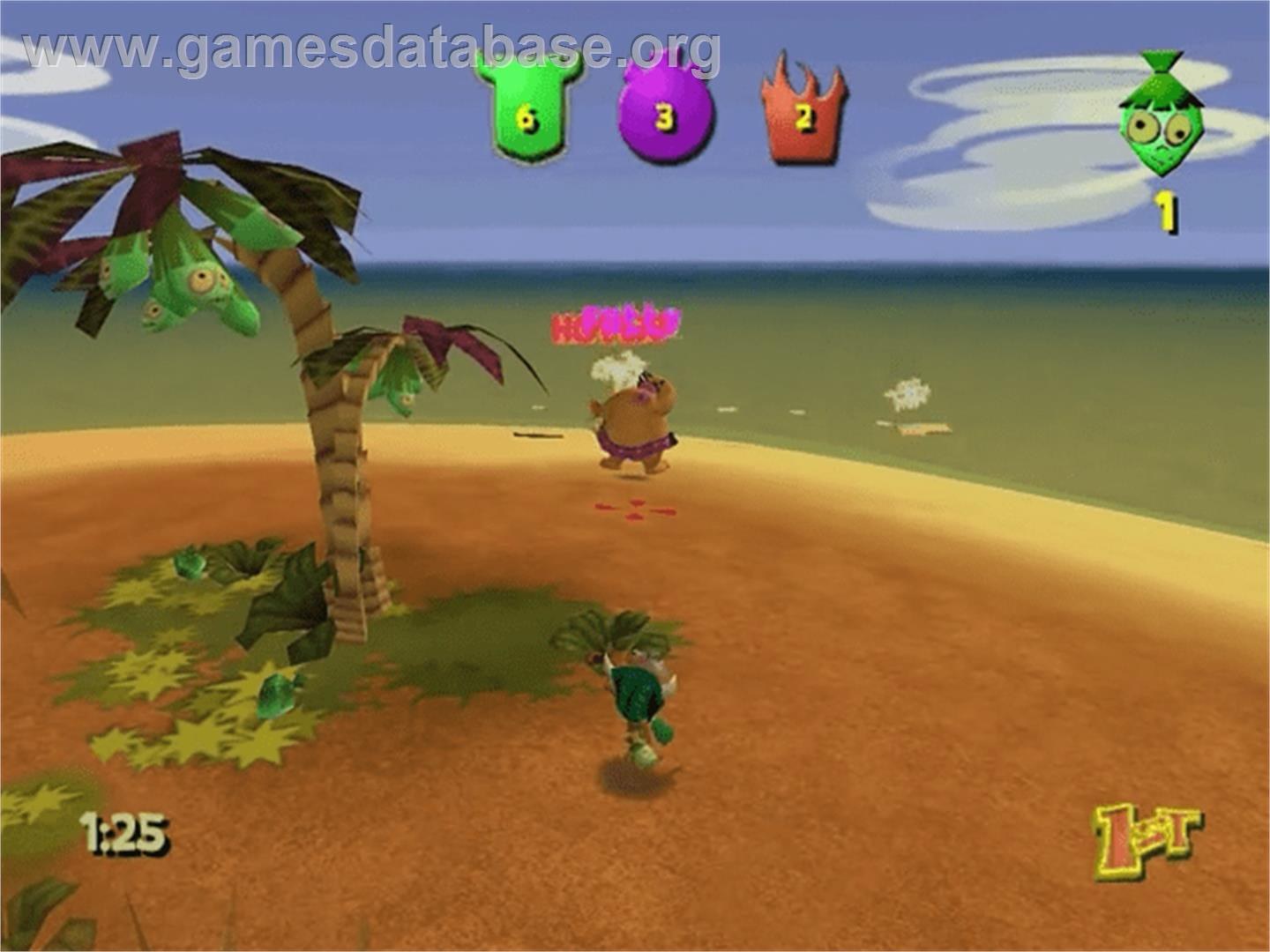
Visual Concepts — yes, the 2K sports studio — made this utterly singular thing: four witch doctors on a tilting tropical island, hurling shrunken heads, riding boars and casting spells at each other in a party-arena free-for-all. It was built with online play in mind as well as four-player local chaos, and its island physics — the whole arena tips as you run — give every match a slapstick instability. It sold to almost nobody in the console’s final months, which makes finding a copy and three friends feel like unearthing buried treasure. The modes multiply the madness — volcano-ball sports, head-hunting free-for-alls, spell-slinging duels — and the whole production has the handmade strangeness of a team allowed to make exactly the game it wanted. In a library famous for arcade conversions, Ooga Booga is proof the Dreamcast’s originals could be every bit as daring.
5. Floigan Bros. Episode 1 (2001)
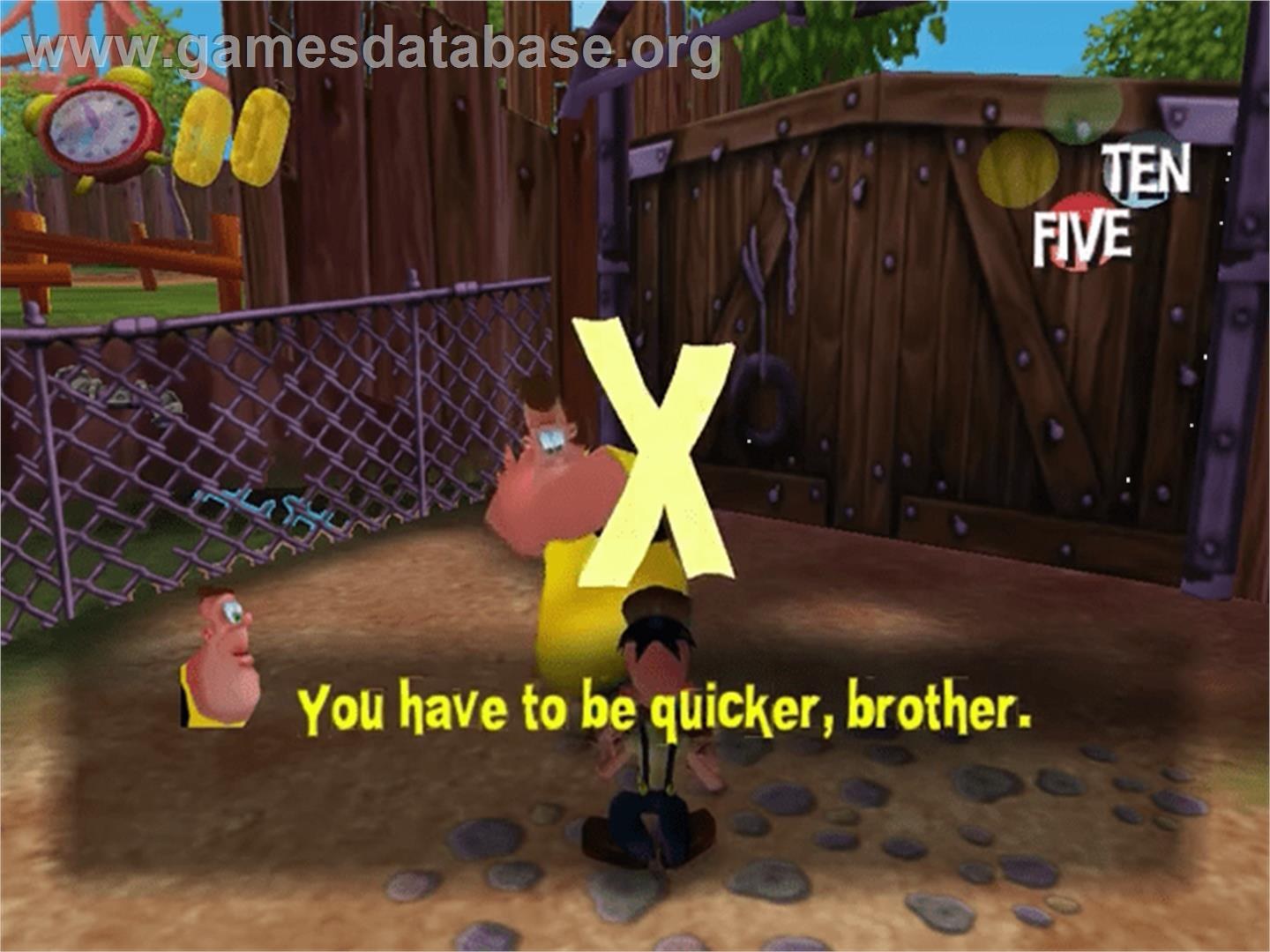
A playable cartoon from Visual Concepts’ other eccentric department: Moigle, the small clever brother, must complete jobs around a junkyard by literally teaching Hoigle, the huge gentle brother, how to help — pointing, demonstrating and occasionally hiding, because Hoigle has moods, and a sulking seven-foot sibling is a genuine gameplay system. The animation and voice work channel golden-age cartoons, the episodic structure was ambitious for its time, and the promised sequels never came. Short, strange and full of heart.
6. Cosmic Smash (2001)

Sega Rosso took squash, Breakout and a fashion shoot and made the most beautiful sports game of its era. A silhouetted player in a white void smashes a ball through translucent block formations, the camera gliding like a perfume advert, the soundtrack downtempo and icy. Released in Japan and Europe only, in a DVD-style case that made it look like an art object, it lasts an afternoon and lingers for decades. Its trick shots — carving the ball around walls, through formations, with languid spin — are taught by doing, and its minimalism was a genuine risk in 2001, when the industry measured value in explosions. If you want one game to prove the Dreamcast had an aesthetic soul beyond arcade noise, it is this one; it is less a sports title than a playable screensaver for a more stylish universe.
7. Bangai-O (1999)
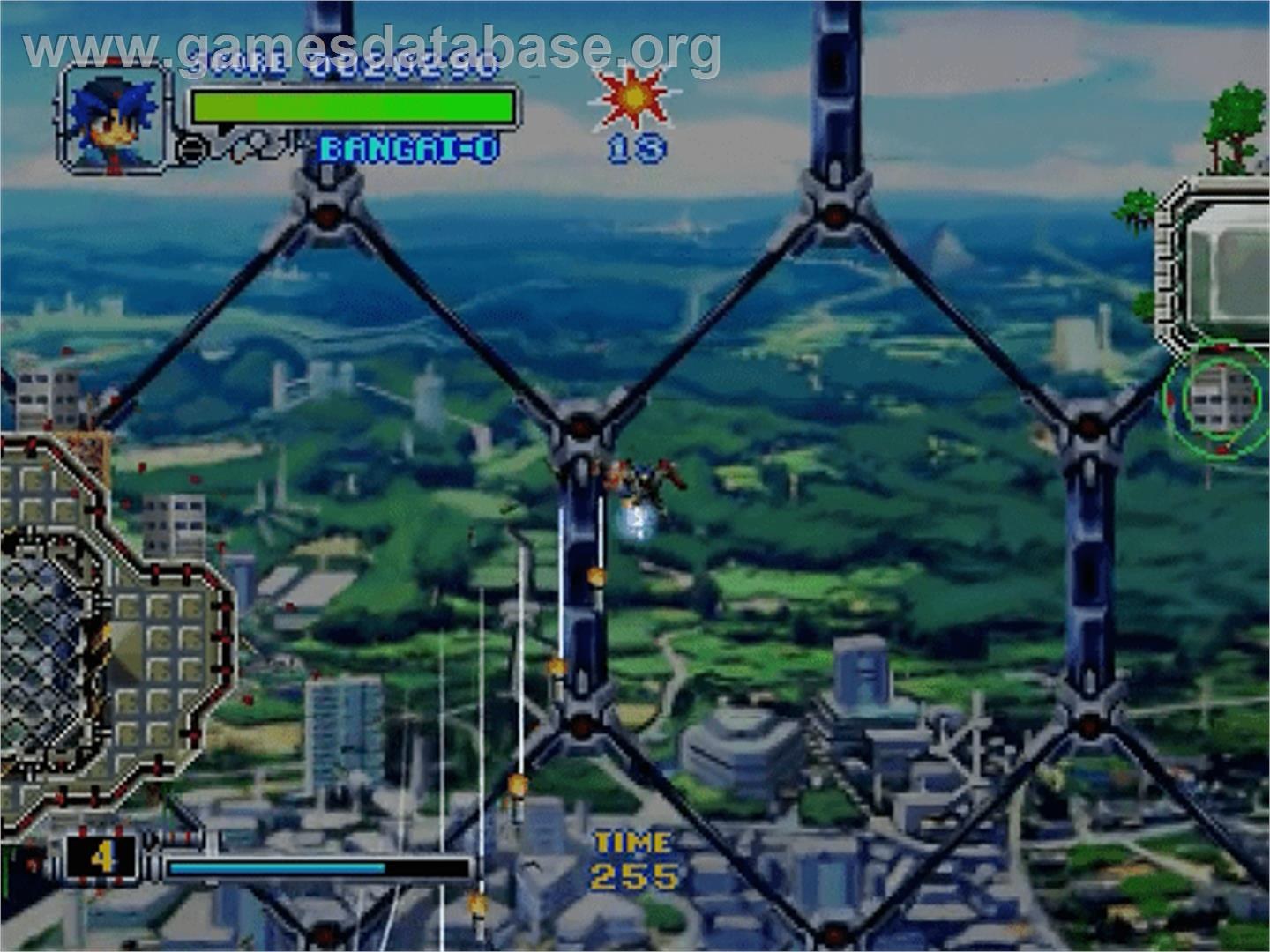
Treasure’s multi-directional shooter puts a tiny mech in huge stages full of buildings, fruit, civilians and several hundred enemy bullets — and gives you one glorious answer: a counter-attack whose missile count scales with how close you were to death when you triggered it. The Dreamcast version of this N64-born cult favourite looks and sounds richer, and its cheerful absurdity (the plot involves collecting fruit amid a cosmic gang dispute, roughly) hides a score system of real depth. The genius is in the temptation: the longer you let bullets crowd the screen before detonating your counter, the bigger the payoff — and the closer you skate to disaster. Treasure built a whole risk engine out of panic. Screens do not get more full than this, and few shooters reward nerve so theatrically.
8. Mars Matrix (2001)

Takumi’s vertical shooter, ported from Capcom’s arcade board, sends the mosquito-like Mars Matrix fighters against an armada over a terraformed Mars. Its signature is the Gravity Hole Bomber: hold your fire to vacuum up enemy bullets into a shield, then release them as a devastating reflected barrage — a risk-reward loop that turns the screen’s worst moments into your best ones. Experience points unlock extras in a generous home package, and the difficulty is honest arcade difficulty. A late, great entry in the Dreamcast’s shooter library.
9. Zero Gunner 2 (2001)

Psikyo’s helicopter shooter stayed in Japan, and importing it was a rite of passage for Dreamcast shooter fans. You pilot one of three helicopters through seven stages with a wonderfully tactile gimmick: a turn marker lets you rotate your craft a full 360 degrees, so enemies can be engaged from any angle while you keep moving — it feels like nothing else in the genre. Add chunky polygonal bosses, a train convoy stage for the ages and two-player co-op, and you have one of the system’s finest import-only treasures. The rotation mechanic takes minutes to learn and weeks to master — repositioning your fire while dodging transforms familiar shooter geometry into something three-dimensional — and the presentation, all swooping camera work and mechanical detail, shows Psikyo at the height of its powers. If your Dreamcast journey leads you to imports, let this be the first stamp in the passport.
10. Record of Lodoss War (2000)

The Dreamcast’s own Diablo, built on the beloved Lodoss anime and novel world: an isometric action-RPG of dungeon-crawling, loot and a clever blacksmith system that engraves upgrades — and your hero’s name — onto your weapons and armour. It is vast, occasionally gruelling and far less known than it should be, partly because isometric dungeon crawlers were not what the Dreamcast was famous for. Give it time and it reveals one of the deepest single-player grinds on the console, with a moody, candle-lit atmosphere all its own. The engraving system is the hook that keeps the grind humane: rather than discarding old gear, you keep improving the sword that has your name on it, which gives your arsenal a personal history no loot-drop lottery can match. For RPG players who think they have seen everything the Dreamcast offers, Lodoss is the long, rewarding shadow at the back of the shelf.
A special word for the hunters: several of these ten were late releases, import-only releases, or both, which means original copies can take patience to find — check region compatibility before importing (a Japanese or European disc will not boot on a North American console without help), and remember that this is a library where reading the manual is half the archaeology. The chase is part of the charm. Every Dreamcast collection has the famous five on the front row; the second shelf is where the personality lives.
One more honourable pattern before we close: notice how many of these ten are multiplayer games, oddball sports, or shooters built for fifteen-minute sessions. The Dreamcast’s experimental streak was social — this was a console that assumed friends on a couch and designed accordingly. Revisit these with company where you can; several of them double in value the moment a second controller wakes up.
The Joy of the Second Shelf
What unites these ten is range: no other console of the era swings from Cosmic Smash’s gallery minimalism to Ooga Booga’s island slapstick to a Japanese-only helicopter shooter within one library. The Dreamcast’s short life meant experiments got published that a longer, safer console cycle might have filtered out — and that is precisely why digging its second shelf remains one of retro gaming’s great pleasures. Start anywhere on this list; you will not stay on it for long, because every one of these games points at three more. That, in the end, is the Dreamcast’s real hidden gem: not any single disc, but the density of a library where the second shelf is deeper than most consoles’ entire first shelf.