History has a sense of humour. Resident Evil 3: Nemesis, for all its charms, was a side-story elevated to a numbered sequel at the last minute — while the game that actually advanced the series’ plot, introduced its most theatrical villains and pushed its technology forward arrived in 2000 as a Dreamcast exclusive with a subtitle. Resident Evil – Code: Veronica is, by any honest measure, the true Resident Evil 3, and for a golden window it was the single best reason for survival horror fans to own Sega’s console.
The story picks up months after Raccoon City. Claire Redfield, still searching for her brother Chris, raids an Umbrella facility in Paris and is captured and shipped to Rockfort Island, a prison colony in the southern ocean. Freed in the middle of an attack that floods the island with the T-virus, she teams up with fellow prisoner Steve Burnside and stumbles into the rotten heart of the Ashford family — Umbrella’s aristocracy, complete with twin heirs Alfred and Alexia, a private palace, and secrets buried under Antarctic ice. The second half hands control to Chris in a mirror of the island campaign, and the whole thing lands as the most coherent, character-driven plot the young series had managed: the Redfield-versus-Wesker feud that would define later games starts here in earnest.

Survival Horror Grows a Camera
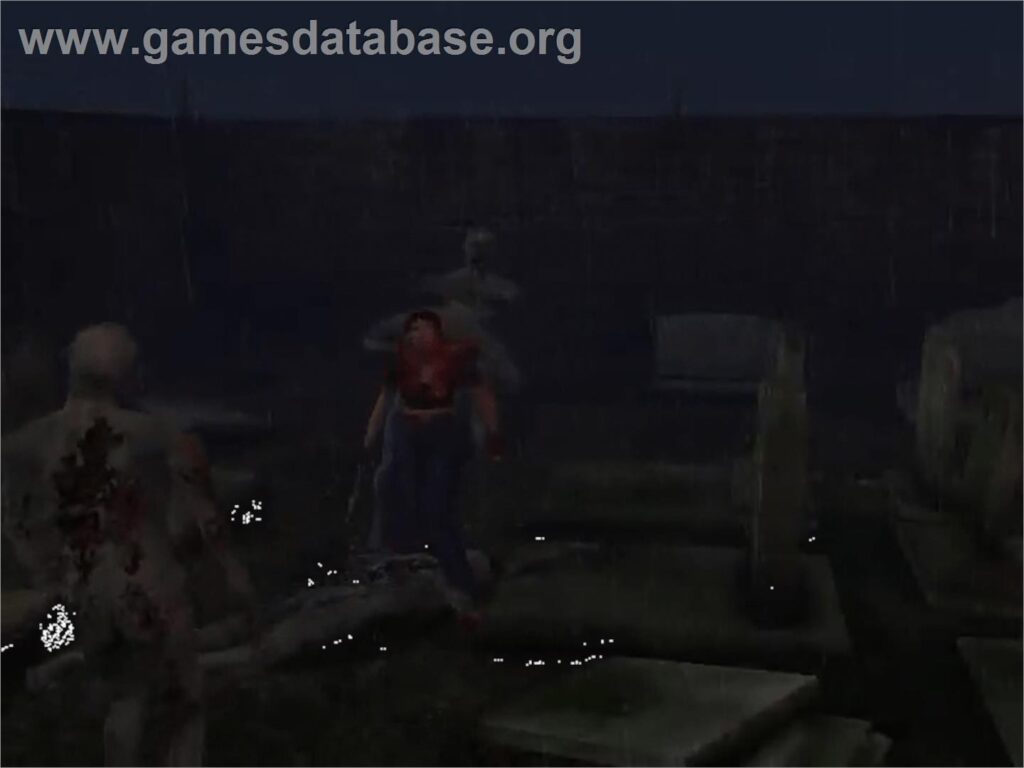
The technical leap matters. Gone are the pre-rendered backdrops of the PlayStation games: Code: Veronica renders everything in real-time 3D, which frees the camera to pan, track and zoom through scenes instead of snapping between paintings. The Dreamcast makes the most of it — torch-lit corridors, a rain-lashed graveyard, the Ashfords’ grotesque private residence — and scenes like the famous first-person-tinged sniper sequence against Nosferatu play with perspective in ways the old engine never allowed. Cutscenes, running in-engine, were a showcase for the hardware and remain impressively directed.
Underneath, the classic formula is intact and deliberately unforgiving: tank controls, limited ink ribbons and inventory slots, ammunition you count in single digits, and puzzles built on crests, plaques and gloriously implausible architecture. Code: Veronica is often cited as the hardest of the classic entries, and not always kindly — a couple of resource traps can leave an unprepared save in real trouble before the endgame, and the backtracking across Rockfort is extensive. Steve, meanwhile, has divided opinion for a quarter-century: his voice performance is a lot, though the character’s arc lands harder than his reputation suggests.

The Dreamcast’s Dark Crown
What the Dreamcast version specifically offers is the original, undiluted edition: the complete two-disc campaign and a Battle Game mode to unlock — the platform was quietly becoming horror’s second home, with titles like Blue Stinger and Carrier around it. Later expanded editions on other consoles added cutscenes and polish, and they are fine ways to play; but Code: Veronica was built for this machine, and on this machine its atmosphere — grey seas, gothic wealth, an island of the dead — coheres best.

The Ashfords Steal the Show
Every classic Resident Evil has its monster; Code: Veronica has a whole family, and they elevate the entire production. Alfred Ashford — preening, unhinged, commander of an island prison he runs like a family heirloom — and his twin sister Alexia, the child prodigy whose fifteen-year sleep in Antarctic ice is the game’s ticking clock, give the series its most operatic villains until the Bakers came along decades later. The Ashford estate’s decaying grandeur, the portraits, the music-box puzzles and the family’s ant-farm cruelty make Rockfort feel haunted by people rather than just infected by a virus. Wesker’s return, sunglasses and superhuman upgrades in place, completes the triangle: this is the game where Resident Evil’s soap opera found its permanent shape.
Performance-wise, the Dreamcast handles it with confidence — the full-3D environments load briskly, the character models were the series’ best to that date, and the VMU earns its keep displaying Claire and Chris’s health status, a trick the console’s horror games loved. If you are returning via the original hardware, play it on a CRT or a clean upscaled feed, take notes like it is 2000, and respect the knife: Code: Veronica’s knife, famously, is one of the most powerful in the series, and learning it is the difference between hoarding ammo and finishing rich. This is not the friendliest classic Resident Evil. It might be the most rewarding.
Structure deserves a final word, because Code: Veronica’s two-act design — Claire’s escape, then Chris’s arrival retracing a changed island — was the series’ most elegant use of its dual-scenario idea since Resident Evil 2. Items left in shared storage boxes carry between the halves, decisions in act one echo into act two, and the Antarctic finale raises the stakes from prison break to family apocalypse without breaking the game’s gothic spell. It is a big, confident campaign, easily the longest of the classic trilogy-plus-one, and it earns its length the hard way: with places you remember, and a body count of tyrants, twins and giant moths that later games are still dining out on.
Dreamcast Was Horror’s Second Home
Context flatters this game. The Dreamcast in 2000 was quietly assembling the best horror shelf outside the PlayStation: Capcom ported its PlayStation trilogy with care, then delivered Code: Veronica as the machine’s exclusive crown, while titles like Illbleed, Blue Stinger, Carrier and The Ring filled out a catalogue with a genuinely morbid streak. Owning a Dreamcast for horror was a defensible lifestyle choice, and Code: Veronica was its flagship — the one you showed people to prove the pastel-swirl console had a dark side. That reputation has only grown as the series’ history gets retold: ask a room of Resident Evil veterans to rank the classics and watch this “side game” land near the top, every single time.
Accessibility note for newcomers: the tank controls and fixed saves are period-authentic, and the game makes no apology for either, but its camera work is gentler than the PlayStation entries’ and its first hour is a model of onboarding-by-dread. Give it one evening past the prison yard and the Ashfords will do the rest. Few Dreamcast games reward an evening’s commitment with interest this compound.
The Verdict
Code: Veronica is classic survival horror at its most ambitious and occasionally its most punishing: a gothic epic with the series’ best villains of the era, a real technical step forward, and traps that demand respect. Newer fans should bring patience and a guide’s phone number; veterans already know this is essential. Either way, nobody leaves Rockfort Island unchanged — least of all the series itself.
It also happens to be the classic Resident Evil most likely to convert a sceptic, precisely because it never stops escalating: a prison break becomes a family tragedy becomes an Antarctic last stand, with the series’ mythology tightening at every step. Play it where it was born, on the swirl-logo machine, and you are playing the series’ alternate-history high point — the moment Resident Evil belonged to Sega for a year, and made it count.
Score: 8.5 / 10 — The island, the twins, the tyrant in the ice. The Dreamcast’s darkest essential, full stop, forever.