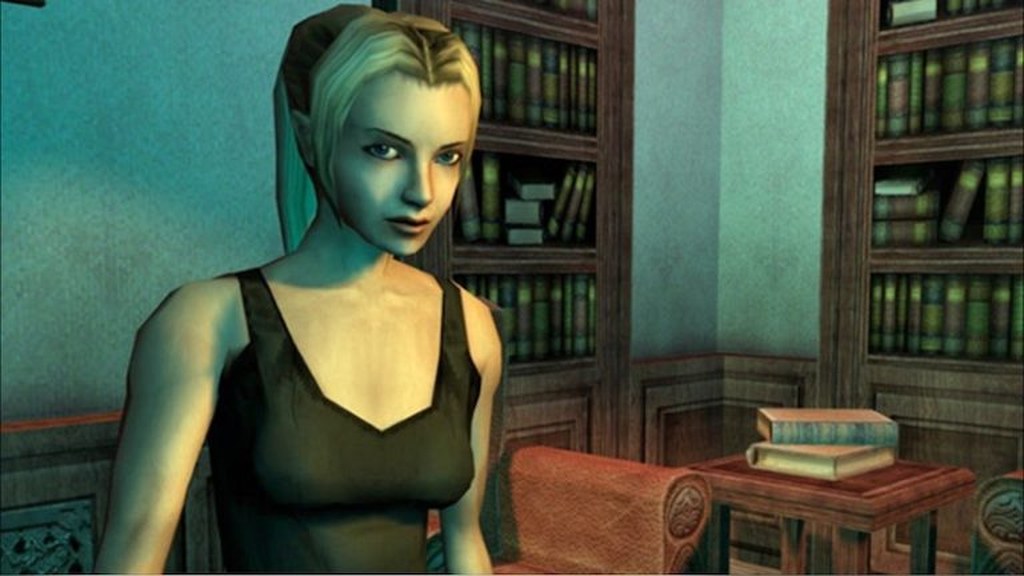
At a glance: Eternal Darkness: Sanity’s Requiem · GameCube · Silicon Knights, 2002 · Survival horror · Score: 9.0/10
There is a moment, a few hours into Eternal Darkness, when the game lies to you. Not to your character — to you. The volume drops on its own. The screen pretends your controller has disconnected. A save file offers to delete itself. In 2002, players got up off the sofa to check their television settings, and that is the moment Silicon Knights’ Lovecraftian horror epic stops being a game you play and becomes a game that plays you back. Nintendo publishing an M-rated horror title was itself a statement on the GameCube; that the result was this intelligent, this literary and this willing to break the fourth wall into splinters makes Eternal Darkness the console’s most singular release — and the cult classic that remaster speculation, including the teasing our own news pages have enjoyed, will never quite let rest.
Two thousand years of bad decisions
The structure is a novel’s. In 2000, Alexandra Roivas inherits her grandfather’s Rhode Island mansion and finds him murdered in a house full of secrets; reading his hidden Tome of Eternal Darkness, she relives the lives of everyone who has held it before her, across two millennia of chapters: a Roman centurion in a Cambodian temple, a Persian swordsman, a Venetian-era courtesan’s household, Charlemagne’s messenger in a cathedral that will recur, haunted and re-haunted, through the centuries, a World War I battle hospital, a Canadian firefighter at an oil fire in 1991. Twelve playable characters, three interlocking timelines of gods — Chattur’gha, Ulyaoth, Xel’lotath, and the corpse-god Mantorok who binds the plot in decay — and a single elegant mechanic of alignment: choose which Ancient your Roman serves, and the game’s enemy balance, puzzle flavours and dominant colour of dread shift for the entire run. Three playthroughs, honestly signposted by the game itself, assemble the complete ending. Few horror games have ever been this ambitious about structure, and fewer still pull it off.
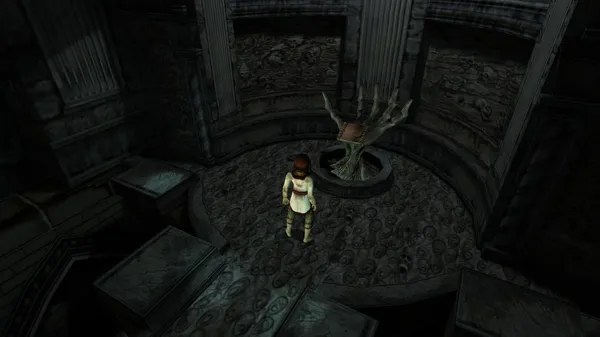
The writing does the heavy lifting. Dennis Dyack’s team wrote Eternal Darkness like a doomed chronicle rather than a script of jump scares: chapters end badly as often as bravely, heroes fail, go mad, betray and are betrayed, and the recurring locations — the temple, the cathedral, the mansion itself, revisited across centuries as they rot and are rebuilt — accrue a weight of history that no single-protagonist horror game can match. The voice cast, unusually strong for 2002, sells the period hopping, and the game’s quotations and chapter epigraphs wear their literary influences openly.
Sanity as a resource — and a weapon aimed at you
The Sanity system is the famous innovation, patented by Nintendo and imitated ever since. Seeing horrors drains a green meter alongside health and magick; as it falls, the world misbehaves in small ways — statues watch you, rooms tilt a degree or two, ceilings bleed, a version of your character turns up somewhere it should not be — and then, at the depths, the game attacks the player directly with the fake system messages, phantom volume and input tricks described above. Playing in 2002 on a CRT, alone, these effects were genuinely destabilising; even now, knowing the catalogue, the best ones land. Sanity is restorable, manageable, and occasionally more useful low than high, which keeps it a system rather than a gimmick — but its genius is conceptual: it made the player’s trust in their own television a resource the game could spend.
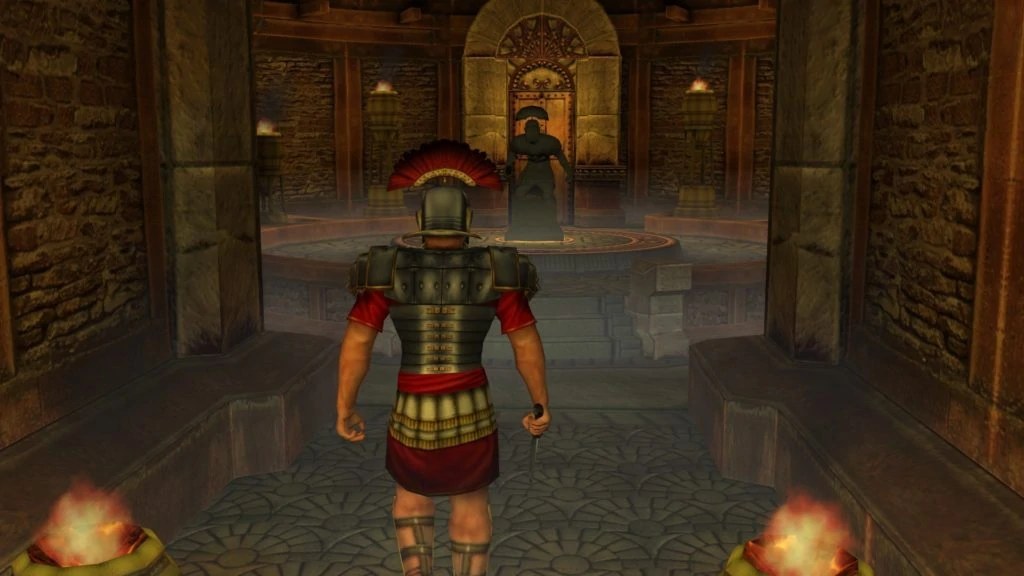
Combat and magick are the more conventional pillars. Melee and period firearms are aimed at specific limbs and heads — decapitating zombies to stop their screaming is both tactical and sanity-preserving — and the rune-based spell system, built from circles, alignments and learned runes, lets you construct enchantments, summons and the essential recovery spells, with a satisfying ritual cadence. Honesty requires noting the combat is workmanlike rather than brilliant: animations are stiff, enemy AI is of its era, and chapters vary in quality, with the more action-led late sections less interesting than the dread-soaked early ones. The targeting can also fight you in tight rooms. Eternal Darkness is a horror game whose ideas outgun its mechanics, and it knows where its strengths live.
Played today
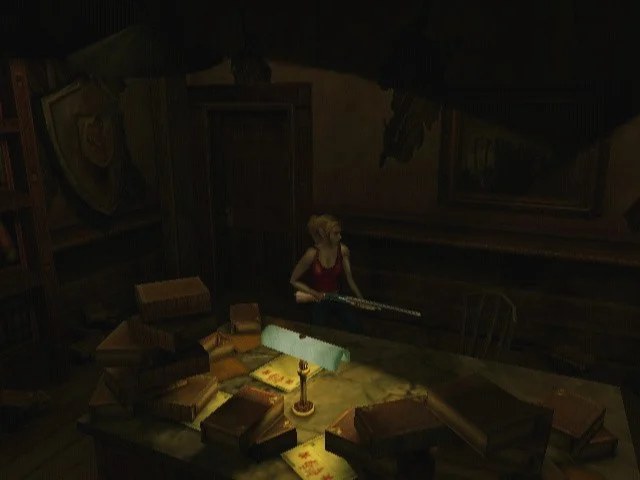
Visually it is a handsome early GameCube title — detailed mansions, moody lighting, sixty-frame smoothness in most areas — though character models have aged more than its environments. There is no remake and no re-release at the time of writing, which is precisely why the original disc has become one of the console’s sought-after horror releases and why every whisper of a return makes news. The GameCube original is currently the only way to play it officially, and it plays exactly as Silicon Knights intended — sanity effects and all, several of which depend on period display habits in ways that make the CRT experience, arguably, the definitive one.
A Nintendo game like no other
Context sharpens the achievement. This was a Nintendo-published, Nintendo-marketed M-rated horror epic, developed in Canada by Silicon Knights — a studio Nintendo had taken a stake in precisely to broaden the GameCube’s audience — and it launched into a console war in which Nintendo was fighting a “kiddy” image with exactly this kind of ammunition, alongside the Resident Evil exclusivity deal. Eternal Darkness was the prestige piece of that strategy: horror for adults who read. Its commercial performance was respectable rather than spectacular, its sequel never materialised despite years of fan campaigning, and Silicon Knights’ later history was troubled — all of which has only gilded the original’s reputation. It sits now in that specific category of GameCube releases — with Killer7, with the Resident Evil remake — that players cite when they argue the purple box had the most interesting library of its generation.
One playing tip, offered seriously: play it in the dark, in long sessions, and do not read a sanity-effects list first. The game’s best tricks depend on a player’s unspoiled trust in their own setup, and that innocence, once spent, does not come back. Few games ask for that kind of vulnerability. Fewer still deserve it.
The verdict
Eternal Darkness is not the scariest game on the GameCube — Resident Evil’s remake contests that crown — but it is the most intelligent, the most literary and by a distance the most audacious. Its combat is ordinary; everything around the combat is extraordinary. If you collect for the console, this is one of the discs that explains why the GameCube’s library keeps pulling people back: a Nintendo-published cosmic horror novel that occasionally pretends to turn your television off. Deep darkness, indeed.
Collectors should know the disc itself has become a small artefact of the era: a single, dense disc, with the alignment choice effectively tripling the campaign for completionists who want the true ending assembled from all three Ancients’ paths. That structure — a horror game designed to be played three times, changing its dominant colour and enemy emphasis each run — remains almost unheard of, and it is the final reason the original keeps its hold on the console’s faithful.
Score: 9.0/10 — A literary, fourth-wall-breaking horror epic whose sanity system still has no equal — the GameCube’s great cult classic.