
Twenty-two games. That is the entire commercial Virtual Boy library — every cartridge Nintendo and its partners released for the system across Japan and North America in 1995 and 1996. A library that small can be ranked completely, argued over completely and, for the truly committed, owned completely. So here is the whole shelf, worst to best, with one rule: we judge the games as games, not as collectibles. Scarcity earns nothing here. Waterworld’s price tag will not save it, and Virtual Bowling’s reputation must survive contact with its actual bowling. Where a full review exists on this site, this is the short version of that verdict; where it doesn’t, this is the review the game gets.
Counting note: the twenty-two are the fourteen North American releases plus the eight Japan-only titles. Unreleased prototypes — Bound High, Zero Racers and friends — are a wonderful story, but they are not releases, and they are not here.
A few ground rules before the arguments start. Games are ranked as complete packages — design, execution, and how completely they use or transcend the hardware — with historical importance counted only where it is inseparable from the playing. Regional editions count once: Virtual League Baseball and its Japanese edition Virtual Pro Yakyuu ’95 are the same game in two sets of clothes, and Golf’s Japanese T&E Virtual Golf edition likewise. Homebrew, prototypes and the magnificent cancelled games are excluded by the ‘released’ rule above, however much Bound High deserves its own list. And one confession: positions 8 through 14 are separated by preference more than by quality, and any reader who rearranges them has our sympathy and probably our agreement on a different day.
22. Waterworld
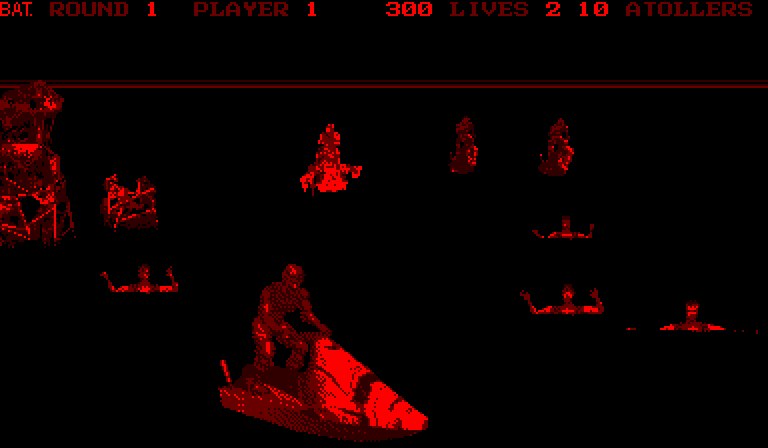
Ocean’s licence game is an arena shooter with one idea — Smokers approach, shoot them — repeated until the cartridge gives out. It ignores its own hardware’s depth, recycles its single arena and survives in memory mainly for its superb soundtrack and its absurd price. The library’s most expensive game is its weakest.
21. Virtual Lab
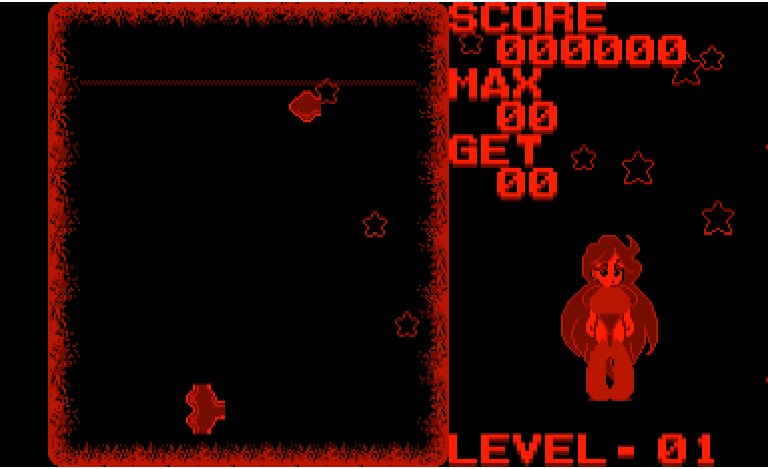
A sound tube-connecting puzzler released visibly unfinished, garbled text and all. What’s here is likeable; what isn’t here — polish, proofreading, a final pass — is the story. Japan-only, and charming in the way only a published rough draft can be.
20. Virtual League Baseball
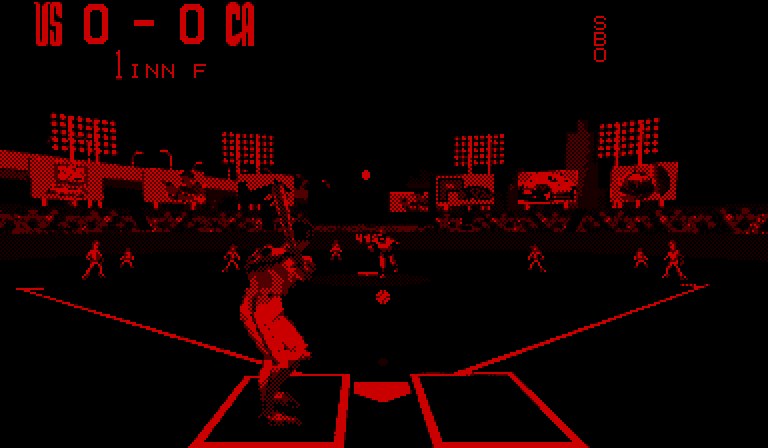
Kemco’s baseball sim has the library’s most dramatic camera and its least reliable batting, a combination that defines it. Pitching and fielding use the depth honestly; hitting is an eyesight test. Earnest, odd, and outclassed by the system’s other sports titles.
19. Mario Clash

The cleverest idea in the launch library — Mario Bros. across two planes, shells thrown through the screen — stretched across too many quiet, repetitive levels with no save to help. Brilliant in bursts, thin by the hour. A diorama that deserved a tighter game inside it.
18. Golf

T&E Soft’s careful simulation does the sport properly and puts the best putting of its portable era on the greens, where the depth genuinely reads. But pace, palette and sheer patience confine it: a good game of golf on the least golf-shaped machine ever made.
17. 3D Tetris

Nintendo’s last Virtual Boy game is a real intellectual achievement — Tetris rebuilt in a five-layer well — and a genuinely exhausting one, taxing your spatial memory on a machine that taxed everything else. The puzzle mode is its best self. Brilliant, punishing, divisive by design.
16. Nester’s Funky Bowling
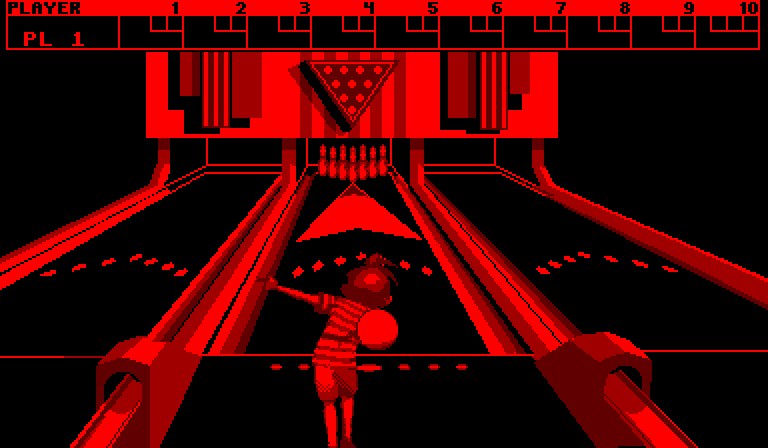
The Nintendo Power mascot’s only starring role is a likeable bowling game with honest physics, a daft bumper-chaos mode and the system’s friendliest pass-and-play. One lane, a small roster and a short mastery curve keep it mid-table — comfortably, cheerfully mid-table.
15. Virtual Fishing

The library’s meditation: casting, waiting, reading water in genuine depth. Almost nothing happens, beautifully. Japan-only, cheap to import, and the single most relaxing cartridge the red machine ever hosted — a quality nobody predicted it could have.
14. V-Tetris
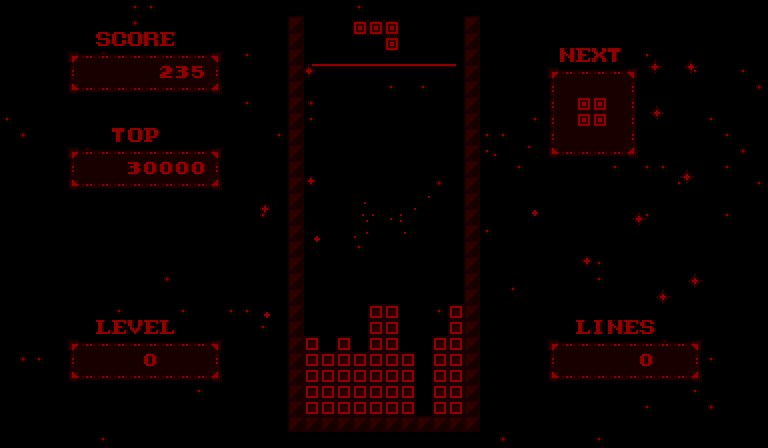
The Tetris the West never got is simply Tetris — flat well, classic pieces, depth used only for presentation — and on this system that restraint is a virtue. More playable than its 3D sibling by a distance, and the library’s purest puzzle hour. Japan kept the good one.
13. Mario’s Tennis

The pack-in did its job: tennis is the perfect depth sport, and this is a charming, readable, instantly understood demonstration of it. As a game it is shallow — small roster, no career, no link play — but as an introduction to a dimension, nothing in 1995 did it better or kinder.
12. Space Squash
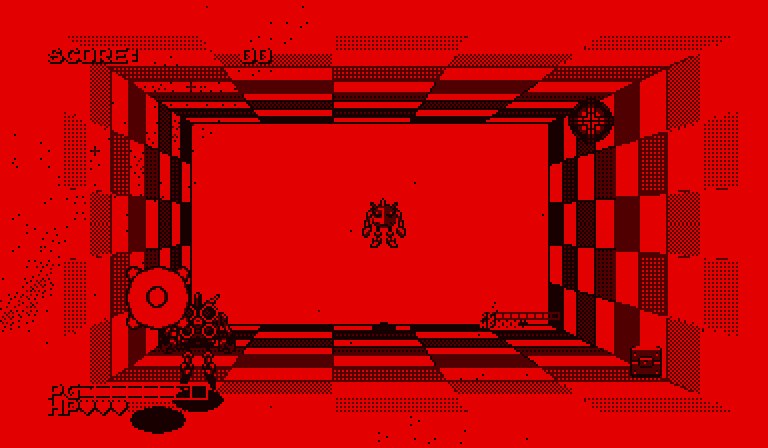
Japan-only and criminally overlooked: Pong rebuilt inside a transparent 3D box, where reading trajectories in depth is the entire game and it is enough. A small, complete, perfectly judged arcade sport that could not have existed on any other contemporary machine.
A note at the halfway mark, because the shape of the list is itself the finding: the Virtual Boy’s library does not divide into the good and the bad so much as into the suited and the stranded. The bottom of this ranking is dominated by games fighting their own format — a nine-inning sport on a fifteen-minute machine, a hundred-level marathon with no save, a licence loop with no depth in it — while the top is a parade of games whose designs and hardware were made for each other. The machine did not fail its games, and its games, mostly, did not fail it. The calendar failed both.
11. SD Gundam Dimension War
The library’s only strategy game earns its place by existing — and then by being good: grid tactics, super-deformed suits and a full campaign structure on a machine with no other shelf for it. The Japanese text is a hurdle the community has long since mapped.
10. Panic Bomber

Hudson’s falling-block battler is the library’s quiet overachiever: Bomberman heads, bomb chains, a solo ladder with real teeth and not a wasted feature. Only the missing versus mode — a casualty of the link cable nobody used — keeps it from the top tier.
9. Galactic Pinball

Four space tables from Intelligent Systems, and the discovery that pinball was always a 3D game waiting for its hardware. Stately physics, saved scores, the system’s best long-session comfort. Pinball given the depth it always pretended to have.
8. Virtual Boy Wario Land

The library’s flagship platformer — covered in full elsewhere on this shelf — layers Wario’s treasure hunt across foreground and background planes with Nintendo’s full polish. It is the game most often called the system’s best, and on craft alone the case is strong; it loses the very top spots here only to games that use the hardware more originally.
7. Innsmouth no Yakata

A first-person Lovecraft horror game, on a Nintendo console, in 1995, that the West never saw. Slow, sparse and genuinely eerie, it turns every hardware limitation — tunnel vision, monochrome, isolation — into dread. The library’s bravest cartridge.
6. Space Invaders Virtual Collection
It ranks this high on a technicality that isn’t one: the core of this package is Space Invaders, one of the greatest games ever made, faithfully kept, with depth-arranged modes as a respectful bonus. The ancestor, preserved in red, outranks most of its descendants.
5. Virtual Bowling

The rarest game in the library is also its best sports simulation: Athena’s bowling treats stereoscopy as instrumentation — oil, hook and entry angle all readable in depth — inside the system’s most polished sports package. Play it via flash cart and judge it as a game. It holds up.
4. Vertical Force

Hudson’s shooter takes the Star Soldier formula and adds one axis that changes everything: two altitude layers, dived between at a button’s press, with bosses that live on both. The smartest shooter design on the system and its most replayable quarter-hour.
3. Teleroboxer
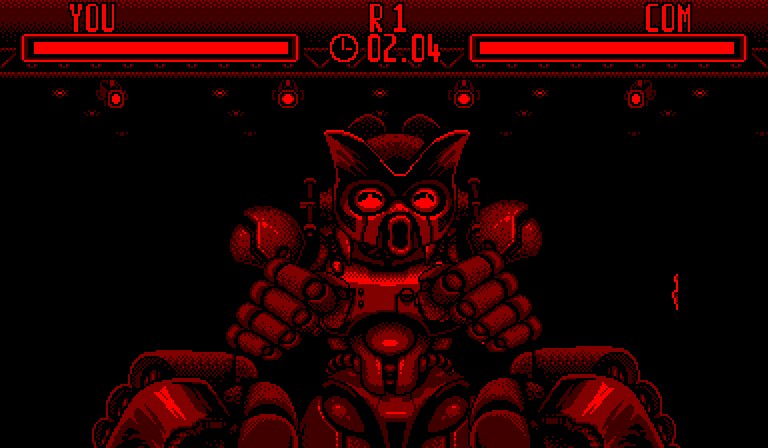
Punch-Out!! rebuilt for a controller with two D-pads and a display with real depth: your two fists, mapped one-to-one, against a ladder of magnificent robots. Hard, exact and utterly specific to this hardware — the game the Virtual Boy was invented to make possible.
2. Red Alarm
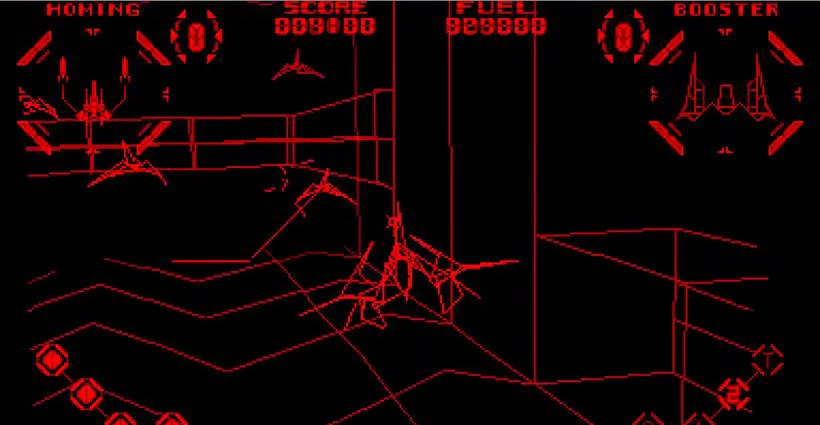
T&E Soft’s wireframe epic remains the library’s technical summit: free-roaming 3D space combat, enormous line-drawn bosses and hidden jokes in the geometry. Its controls demand an apprenticeship its ambition repays. The Virtual Boy’s Star Fox that never was, and in some ways the braver game.
1. Jack Bros.
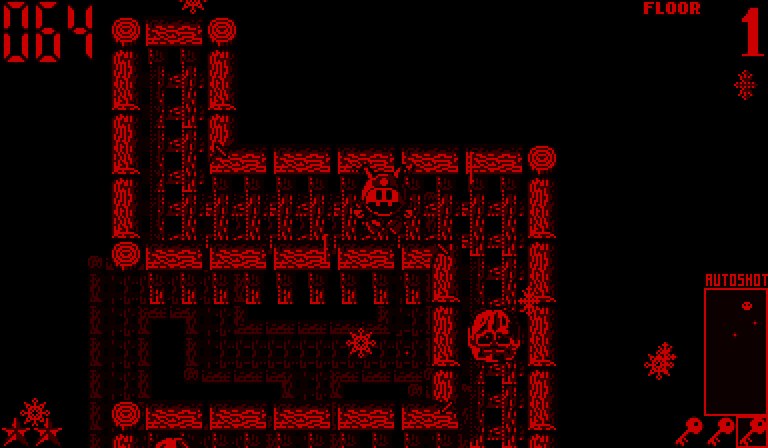
The complete package. Atlus’s maze-action descent — three playable Jacks, time as health, six areas of perfectly tuned tension and the most personality in the library — is the game with no weak department. The first Shin Megami Tensei title the West ever received is also, simply, the best game on the Virtual Boy.
Twenty-two games, and the honest surprise of ranking them is how few are bad. One licence-game write-off, a couple of noble experiments that don’t quite land, and then a long, respectable climb to a top five any console would be proud to be judged by. The Virtual Boy’s problem was never the quality of its library. It was that the library stopped — and rankings like this one are really just a way of saying: imagine the forty games that should have come next.
The ones that got away deserve their paragraph before we close. Bound High — a complete, polished, magazine-reviewed platformer about a bouncing alien — was cancelled so late that its absence from this list is a historical accident rather than a quality judgement; the homebrew scene eventually published it, and played, it would trouble the top ten. Zero Racers, the finished F-Zero-style racer, and Dragon Hopper would each have changed the library’s shape, giving it the racing game and the adventure it never had. A ranking of the library Nintendo planned would look different from this one. This is the library that shipped — and the gap between the two is the Virtual Boy’s whole tragedy, measured in cartridges.
So the final tally stands: twenty-two games, one write-off, a handful of noble misfits, a long honourable middle and a top five that includes a Lovecraft horror game, a wireframe space epic and a maze full of Atlus mascots. No other Nintendo platform’s complete library can be held in two hands, argued over in an evening and owned in a shoebox. The Virtual Boy was a failure by every commercial measure ever applied to it. As a library — complete, ranked and still playable — it is one of the medium’s perfect small objects.
One more observation the ranking forces, and it is the compliment the library most deserves: the distance between position 22 and position 1 is smaller, in honest quality, than on any comparable Nintendo platform. There is no shovelware tier here, no licensed filler season, because there was no time to build one. The Virtual Boy’s catalogue is twenty-two considered attempts, of which perhaps three truly fail. Failure rates like that are not what killed it. They are what its fans have been pointing at, patiently, ever since.