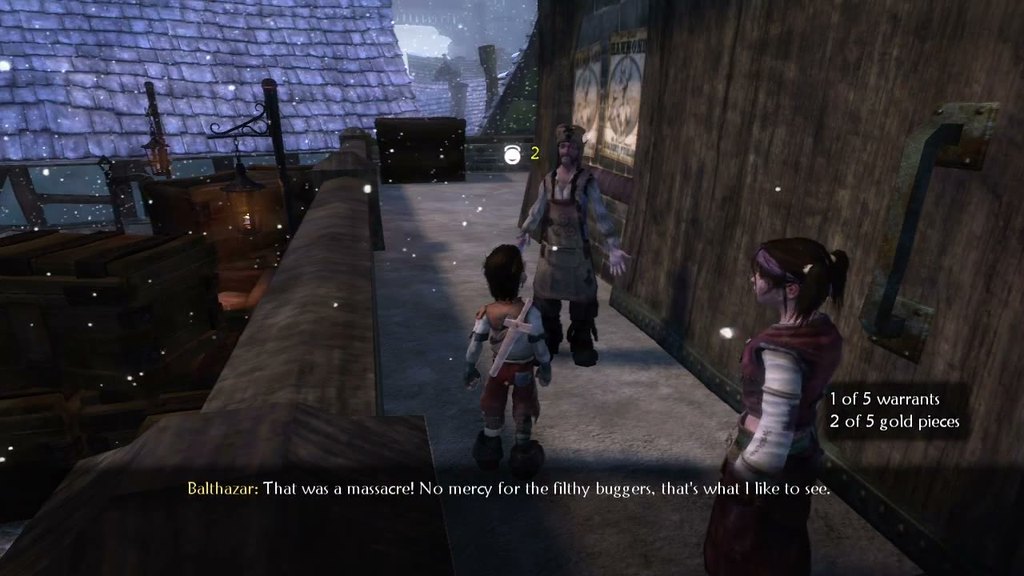
At a glance: Fable II · Xbox 360 · Lionhead Studios / Microsoft Game Studios, 2008 · Action RPG · Score: 8.5/10
Fable II begins with a bird relieving itself on your head, and ends — depending on your choices — with the fate of everyone you love. Between those two points lies the warmest, funniest and most British RPG on the Xbox 360: a fairytale about growing up in Albion, getting rich, getting married, getting fat on pies, and deciding what kind of person power makes you. Peter Molyneux promised the moon for this game, as was his custom. What Lionhead actually delivered was smaller than the promises and better than almost anyone expected: not a revolution, but a world with a heart.
A life, lived in fast-forward
The structure remains Fable’s signature: you play a whole life. Orphan child of the Bowerstone streets; young hero recruited by the blind seer Theresa; adult adventurer gathering the three Heroes of Strength, Skill and Will to stop Lord Lucien from rebuilding a wish-granting tower. Ten years pass in a prison. You return older, heavier perhaps, with a dog at your heels and a reputation that precedes you into every village — where the crowds now cheer, boo, propose marriage or run screaming depending on the stories they’ve heard and the horns (or halo) you’ve grown.

The dog deserves top billing. Lionhead’s one great gamble — replace the minimap and moralising UI with a companion animal who finds treasure, finishes off downed enemies and reacts to the world — pays off completely. The dog is the game’s emotional anchor, the thing that makes Albion feel inhabited rather than administered, and the late-game choice involving the dog remains one of the most quietly discussed decisions in RPG history. Studios have been trying to build a dog this good ever since.
One-button Albion
Combat was redesigned around radical simplicity: one button for melee, one for your gun or crossbow, one for magic, with flourishes and charged attacks layered on top for players who want depth. Purists scoffed; in practice it makes fights feel like swashbuckling rather than spreadsheet management — you chain sword combos into pistol shots into a wall of fire while the camera swoops, and it looks like the storybook illustrations Albion is drawn from. Death carries no real penalty beyond a scar and a docked experience bonus, a deliberate choice: Fable II wants casual players to finish it, and reserves its challenge for its choices instead.
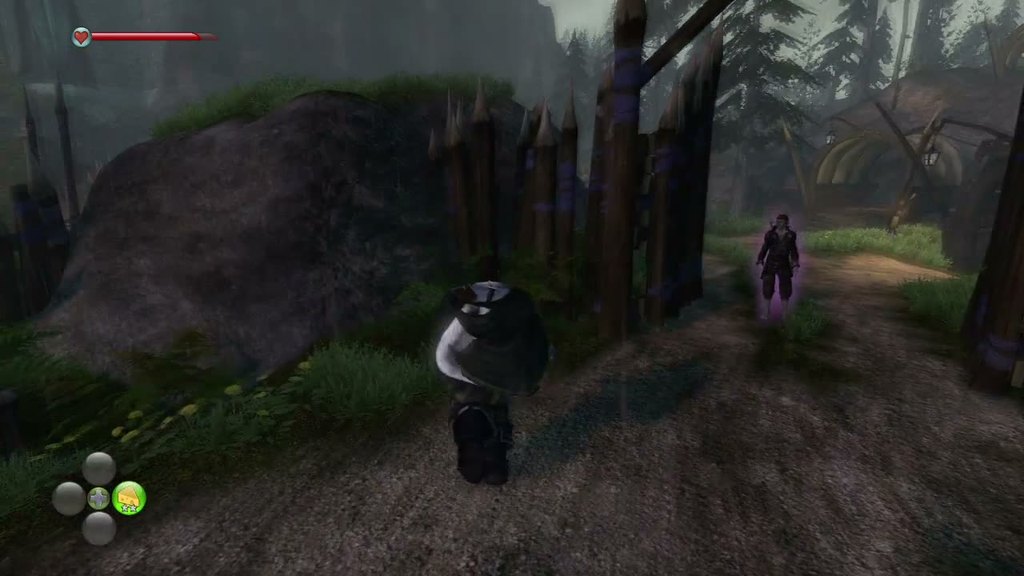
And the choices are the real game. Albion’s economy is fully simulated at street level: you can buy every pie stall, pub and blacksmith in a town, set the rents, and watch the economy (and your popularity) respond. Marry, divorce, have children, neglect them, become a celebrated landlord or a slumlord tyrant. The moral system is broad-strokes — your body literally reshapes itself around your deeds and diet — but the cumulative effect, a life visibly authored by you, is something few RPGs have matched for sheer charm.
Faults in the fairytale
Honesty requires the other ledger page. The main quest is short for an RPG — fifteen hours if you hurry the story — and Lucien is a thin villain whose finale drew criticism even from fans. The co-op mode, a headline feature, arrived compromised: your partner joins as a generic henchman rather than their own hero, a limitation of the era’s online design. Menus are sluggish, expressions (the game’s social minigames of farting and dancing for villagers) wear thin, and the frame rate in busy Bowerstone can wobble on original hardware.

The empire of small things
What Fable II understood, and what its more solemn contemporaries missed, is that a role-playing life is mostly made of small transactions: a pie bought on the road, a villager impressed by a flexed arm, a house bought because the street felt right. Its simulation of Albion’s social fabric — jobs (blacksmithing as a rhythm game, bartending, woodcutting), gambling in pubs, a property market that reacts to your renown, citizens who remember your deeds and your marital record alike — creates stories no quest writer scripted. Players remember their Fable II runs not by the main plot but by biography: the landlord phase, the family in Oakfield, the great pie binge that preceded a wedding. That is a rare achievement for any RPG, and it is entirely deliberate design — Lionhead built a life simulator and draped a hero’s quest over it to give the life stakes.
The downloadable chapters, Knothole Island and See the Future, add a weather-locked island adventure and a cursed-artefact carnival respectively, plus the dog-resurrection option that exists because Lionhead knew exactly what they had done to players. Both were sold through the Marketplace in the console’s connected years; today they ride along with the game’s later complete editions and backward-compatible versions, so the full Albion is still reachable — but the original disc, with its bustling Bowerstone and its golden light, is where the charm is undiluted.
A word for the sound of Albion
Two audio choices carry Fable II’s tone as surely as its art. Russell Shaw’s score — pastoral, melancholy, threaded with the main theme’s simple melody — gives Albion the feel of a remembered childhood place rather than a fantasy map, and it swells and hushes with a restraint the era’s bombast rarely attempted. And the voice cast is a roll-call of British character talent deployed with a comedian’s timing: Stephen Fry’s deliciously corrupt Reaver, Zoë Wanamaker’s Theresa, Julia Sawalha, Hugo Myatt and a hundred pub voices gossiping in regional accents. Albion sounds like somewhere. In a genre that often sounds like a film trailer, the difference is everything, and it is a large part of why players describe returning to this game the way other people describe going home for the holidays — which, in the end, is exactly what Fable II was always for.
The verdict
Not the revolution Molyneux promised — something better: the most likeable RPG on the 360, a fairytale that trusts small moments more than big systems.
Fable II’s Albion is one of gaming’s great places: golden, silly, melancholy and alive with gossip. Its ambitions outran its technology in the menus and the co-op, but its heart never missed. As a 360 exclusive it has aged into a comfort blanket of a game — the one you revisit not to be challenged, but to go home, walk the dog, and decide, one more time, what kind of legend to be.
New players should know the shape of the commitment: a story run of roughly twelve to fifteen hours, doubling easily for anyone who falls for the property market, the jobs, the collectables and the dog’s buried treasures — and it is designed, unusually, to be finishable by absolutely anybody, with the challenge parked in its choices rather than its combat. Bring a relaxed evening and a tolerance for fart jokes deployed as diplomacy. Leave with a spouse, three properties, a legendary cutlass and a dog who would die for you, in a game that will eventually ask if you’d let him. Fable II earns its eight and a half the way Albion earns its legends: not by being the biggest, but by being the one you tell stories about.
Score: 8.5/10