
Buying a Game Gear in 2026 is the best-value entry into Sega collecting — the machines are plentiful, the games are largely affordable, and the library is far stronger than its reputation. It is also the one retro purchase where the order of operations matters more than the budget, because the Game Gear has a known, universal, non-negotiable issue that must be dealt with before anything else: its capacitors. Buy in the wrong order and you will own a beautiful paperweight. Buy in the right order and you will own the most characterful handheld of the nineties, good for another thirty years. This guide walks the whole purchase — the capacitor question first, then models, screens, power, regions and the games, with honest guidance on what things should cost.
Step zero: the capacitor problem

Every Game Gear ever made — every revision, every region, the Majesco reissues included — was built with electrolytic capacitors that are now decades beyond their design life, and they fail in a signature cascade: the sound fades to a whisper or dies, the screen dims, washes out or shows only at an extreme angle, and the leaking electrolyte quietly corrodes the board beneath them. A Game Gear described as “working” in 2026 that has never been recapped is a Game Gear on borrowed time, and one that already shows dim screen or quiet sound is showing you its capacitors, not its character. The fix — a full recap, replacing every electrolytic on the main, sound and power boards — is the hobby’s standard rite: capacitor kits are inexpensive, any competent retro repair shop offers the service, and a properly recapped machine with cleaned pads is restored to factory behaviour. Budget the recap into every purchase, buy an already-recapped machine if you can, and treat “unserviced, all original” as a warning label, not a selling point.
Step one: choose your revision
Game Gears divide into families that matter. The original twin-ASIC models (VA0 and VA1, the great majority of Japanese, North American and European machines) carry separate chips for the system’s logic, are the most thoroughly documented, and accept the full range of modern screen and power mods — the safest buy for a machine you intend to upgrade. The later single-ASIC models (VA4 and VA5, a smaller share of production, more common in later North American and European runs) consolidated the chipset; they work beautifully when recapped but have historically had patchier support from some screen kits, so check your chosen kit’s compatibility list against the board before ordering. The Majesco reissue of 2000 — sold cheaply at the system’s second retail life in North America — is a legitimate way in: build quality is a step down, the TV Tuner does not work with it, and its screen was never the best, but prices reflect all of that. Whichever family you choose, the model-specific traps are the same: check the battery compartments for leaked-cell corrosion, test both battery and mains power if you can, and remember that region is no barrier at all — see below.
Step two: the screen decision

The original screen is the Game Gear’s weakest original part: a backlit panel with the contrast, ghosting and viewing angles of 1990, which smears fast games and drinks power doing it. You have three honest options. Keep it — the authentic experience, best paired with a recapped machine and low expectations, and the right call for a display piece. Replace it with a modern IPS kit — McWill’s pioneering mod and the refined kits from BennVenn and others deliver a bright, sharp, low-power display that transforms every game and stretches battery life dramatically; budget for the kit plus fitting, or buy a machine with one already installed by a reputable modder. Or split the difference with a modern replacement glass lens and a good clean, which helps a healthy original panel more than you would expect. Our standing advice: if you intend to actually play the machine weekly, the IPS route is the best money in this entire guide after the recap.
Step three: power in 2026
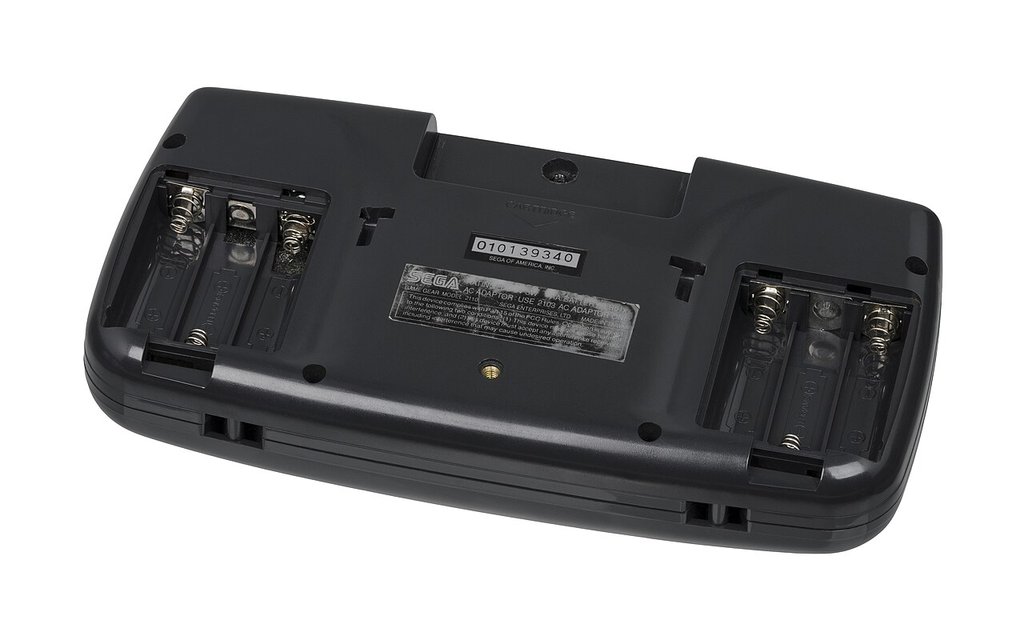
Feeding a Game Gear the period way — six alkalines every few hours — is a hobby in itself and an expensive one. The modern menu is better. Quality rechargeable AAs are the zero-mod answer and serve a stock machine respectably. Replacement power boards and USB-C charging mods, often paired with internal lithium cells, convert the machine to charge like a phone and are the natural companion to an IPS screen build. The official accessories of the era — the battery pack, the car adapter — are collectibles now, not solutions; assume any vintage rechargeable pack is chemically dead. However you power it, do the recap first: tired capacitors waste power and muddy everything downstream of them.
Step four: regions, and the games to buy first

Here is the Game Gear’s gift to collectors: there is no region lockout. Cartridges are the same shape worldwide, and a Japanese game plays on a North American or European machine exactly as it does at home — which opens the superb Japan-only shelf (GG Aleste, Gunstar Heroes, Mappy and dozens more) to every buyer without adapters or modification. Two practical notes: Japanese text-heavy RPGs remain Japanese, so shop accordingly; and the Master Gear Converter, if you add one for the Master System’s library, plays Western Master System cartridges — Japanese Master System games use a different cartridge format and stay a separate pursuit.
Build the library in this order. First the pillars, all common and fairly priced loose: Sonic the Hedgehog and Triple Trouble, Castle and Land of Illusion, Columns, Streets of Rage 2, Micro Machines. Then the depth: Shining Force: The Sword of Hajya and Defenders of Oasis for the RPG shelf — the two priciest of the common games, and worth it — plus Tails Adventure, Ristar and Wonder Boy III. Then the gems and imports as taste and budget allow. As a rule of thumb in 2026, loose common games change hands for the price of a sandwich-to-a-pizza each, boxed examples multiply that several times, and genuinely rare late releases are the only part of the library where prices turn serious — do your homework there, check sold listings rather than asking prices, and never pay a “tested” premium for a machine whose capacitors have not been touched.
Step five: flash carts, spares and the small print
The modern collector’s toolkit completes the picture. Flash cartridges for the Game Gear exist and are excellent for trying the library’s expensive corners before committing to originals, for homebrew, and for the translated Japanese games that fan patches have opened to English readers — buy from the established makers, and keep your originals for the shelf and the conscience. Spares are plentiful in a way owners of rarer systems envy: replacement shell lenses, membranes, speakers and screws are all in current production, and a tired machine can be refreshed cosmetically for very little. The one spare to hunt early is a good link cable — originals are common now, but they are the kind of common that quietly becomes scarce. Finally, the screen lens: the plastic window over the display scratches if you look at it sternly, replacements cost little, and fitting one is the cheapest transformation in this entire guide.
What things should cost
Prices move, so treat these as weather rather than law, checked against sold listings in autumn 2026. An unserviced machine in honest cosmetic order is a modest purchase — think the cost of a new release game, or less — while a professionally recapped example roughly doubles it, and a recapped, IPS-screened machine from a reputable modder sits at the top of the range at perhaps three to four times the unserviced price: still, for what it is, some of the best value in the hobby. Games follow the pattern set out above: the pillars are cheap loose, the two big RPGs and the late first-party titles lead the common market, and the genuinely scarce late releases — the final-era Japanese and European cartridges above all — are where the serious money lives. Buy the machine right, buy the pillars first, and let the rarities wait until the library has earned them.
A word on testing before you buy, in person or by post. Ask for the machine running a game with the sound up, at a normal viewing angle, for more than a boot screen — capacitor failure hides behind still photographs and reveals itself in motion and audio within minutes. Check the brightness across the whole panel, work both speakers of the headphone output if you can, and inspect the battery contacts. A seller who has recapped a machine will say so proudly and usually show the work. A seller who has not will say it is all original. In this one corner of retro collecting, original is not the compliment it is elsewhere, and the whole market knows it — which is why the serviced machines, fairly priced, are the ones that sell first.
The buy-once checklist

Recap first, or buy recapped. Choose a twin-ASIC machine if you plan to mod; verify screen-kit compatibility if you land a single-ASIC board. Decide the screen honestly — original for display, IPS for play. Power it the modern way. Exploit the region-free library shamelessly. And buy the pillars before the rarities, because this system’s common games are uncommonly good. Do those things and the Game Gear stops being the handheld that ate batteries and becomes what its owners always insisted it was: the little colour machine that was right about everything except the calendar.
And a final reassurance for the first-time buyer standing where this guide began: the Game Gear’s reputation for trouble is thirty years out of date. The capacitor problem is known, priced and fixable; the screens and power supplies of 2026 are better than the originals ever were; and the library waiting on the other side of one sensible purchase is among the most undervalued in the hobby. Buy the serviced machine, buy the pillars, and welcome to the colour side of the nineties.
One sentence to carry into the market, then: buy the serviced machine, feed it modern power, and spend the savings on the games — because on this system, unusually, the games are still the cheap part, and they were always the point.