
At a glance: Gates of Zendocon · Atari Lynx · Epyx, 1989 · Side-scrolling shooter · Score: 7.0/10
Gates of Zendocon was the Lynx’s other launch-day shooter, and the stranger of the two. Where Blue Lightning was speed and spectacle, Zendocon was scale: a side-scrolling campaign across 51 alien bases, threaded together by warp gates, with a password system to carry your progress and a story about liberating a galaxy from the Zendocon — a monstrous space spider and its brood — one planet at a time. In September 1989, a handheld shooter with fifty-one levels was an absurd quantity of game. Revisiting it now, the quantity is still the headline, and the campaign’s strange, slow-burn character is both its identity and its dividing line.
Fifty-one bases, one long war
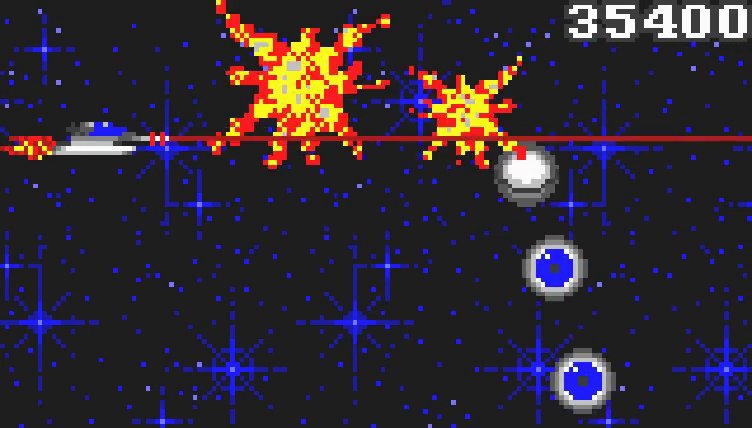
Your ship enters each base from a gate, fights through waves of alien craft and ground defences, collects power-ups and allies — freed aliens who join your formation and add their fire to yours, an idea well ahead of the genre’s habits — and exits through the gate to the next world. The bases vary: some are gauntlets, some are mazes of terrain, some are short and vicious. Passwords record your progress, and the campaign is designed to be lived with for weeks, dipped into on journeys, ground through on rainy weekends. That structure — a handheld shooter as a long campaign rather than a short score attack — was genuinely novel in 1989, and it remains the game’s best argument.
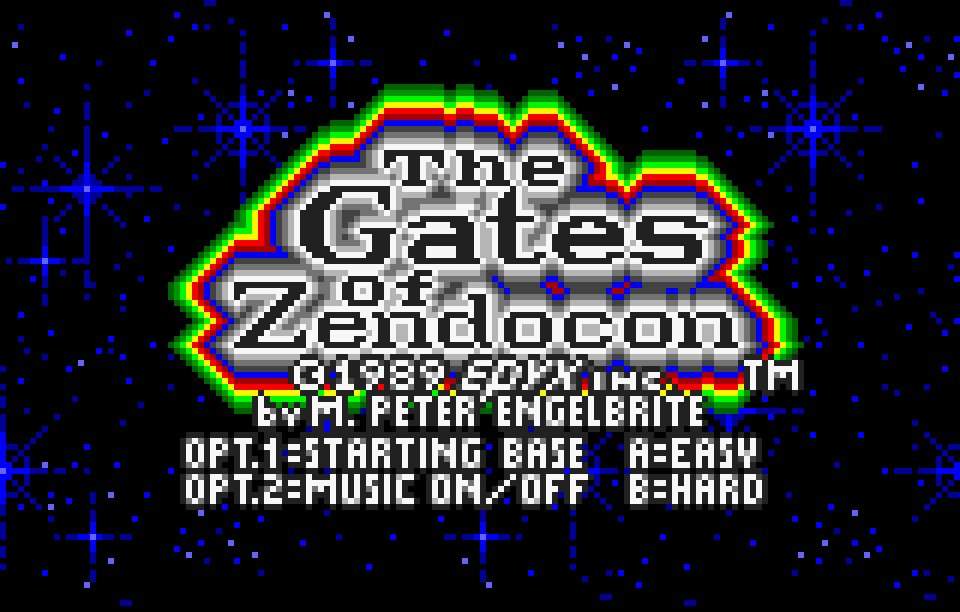
The presentation leans on the Lynx’s strengths differently than its launch siblings. The sprites are large — your ship, the enemy craft, the bosses all have a physical presence that smaller-screened shooters of the era couldn’t afford — and the parallax landscapes give each base a distinct geology. The alien designs have a biological squick to them that fits the Zendocon fiction: this is a war against an infestation, and it looks like one. Boss encounters punctuate the campaign at intervals, big set-pieces that the game builds toward and that still land.
Zendocon is the Lynx shooter for players who want a war, not a duel: fifty-one fronts of it, fought at the pace of a long campaign rather than a short arcade life.
The arsenal and the allies
The campaign’s variety deserves more credit than it usually gets. Your ship does not merely get faster bullets: the power-up system layers weapons, shields and options in combinations that change how a base is fought, and losing them to a careless death reshapes the next attempt — a very modern loop of risk and recovery, running in 1989. The allied aliens are the signature touch. Freeing one and watching it slot into formation, adding its guns to yours, gives the war a cause beyond score: you are not just clearing levels, you are raising an army, base by base, for a final reckoning with the spider itself. Games of the era rarely gave a shooter a strategic emotion. Zendocon’s liberation arc is simple, but it works, and it carries the middle campaign through its slowest stretches.
The gate system itself is smarter than a level select. Gates within a base can lead onward, backward or sideways into optional fronts, and the campaign’s map — never shown, always inferred — becomes a piece of knowledge the player owns. Veterans still argue about routes. For a launch-window handheld game to sustain route arguments thirty-six years later is not a small achievement.
The pace problem
Honesty demands the central criticism, because it has followed the game since 1989: it is slow. Your ship cruises where other shooters sprint, enemy waves arrive at a stately tempo in the early bases, and long stretches of some levels are more scenic than dangerous. Critics at the time called it ponderous; defenders called it atmospheric; both were describing the same design. The pace does rise — the back third of the campaign is a different, meaner game — but a player raised on the genre’s faster schools may bounce before the war gets interesting. The sound, too, is a mixed dispatch: strong effects, music that divides opinion, and quiet stretches that underline the tempo problem.

What it got right before anyone else
Set the pace aside and the design credits accumulate. Allied wingmen who fight beside you. A non-linear gate network that lets the campaign breathe. Power-ups with genuine variety rather than a single upgrade ladder. A password system that treats a handheld game as something you live with — all of this in a launch title, on a cartridge that predates most of the conventions it uses. Zendocon was also an Epyx original, designed for the Handy hardware it shipped on, which explains both its ambition and its oddity: this was a showcase team showing off endurance instead of speed, proving the machine could sustain a long game as well as a loud one.
Playing it now
Modern players have two good routes in — an inexpensive original cartridge, or emulation, where the campaign’s structure benefits from contemporary conveniences. The advice is to play it as it was designed: in sittings, base by base, letting the war accumulate. Players who mainline it in an afternoon will find the repetition its critics promised; players who campaign properly will find the game its defenders describe. Both are in the cartridge. The password decides which one you meet.
Collectors should know it as the Lynx launch title with the longest shadow: common, cheap, and far bigger than its reputation. Shooter purists will argue about the tempo forever, and that argument is itself a kind of compliment — cartridges nobody argues about are the ones nobody plays.
It helps, too, that the game is honest about its own scale. Fifty-one bases could have been padding; in Zendocon they are a promise the cartridge keeps, each front adding a wrinkle — a new enemy behaviour, a nastier terrain negotiation, an ally worth rescuing — so the campaign accrues rather than merely extends. Ambitious launch titles usually date by their technology. This one dates by its temperament, which is a rarer and more interesting way to be old.
New players should set expectations precisely: this is not a twitch shooter and never wanted to be. It is the Lynx’s long, strange, spidery war — and as the only fifty-level campaign in the launch window, it remains like nothing else the system ever shipped, before or since.
Bring patience, bring passwords written down like a 1989 player, and the Zendocon war will repay both — slowly, massively, and on its own unmistakable terms.
Few launch line-ups in handheld history contain a stranger artefact than this: a campaign shooter the size of a console epic, smuggled into a pocket machine that had been on sale for a matter of weeks when it arrived.
Play it in campaign sittings, forgive the cruising speed, and what remains is one of the most distinctive cartridges of the Lynx’s first year.
That is the review in one line: flawed, huge, and like nothing else in the launch window.
Verdict
An ambitious, flawed, fascinating launch shooter: 51 bases of atmosphere and ideas, paced for a different era’s patience. 7.0/10 — the Lynx’s most interesting B-side, and a campaign worth finishing once.