
At a glance: The Eagle Box (2016) · Android TV box sold as a ready-made retro games machine · One of dozens of near-identical boxes from the mid-2010s Android land-grab · A period piece now — assessed as one
Every gaming era leaves behind a stratum of hardware that made perfect sense at the time and looks faintly baffling a decade later. For the mid-2010s, that stratum is the Android TV box: a small plastic slab, sold for the price of a takeaway pizza, promising to turn any television into a games console, a media centre and a retro arcade all at once. The Eagle Box was one of the more visible residents of that stratum in the UK — a box marketed squarely at retro gamers, sold on the pitch that everything you needed for classic gaming was already inside. Revisiting it now is less a product review than an excavation, because the Eagle Box only makes sense inside the brief, strange gold rush that produced it.
The land-grab under the television
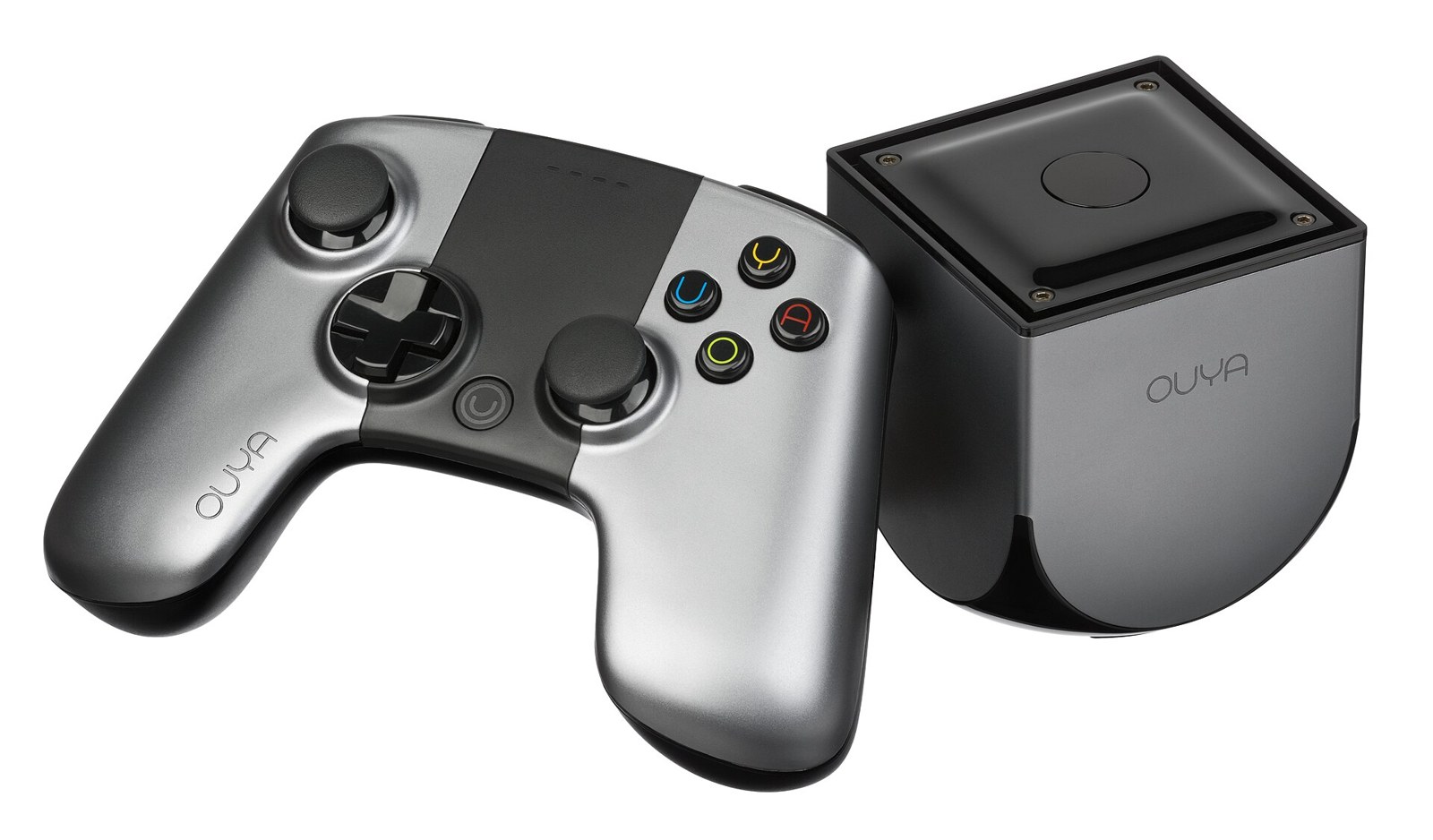
Set the scene. Around 2012, Android escaped the phone. Google’s mobile operating system was free for manufacturers to build on, its app store was permissive by the standards of console holders, and a generation of cheap ARM chipsets — Amlogic, Rockchip and friends — made it possible to build a competent little computer for remarkably little money. The result was a free-for-all. The OUYA Kickstarter raised over eight million dollars in 2012 on the promise of an open Android console, and whether or not the OUYA itself succeeded, it proved the appetite. GameStick, Mad Catz’s M.O.J.O. and a flood of unbranded boxes followed, all chasing the same patch of carpet beneath the nation’s televisions.
Into that flood, around 2016, swam the Eagle Box. Its sales pitch was the era’s standard recipe, executed with unusual directness: an Android box, a controller in the package, media software for your films and television, and emulation front and centre in the marketing. Where the OUYA had tried to build a curated store and the M.O.J.O. had chased the premium end, boxes like the Eagle competed on a simpler axis — arrive, plug in, play. For buyers raised on £300 consoles, a box costing a fraction of that and claiming thousands of games was an easy impulse purchase, and the retro audience was the easiest sell of all: many of us already owned the games, in one form or another, several times over.
What ownership actually felt like
The honest report from the period is that these boxes lived and died by their silicon and their controllers. Eighth and sixteen-bit emulation asked almost nothing of an Amlogic chip, and a box like the Eagle handled the 8-bit and 16-bit libraries — the machines most retro buyers actually wanted — without breaking stride. PlayStation emulation was generally within reach. Beyond that, expectations needed managing: Nintendo 64 and Dreamcast titles exposed the limits of bargain chipsets and the immaturity of Android emulation at the time, and results varied wildly from game to game.
The controller question mattered more than the spec sheet. A retro box is a promise about feel, and the pack-in pads bundled with budget Android hardware ranged from serviceable to dreadful — spongy d-pads, variable build quality, and Bluetooth pairing that could test the patience of a saint. Experienced owners quickly learned the era’s real secret: the box was a platform, not a product. You paired a decent third-party pad, organised your own front end, and treated the supplied software as a starting point. Configured that way, an Eagle Box or any of its siblings made a perfectly pleasant little retro station for the money. Left exactly as it came out of the packaging, it was a lottery.

The “fully loaded” shadow
No excavation of this stratum is complete without the era’s disreputable subplot. Because an Android box could be made to run almost anything, a grey marketplace grew up around selling them “fully loaded” — pre-configured with media software and add-ons aimed at streaming films and sport without paying for them. High-street-adjacent websites and market stalls shifted astonishing numbers of generic boxes on exactly that promise, and for a while in 2016 and 2017 the Android box was a fixture of trading-standards raids and court reports as much as gadget coverage. The retro pitch and the piracy pitch often shared the same product page: thousands of classic games *and* free movies, one small slab, no questions asked.
The crackdown, when it came, chilled the whole shelf rather than just the guilty corner of it. Sellers were prosecuted, platforms tightened their policies on pre-loaded devices, and respectable retail wanted nothing to do with a product category whose most famous use case was now legally radioactive. Boxes like the Eagle — sold on a broader, more legitimate pitch that mixed media playback with retro gaming — found the oxygen gone anyway. The gold rush did not end because the boxes stopped working. It ended because the respectable reasons to buy one were drowned out by the unrespectable one, at precisely the moment better-mannered alternatives arrived.
The wave breaks
What killed the budget Android box was not a scandal but a pincer movement. From above, Nvidia’s Shield TV showed what the concept looked like with real money behind it — a proper Tegra chip, a quality controller, and support that lasted years — and quietly became the connoisseur’s choice, still updated long after its rivals were landfill. The OUYA’s store closed, Razer absorbed what was left, and the M.O.J.O. faded. From below, the Raspberry Pi ate the tinkerers: RetroPie offered the same emulation in a cheaper, better-documented, community-supported form, and the people most likely to configure an Android box were exactly the people most likely to prefer a Pi.
And from the side came the phones. Android emulation matured on handsets that everyone already owned and upgraded every two years, and the dedicated retro handheld scene — the spiritual heirs of these boxes — rebuilt the idea properly, with good controls designed in rather than bundled as an afterthought. The Eagle Box’s moment, roughly 2015 to 2017, was real but brief: a window when the technology was suddenly cheap, the big console makers were ignoring retro demand, and the solutions that would eventually win had not quite arrived.
Verdict: a fossil worth keeping
Judged as a product in 2026, the Eagle Box is obsolete several times over — outclassed by a modern phone, a mini PC, a Pi, or any of the current wave of emulation handhelds. Judged as a period piece, it is genuinely interesting: physical evidence of the moment retro gaming’s centre of gravity shifted from original hardware and official re-releases to cheap, open, bring-your-own-library computing. The Eagle Box and its hundred siblings taught a mass audience that emulation could live under the television in a tidy box with a controller — and every mini console and retro handheld since has profited from the lesson. If you find one in a drawer, don’t throw it out. It’s not a console. It’s a fossil of the land-grab, and fossils are how we prove the era happened.