At a glance: Kaettekita Mario Bros. · Nintendo with sponsor Nagatanien · Famicom Disk System, Japan, 30 November 1988, via the Disk Writer service · A revised remake of the 1983 arcade game Mario Bros. · This feature covers the game itself, its food-company sponsorship and its 2016 English fan translation editorially. No patch, ROM or download links appear anywhere in this article.
Every famous series has a cupboard, and in Mario’s cupboard sits one of the strangest official releases Nintendo ever put its name to: a remake of Mario Bros. that was never sold in a shop, was paid for by a food company, paused to advertise rice seasoning, and then vanished into Japan-only obscurity for nearly three decades. Kaettekita Mario Bros. — roughly, “Mario Bros. Returns” — finally became readable to English-speaking players in May 2016, when a fan translation carried it across the language barrier. The translation is the news hook. The game underneath it is the real story.
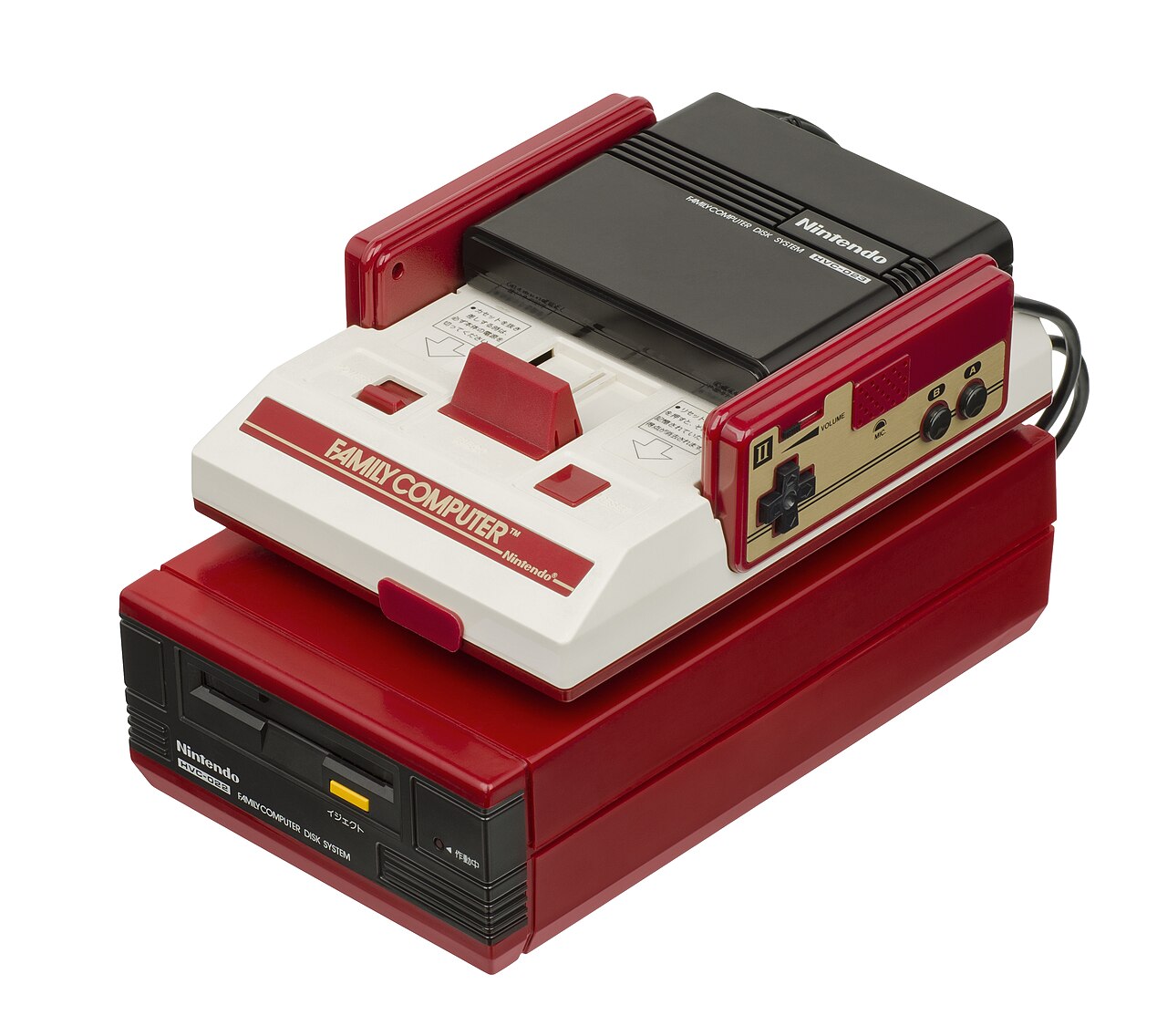
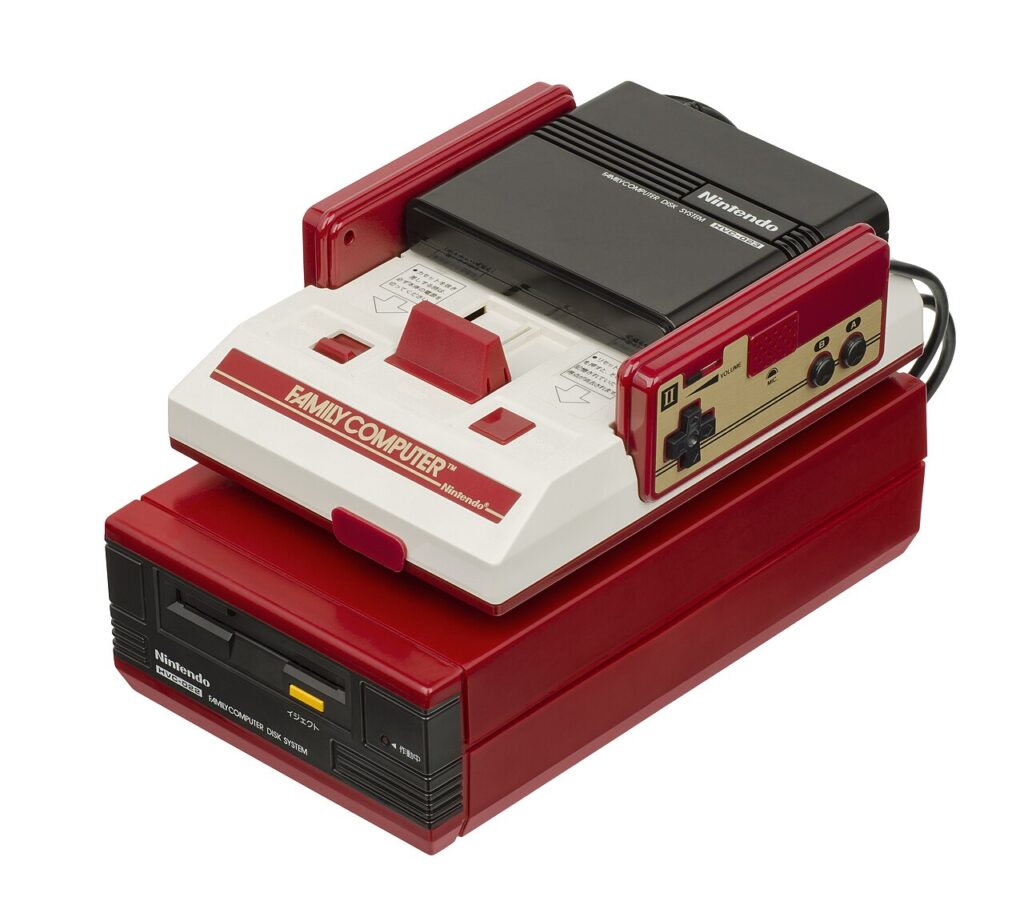
The Famicom Disk System add-on. Kaettekita Mario Bros. was written to blank disks at Disk Writer kiosks rather than sold boxed, which is a large part of why it stayed obscure. Photo via Wikimedia Commons.
A remake you could not buy in a box
To understand the game you first have to understand the medium. The Famicom Disk System, launched in 1986, sat underneath Nintendo’s Japanese console and read rewritable magnetic disks. Nintendo’s Disk Writer kiosks, installed in shops across Japan, let owners have new games written onto disks cheaply instead of buying full cartridges. Some titles lived their whole lives that way, and Kaettekita Mario Bros., released on 30 November 1988, was one of them: a Disk Writer exclusive, co-published by Nintendo and Nagatanien, a Japanese food company best known for seasonings and dried foods. It holds a couple of quiet footnotes in Nintendo history, too — it was the last Super Mario franchise release for the Disk System, and the last Mario game of Japan’s Showa era, arriving weeks before Emperor Hirohito’s death.
The starting point was the 1983 arcade original, the sewer-set game where Mario and Luigi clear single-screen stages by bumping platforms from below to flip Shellcreepers, Sidesteppers and Fighter Flies, then kicking them away before they recover. The earlier Famicom and NES conversion had cut corners to fit its tiny memory: enemy introduction scenes were dropped, sprites shrank, the bonus rounds and icicle hazards went missing. Kaettekita set out to restore the arcade game properly — and then kept going.
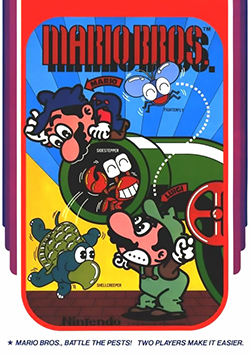
The original 1983 Mario Bros. arcade flyer — the game Kaettekita Mario Bros. remade for the Disk System five years later, restoring material the first home conversion had cut. Flyer via Wikipedia. This is arcade artwork for the 1983 original, not art from the 1988 remake itself.
What the return actually changed
The most important fix was feel. In the original, a jump was a commitment: once Mario left the floor, his arc was his arc. Kaettekita let players nudge their direction in mid-air, a small-sounding change that transforms the game’s fairness, and one modern players take entirely for granted. Graphics were redrawn closer to the arcade’s look, the missing enemy introductions and icicles came back, and the disk format was put to proper use. Rather than a paper high-score table in the manual, players could register their name — the game even asked age and gender, and addressed players with matching honorifics — and save their top five scores to the disk itself.
Then there is the mode that gives the game its legend: Nagatanien World. Because Nagatanien paid for the production, the sponsor is woven through the fabric of the thing. Intermission cutscenes present the company’s products, a Shellcreeper pops up to explain the promotional features, and period advertising for the then-brand-new Super Mario Bros. 3 — released the previous month — rides along too. Game over in Nagatanien World triggered a slot machine: line up the plumbers’ faces to continue, or, with the best possible spin, spell out the sponsor’s name for a reward of extra lives. There was even a real-world contest element, with merchandise prizes in the mix. It is, in the best sense, an advergame — but an advergame built by Nintendo, on a beloved game, with genuine mechanical improvements under the marketing.
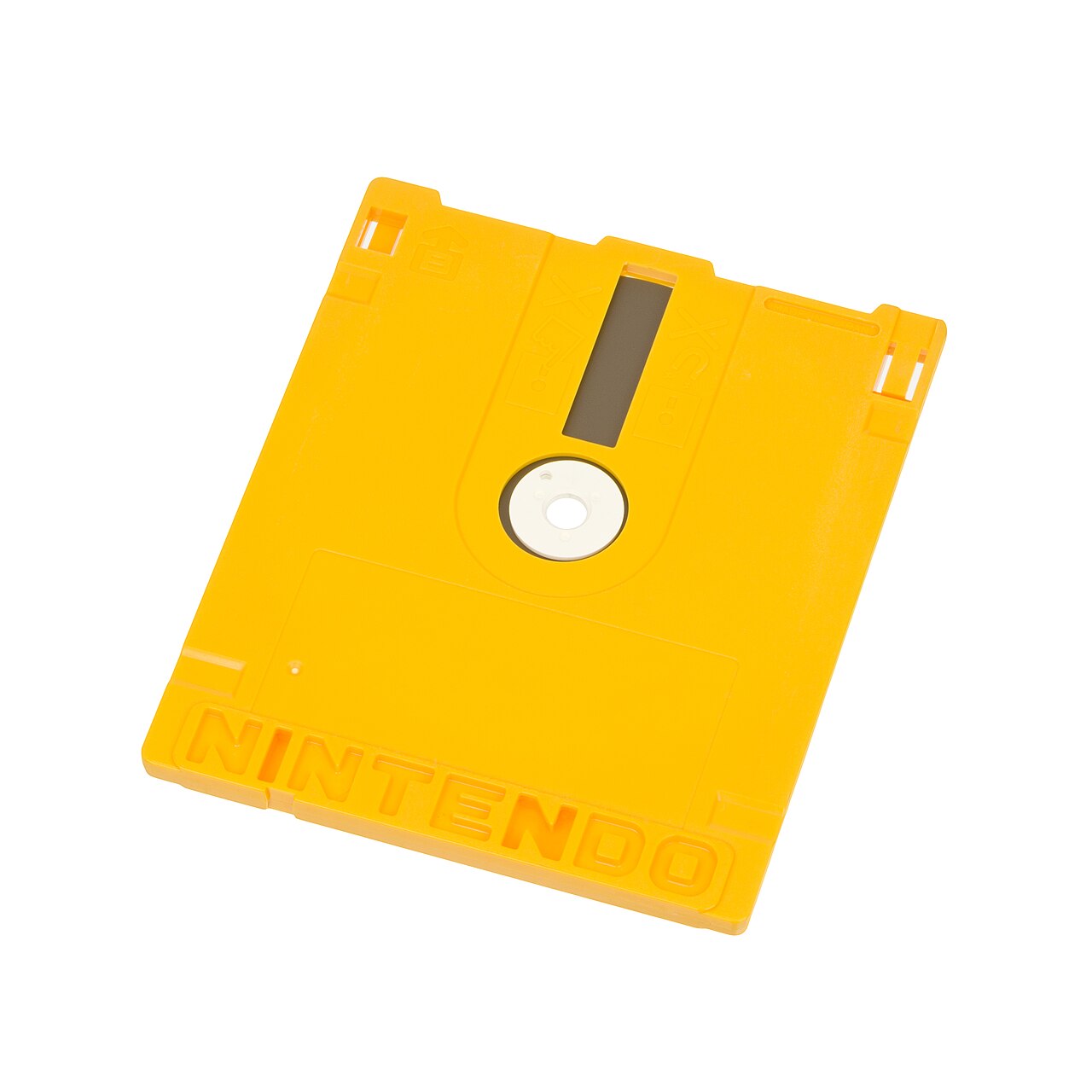
A Famicom Disk System disk. The rewritable format is what made Kaettekita’s saved high scores, player registration and Disk Writer distribution possible. Photo via Wikimedia Commons.
The version that escaped — and the one that did not
Oddly, part of this remake did reach the West, wearing a disguise. When Nintendo reissued Mario Bros. in Europe in 1993 under its Classic Serie line, that cartridge drew on Kaettekita‘s work, using its enemy sprites and colours. The sponsorship, the slot machine and the whole Nagatanien apparatus were stripped out, and North America never received even that cleaned-up edition. So for English-speaking collectors, the full 1988 game — adverts, contest, saved scores and all — remained a rumour attached to an untranslated disk.
Why this disk is a preservation nightmare
There is a material reason this game stayed hidden longer than most Nintendo releases, and it is worth spelling out for collectors. Kaettekita Mario Bros. never existed as a boxed retail product with a print run to survive in the wild; it existed as data written onto customers’ disks at kiosks, a service Nintendo wound down years ago. Magnetic disks demagnetise, mould and get overwritten — a Disk Writer title could literally be erased by its owner in favour of something else, and many were. Surviving copies are therefore accidents of neglect as much as of care, and every one that surfaces carries the additional archaeology of whatever else its disk has held. Fan translation, in that light, is not merely a language service. For a game distributed as rewritable data on a dying medium, translation projects and the documentation around them are a genuine arm of preservation, recording not just the words but the whole sponsored, slot-machine-spinning context that a bare dump of code would leave unexplained.
2016: the fans translate the adverts too
That is what makes the May 2016 fan translation, released by translator MrRichard999 and reported that month by Nintendo Life and Indie Retro News, such a satisfying piece of preservation. A lesser effort might have translated the menus and called it done. This project — which rendered the title as The Return of the Mario Bros. — took on the whole package, sponsorship text included, which is exactly right: the Nagatanien material is not contamination of the game, it is the game’s identity, a perfect fossil of 1988 Japanese cross-promotion. Translating it lets English readers study the fossil rather than just the skeleton.
Read today, Kaettekita Mario Bros. plays like the director’s cut of a game most people only know in edited form: the arcade original’s content restored, its controls forgiven, its scores remembered, and a food company’s mascot cheerfully selling seasoning between stages. It never left Japan in its own clothes, it was never supposed to be a collector’s prize, and for twenty-eight years almost nobody outside Japan could read a word of it. The 2016 translation did not just make a rare game playable in English. It made an argument — that even the commercial, disposable, kiosk-written corners of Nintendo history deserve to be legible. On the evidence of this odd, generous little disk, the argument wins.