
At a glance: Lumines: Electronic Symphony · PS Vita · Q Entertainment, 2012 · Puzzle · Score: 8.5/10
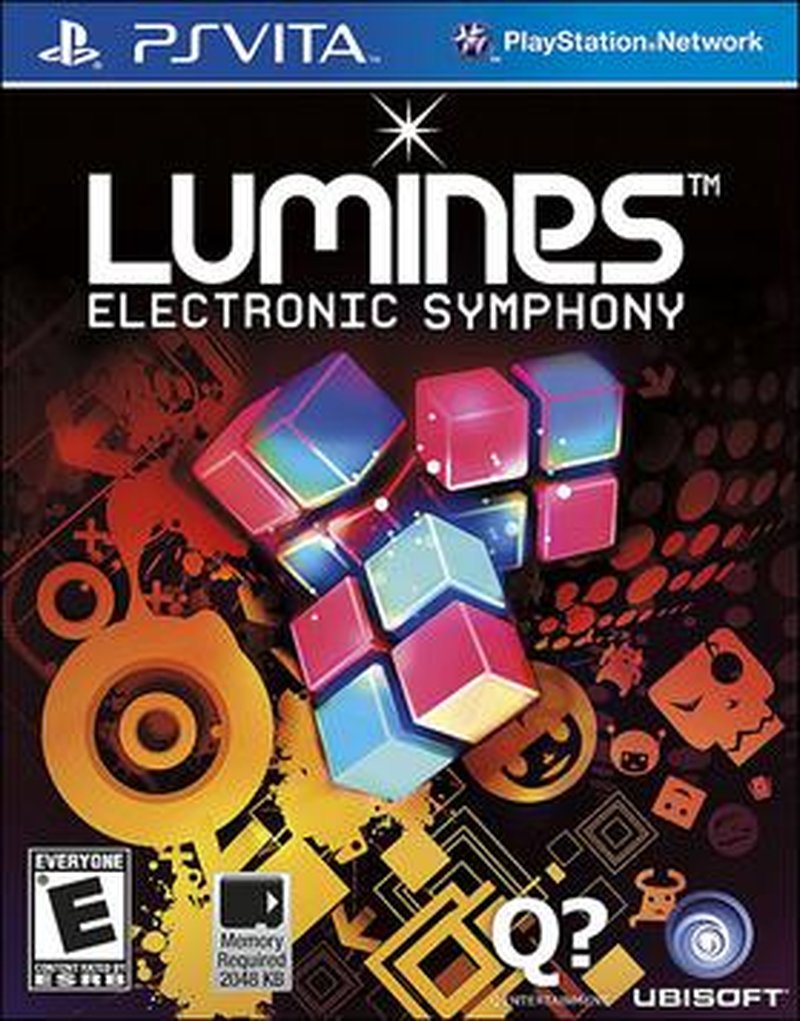
Lumines was the PSP’s killer app — the falling-block puzzler from Tetsuya Mizuguchi’s Q Entertainment that turned a launch line-up into a lifestyle — so its return as a Vita launch title was a homecoming. Electronic Symphony is the series refined to its essence: two-coloured blocks fall in 2×2 squares; you rotate and drop them to build solid squares of one colour; a timeline sweeps the screen to the beat, clearing your squares in time with the music. Build too slowly and the timeline finds your squares unfinished; build in rhythm and chains cascade. It remains one of the most elegant designs in the puzzle genre — Tetris’s only true peer in the ‘one more go’ stakes — and this edition dresses it in the best soundtrack the series ever had.
That soundtrack is the headline. Electronic Symphony is a curated tour of electronic music circa 2012: Underworld’s ‘Born Slippy’ energy by way of Kaskade, Faithless, The Chemical Brothers, Aphex Twin’s ‘Windowlicker’, Underworld themselves, Mylo, Benny Benassi — over thirty tracks, each with its own skin, its own sound effects, its own tempo for the timeline. The Mizuguchi synaesthesia is the point: your blocks are instruments, your clears are percussion, a good run becomes a performance you half-played and half-conducted. On headphones, on the OLED, in the dark, Electronic Symphony is less a puzzle game than a playable album — the Vita’s most stylish launch title by a distance, and still its finest pure puzzler.
New systems, honest trade-offs
Q Entertainment used the sequel to sand the design. The Shuffle Block, a new piece that randomly recolours the blocks it lands on, detonates your careful architecture into new chains — a chaos agent that divides purists and delights everyone else. Powers earned through play (stop the timeline, clear a colour, call the shuffle) add a light strategic layer. Controls offer the era’s fork: the touchscreen, sliding blocks with your thumb, or the classic D-pad and buttons — and here the review must be plain: touch is fun for an hour and inferior forever after. Lumines at speed is a game of frames and certainty; the D-pad is how it is meant to be played, and Electronic Symphony, to its credit, never forces the issue. The rear pad goes similarly unused, which in 2012 counted as restraint.
Every puzzle game wants your attention. Lumines wants your pulse — and with this soundtrack, at this volume, it gets it.
The package around the core is decent rather than generous. Voyage mode strings the skins into a long-form run; Duel, Stopwatch and Master modes cover the competitive and score-attack bases; playlists let you build your own sets. What is missing, veterans noted at launch, is breadth — the PSP games’ puzzle and mission modes, and the sheer track count of the biggest earlier editions. The leaderboards and local multiplayer carry the long-term value, and the game’s difficulty curve is kinder than the PSP original’s, which purists may count either way. As a Vita citizen it is exemplary: instant sleep-and-resume, five-minute sessions that become fifty, a battery-sipping presentation that still looks like the future the console promised.
Why it endures
Lumines has since been remastered beautifully for modern systems, and that version’s HD rumble is a joy — but Electronic Symphony’s tracklist has never been relicensed or bettered, which makes the Vita original a small tragedy of music licensing and a big reason to own it. These specific songs, in this specific order, with these specific skins, exist as a commercial product only here (and in the game’s limited physical print run, now a collector’s piece). Puzzle games are supposed to be timeless; Electronic Symphony is instead gloriously of its moment, a 2012 time capsule you can play, and its moment was excellent.
The science of one more go
Why does Lumines endure when a hundred falling-block games don’t? The timeline is the answer, and Electronic Symphony showcases it best. In Tetris, you clear lines the instant you complete them, and mastery is survival. In Lumines, completion and clearance are separated by the beat: a square only scores when the timeline sweeps it, so every drop is a decision made in musical time, and the screen fills with futures you’ve promised yourself. Build across the sweep and you bank chains; panic and you bury your own work. The system creates a rhythm of hope and jeopardy that syncs, in Electronic Symphony, to some of the greatest electronic tracks ever licensed for a game — so that a great run isn’t merely efficient, it swings. The skins’ design completes the synaesthesia: each track recolours the blocks, revoices the drop and clear sounds, retunes the whole instrument. You are not playing along to the music. You are playing the music, badly at first, then — on the runs you’ll remember for years — like you wrote it.
A collector’s footnote, because this game’s physical story is pure Vita: Electronic Symphony’s Western cartridge had a modest print run, Ubisoft published it, and for years it was simply the classy puzzler in every launch collection. Its sequel-that-never-was and the series’ later remaster (which, licensing being licensing, carries a different, also excellent tracklist) have only raised this edition’s standing: it is now the sole commercial home of a specific, beloved marriage of game and songs. Trance Vibrations and Rez comparisons aside, Mizuguchi’s synaesthesia project found, in this cartridge, its most complete portable expression. Keep it near the top of the case. It earns the slot every commute.
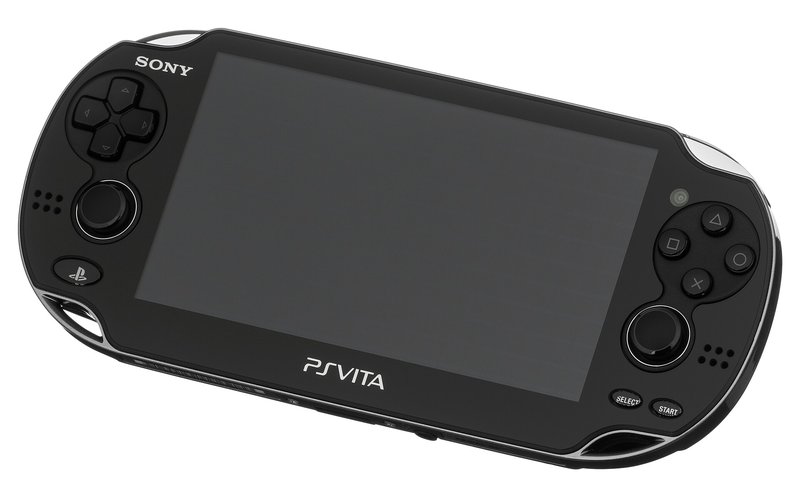
There is a final, specifically Vita pleasure to record: this is one of the platform’s great ‘show someone’ games. Hand a stranger a Vita running Electronic Symphony — headphones on, ‘Hey Boy Hey Girl’ building, the timeline sweeping gold across the grid — and the console’s whole pitch (console quality, music-culture cool, pick-up-and-play purity) explains itself in ninety seconds. Launch line-ups are usually remembered for their tech demos. The Vita’s is remembered, by those who were there, for a puzzle game that made them feel like DJs. That is not nostalgia talking; load it today and the feeling is still there, undimmed, waiting at the top of the first track.
For score-chasers, one veteran’s counsel: build wide, not tall; keep a sacrificial column at each edge for the shuffle block’s surprises; and never, ever chase a chain across the timeline’s blade when a safe square will bank. The voyage is long, the soundtrack is patient, and the grid — like all the best dancefloors — rewards the players who listen before they move.
And if you find the cartridge in a bargain bin — it still happens, at the bottom of the Vita’s most picked-over shelves — know that you are holding the launch window’s classiest object at its lowest-ever price, which is the collector’s definition of a perfect afternoon.
Verdict
Lumines: Electronic Symphony scores 8.5/10: the series’ best-feeling, best-sounding edition, a launch title that still justifies its cartridge slot on any Vita. A leaner mode selection than its PSP ancestors and a divisive chaos block keep it from the genre’s very top step — but for pure, headphone-deep, beat-locked flow, nothing on the platform touches it. Hey boy, hey girl: play this one loud.