Ask anyone about the Atari Lynx and you will get the battery joke inside thirty seconds. It has stood in front of this library for thirty-five years, hiding a second shelf of games that the launch coverage ignored, the sales charts buried and the machine’s obituaries never mentioned. The Lynx’s famous titles earn their fame — but the games below are why owners keep their machines charged. None of them is among the system’s sixteen best-known cartridges. All ten belong in any serious Lynx collection, and most can still be found for less than the price of the AAs they will happily eat.
A word on the rules of this list. Every game below was excluded from the obvious shelf on purpose — you will find no Chip’s Challenge here, no Warbirds, no Blue Lightning, because those are the flagships and they have their own reviews elsewhere in this archive. What remains had to earn its place the hard way: by being the game a Lynx owner discovers third, or fifth, or by accident in a job lot, and then cannot stop recommending. Some were respected in their day and forgotten since. Some were ignored in their day and have been quietly accumulating devotees ever since. One is a chess program. All of them play as well in 2026 as they did on release — most can still be bought for the price of a sandwich, and two or three are, in this writer’s judgement, flat-out among the best games on the system full stop. The order is a journey, not a ranking.
1. Scrapyard Dog
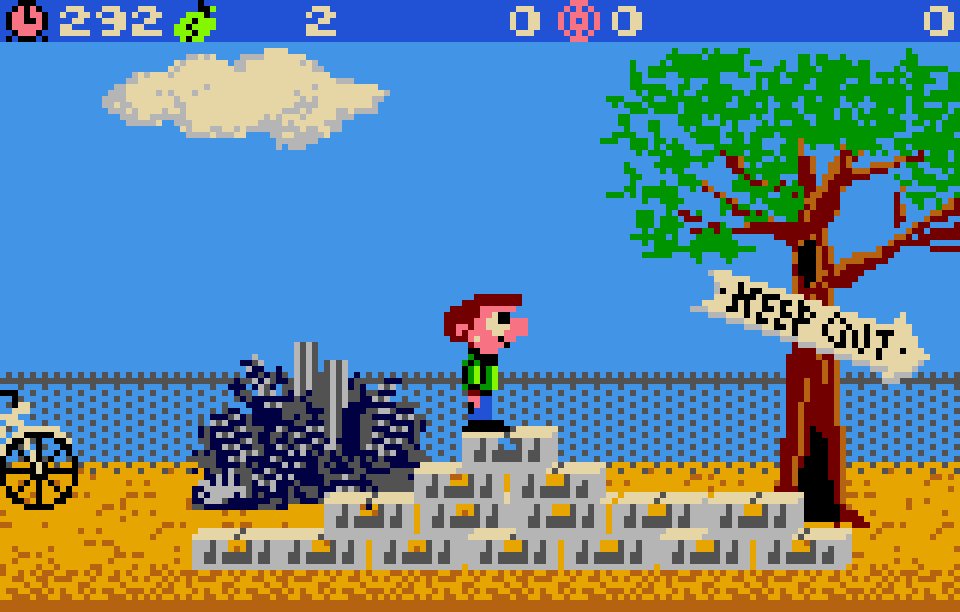
A crime boss named Mr. Big has dognapped your dog, Scraps, and hidden him somewhere in the city’s meanest scrapyard. What follows is a big, bruising platform adventure in the classic mould: run, jump and climb through junkyards, streets and sewers, weaponising whatever rubbish comes to hand, while the timer and the local wildlife argue against you. Scrapyard Dog’s charms are easy to miss in screenshots — it is not the Lynx’s prettiest game — but its levels are large, secret-stuffed and honestly challenging in a way that recalls the great 8-bit platformers. A warmth runs through it: this is a game about a kid and his dog, and it never forgets it. Owners who stuck with it in 1991 found one of the meatiest platform campaigns on the system.
2. Zarlor Mercenary

Vertical shooters were not supposed to work on a wide, short handheld screen, so Epyx simply redesigned the contract: Zarlor Mercenary scrolls its alien planet beneath you at a pace the Lynx’s display reads beautifully, and wraps the shooting in a mercenary economy. You choose your pilot from a roster of hired guns, earn money — zarlors — for everything you destroy, and spend it between missions on a genuinely tempting arsenal of lasers, missiles and defensive kit. Spend badly and the later waves will explain economics to you at gunpoint. Best of all, up to four players can take contracts together over ComLynx, a linked co-op shooter years before the idea was fashionable. Tough, generous and criminally overlooked.
3. Switchblade II

Gremlin’s cyberpunk platformer began life on the Amiga and ST, and its Lynx conversion is one of those ports that makes you wonder why the game wasn’t designed for the handheld all along. You are Hiro, last of the Blade Knights, fighting the resurrected villain Havok through a neon city of platforms, gun emplacements and mechanical horrors. The formula is classic — slash, shoot, collect, upgrade — but the execution is a cut above: big characterful sprites, a weapon system that grows with your earnings, and level design that mixes combat rooms with proper exploratory platforming. In a library light on this kind of action-platformer, Switchblade II fills its niche almost alone, and fills it well.
4. Crystal Mines II
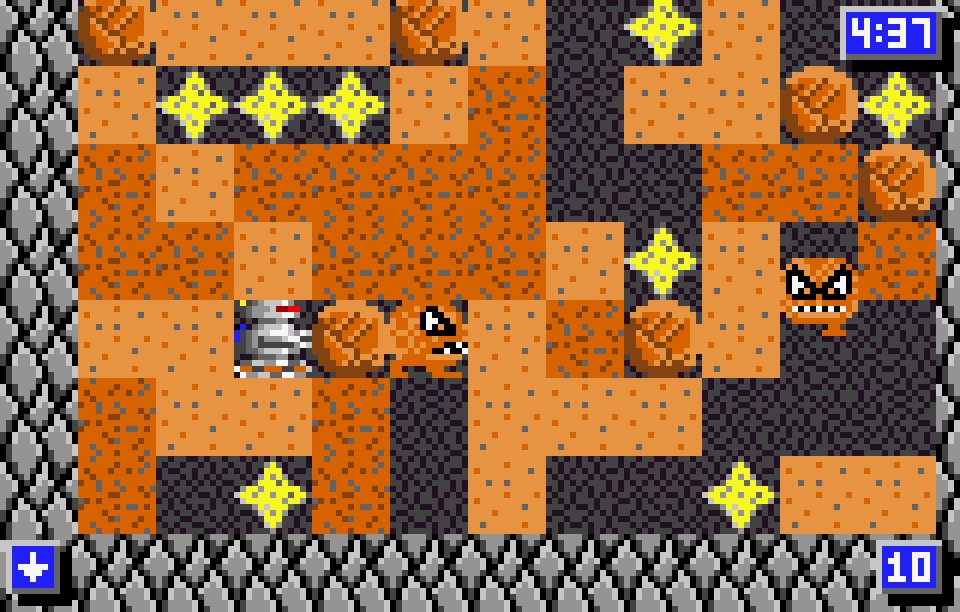
The Lynx’s puzzle-action bench was deep, and its deepest cut is this digging game — a descendant of the NES cult favourite Crystal Mines, expanded into well over a hundred underground levels. You pilot a little robot through caves of dirt, boulders and treasure: dig the earth, grab the gems, and learn — usually by being flattened — that every boulder is a physics problem and every enemy a patrol route to be read. It plays like Boulder Dash that went to puzzle school: part arcade, part Sokoban, wholly addictive. The difficulty curve is long and fair, the level count is enormous by handheld standards, and “one more cave” is a genuine clinical condition among its owners. If Chip’s Challenge is the Lynx puzzle game everyone owns, Crystal Mines II is the one its owners graduate to.
5. Dracula the Undead
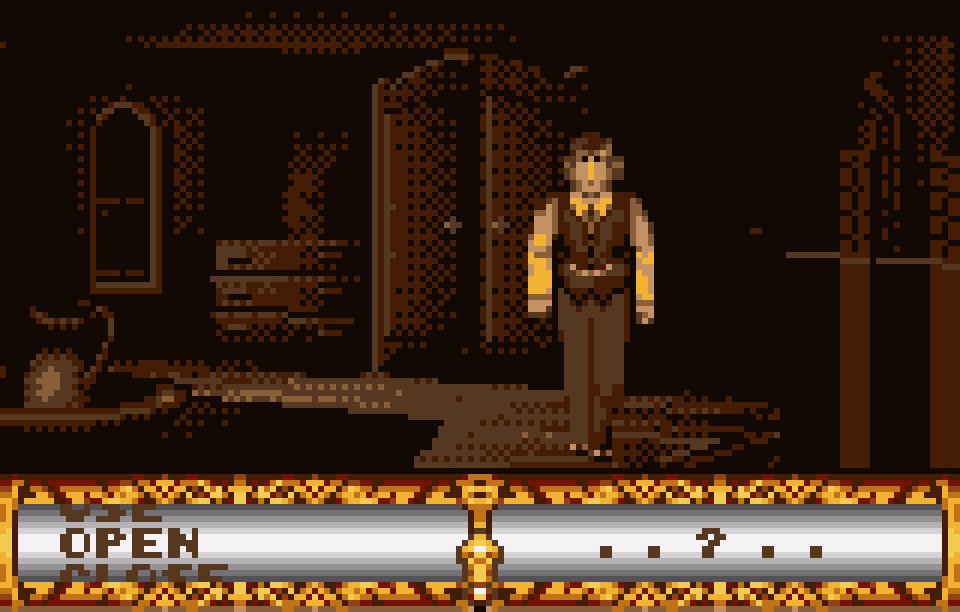
Nothing else in the Lynx library looks or plays like this. Dracula the Undead adapts Bram Stoker’s novel as a moody graphic adventure: you are Jonathan Harker, a guest in a castle where the hospitality has teeth, exploring, examining and conversing your way through an interface of icons and inventories. The art is the headline — sepia-toned, digitised-looking scenes that give the game an antique-photograph dread no other Lynx title approaches — and a real-time clock drives the fiction, with the castle’s dangers changing between day and night. Adventure games were vanishingly rare on handhelds in 1991, and a licensed literary one, made with this much atmosphere, is a small miracle of ambition. Slow, strange and essential.
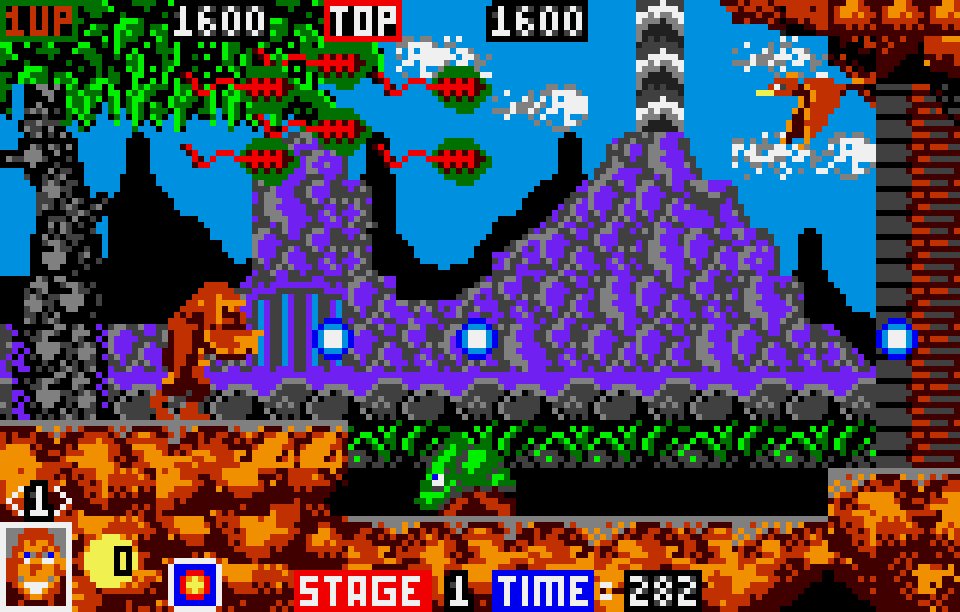
6. Toki

Tad Corporation’s arcade oddity — a heroic ape who defeats a jungle full of monsters by spitting at them — sounds like a dare, and the Lynx conversion takes it completely seriously. The result is one of the prettiest platformers on the system: dense jungle art, big expressive sprites, and level design that alternates swimming, climbing and precision jumping with the confidence of the coin-op original. Toki’s power-ups — the football helmet, the improved spit, the high-jump shoes — arrive exactly when the game needs a new idea, and the difficulty is the friendly kind of hard: deaths that teach. Arcade ports on the Lynx ranged from the sublime to the rushed. Toki stands firmly in the first camp, and its relative obscurity beside the system’s launch titles is one of the library’s small injustices.
7. Blockout
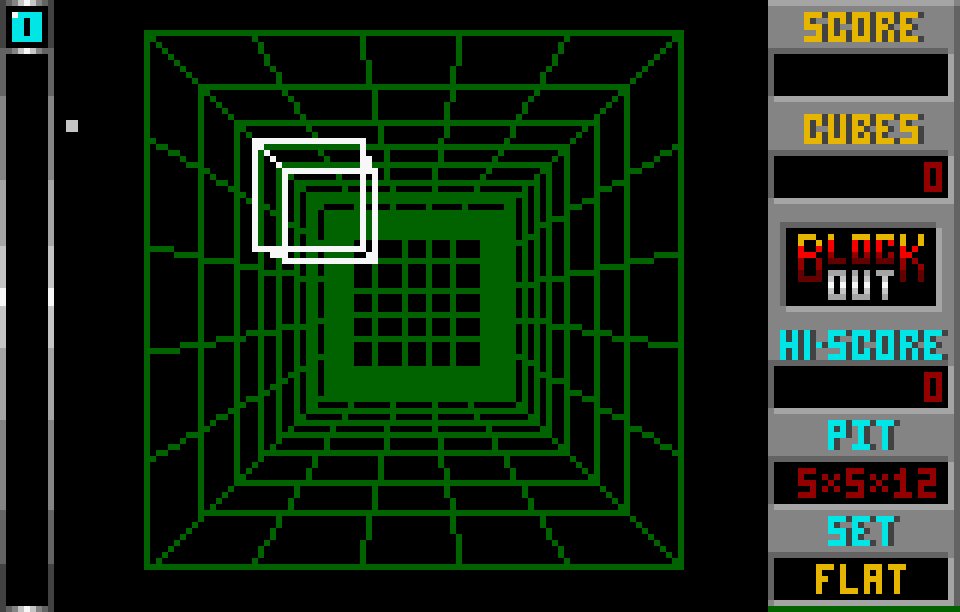
Falling-block puzzles went 3D remarkably early, and Blockout — designed in Poland by Aleksander Ustaszewski and published by California Dreams — was the game that did it: blocks tumble into a pit seen from above, rotated in three axes, building complete layers in the round. The Lynx version is the one to own. The pit reads clearly on the small screen, the controls give you rotation without contortion, and the game’s particular tension — a structure you can see but must learn to think inside — survives miniaturisation intact. Tetris trained a generation to think in two dimensions. Blockout is where that generation went to graduate, and the Lynx’s puzzle library, already the deepest on any handheld of its day, is richer for having it near the top.
8. Krazy Ace Miniature Golf

Every library needs a game that can be taught in one sentence and enjoyed by absolutely anyone, and the Lynx’s is a miniature golf game from Telegames with a clown’s heart. The holes are the stars: themed, obstacle-stuffed miniature worlds where ramps, moving hazards and outright surreal machinery stand between your ball and par. The putting model is simple and honest — aim, power, pray — and up to four players can share a round, which made it a playground staple in its day. Krazy Ace never troubled the review charts, but it is the cartridge Lynx owners reach for when a non-gamer asks what the machine actually does. Charm, it turns out, is a feature.
9. Super Asteroids & Missile Command
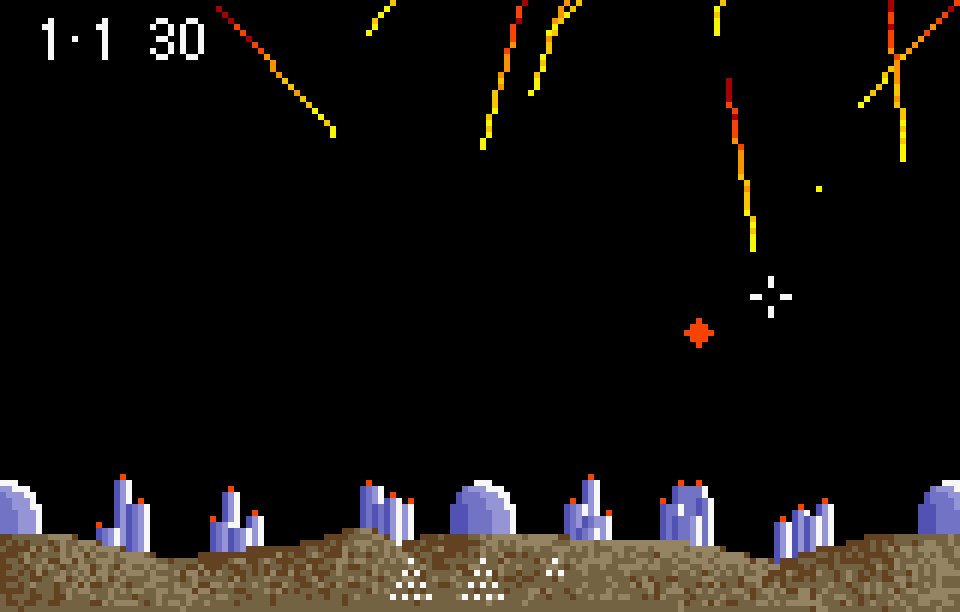
One of the last official Lynx releases, in 1995, was a love letter to the first: Atari paired enhanced versions of Asteroids and Missile Command — two foundational arcade games — on a single cartridge, rebuilt with colour, power-ups and modernised presentation while keeping the originals’ skeletons intact. Both halves work beautifully. The Asteroids update respects the physics that made the original a masterpiece of momentum; the Missile Command half turns the little screen into a sky full of descending doom, its cities depending on your interception arithmetic. It is a modest cartridge with a poetic job: the Lynx, the most advanced handheld of 1989, closing its commercial life by honouring the games that built its maker.
10. Ultimate Chess Challenge
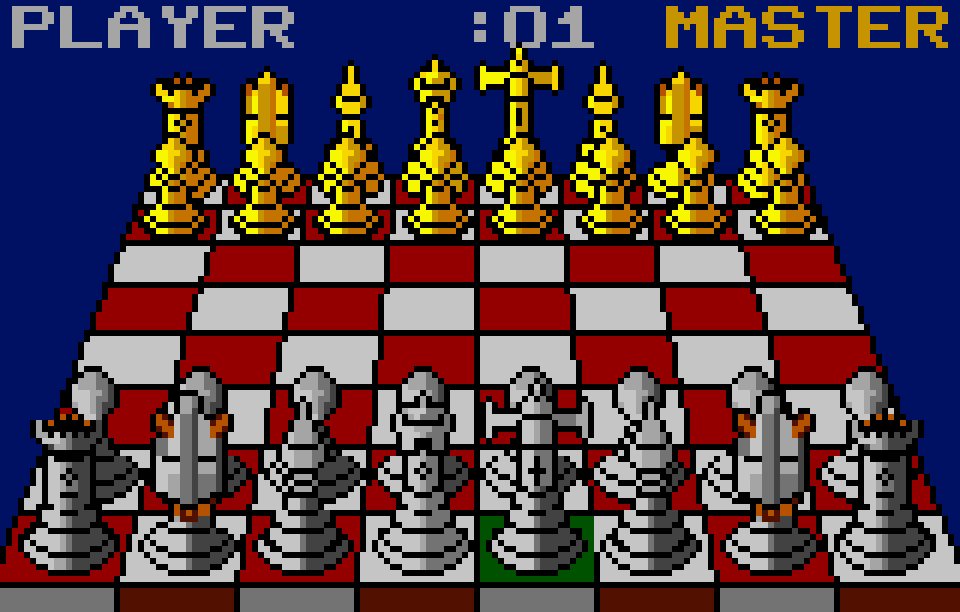
We end with the quietest cartridge on the system: a chess program, licensed from Fidelity — the name behind some of the most respected dedicated chess computers of the era — and published by Telegames. Ultimate Chess Challenge takes its subject seriously: a capable engine with multiple strength levels, clean board presentation in 2D and angled views, take-backs, hints and the full legal game. It will not make highlight reels. What it offers instead is the thing chess players actually want from a handheld — a strong, honest opponent that fits in a coat pocket and never needs its batteries changed mid-game, by Lynx standards at least a theoretical possibility. In a library famous for noise, this cartridge is the library’s library: the one that sits quietly at the end of the shelf, beating visitors.
Runners-up deserve their sentence: Batman Returns, Paperboy, Shadow of the Beast and Rygar all pressed hard for places, and a list of fifteen would have found room for Lemmings and Desert Strike too. The Lynx’s second shelf is deep enough to argue about at length — in forums, at meets, across pub tables — which is rather the point of this exercise, and of the machine.
Play them in the order given and something pleasant happens: the list becomes a tour of everything the Lynx could do that its rivals could not — a four-player linked shooter, a 3D puzzle pit, a literary adventure, a chess computer — on a machine the size of a paperback. That breadth, more than any single title, is the hidden gem.
Ten games, ten different kinds of excellence — and not a battery joke among them worth repeating. The Lynx’s famous shelf will look after itself. This is the shelf that rewards the digging.