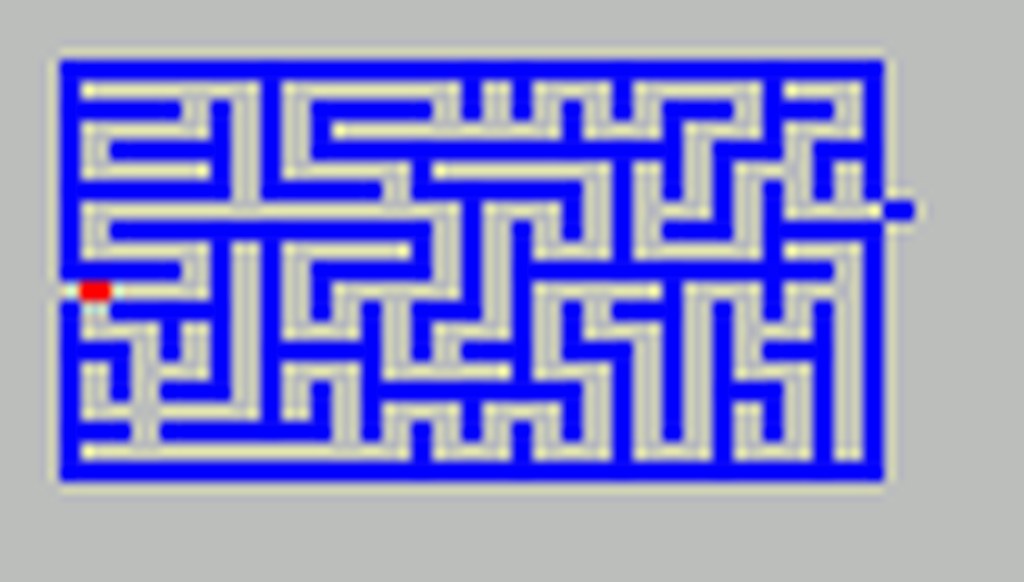
At a glance: Maze (Videocart-10) · Channel F · Fairchild, 1977 · Maze / action puzzle · Score: 7.5/10
Of all the things the Channel F’s framebuffer could draw, a maze was the most natural — lines anywhere on the screen, generated fresh each game, no sprites required. Videocart-10, released in November 1977, takes that home-field advantage and builds the library’s most replayable cartridge around it: you are a mouse, the maze is randomly generated, a cat is hunting you inside it, and there are four different games folded into the one title. Brett Weiss compared the cartridge favourably with Atari’s later Maze Craze, which is the right frame for it: this is the maze game as the seventies consoles dreamed it, and the Channel F got there early, with a random generator for a level designer and a mode list that reads like a dare.
The base game sets the terms cleanly. The maze is drawn, your mouse appears in it, the exit waits, and the cat — the cartridge’s stroke of cruelty — hunts by its own logic through the same corridors. Escape is a routing problem under pursuit, and because the maze is generated rather than memorised, the skill being tested is reading: glance, plan, commit, and re-plan when the cat’s route crosses yours. It is the pleasure of Pac-Man’s ancestors stated plainly, years before Pac-Man: the corridors are the game, and the cat is the clock.
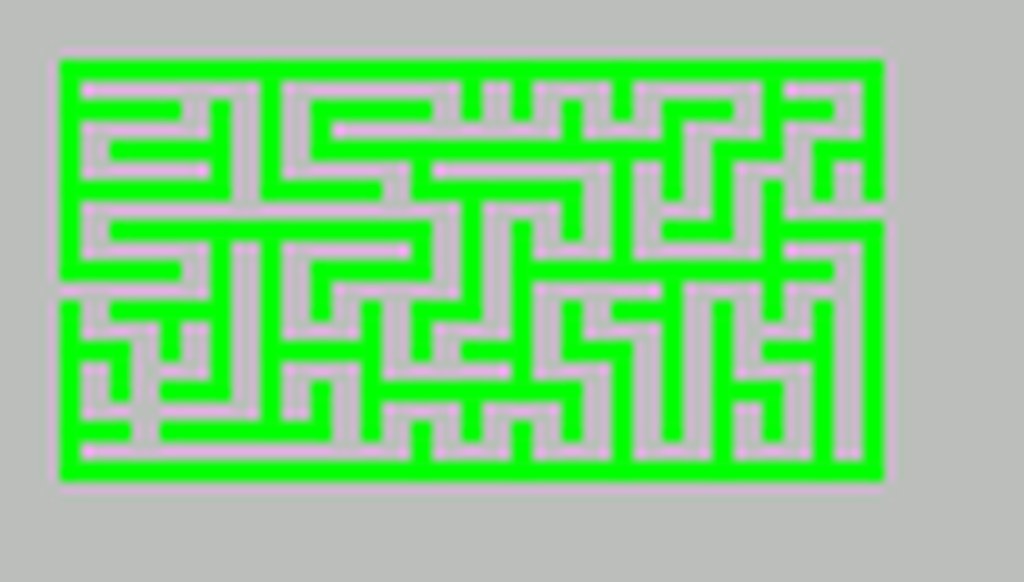
Four mazes in one
The cartridge’s generosity is its modes. Jailbreak raises the stakes of the escape, adding barriers and complication to the route out. Trailblazer layers further obstacles into the generated maze, turning a clean routing problem into a negotiation. And Blind-Man’s-Bluff performs the cartridge’s party trick: the maze layout is invisible, and the mouse must feel its way through corridors it cannot see, learning the labyrinth by collision and memory while the cat, presumably, enjoys every advantage. An invisible-maze game in 1977 is not a gimmick but a genuinely different cognitive sport — spatial memory under pursuit — and it is the mode that makes Videocart-10 feel modern in retrospect. Games would spend decades rediscovering the fun of hiding the map.
Random generation is the other modern note. Most cartridge games of 1977 contained a fixed set of challenges that mastery would eventually exhaust; Maze’s challenge is regenerated every round, so mastery here means getting better at mazes rather than better at this maze. The framebuffer’s indifference to what it draws becomes a design engine: no two escapes alike, no solution to memorise, the cat forever arriving from a new direction. For a console whose cartridges were 2K slivers, that is an economy of content modern roguelikes would recognise — infinite levels, honestly earned, from almost no storage at all.

Mouse, cat, corridor
The presentation is the library’s standard dialect: bright lines on a plain field, the mouse and cat as simple marks, the beeper keeping emotional score. It works because a maze game is a readability contest, and everything on this screen can be read at a glance — which is more, historically, than could be said for several better-drawn maze games that followed. Controls are the stick in its simplest employment, eight directions reduced to corridor choices, and the mouse answers promptly. Deaths feel like routing errors. Escapes feel like escapes.
A randomly generated maze, a hunting cat and a mode where the walls are invisible: Videocart-10 is the Channel F quietly inventing the replayable maze game in 1977.
The limits: the cat’s intelligence is of its era, the modes vary the maze more than the fundamental verb of escaping, and a player raised on Pac-Man’s personalities — ghosts with names and habits — will find one cat a sparse dramatis personae. But judged against its contemporaries, as it asks to be, Maze is the complete package of its genre for its year: generated, modal, tense and fair. The comparison to Maze Craze cuts the right way. Atari’s cartridge is fondly remembered as a two-player maze duel; Fairchild’s, earlier, is a solo escape artist’s game with a hunter inside the walls, and the hunter makes all the difference.
The mouse that taught the machine
One further idea inside Videocart-10 deserves rescue from its own modesty before the verdict: the cat. Plenty of maze games of the era populated their corridors with hazards, but the cat is a hunter — an agent with its own route through the same maze, whose position is information the player must track while solving their own escape. That double problem, navigate and evade simultaneously, is the engine of the entire maze-chase genre that Pac-Man would shortly conquer the world with, and it is running here in November 1977 in a mouse-and-cat cartoon reduced to its essentials. The comparison flatters the later game not at all and this one considerably: where Pac-Man’s genius was personality — four ghosts, four temperaments — Maze’s is structure. One hunter, honestly routed, is enough to convert a puzzle into a pursuit, and the conversion is total. Players do not describe finishing a Maze round the way they describe solving a puzzle. They describe escaping. The cartridge knew the difference between those verbs and built itself on the better one, with a randomly drawn labyrinth as the stage and a single cat as the entire argument. It remains, quietly, one of the most modern-feeling designs in the library.
The modes also make Maze the library’s best argument for the compilation cartridge as a form. Fairchild’s multi-game Videocarts are sometimes read as the platform padding small games into saleable boxes; Maze is the rebuttal — four variations engineered as one escalating study of a single idea, the later modes recontextualising skills the earlier ones taught. Blind-Man’s-Bluff only works on a player who has first learned to read visible mazes; Trailblazer’s extra barriers mean most to a mouse that has already escaped clean ones. Sequenced design, inside one title, in 1977: the cartridge is a curriculum disguised as a collection, and the cat is its examiner throughout.
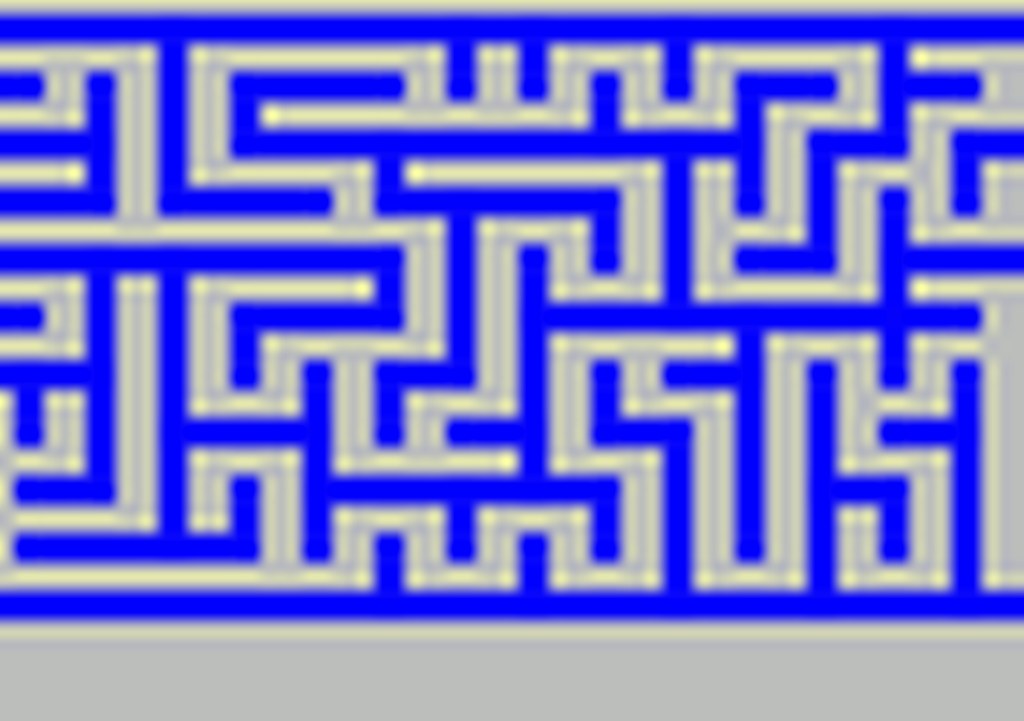
And the maze itself, considered as a piece of drawing, closes the case: crisp corridors at the framebuffer’s full extent, a layout always legible in the half-second a pursued mouse can spare for looking. Plenty of later maze games on stronger hardware drew worse mazes and called it style. Videocart-10 draws a good one, endlessly, and lets a cat argue about it. That is the whole formula, and it has not stopped working since November 1977.
The verdict
Maze is the cartridge where the Channel F’s architecture and a game design fit each other perfectly: a display that draws anything, a generator that draws it differently every time, and a cat to make the drawing matter. Four modes, one invisible, all replayable — in a 1977 library of fixed challenges, that is remarkable value from a single yellow cart. It lacks the star power of the library’s sports and card triumphs, but for pure minutes-played-per-cartridge it may quietly beat them all. The mouse is still escaping. The maze is never the same twice. Neither are you, after the invisible one.
Score: 7.5/10 — Random mazes, a hunting cat and an invisible-labyrinth mode: the most replayable cartridge of the Channel F’s first year.