
At a glance: Pinball Challenge (Videocart-17) · Channel F · Fairchild, 1978 · Arcade / brick-breaker · Score: 7.0/10
First, the confession the cartridge itself eventually makes: Pinball Challenge, released in April 1978, is not a pinball game. There are no flippers, no bumpers, no plunger lane. What Videocart-17 actually contains is a Breakout game — paddle at the bottom, ball above it, a wall of bricks waiting to be demolished — wearing pinball’s name like a borrowed jersey. The strange thing is that the misnomer barely matters, because the market delivered its own verdict: Pinball Challenge became the best-selling Videocart in the library, the title more Channel F owners played than any other. The machine’s customers, it turns out, did not care what it was called. They cared that the paddle-and-bricks formula, then barely two years old in the arcades, was on their television and playable — and on that modest, enormous promise, the cartridge delivered.
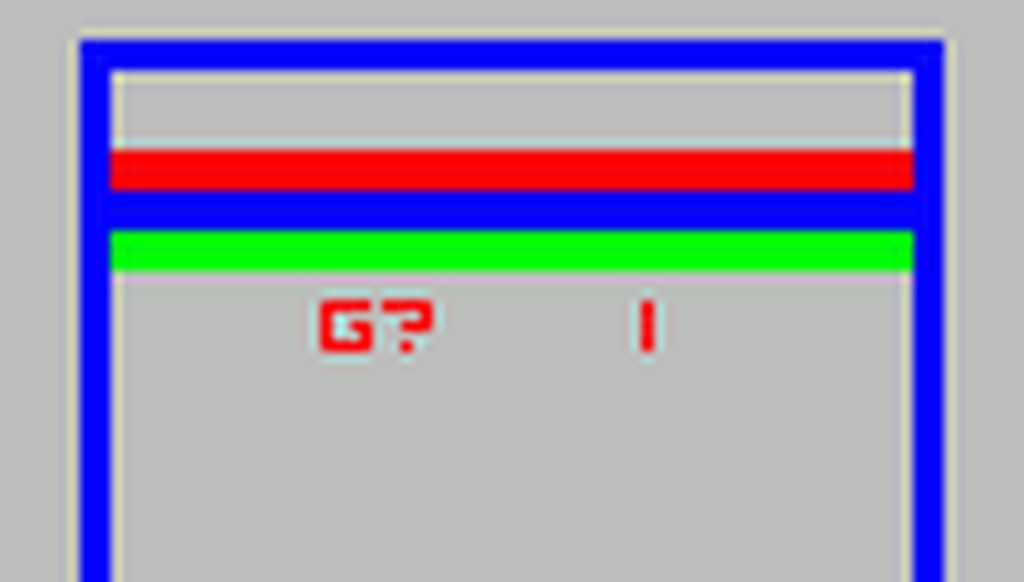
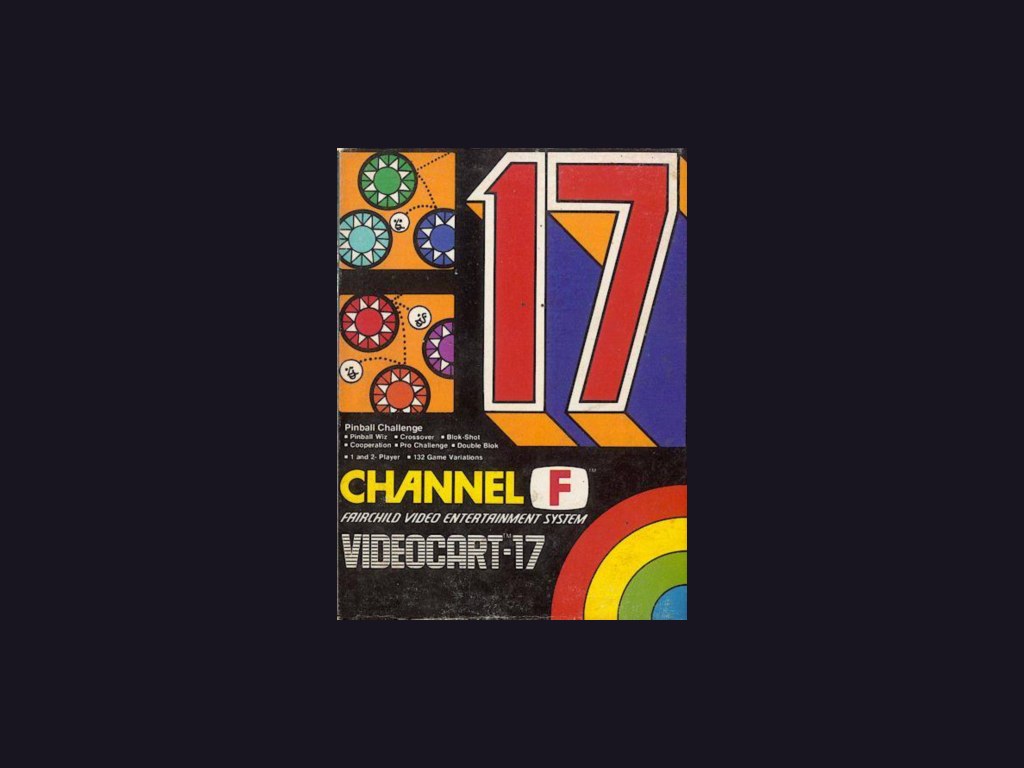
The formula needs no explaining to anyone who has met it since: keep the ball alive, clear the wall, repeat with a fresh wall when the last brick falls. What Videocart-17 adds is customisation, the Channel F programmers’ favourite generosity. Ball speed can be set, paddle size can be set, and — the cartridge’s signature option — the visibility of the bricks themselves can be altered, letting confident players demolish a wall they can only partly see. It is the Dodge It philosophy applied to Breakout: ship the game and the game’s adjustment screws together, and let each household tune the cruelty to its own taste.
The paddle problem
The honest criticism arrived from Brett Weiss, who found that “sluggish controls put a damper on the whole thing” — and in a Breakout game, control is not a detail, it is the product. The paddle’s movement lacks the snap that the genre’s best versions, arcade or home, use to make defence feel like skill; there is a softness to the response that converts some would-be saves into obituaries. It must be said in the cartridge’s defence that the Channel F’s stick was never designed as a paddle — it is an eight-way control with a twist, emulating a one-dimensional slider — and the programmers were translating between control languages the hardware had not anticipated. The result is playable, tuneable and occasionally frustrating in the specific way that makes a player say the paddle, not the angle, was at fault.
Set against the competition of its moment, the picture improves. The Atari VCS’s Breakout was a fine cartridge fighting its own hardware’s paddle controllers into relevance; the dedicated consoles offered fixed variants. The Channel F’s version, arriving the same spring its rivals were finding their feet, offered options none of them matched and a wall-clearing loop identical in its pleasures. That it outsold everything else on the system suggests its first audience weighed the same evidence and reached the generous verdict — or simply that Breakout, in 1978, was the game every household wanted and this was the version their console had.
Why it sold
There is a history lesson folded into the sales figures. The Channel F’s library is remembered, when it is remembered at all, for its brainy strengths — cards, baseball, board games, text on screens. Its best-seller was none of those. It was the arcade reflex game, the simplest loop on the system, bought by the same families who bought the blackjack. The market for home games in 1978 wanted the arcade’s verbs first and the parlour’s nouns second, and Pinball Challenge is the cartridge where Fairchild met that demand most directly. The name, in that light, is almost forgivable: pinball was the recognised word for a ball bouncing around a playfield, and marketing reached for the word the customer already had.
It is not pinball — it is Breakout with adjustable speed, paddle size and even brick visibility, and it became the best-selling cartridge on the system anyway.
Played today, the loop survives its controls: clear a wall, tune the game harder, clear another. The invisible-brick variants remain a genuinely spicy idea that later brick-breakers rarely bothered to steal. The beeper counts your bricks in its flat voice and the walls keep coming, and a session retains the one-more-wall pull that made the cartridge a best-seller in a library that contained better games. Popularity is not quality, but it is evidence — of a formula delivered adequately, at the right moment, to an audience that knew exactly what it wanted from its television.
The name on the box
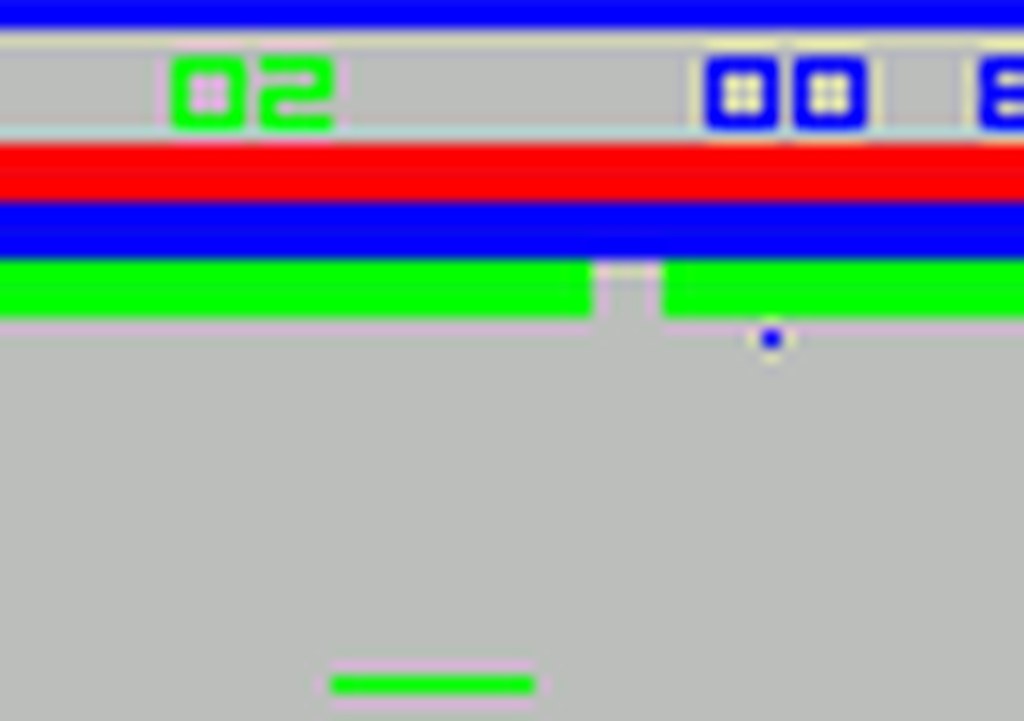
A final consideration before the verdict, on the cartridge’s borrowed name — because the misnomer is itself a piece of 1978 worth understanding rather than merely forgiving. Home video games in the seventies sold to adults through the vocabulary adults already owned, and the vocabulary for “a ball bouncing around a playfield with a score attached” was pinball. Breakout, in the arcades, was two years old and had not yet colonised the language; Fairchild’s marketers were not deceiving anyone so much as translating. The buyers, evidently, completed the translation themselves and bought the cartridge in numbers that made it the library’s best-seller — which suggests they got exactly the game they wanted under an approximate name, a very seventies transaction. There is a modern lesson in it about how categories form: before a genre has a name, its products borrow the nearest one, and the borrowing can look absurd only once the genre is old enough to have grandchildren. Pinball Challenge’s grandchildren number in the thousands, and every one of them, at some remove, plays exactly the game inside this cartridge: paddle, ball, wall, repeat, faster. The people’s choice turns out to have been a genre’s founding home document. The jersey was borrowed. The game was the real thing.
And a final fairness check on the controls, since the paddle decides this game’s reputation: the softness Weiss identified is real but tuneable around — the options menu’s paddle-size and speed settings exist precisely so a household can find the configuration where the paddle’s character stops being the story. Configured kindly, Pinball Challenge plays a clean, brisk game of Breakout whose invisible-brick variants no rival cartridge of the moment offered at all. Configured cruelly, it is a brick wall with a grudge and a missing floor. Either way the wall falls, the next wall rises, and the library’s best-seller earns another hour of the machine’s life.
The verdict
Pinball Challenge is the library’s most successful ordinary game: a Breakout implementation with a misleading name, slightly soft controls, an admirable options menu and the sales crown of the entire catalogue. It is not the Channel F cartridge a critic would save from a fire — Baseball, Whizball and Casino Poker all stand ahead of it in line — but it is the one the system’s owners actually reached for, and a modern player who tunes the speed up and the bricks invisible will find the reaching understandable. Sometimes the people’s choice and the connoisseur’s choice differ. Both choices are data.
Score: 7.0/10 — The system’s best-seller is a Breakout in pinball clothing: soft paddle, smart options, and a wall-clearing loop that has never stopped working.