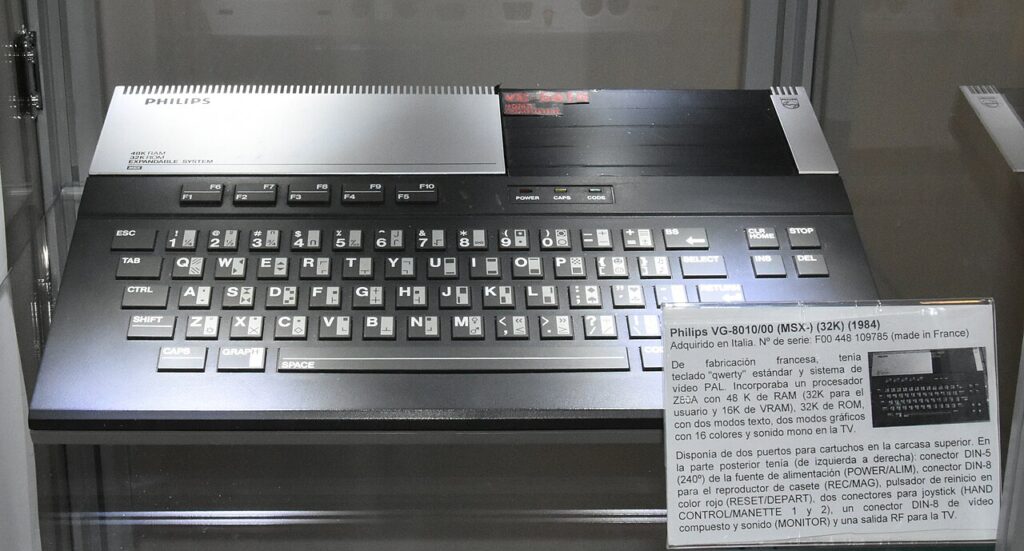
Buying an MSX is not like buying a console. There is no single box to hunt: the standard was built by dozens of manufacturers across four generations, sold on three continents, and survives in numbers that range from flea-market common to museum rare depending on where you stand. That variety is the joy of the platform — and the reason a little guidance goes a long way. This is the guide we would hand a friend: which machines matter, what to pay, how to feed them games, and where the traps are.
First, the Four Generations
Everything with an MSX badge belongs to one of four generations. The original MSX (1983) is the 8-bit baseline: Z80 processor, TMS9918-family graphics, 16 colors and a mountain of early software. MSX2 (1985) is the great leap — richer video modes, more memory, better sound options — and hosts most of the famous library, including Metal Gear and its sequel. MSX2+ (1988) refined the formula with smoother scrolling and more colors, mostly for Japan. The turbo R (1990) closed the line with a faster 16-bit-compatible processor and was sold only by Panasonic, only in Japan. Your buying decision is really a choice among these four — and for most collectors, the answer is the second one.
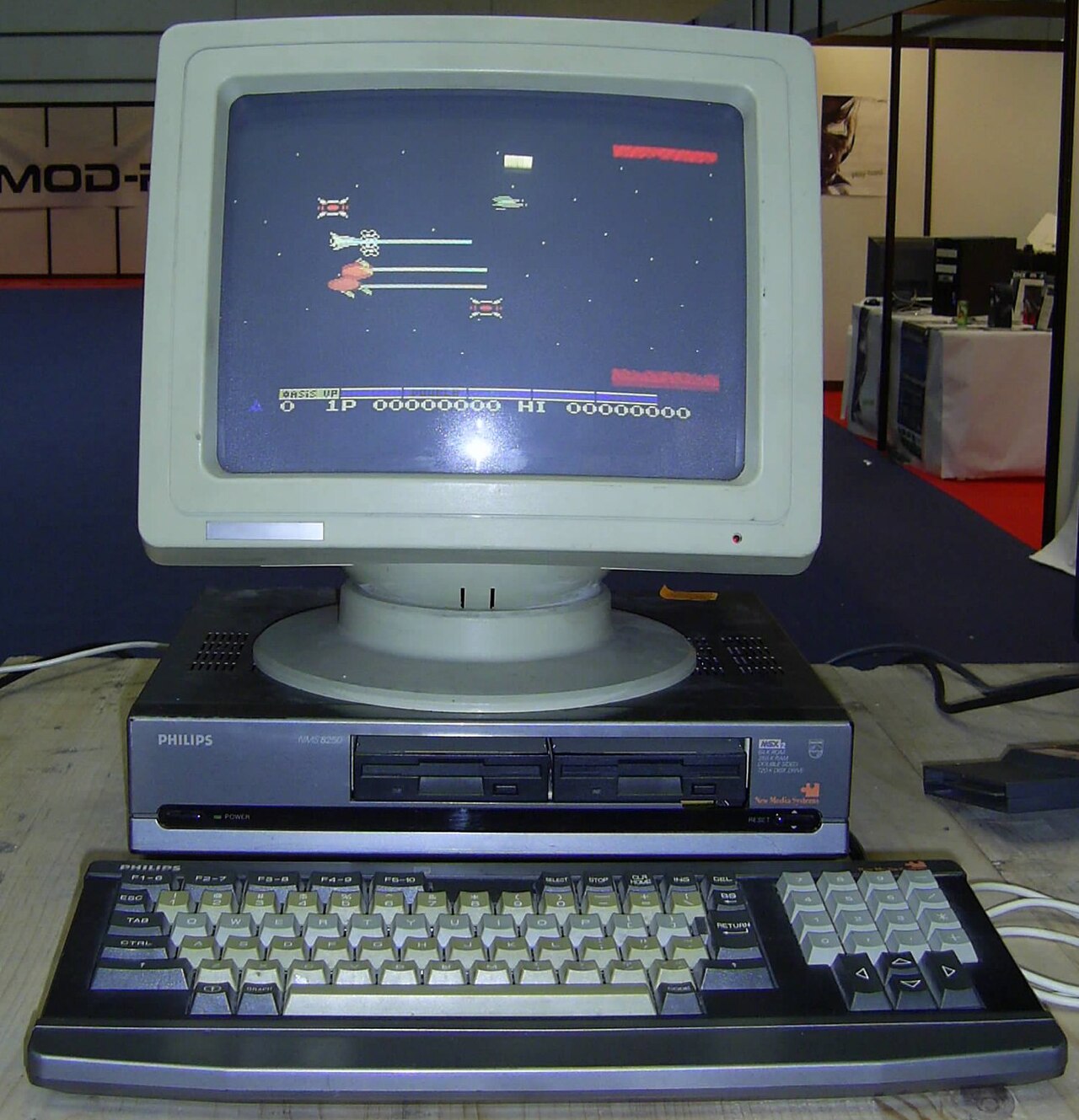
The Sweet Spot: MSX2
An MSX2 plays the overwhelming majority of the library that made the standard famous, from Konami’s SCC epics to the great RPGs, and it plays the entire MSX1 catalog too. Look for machines from Philips (the NMS series, plentiful in Europe), Sony (the HB-F series in Japan), Yamaha, Canon and Panasonic. Prioritize memory — 128KB or more opens the whole library, and many machines can be expanded — and a disk drive or the willingness to use modern storage instead. European Philips machines are the value kings: common, well built, and sold in the millions. Japanese Sony and Panasonic models carry a premium for style and features. Either way, an MSX2 in good order remains one of retro computing’s bargains, typically costing less than the headline consoles of its era while offering a far larger library.
The Extremes: MSX1 Value, turbo R Glory
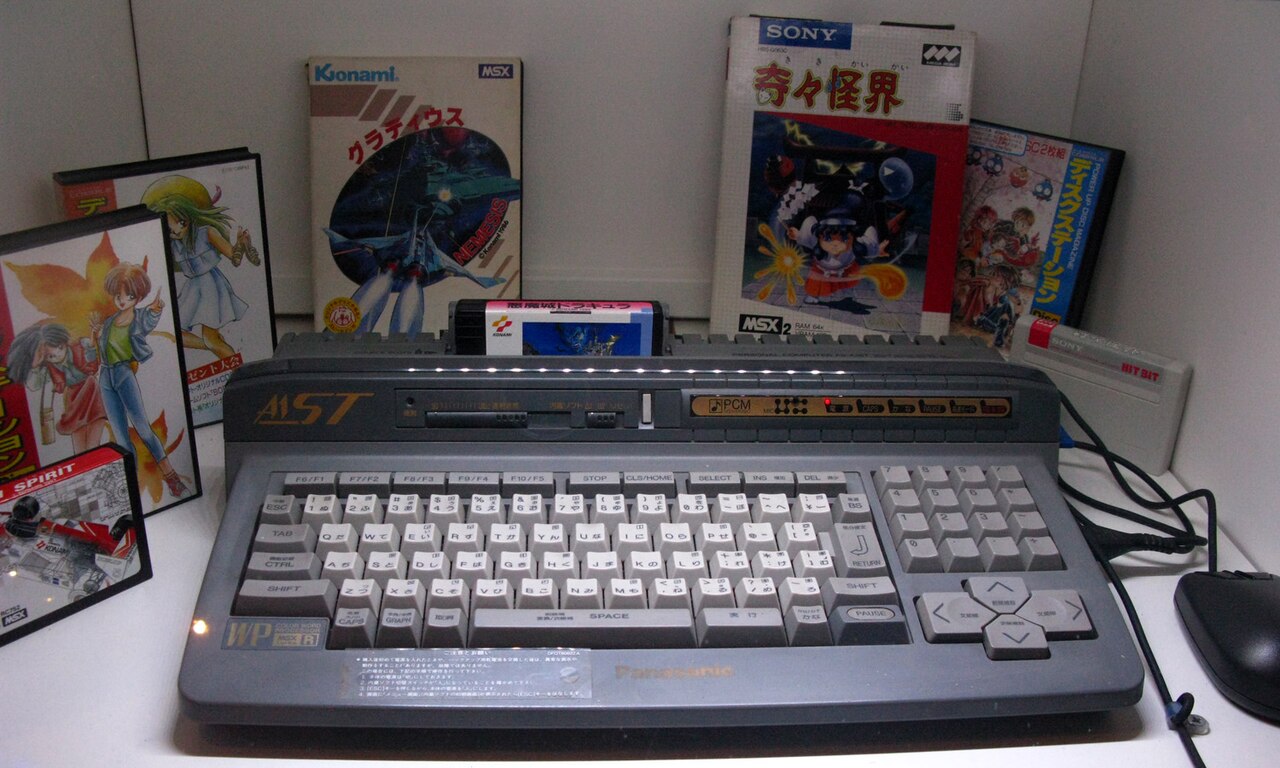
An original MSX1 is the budget door into the standard — machines like the Philips VG-8020, the Canon V-20 and Brazil’s beloved HotBit trade cheaply and run the entire first-generation library, including Antarctic Adventure, Knightmare and the Namcot catalog. If your heart is set on the early arcade years, an MSX1 plus a flash cartridge is a complete hobby for the price of a modern game. At the other pole sits the turbo R: the Panasonic FS-A1ST and FS-A1GT, gorgeous, fast, rare and priced like the crown jewels they are. A turbo R is a connoisseur’s machine — it plays everything, faster, with the standard’s best sound — and in 2026 it is an investment-grade purchase. Buy it because you love the standard, not as a starter kit.
Feeding the Machine: Storage in 2026
However you buy, plan your storage before your second cartridge. The modern MSX runs on flash: SD-based cartridges and multi-carts hold the entire library on a card, load instantly, and add quality-of-life features the original media never dreamed of. Disk images run from the same devices, sparing forty-year-old floppies. Purists can still load cassettes — or feed them from a phone with apps like MSX2Cas, covered elsewhere on this shelf — and original cartridges remain the collector’s format of choice. The pragmatic setup used by most of the scene: original hardware, a flash cartridge for daily driving, and a shelf of favorite originals for the ritual.
What the Games Cost
Cartridge prices follow fame. The Konami crown jewels — Metal Gear 2 above all, then the SCC adventures and shooters — command serious money, especially boxed and complete. Below them sits a deep middle class of excellent games at fair prices: Compile’s shooters, HAL’s puzzlers, the Namcot conversions, and most European releases. Loose cartridges cost a fraction of boxed copies, and the Japanese market, via the usual import channels, remains the deepest well of stock. Two rules protect every buyer: photographs of the actual cartridge and board for expensive purchases, and patience — MSX stock turns over constantly, and the copy you overpay for in March is the bargain somebody lists in May.
Region Notes: Three Continents of Stock
The MSX’s geography is the collector’s friend. Europe — above all the Netherlands and Spain — holds vast Philips-era stock and an active fair circuit. Japan holds everything, in the best condition, at prices that reward importing in batches. Brazil is the connoisseur’s frontier: its domestic machines (Gradiente’s Expert, Sharp’s HotBit) and local releases are fascinating and increasingly collected, though shipping demands care. North America, which never officially received the standard, is the hardest hunting ground — expect to import, and expect the machine you import to be the start of a beautiful habit.
The Bottom Line
Start with an MSX2 from Philips or Sony, a flash cartridge, and three games: one Konami epic, one Compile shooter, one adventure. Total outlay, shopped patiently, rivals a single modern console — for a platform with a decade of classics, an active homebrew scene still releasing cartridges, and forty years of history in three continents’ attics. The MSX is the retro hobby’s best-kept open secret. In 2026, the door is still open. Walk through it.
What to Inspect Before You Pay
MSX machines are forty-year-old electronics, and condition separates a bargain from a project. Ask for photographs of the machine running — ideally showing its BASIC screen and a cartridge game — and of the keyboard, the standard’s most-used component. Capacitors in some models are reaching the age of mischief; a machine serviced or recapped by its seller is worth a premium over an untouched attic find of unknown temper. The cartridge slot’s contacts forgive much, but a machine that reads carts only at an angle is telling you its biography. Power supplies matter too, and here the news is good: the scene produces modern replacement PSUs for the popular models, and a tired original brick is a negotiation point, not a deal-breaker. Finally, the humble keyboard membrane is the most common failure in the whole family — test every key in the listing video, or price the machine as if three of them are lying to you.
The Modern Extras Worth Their Money
Three upgrades transform ownership. First, video: the MSX’s composite output was designed for forgiving CRTs, and while a CRT remains the connoisseur’s display, modern upscalers and RGB solutions (model-dependent) make the standard glow on contemporary screens. Second, sound: the library’s best music assumes hardware many machines lack — SCC lives in the cartridges themselves, but FM-PAC-style expansion brings the MSX-MUSIC standard to machines that shipped without it, and modern reproductions have made that affordable. Third, the flash cartridge already praised above doubles as a memory expansion and utility toolkit on better models. Buy the machine for the library; budget a little for these, and the standard will feel less like an antique and more like what it is — a living platform with an active aftermarket.
A Starter Shelf, Priced in Sanity
End with a concrete shelf, because guides should commit. Cartridge one: Penguin Adventure — joy, history, attainable price. Cartridge two: the first Metal Gear — the platform’s founding legend, mid-priced loose. Cartridge three: Aleste or Zanac, for the Compile wing of the faith. Cartridge four: The Maze of Galious when you are ready to be serious. Around those four, let the flash cartridge carry the long tail while you learn your own tastes — puzzler, RPG loyalist, shooter devotee — because the MSX’s genius is that it has a deep answer for every taste. Total the four originals patiently and you have spent less than many collectors drop on a single boxed console game, for a shelf that explains an entire standard. That is the MSX proposition in 2026, and it has never been better.
Japan-Bound: A Note on Importing
Since so much stock lives in Japan, a paragraph of import craft. The Japanese retro market is the most honest in the world — condition grading is conservative, packaging is careful, and the great auction and marketplace platforms are thick with MSX hardware at prices that regularly shame Western listings. Budget for the unglamorous: shipping weight (these are computers, not cartridges), import taxes in your jurisdiction, and a power solution, since Japanese machines expect 100 volts and European or American mains require either a step-down transformer or one of the scene’s modern replacement supplies. None of this is exotic; the MSX community imports as a matter of routine, and sellers who ship internationally are easy to find. The reward for the small effort is access to the standard’s deepest archive — machines in collector condition, software in bewildering variety, and the particular pleasure of unboxing a piece of the platform’s homeland. Many a lifelong collection began with one careful box from Osaka.
Join the Scene While You’re At It
Last, the cheapest upgrade of all: people. The MSX has one of retro computing’s most welcoming and technically generous communities — forums and gatherings across the Netherlands, Spain, Brazil and Japan, where the same question about a capacitor or a cartridge will be answered within the day, usually with photographs. The platform’s legendary fairs, above all the Dutch gatherings that have run for decades, are worth building a trip around once the bug bites. Buy the machine for the games, by all means. Stay for the civilization that kept it alive — and that, forty years on, is still releasing new cartridges for it.
There is one more consideration the first-time buyer deserves to hear plainly: buy the machine you will actually use. The collector’s market will happily sell you a museum — the sealed Japanese flagship, the mint European rarity — but the MSX’s magic is in the using: the cartridge slot worn friendly, the BASIC prompt at midnight, the homebrew cartridge that arrived this spring from a team in Spain. A working MSX2, honestly priced and daily-driven, is worth more of the standard’s soul than a shelf of trophies. Start there. The trophies, experience suggests, will find you soon enough on their own.
Welcome, then, to the friendliest rabbit hole in retro computing. The standard that Microsoft co-designed, that Japan made a games empire, that Europe adopted and Brazil nationalized, is waiting with its slot open and its library deep. One machine, one flash cartridge, three cartridges of history — that is all it takes to start. Everything after that is the good part.
And if, a year from now, the shelf has grown teeth — a turbo R at one end, a Brazilian Expert at the other, a row of Konami boxes between — remember that it started with the humblest possible decision: one good MSX2, honestly bought, and three cartridges. Every great collection in this scene started exactly there. Yours can too.