The MSX’s famous games are genuinely famous — Metal Gear was born here, Konami’s cartridge library is the stuff of legend — but a platform this big has a deep bench, and the MSX’s is deeper than most. This is a computer standard that lived for a decade across three continents, fed by Konami and Compile but also by HAL, Namcot, T&E Soft, Irem and a hundred smaller houses. These ten games are the ones the highlight reels skip: stranger, quieter, or simply unlucky in the localization lottery. Every one deserves an evening of yours.
1. Quarth (Konami, 1990)
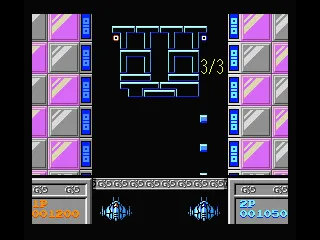
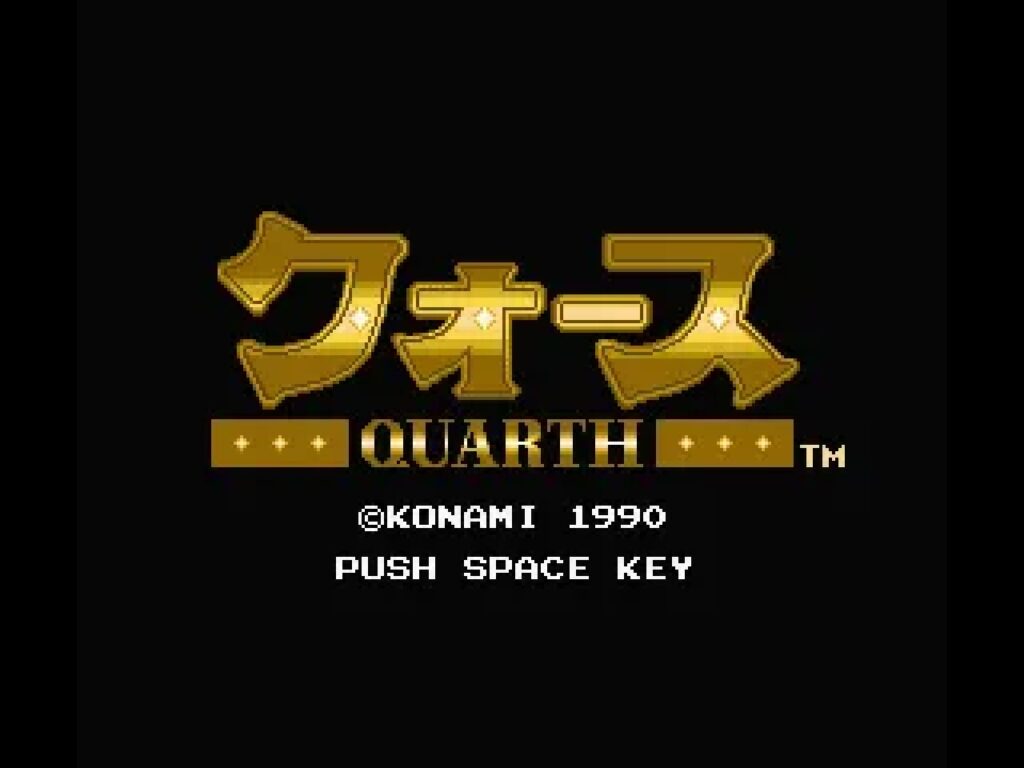
Only Konami would look at the falling-block puzzle craze of 1990 and ask: what if you shot the blocks? Quarth drops geometric shapes from the sky and gives you a little ship at the bottom of the screen, firing cubes upward to complete the falling shapes into rectangles, which vanish. It is Tetris rebuilt as a shooter — or a shooter rebuilt as a puzzle — and the hybrid is electric: your brain is solving geometry while your hands are dodging, and the shapes accelerate until both fail you at once. It later reached the Game Boy in the West as part of a Konami collection, but the MSX original, golden logo and all, is where the idea landed first and strangest.
2. Eggerland Mystery (HAL, 1985)
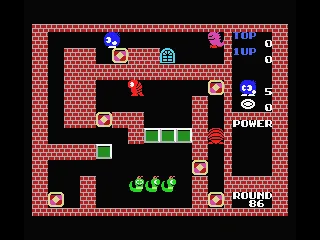
Before the Adventures of Lolo charmed the NES, HAL Laboratory built its egg-and-labyrinth formula here. Eggerland Mystery casts you as Lala, rescuing the kidnapped Lolo room by room: collect the heart frames, wake the monsters you would rather have left sleeping, push the emerald blocks into shields and causeways, and reach the treasure that opens the door. Every room is a small logic machine, and the game’s cruelty is perfectly calibrated — the solution is always fair, usually elegant, and occasionally humiliating in hindsight. HAL’s puzzle design would become an industry legend. This is the source code.
3. Hydlide (T&E Soft, 1985)
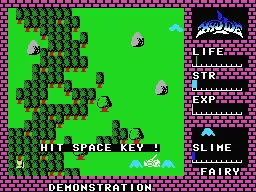
Hydlide gets mocked by players who met it in its rough NES port, which is a shame, because in its MSX home this is one of the most important games ever made: an action RPG from 1984-85, when the genre barely existed. Jim the knight wanders an open world in real time, bumping into enemies to fight them, gaining levels, managing his strength — the whole template that Ys and a hundred successors would polish, present at the creation. Judge it as history and it is essential; judge it as a game and it is a charming, stubborn little quest that still rewards the patient. Either way, the MSX version is the one to judge.
4. Magical Kid Wiz (Seibu Kaihatsu / Sony, 1986)
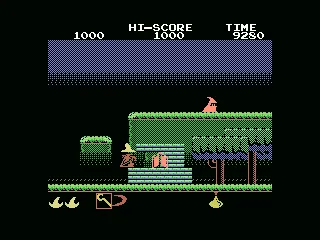
A platform game about a young wizard whose arsenal grows by reading: Wiz explores a storybook kingdom collecting spell books, each one adding a new magical attack, from fire to transformation. Published by Sony — a reminder that Sony was an MSX manufacturer before it was a console empire — Magical Kid Wiz has the bright, chunky charm of the standard’s first generation and a gentle escalation that makes it the friendliest game on this list. It is also a genuine rarity in the West, the kind of cartridge that changes hands between collectors with a nod. Sweet, strange, and very MSX.
5. Antarctic Adventure (Konami, 1984)
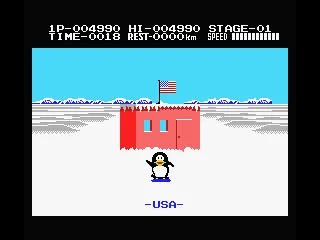
The original penguin game, and still the purest. Penta races around the Antarctic coastline, leaping crevasses and dodging sea lions, planting flags at research stations from a dozen nations while a jaunty classical theme loops. It is simple to the point of transparency — run, jump, don’t fall — and perfect in the way only very early, very confident arcade design is perfect. Penguin Adventure, elsewhere on this shelf, would inflate the formula into an epic; the original remains the jewel: ten minutes of it will recalibrate your standards for what a 1984 computer game can be. Penta became Konami’s mascot on the strength of this little run, and the company was right.
6. Mappy (Namcot, 1984)
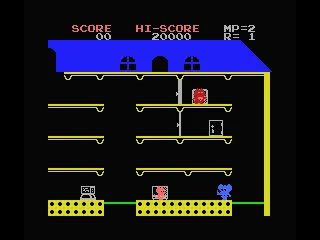
Namco’s police mouse versus the cat burglars, staged in a mansion where nobody can use the floors properly: Mappy and the Mewkies travel between levels by trampoline, invulnerable mid-bounce, vulnerable at the landing, slamming doors into each other’s faces to recover the stolen loot stacked around the house. The MSX conversion by Namcot — Namco’s home division, whose MSX output is a collector’s field of its own — keeps the arcade game’s timing and charm intact. Mappy is remembered as an arcade footnote in the West. On the MSX it is a headline act, and the trampoline physics remain, bounce for bounce, some of the most satisfying movement of the 8-bit era.
7. Spelunker (Irem, 1986)
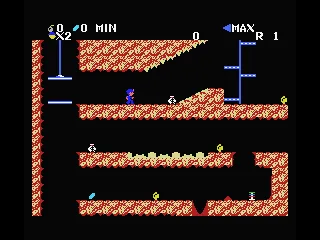
The most fragile hero in gaming history: a cave explorer who can be killed by a bat’s exhalation, a two-foot drop, or — famously — his own ghost. Spelunker’s MSX edition, licensed from Broderbund by Irem, brings the masochistic cave crawl to the standard in fine form: vast vertical caverns, ropes and flares and dynamite, treasure glinting at depths the spelunker’s constitution seems designed never to reach. Modern players know the name through its cult afterlife and remakes; the MSX version is a worthy way in, as funny and as cruel as the legend requires. Bring patience. Bring flares. Bring a sense of humor about gravity.
8. Lode Runner (Broderbund / Sony, 1984)
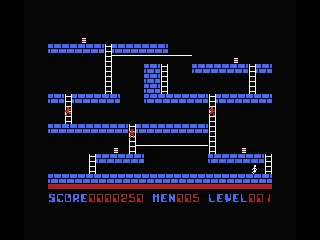
Doug Smith’s masterpiece — dig holes, trap the Bungelings, steal the gold, climb — was one of the great universal games of the early eighties, and the MSX received a first-class edition. What elevates Lode Runner beyond its flawless action-puzzle core is the editor: the game shipped with the tools to build your own stages, making it an early monument to user creativity on every platform it touched. On the MSX, that meant schoolyards in Tokyo and Amsterdam trading homemade levels on cassette. The formula has never been improved upon, only re-skinned; this is one of its purest original forms, and its 150 stages will hold you longer than most modern games.
9. Shalom: Knightmare III (Konami, 1987)
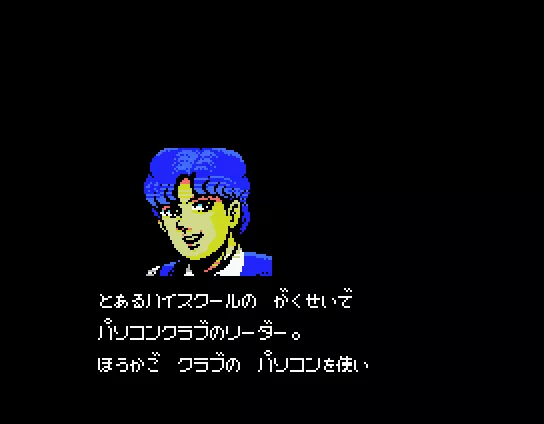
The Knightmare saga ended by changing genre entirely. After Knightmare’s vertical shooting and The Maze of Galious’s labyrinthine adventure, Shalom sends Popolon on a top-down adventure-RPG quest — towns, conversations, a girlfriend to rescue and a demon to outwit rather than simply outshoot. It is the least-known panel of the trilogy in the West, partly because its text-heavy design resisted import, and partly because Galious’s shadow is long. But as a period piece it is fascinating: Konami’s adventure ambitions in full bloom, with the series’ mythology given room to breathe. The trilogy is honored elsewhere on this shelf; Shalom is its strange, gentle coda, and a gem by any definition.
10. Vampire Killer (Konami, 1986)
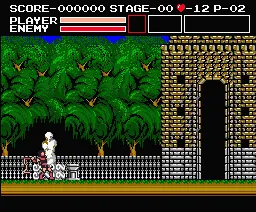
A hidden gem hiding inside the most famous name on this list: while the world played the NES Castlevania, the MSX2 received this parallel version — the same castle and count, restructured as an exploration game with merchants, keys and looping, secret-stuffed stages. It is the Castlevania the West never got, and it plays like a dispatch from an alternate timeline where the series went open from the start. We review it in full elsewhere on this shelf; as a gem, it earns its place by being simultaneously a landmark and a secret. If you think you know Castlevania’s first chapter, the MSX has a footnote that reads like a lost chapter. Whip it.
The Bench Runs Deeper
Ten is a cruel limit for a library this size — the MSX’s shooters, RPGs and oddities could fill three more lists without repeating a name, and its homebrew scene adds new entries every year. Start with these, though, and you will understand the platform’s real character: not a one-hit wonder that happened to host Metal Gear’s birth, but a decade-long civilization of games, most of it still waiting for the wider world to visit. The gems are not hidden, exactly. They are just patient.
Honorable Mentions
A list this size sins by omission, so let the record show the runners-up. Konami’s own back catalog hides more: the original Knightmare, whose shooting started the Galious saga, remains a blast of pure 1986. Compile’s stable holds Guardic, Zanac’s stranger sibling, for those who like their shooters with RPG seasoning — and Zanac itself graduated to a full review on this shelf, which tells you its rank. HAL’s catalog beyond Eggerland is a puzzle library unto itself. T&E Soft’s golf and sports titles were once the standard’s living-room staples in Japan. And from Europe’s bedroom coders came a thousand cassette curiosities, most lost, some legendary in three streets of Amsterdam. The MSX rewards the digger as few platforms can — its library is a decade deep, in three languages of box art, and the tenth-best game in any genre would headline another system’s list. These ten are a door. The house is enormous.
One buying note that applies to the whole list: MSX cartridges are region-free by design — the standard was global, and a Japanese cartridge plays in a Dutch machine plays in a Brazilian one, a small miracle of the era that keeps this entire library liquid across three continents’ marketplaces. The gems are findable. Go find them.
How to Use This List
A practical coda, because a gems list that cannot be acted on is just nostalgia with headings. Every game here exists in the usual archival forms and plays beautifully in the standard’s accurate emulators, which is how most first encounters will happen — and should, because curiosity costs nothing and the MSX rewards it instantly. For the hardware-blessed, the cartridges divide kindly: the Namcot and HAL titles are attainable, the Konami entries are mid-priced except where the SCC chip inflates them, and Shalom and Wiz are the true hunts, the ones that justify a saved search and a quick trigger finger. Play them in the order given if you like a narrative — the list is sequenced from the accessible to the arcane — or start from the bottom and work up like a spelunker. Either way, write down the passwords. This is an MSX list. There are always passwords.
And if this list does its job, it will not be the last MSX list you read — it will be the first. The standard’s library is the rare retro catalog where the deep cuts are this good, this varied and this playable, where a falling-block shooter from Konami and a puzzle game about eggs can stand without apology next to the medium’s founding masterpieces. Ten gems is where the digging starts. The MSX has been waiting forty years to show off its bench. It does not disappoint.
One last encouragement for the hesitant: hidden gems are only hidden until somebody hands you the map, and you are now holding one — complete with screenshots, passwords implied, and a decade of other people’s discoveries compressed into an evening’s reading. The MSX’s famous games will still be famous tomorrow. These ten are the ones that make a collection, a conversation, a conversion. Dig in. The bench is deep, the cartridges are patient, and the tenth-best game on this list would be the first-best on most others.