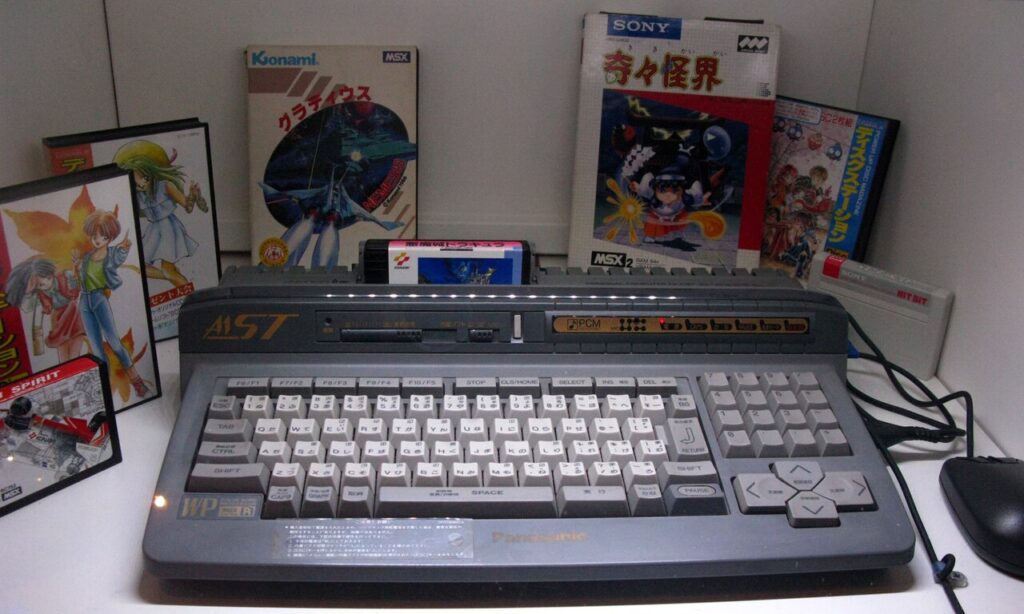
Every platform deserves a finale, and the MSX got a magnificent one that almost nobody saw. In October 1990, Panasonic released the FS-A1ST — the first and defining MSX turbo R, a fourth-generation machine built around a new 16-bit-compatible processor, carrying the standard’s best sound, its fastest BASIC, and the hopes of a platform that the market had already begun to leave behind. A second model, the FS-A1GT, followed in 1991. No other manufacturer ever shipped a turbo R. The finale was a solo.
The R800 Heart
The turbo R’s centerpiece is its processor: the R800, a RISC design from ASCII, the company that had co-created the standard itself. Running at over 7MHz with a 16-bit architecture — while retaining a Z80 for perfect compatibility with a decade of software — the R800 made the turbo R several times faster than any MSX before it, without orphaning a single cartridge. Around that heart, Panasonic built the standard’s most complete specification: the MSX2+ video modes, the MSX-MUSIC FM sound standard built in, generous memory, and a DOS-based disk system that treated the machine as the serious computer it remained. It was, specification for specification, the finest MSX ever manufactured — a glimpse of the standard’s road not taken, the one where 1990s MSX machines kept pace with the decade.
The Software That Showed the Way
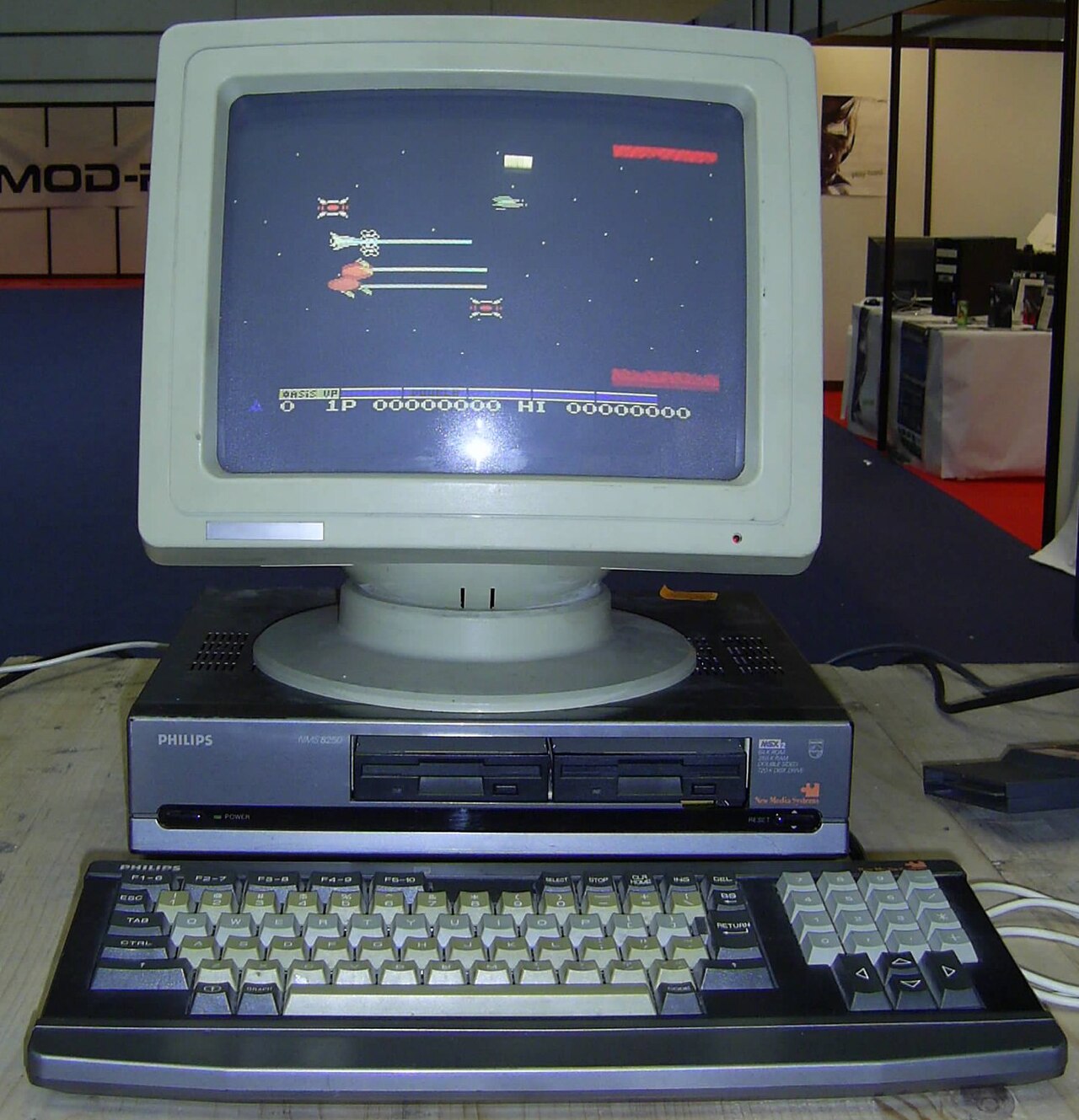
A finale needs its showcases, and the turbo R found them in the scene’s most ambitious hands. Microcabin’s Illusion City, a cyberpunk RPG epic, headlined the machine’s ambitions — a game whose scale and presentation argued that the standard could still host the industry’s frontier. Fray and other turbo R-enhanced titles followed, alongside software that used the R800’s speed for smoother, denser action than the older generations could sustain. Every turbo R game carries an asterisk of poignancy: this is what the standard was becoming, right up to the moment it stopped. The library is small — the machine sold only in Japan, for barely two years — and for collectors that smallness has made it sacred: every turbo R release is a document of the road not taken.
Why Only Panasonic?
The solo is the story’s most telling detail. By 1990 the MSX’s other manufacturers had read the market: 16-bit consoles were ascendant, the PC was consuming home computing, and a premium Japanese-only computer standard was a bet few boards would approve. ASCII and Panasonic made the bet anyway — one last flagship for the faithful. History has been kind to the decision, if the market was not: the turbo R’s rarity, specification and design have made it the most coveted MSX hardware of all, the machine that anchors great collections and the standard’s entire mythology of what might have been.
The Last Word of the Standard
There is a temptation to treat the turbo R as a footnote — a Japan-only epilogue to a story that ended with the MSX2. Resist it. The turbo R is the standard’s proof of vitality: evidence that after a decade, the idea of one library across many machines could still produce a machine this fast, this complete, this loved. The MSX did not fade because its technology failed. It ended, as the turbo R demonstrates on every boot screen, with its engineering unexhausted and its dignity entirely intact. Nobody outside Japan saw the finale. It deserved a bigger house — and in the collections and the scene that keep it running today, it finally has one.
The GT and the End of the Line
The second turbo R, the FS-A1GT of 1991, refined the formula with more memory and the standard’s most complete built-in software suite — a machine aimed squarely at the enthusiast who had owned every generation and wanted the definitive one. It was also, though nobody could say it in the brochure, the last MSX computer ever manufactured by a major maker. Production of the standard’s flagship ended not with a failure but with a masterpiece, which is why the turbo R occupies its peculiar place in collectors’ hearts: it is simultaneously the platform’s peak and its tombstone, the fastest MSX and the final one. Machines that are both are rarely affordable, and the GT’s prices have long since joined the ST’s in the investment bracket — the market’s way of agreeing with the history.
The Standard’s Immortality Clause
And yet the story refuses the past tense. The turbo R’s afterlife is the MSX scene in miniature: the machines are maintained, modified and cherished by a community that treats them as living systems; the R800’s speed still finds new uses in modern software; and emulation has carried the turbo R experience worldwide, letting anyone boot the finale that Japan kept. There is something fitting in the fact that the last MSX was also the most future-proof — a machine that still feels brisk in 2026, still runs the entire library, still raises the question its makers could not answer in 1990: what if the standard had been given the decade it had earned? The turbo R cannot answer. It can only demonstrate, beautifully, that the question was worth asking.
For the Collector in 2026
A practical benediction, since this machine is bought as often as it is admired. Turbo R prices sit at the summit of the MSX market and have shown no interest in descending: complete, serviced ST and GT units trade as investment-grade hardware, and the small software library’s key titles — Illusion City above all — carry prices to match. Buy with the discipline this guide’s sibling article recommends for the whole standard: photographs, proof of operation, service history where it exists, and a seller fluent in the scene. What the premium buys is genuine — the finest machine the standard produced, in genuinely limited numbers, with a story no other retro computer can tell. Flagships of dead platforms are supposed to be sad objects. The turbo R, booting in a blink to its advanced BASIC with forty years of software awaiting its command, is not sad at all. It is a king in exile, and exile has rarely looked this fast.
Perhaps that is the turbo R’s final lesson for the wider retro world. Platforms do not die when their last machine ships; they die when the last person who loves them stops. The MSX’s last machine was built by people who plainly intended it to be loved for a very long time — over-engineered, over-specified, and finished like a flagship — and the scene has honored the intention. Boot an FS-A1GT today and the standard’s whole history is present in the room: the BASIC prompt of 1983, the video modes of 1988, the speed of a future that arrived for one country only. The finale nobody saw turns out to have been an overture. It just took the audience a few decades to arrive.
File the turbo R, then, where it belongs: not as the MSX’s epitaph but as its exclamation point — the loudest, fastest, most confident sentence the standard ever spoke, addressed to a future that eventually, cartridge by cartridge and fan by fan, wrote back.
Long may it boot.
Author’s note for the shelf: of the fifty-three system homes now standing on this site, the turbo R’s chapter may be the most romantic — the fastest machine, the smallest audience, the longest shadow. Some finales are whispers. This one left at full speed, engine singing, with the whole library in the passenger seat.