
Some arcade games got ported to everything. Wizard of Wor very nearly did. Bally Midway’s maze shooter turned up on the Atari 2600, the Atari 5200, the Atari 8-bit computers, the Bally Astrocade and the Commodore 64, and it was still being bundled into retro compilations decades later. Yet one machine — the biggest home console of the following generation — never received it at all. There is no official NES version of Wizard of Wor, and there never has been. In July 2017, almost four decades after the coin-op original, a programmer named Thom decided to correct that omission himself, as homebrew. This is the story of that attempt: how far it got, why it stalled, why it briefly came back to life — and the honest answer to whether it was ever finished.
A Dungeon With a Voice
Wizard of Wor was created by Dave Nutting Associates, designed and programmed by Tom McHugh and Dave Nutting, and released by Bally Midway. Most references date the game to 1980; arcade records show it being demonstrated to distributors in July 1981, so it belongs to that exact hinge point where the seventies arcade gave way to the golden age. Either way, it arrived in the same breath as Pac-Man and Berzerk, and it took ideas from both — the maze, the gun — before adding two twists entirely its own.
You play a Worrior, a spacesuited warrior dropped into a single-screen dungeon of tight corridors. Each dungeon starts with six blue Burwors. Shoot them and deadlier creatures take their place: yellow Garwors, then red Thorwors, the latter two able to vanish from view while still blinking away on the radar strip beneath the maze. Clear the final Thorwor from the second dungeon onwards and a winged Worluk scuttles for the side doors. Gun it down before it escapes and every score in the next dungeon doubles. Survive that, and the Wizard himself may appear — teleporting around the maze, hurling lightning, worth 2,500 points if your shot finds him first. Later dungeons strip away the interior walls: first the open Arena, then the Worlord dungeons, and finally the Pit, which has no walls at all.
The first twist was the second player. Wizard of Wor is a two-player game in the truest simultaneous sense — both Worriors, yellow and blue, are in the dungeon together, and cooperation is genuinely the smart way to play it. But your shots are fatal to your partner too, and blasting the other Worrior is worth 1,000 points, so every partnership carries a standing temptation to betray it at the worst possible moment. Playing alone, the second Worrior fights beside you under computer control, an unusually generous arrangement for 1980. The second twist was the voice. A Votrax SC-01 speech chip let the Wizard talk — dozens of synthesised taunts, warnings and cackles, from “Get ready, Worrior” to “You’ll never leave Wor alive!” In an era when most cabinets beeped, a game that mocked you out loud was a genuine attraction, and the taunting is still the first thing anyone who played it remembers.
Everybody Got a Port Except Nintendo
The home conversions came quickly, and some were excellent. The Commodore 64 version of 1983 is still held up as one of the finest arcade conversions on any 8-bit machine — fast, faithful, and recognisably the same game, though the Wizard’s voice needed an optional speech add-on to be heard. Bally’s own Astrocade received the game under a new name, The Incredible Wizard. Atari’s machines, the 2600, 5200 and 8-bit line, all got their editions too. A ColecoVision version was started and never released. The pattern is clear: if you owned a home machine in the early eighties, the dungeons of Wor were open to you.
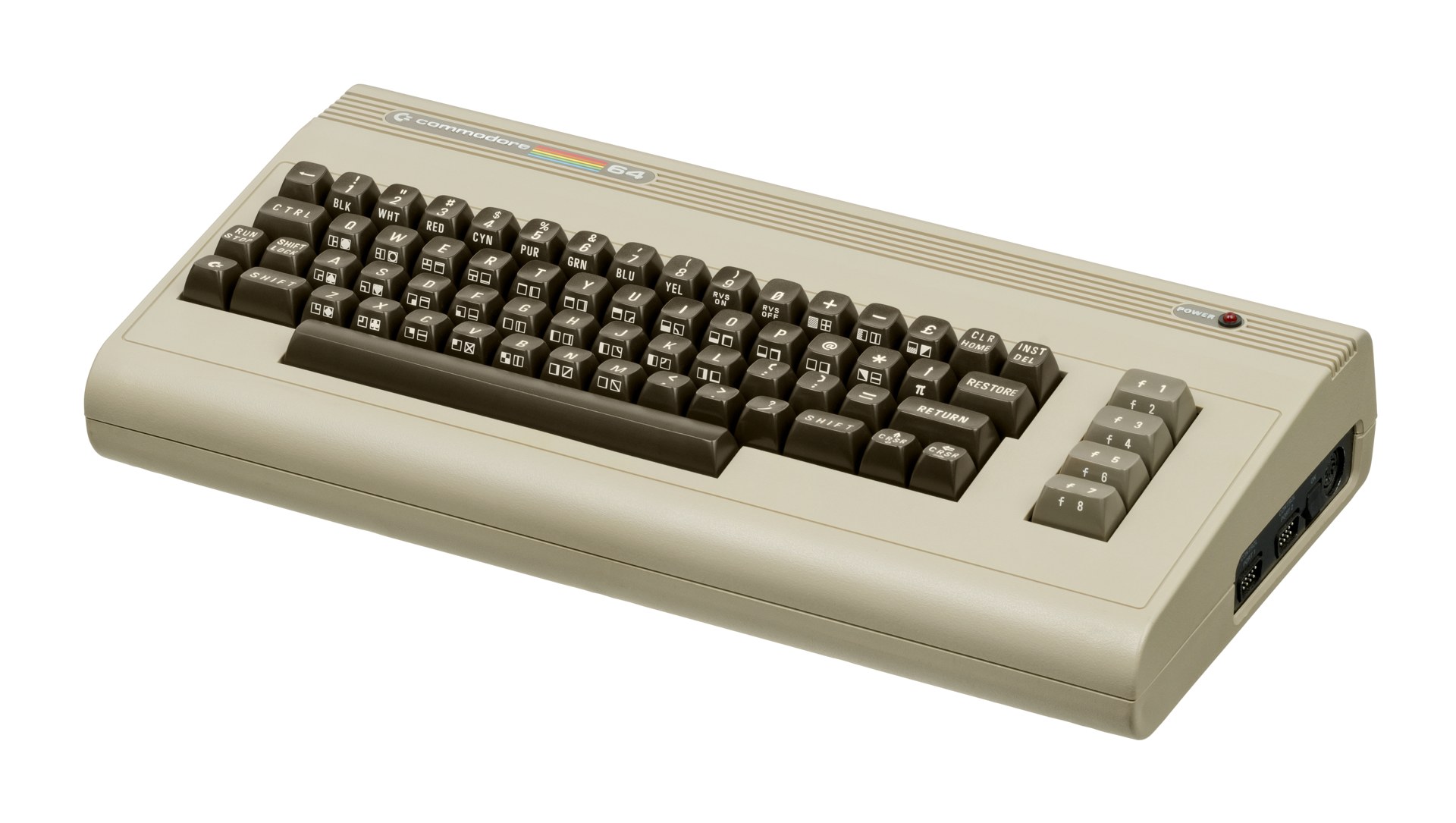
The Commodore 64, home of the most admired Wizard of Wor conversion of 1983 — the standard any later port would be judged against. Photo: Wikimedia Commons.
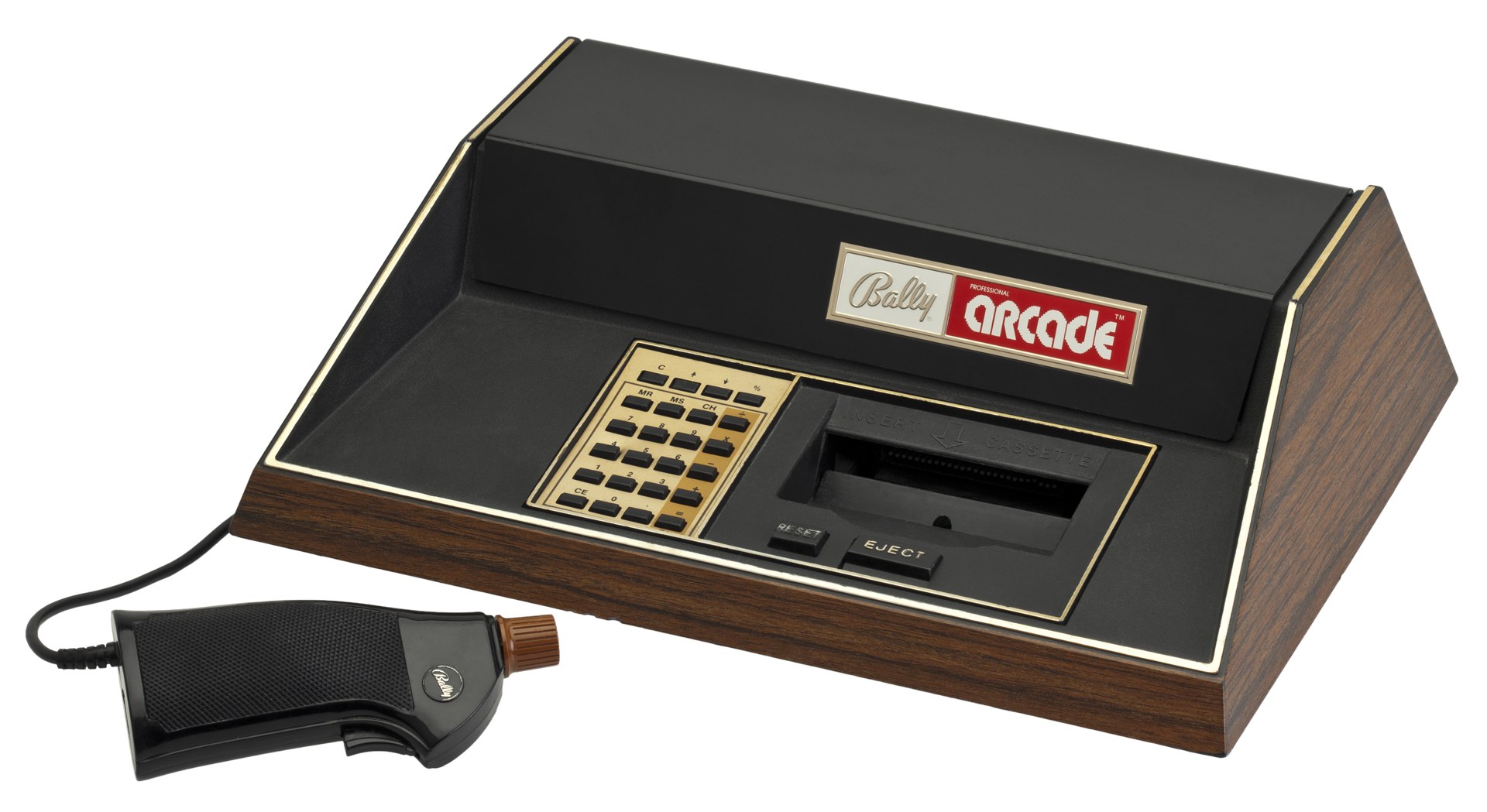
The Bally Astrocade console (badged here in its original Bally Professional Arcade form), which received the game renamed as The Incredible Wizard. Photo: Wikimedia Commons.
Then the moment passed. By the time the Nintendo Entertainment System conquered the living room in the second half of the decade, Wizard of Wor was an ageing arcade property, and Midway’s home efforts went elsewhere. The NES built a vast library of arcade conversions — Galaga, Ms. Pac-Man eventually, whole shelves of them — but the Worrior never joined it. The omission sat there, obvious and unaddressed, for more than thirty years.
Why the Obvious Port Is Not a Simple One
On paper, the NES should handle Wizard of Wor comfortably. The playfield is a single static screen; there is no scrolling to engineer. In practice, the details bite. The arcade game keeps two Worriors, up to six monsters and everybody’s shots moving at once, and the NES has strict limits on how many sprites it can draw on a single scanline before things start to flicker. The radar, which the whole invisible-monster mechanic depends on, has to live somewhere in a 256-by-240 picture that also holds the maze, the scores and both players’ spare lives. And then there is the voice — the game’s signature. The NES has no speech chip. Its sample channel can play back short digitised clips, but dozens of distinct taunts would devour the cartridge space a small homebrew project can reasonably carry. A silent Wizard of Wor is doable; a talking one is a research project. Any faithful port has to decide, early, how much of the original’s personality it can afford to keep.

The Nintendo Entertainment System. Wizard of Wor never received an official release for it — the gap this homebrew project set out to close. Photo: Wikimedia Commons.
Thom Takes Up the Quest
The programmer who picked up the challenge in 2017 was Thom Cherryhomes, a retro-computing veteran who works under the handle tschak909. His project, announced in July 2017 and discussed on the NESdev forums, was a from-scratch NES version of Wizard of Wor, developed in the open. The public code repository he created that month tells its own story about how serious the attempt was. This was not a mock-up or a title screen demo: the source is organised into proper game systems, with separate modules for the dungeons, the monsters, the players and an attract mode, written in C with the standard NES homebrew libraries and a FamiTone sound engine. In other words, the skeleton of the whole game was being built, system by system, the way you would build something you intended to finish.
Then, as homebrew projects worked on in spare hours so often do, it went quiet. Life, work and other projects intervened, and the dungeons sat dormant — which is exactly where our original February 2018 report on this site came in. The news then was that the project had been revived, and it was real news. The public commit log shows a furious burst of work across January and February 2018: a first pass at computer control for the blue Worrior, monsters that shoot back, player-versus-player shots worth the arcade’s treacherous 1,000 points, kill and explosion logic, and round after round of optimisation to keep it all moving at speed. In February 2018, Indie Retro News reported the port as a work in progress with a February build available for players to try, describing the Worrior moving through the maze and the radar tracking enemies as they disappeared and reappeared — the game’s signature mechanic, up and running on NES hardware. Screenshots and footage showed a recognisable dungeon, recognisable monsters and a game that was plainly playable, if plainly unfinished. The revival was genuine. The Worrior was, briefly, on his way home.
The Honest Ending: It Was Never Finished
Here is where a feature like this is supposed to report the triumphant release, and here is where we have to level with you instead: we can find no evidence that Thom’s Wizard of Wor for the NES was ever completed or released. The trail is specific. The project’s public repository accumulated 131 commits in total, and the game itself was last actively developed in that January–February 2018 burst, ending with optimisation work in early February 2018. The only later touch came on 4 January 2023, when Cherryhomes merged an outside contributor’s pull request modernising the build files so the code still compiles with current versions of the cc65 toolchain — the project was being kept buildable, but no new game was being built. Across the whole of its life the repository has gained no release and no version tags; its readme still consists of a single line. It has never been formally archived or cancelled either. It simply stops. No finished build, cartridge release or “final version” announcement from the project appears anywhere in the homebrew record we could search, and Cherryhomes’ considerable public energy in the years afterwards went into other retro-computing work — he is now best known as the driving force behind the FujiNet network adapter project, which is about as far from an abandoned hobby as a project can get. The talent did not disappear. The time went somewhere else.
So the score, as it stands, is this: the February 2018 build was the port’s high-water mark — a real, playable, recognisable Wizard of Wor running on the NES, built by one programmer in his own time, nearly forty years after the arcade original. It was never, so far as any public record shows, carried the rest of the way. The repository remains online and open-source, which means the story is unfinished rather than formally ended; anyone with the skill and the stubbornness could pick up the dungeon where Thom left it. Until somebody does, the strangest gap in Wizard of Wor‘s long porting history stays exactly where it has always been. The Wizard came to Atari, to Commodore and to Bally’s own console. He taunted his way through compilations on machines undreamed of in 1980. But on the NES — officially then, homebrew now — he remains, as ever, still in development.
Editorial note: we cover homebrew projects as news and history, and do not link to game downloads or ROM files.