
Three Hunters, One Handheld: The Lynx Alien vs Predator Build That Kept Growing
Some cancelled games stay cancelled in a tidy, well-documented way. A press release announces them, a magazine previews them, the plug gets pulled, and historians file the story away. The Atari Lynx version of Alien vs Predator refuses to behave like that. Every few years it grows. A build that was supposed to let you play as two characters turns out to contain a third, hidden in the code. Copies described for decades as the most complete version are joined by newer revisions with later dates burned into them. And in February and March of 2015, the Lynx community found itself doing something unusual even by prototype standards: not celebrating the discovery of a lost game, but quietly revising upwards how finished that lost game had ever been.
This is the story of the newer revision reported that spring, dated 7 March 1995, and of why a handheld first-person shooter that Atari never released still matters. It is a story with two development teams, one very public mix-up over who made what, and a licence that began life attached to a completely different game on a completely different console.
It Started as a Port of Somebody Else’s Game
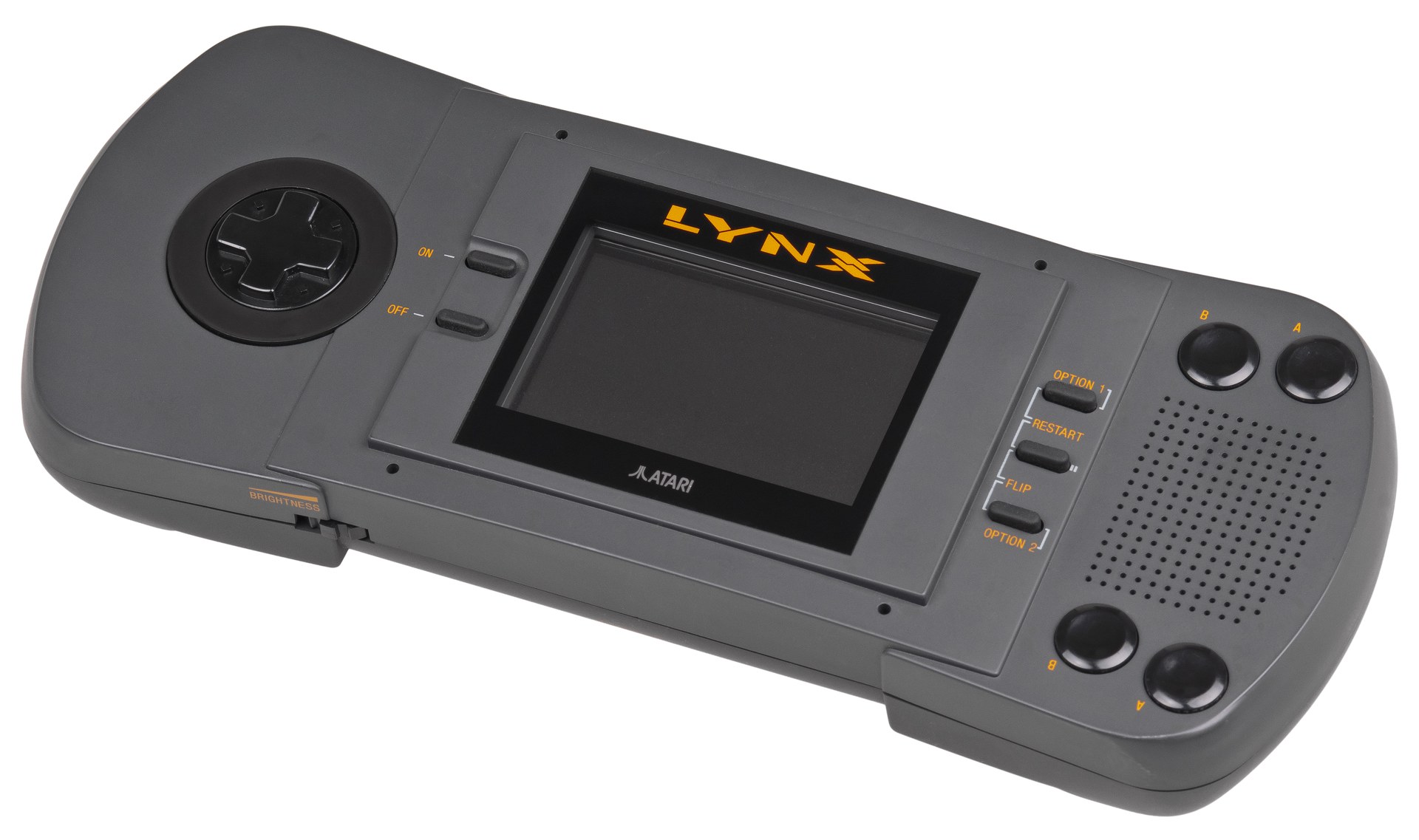
The strangest thing about Lynx Alien vs Predator is that it was never supposed to be a first-person shooter at all. Atari’s Chicago office, which handled most Lynx production, had acquired a sub-licence through Activision connected to the Super Nintendo Alien vs Predator game, a side-scrolling beat-’em-up, and commissioned British studio Images Software to convert that game to the handheld. Producer James Hampton, who had joined Atari in 1992 after testing games at Lucasfilm Games, looked at the plan and concluded that wandering corridors punching Aliens in side view did the two film monsters no justice at all. Images agreed to tear up the brief and rebuild the project as a first-person game in which the player could step into the role of a Colonial Marine, a Predator, or an Alien.
That decision makes Lynx AvP the true origin point of the whole Alien vs Predator shooter lineage. The three-species structure that later defined the franchise on PC was not invented for a big console first. It was sketched out for a 160-by-102-pixel handheld screen, on a machine with 64K of RAM, by a small British team working for a company that was already losing its grip on the market. The Lynx hardware gave them one genuine advantage: its Suzy graphics chip offered hardware sprite scaling and distortion, the raw ingredients for faking smooth corridor movement years before handhelds were expected to attempt anything of the sort.
Suspended, Then Reborn on the Jaguar
Production on the Lynx game was suspended when Atari closed its Chicago operation and concentrated everything on the upcoming Jaguar. That might have been the end of it, except that Atari showed the Lynx design work to a young British studio called Rebellion, founded by brothers Jason and Chris Kingsley. Rebellion had impressed Atari with a 3D flight demonstration built around dragons and Viking ships, and in 1993 it signed to make a Jaguar version of Alien vs Predator, working from Images Software’s initial designs. Hampton moved across to produce that version too, and after a troubled, extended production, Alien vs Predator reached the Jaguar in October 1994 to strong reviews. It is still routinely named among the best games on that console.
Here is where the record needs correcting, because the confusion has followed the Lynx game for thirty years. Older reference pieces, including a widely read Atari museum spotlight, credit Rebellion with the Lynx version itself. Rebellion never developed for the Lynx in any capacity. The handheld game was Images Software’s work from start to suspension. Rebellion’s contribution begins with the Jaguar contract, building on design documents and an early demo in which the player could already move through Alien-infested corridors as the Marine or the Predator. When later interviews asked Rebellion’s Jason Kingsley how far the Lynx game got, the honest answer embedded in those exchanges is that it was never his project to finish. Treating the two versions as one team’s continuous work flatters the Jaguar game and erases the handheld original that inspired it.
The Build Everyone Knew, and the Character It Would Not Show You
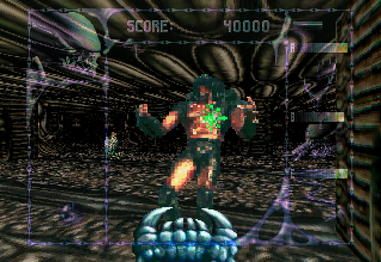
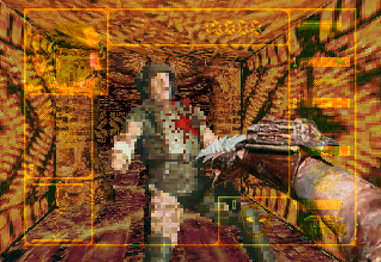
For years, the Lynx version survived publicly through one widely circulated build, sold on cartridge by B&C ComputerVisions and passed around the collecting scene. In that build you stalk a docked spaceship as the Marine or the Predator, working through mission briefings, collecting ammunition, bombs and energy pick-ups, and pulling up a status screen that shows an overhead map of the vessel. It is recognisably the same design philosophy as the Jaguar game: not a frantic corridor blast, but something slower and more tactical, closer in spirit to a stealth mission game, where the atmosphere does the frightening and every corridor has to be approached with care.
What that build would not let you do was play as the Alien. Contemporary write-ups treated the third campaign as simply unfinished, and estimates of the game’s completeness swung wildly depending on who was holding the cartridge, from around half-finished to claims of eighty-five per cent. Then hobbyist investigators started pulling the code apart. Sprites and a heads-up display for the Alien were found sitting inside the familiar build, and a researcher posting as dr_kirk demonstrated that the Alien campaign had not been cut so much as switched off, working out how to reach it with codes developed, in a detail that captures the era perfectly, on a hacked PSP. A separate, rarer three-character version had also passed through private collectors’ hands over the years, playable as all three species from the start, but few people had ever seen it run.
February 2015: The Revisions Get Newer
The news that prompted our original short report in March 2015 came out of the AtariAge forums the previous month, in a thread announcing that several further versions of Lynx AvP had been discovered. Alongside the familiar circulating build sat a revision dated 7 March 1995, strikingly late for a Lynx project, landing in the same season Atari was winding the platform down entirely. A dated build from March 1995 matters because it pushes the game’s active development well past the point where the standard history says work stopped for the Jaguar. It suggests the handheld version was not simply abandoned mid-thought when Chicago closed, but kept moving, in some form, into the Lynx’s final year.
The discussion that followed is a small masterclass in how prototype history actually gets written. Collectors compared revisions against the B&C cartridge, wondered aloud what else might be sitting disabled inside the newer code waiting for a debug menu or cheat to expose it, and folded dr_kirk’s Alien findings into the picture. The emerging consensus was not that a finished game had been found. It was something more interesting: the Lynx AvP that the community thought it knew, a two-character demo frozen in time, was a snapshot of a project that had travelled further than anyone had documented.
Hindsight: Where the Story Stands Now
Everything in this section was learned after March 2015, and we are keeping it separate from the news as it was reported at the time. Reference listings for cancelled Lynx games now record Alien vs Predator with Images Software as developer and a last development date matching that March 1995 revision, and they note a plan for Beta Phase Games to sell a further-developed build containing all three playable characters. Plans in prototype listings have a habit of slipping, and readers should treat that as an intention recorded by cataloguers rather than a finished retail release. Either way, the direction of travel since 2015 has been consistent: each new piece of evidence makes the Lynx game look more substantial, not less.

There is a final irony worth sitting with. The Lynx sold around two million units, was discontinued in 1995, and is remembered by the mainstream mostly as the colour handheld the Game Boy beat. Yet one of its cancelled games quietly contains the founding idea of a shooter franchise that ran for decades on far more powerful machines. The Marine, the Predator and the Alien were first put in the same first-person maze not on a Jaguar, not on a PC, but on a handheld with a four-and-a-half-hour battery life, by a team whose credit on the project is still being restored thirty years later. The March 1995 revision does not finish that story. It just proves the story was longer, and better, than the one we had been telling.