
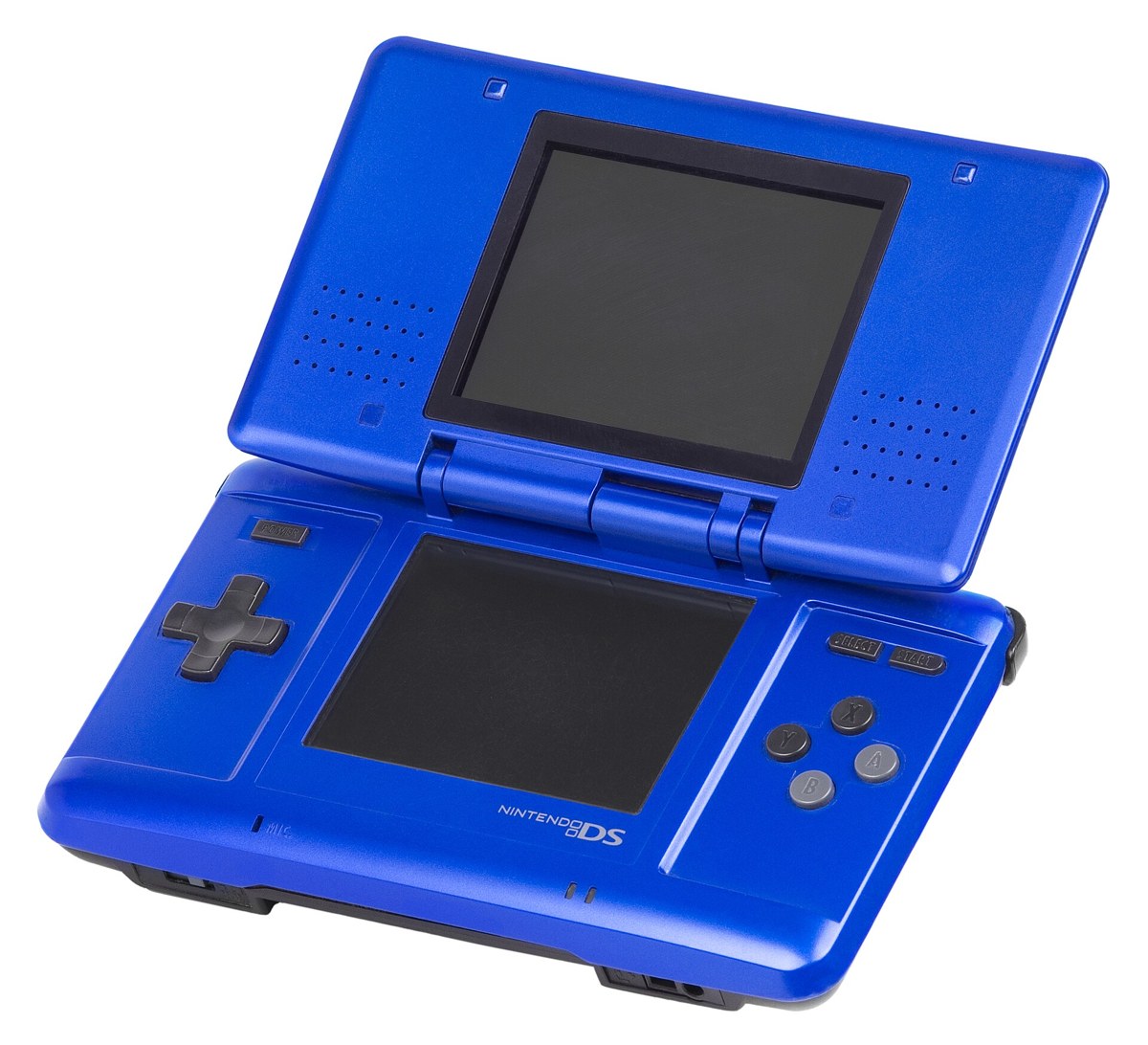
The Nintendo DS that launched in 2004 was, charitably, a prototype that escaped. Its chunky silver shell, dim screens and stubby stylus hid a revolutionary interior — but Nintendo’s hardware teams knew the machine the concept deserved had not yet been built. What followed was one of the most instructive hardware evolution stories in gaming: three major revisions across five years, each targeting a different weakness, each expanding the audience, together carrying the platform to 154 million units and the title of best-selling handheld ever made. This is the story of the brick becoming the jewel, then the camera, then the big book.
The DS Lite, launched in 2006, is the revision that changed everything about how the system felt. Gone was the silver slab; in came a glossy, iPod-era clamshell in Polar White, smaller, lighter, with screens dramatically brighter (four selectable levels, the top one visible in daylight), a longer, thicker stylus stored in the side, and battery life stretching past fifteen hours. Nothing inside changed — the Lite plays the identical library — yet the Lite is the machine most people picture when they picture a DS. It was a design correction so complete that original-model sales effectively ended overnight, and a lesson the industry has relearned with every ‘slim’ revision since: industrial design is a feature.
The DSi: Nintendo’s first download future
The DSi of 2008 (2009 in the West) was a bolder, stranger step. It slimmed further, enlarged the screens slightly, added two cameras — VGA by modern standards, toys even then — an SD card slot, built-in software including a sound recorder and photo playground, and, most consequentially, the DSi Shop: Nintendo’s first download storefront on a handheld, selling DSiWare games and applications directly to the device. It also removed the Game Boy Advance slot, ending backward compatibility — a trade that tells you exactly where Nintendo thought the future lived. A small catalogue of DSi-enhanced and DSi-exclusive retail games followed (Solatorobo and Pokémon Black and White among the enhanced), using the cameras and extra power in modest ways.
The DSi’s real legacy is infrastructural. DSiWare normalised buying games digitally on a Nintendo handheld, hosted gems from Art Style puzzlers to Shantae: Risky’s Revenge, and built the account-and-storefront habits the 3DS eShop would inherit. Its cameras, meanwhile, were pure DS philosophy: technically feeble, experientially delightful, spawning face-warping toys and the Flipnote Studio animation phenomenon, in which a generation of teenagers became animators on a free app and shared their work over Nintendo’s Hatena service — an early, gentle sketch of the social-creative internet, running on a games console.

The XL: the book gets bigger
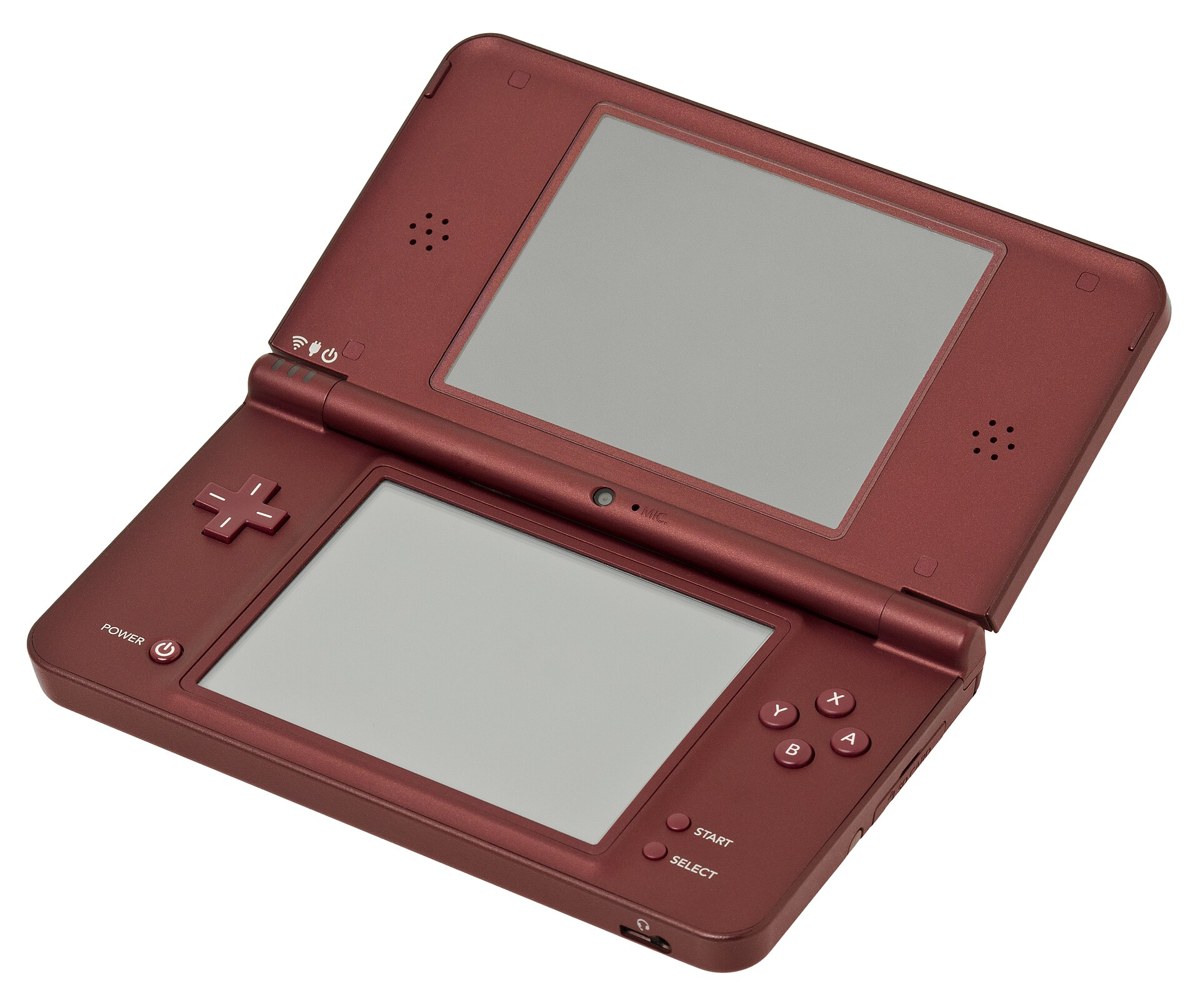
The line closed in 2009–2010 with the DSi XL (LL in Japan), a revision aimed squarely at the audience the Touch! Generations line had created: larger in every dimension, with 4.2-inch screens nearly double the area of the original’s, a chunky pen stylus, pre-installed brain-training and dictionary software, and an explicit pitch as a shared, coffee-table device — a games machine for people who read with reading glasses. It is, for many collectors today, the connoisseur’s DS: the big screens flatter the library’s pixel art, the weight feels deliberate, and as a way to play Hotel Dusk — a game you already hold like a book — it is poetry.
Four machines, one library: the DS family is a masterclass in revision — design first, then connectivity, then comfort — with the games untouched throughout.
Choosing between them in 2026 is a matter of taste rather than capability. The Lite is the value sweet spot with the GBA slot for the Advance library; the DSi adds the (now closed) shop’s legacy library on-cartridge, cameras and the best D-pad of the family in many hands’ judgment; the XL is the premium way to play DS games at home. The original 2004 model, screens aside, remains a charmingly honest brick. All four play the same extraordinary catalogue — which is precisely the point of the family’s design: Nintendo revised everything about the DS except the idea.
Why the revisions mattered
The DS family’s evolution is a case study in platform stewardship. Each revision widened the tent — design-conscious players, then connected and creative players, then older and comfort-seeking players — without fragmenting the library or punishing early adopters. In an industry that now treats hardware revisions as performance escalations, the DS line stands as the alternative model: the machine got prettier, kinder and more connected, and the games — all 1,700-plus of them — simply kept working. That restraint is a large part of why, two decades on, the DS does not feel obsolete. It feels finished.
The collector’s footnote is worth adding: special editions multiplied across the family’s life — Pokémon, Zelda and Mario-themed Lites, anniversary XLs, a small galaxy of colours from Crimson/Black to the cobalt and pink runs — and the Japanese market adds still more variants, all region-free for DS cartridges. The family’s breadth is part of its charm: somewhere in the four-model, hundred-colour matrix is a DS that feels personally yours, which, for a machine people carried daily for years, was surely the idea all along.
Reading the revisions as strategy
Seen whole, the four models chart Nintendo’s expanding definition of its own audience with unusual clarity. The 2004 original was a gamer’s experiment, sold on concept. The Lite chased design culture — the same shoppers buying iPods and fashion electronics — and detonated the system’s sales in Japan, Europe and America alike. The DSi chased connectivity and creativity, the platform-holder’s tools for competing with the iPhone that had just appeared over the horizon. The XL chased the demographic the Touch! Generations line had discovered: adults, older players, families sharing one screen on a sofa. Each step widened the definition of ‘a person who plays games’ — and the industry’s total audience today is substantially the one this revision strategy assembled.
There is also a quieter engineering story: across all four models, the fundamental machine — processors, resolution, cartridge format — never changed. Nintendo spent five years and three redesigns improving everything except performance, at the exact moment its competitors were teaching the market that performance was the only improvement that mattered. The DS outsold them all, combined, several times over. As a rebuttal to an entire philosophy of hardware, the DS family is complete and, so far, unanswerable.
Which model should anchor a new collection in 2026? The working answer this feature keeps returning to is unglamorous and correct: a clean DS Lite for value and the GBA slot, a DSi XL for the pure pleasure of the library at scale, and either will serve for decades with a hinge treated kindly. The family’s final achievement is that the question has no wrong answer — four expressions of one idea, each honourable, all reading the same cartridges. Few platforms in history can say as much. Fewer still earned it.