
Most game leaks burn brightly for a weekend and then fade into trivia. The Pokémon “Teraleak” refused to fade. Six months after an enormous trove of material taken from Pokémon developer Game Freak spilled across the internet in October 2024, Nintendo of America walked into federal court in California and asked for the one thing the leak had never given up: a name. On 18 April 2025, as first reported by Polygon, Nintendo asked the U.S. District Court for the Northern District of California to issue a subpoena that would force Discord to identify the user known as “GameFreakOUT,” the account Nintendo accuses of posting the stolen material for the world to download. It is a small filing with a long shadow, because it shows exactly how Nintendo handles a leak it cannot simply delete — patiently, formally, and with every intention of finding the person on the other side of the screen.
An Archive Nobody Was Meant to See
The intrusion itself happened quietly. In a statement dated 10 October 2024, Game Freak disclosed that a third party had gained unauthorised access to its servers back in August of that year. The studio’s notice was narrow and specific. It said the personal information exposed in the breach amounted to 2,606 items: the names and company email addresses of current and former employees, along with contract workers. Game Freak apologised, said it was contacting affected people individually, and explained that the compromised server had already been rebuilt and re-inspected, with further security strengthening promised.
What the statement pointedly did not discuss was game material. Yet over the weekend of 12 and 13 October 2024, material said to come from inside Game Freak began appearing widely online, and the gap between the studio’s cautious notice and the scale of what was circulating became the story. Press coverage at the time put the haul at roughly a terabyte of data, which is how the episode earned its nickname: the Teraleak, a deliberate echo of the “Gigaleak” that had hit Nintendo itself in 2020. This feature describes what was taken only in the broad categories journalists used at the time, and deliberately goes no further than that.

A Nintendo DS Lite in black. Press coverage of the Teraleak described source code for earlier, DS-era Pokémon games among the material reported taken; this photograph shows ordinary retail hardware only. Photo: Evan-Amos, CC BY-SA 3.0, via Wikimedia Commons.
Those categories were sweeping. Reporters described source code and complete builds relating to already-released games from earlier generations, alongside a deep bench of development material: unreleased creature designs, concept artwork, design and lore documents, prototypes for games and features, and internal documents and records. Material touching on future projects drew the loudest headlines, although Polygon’s reporting at the time stressed that what circulated about upcoming games amounted to little beyond codenames and a few basic details, together with references to screen and animation projects. One claim towered over the rest. The person distributing the material said they held the source code for the then-upcoming Pokémon Legends: Z-A — but, as Nintendo Life and others later underlined when covering the court move, that code was never actually shared online. A further caution applies to everything from that weekend: moderators in the communities sorting through the posts warned that fabricated items were mixed in among genuine files, so not every screenshot that did the rounds in October 2024 was what it claimed to be.
What Nintendo Actually Filed
The April 2025 move was not a lawsuit against the leaker, because Nintendo did not yet have a leaker it could name. Instead, Nintendo of America used a specialised tool built into United States copyright law: the DMCA subpoena, set out at 17 U.S.C. § 512(h). Under that provision, explained in plain terms by the U.S. Copyright Office, a copyright owner can ask the clerk of any federal district court to issue a subpoena to a service provider to identify an alleged infringer. The request package consists of a copy of a takedown notification, a proposed subpoena, and a sworn declaration that the identity is being sought solely to protect rights under the Copyright Act. If the paperwork is in order, the clerk issues the subpoena, and the provider is expected to hand over information sufficient to identify the account holder.
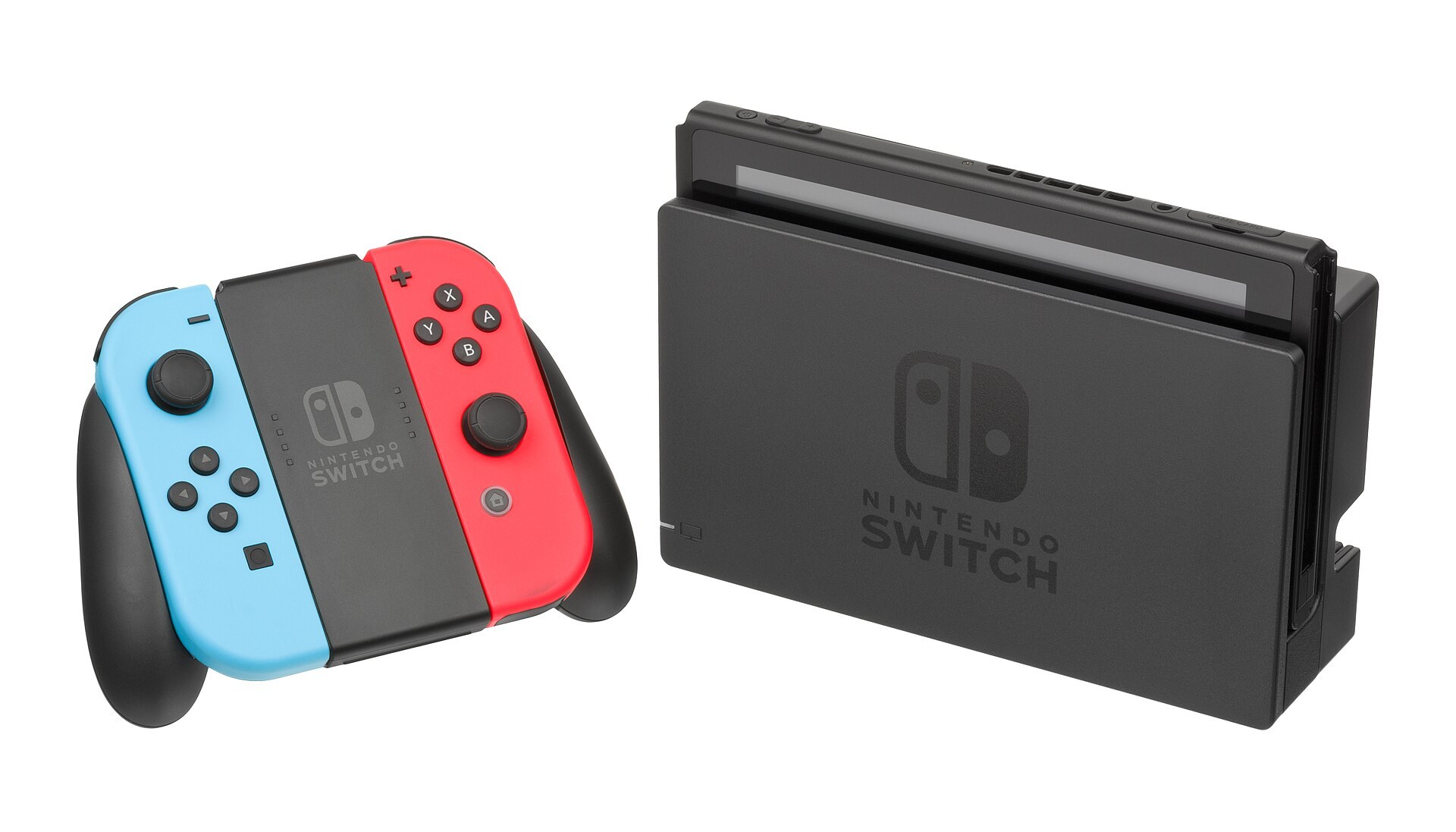
A Nintendo Switch docked with its Joy-Con controllers in the grip — the current home console generation for the Pokémon series, and the platform whose predecessor-era material also featured in Teraleak reporting. Photo: Evan-Amos, via Wikimedia Commons.
Nintendo’s paperwork, filed in the Northern District of California and opened as miscellaneous case No. 4:25-mc-80094-DMR, follows that template closely. The proposed subpoena is directed at Discord Inc., and the accompanying declaration by Nintendo attorney James D. Berkley of Mitchell Silberberg & Knupp LLP states its purpose in one sentence quoted by Polygon and Techdirt: the aim is “to obtain the identity of the Discord user ‘GameFreakOUT,’ who posted infringing content.” Nintendo alleges that the account posted “confidential materials not released to the public” on a Discord server called FreakLeak. As supporting evidence, the filing includes a partially redacted screenshot from that server showing the GameFreakOUT account posting a file and telling the room to “enjoy.” The information demanded is comprehensive: the account holder’s name, address, telephone number and email address, with PC Gamer’s account of the filing also listing IP address and any other information in Discord’s possession sufficient to identify the user. Berkley’s declaration adds the standard assurance required by the statute, that anything obtained “will be used only for the purposes of protecting the rights granted to NOA under the Copyright Act.”
Two details in the chronology matter. First, April’s filing was an escalation, not an opening shot. According to Polygon’s reporting, Nintendo had already fired DMCA takedown notices at the circulating material, and the files had kept spreading regardless, hopping between servers and social platforms faster than notices could chase them. Second, the filing targets the account accused of posting the material. The press coverage of the request does not establish that the person behind GameFreakOUT was also the person who broke into Game Freak’s servers the previous August, and careful readers should keep those two roles — intruder and distributor — separate until a court record joins them together.
A Subpoena Is Not a Lawsuit — Yet
It is worth being precise about what this document does and does not do. A DMCA subpoena of this kind decides nothing about guilt, damages or wrongdoing. It is an identification mechanism, issued through a court clerk rather than argued before a judge, and Nintendo Life’s coverage of the filing noted plainly that such a request does not necessarily mean a further court case will follow. What it does is convert an anonymous handle into a legal person: someone who can be written to, negotiated with, or sued. Everything in Nintendo’s history suggests that this conversion is the point of the exercise. The company that spent six months saying nothing public about the Teraleak beyond takedown notices was not forgetting the episode. It was building the paper trail that anonymous leaking is specifically designed to prevent.
There is also a risk built into the strategy, and commentators noticed it immediately. Techdirt, covering the filing under the headline “Nintendo Once Again Seeking To Unmask Discord User For Leaking Content,” questioned what dragging a six-month-old leak back into the headlines would achieve, beyond reminding the internet that the material exists. That tension — between letting a leak die quietly and pursuing it as a deterrent to the next one — runs through every case in Nintendo’s recent history, and the record shows which side the company reliably chooses.
Discord Again: The Sword and Shield Precedent
Pokémon leaks have ended up in court before, and the closest precedent also ran through Discord. Ahead of the November 2019 launch of Pokémon Sword and Shield, photographs of an unreleased official strategy guide began circulating online, revealing game content that The Pokémon Company had not yet announced. The Pokémon Company International sued. Reporting on the case established that one of the two defendants worked for the company hired to print the guide and had photographed its pages, passing the images to a friend, from whose circle they reached a group chat and were then posted publicly on Discord. When the case settled in June 2021, each of the two men agreed to pay The Pokémon Company $150,000, a figure covering damages and attorneys’ fees. The company’s lawyers had argued in that case that the leak caused irreparable injury by spoiling its carefully staged reveal plans.

A Game Boy Color in its translucent Atomic Purple case — the hardware of Pokémon’s first handheld boom, a reminder of how many generations of development history a studio archive like Game Freak’s contains. Photo: Evan-Amos, via Wikimedia Commons.
Read the Teraleak filing against that outcome and its logic sharpens. The Sword and Shield case began with anonymous guide photographs and ended with six-figure settlements from identified individuals. The amounts were never really the prize; the message to anyone photographing, uploading or re-posting unreleased material was. A terabyte-scale breach sits at the opposite end of the spectrum from a photographed strategy guide, which is precisely why outside observers quoted in April 2025 expected Nintendo to come down hard if the subpoena produced a name.
Same District, Same Playbook
If the shape of the April 2025 request feels familiar, that is because Nintendo had run the identical play two years earlier, in the same district, against the same platform. In February 2023, images from the roughly 200-page art book bundled with the Collector’s Edition of The Legend of Zelda: Tears of the Kingdom leaked online months before the game. After takedown correspondence with Discord failed to satisfy it, Nintendo of America applied on 4 April 2023 for a DMCA subpoena in a California district court, asking that Discord “disclose the identity, including the name(s), address(es), telephone number(s), and e-mail addresses(es) of the user Julien#2743, who is responsible for posting infringing content.” TorrentFreak broke that story, and VGC and Kotaku followed it. Swap an art book for a developer’s archive and Julien#2743 for GameFreakOUT, and the 2025 filing is the 2023 filing with the volume turned up.
The wider enforcement record fills in the rest of the pattern. On the piracy side of the ledger, Nintendo’s pursuit of the Team Xecuter Switch circumvention operation ended with Gary Bowser pleading guilty in the United States, receiving a 40-month prison sentence in February 2022, agreeing to $4.5 million in restitution in the criminal case and facing a further $10 million civil judgment. Its case against the ROM site RomUniverse produced a $2.1 million damages award in 2021. Those are piracy cases rather than leak cases, driven by different facts, but they explain the reputation that surrounds a Nintendo subpoena: the company budgets for follow-through, litigates for the precedent as much as for the money, and treats each identified defendant as a signpost aimed at everyone watching.
What Happens Next
As of the reporting that prompted this feature in late April 2025, the story ends at the request itself. No follow-on lawsuit against a named individual had been announced, and a subpoena is only as useful as the records behind it: if the account was registered with throwaway details and routed through anonymising services, Discord’s answer may identify very little, a possibility raised in coverage of the filing. If, on the other hand, the records do yield a name, the Sword and Shield settlement stands as the worked example of what comes after — a civil claim, a painful bill, and a permanent place in the cautionary tales told in every leak community.
Either way, the Teraleak’s second act has already made its point. The breach took a weekend. The response has taken years of institutional patience: a rebuilt server in Tokyo, a paper trail of takedown notices, and finally a one-page request in a California court asking a chat platform for a name, an address, a phone number and an email. Whoever ran the GameFreakOUT account posted a file, typed “enjoy,” and moved on. Nintendo, characteristically, did not.