
Some games return like royalty and some return like rumours finally believed. Fire Emblem: The Sacred Stones belongs to the second kind. The Game Boy Advance strategy epic – twin royal heirs, a continent sliding into war, permadeath waiting behind every elegant grid – has joined the Nintendo Switch Online library, giving a new generation a legitimate, easy way into one of the most admired entries in the whole Fire Emblem series. For long-time fans, the arrival lands with extra resonance, because Sacred Stones stands at the head of a golden lineage that ran straight into the Wii.
That lineage is the real story. In the mid-2000s Fire Emblem enjoyed a remarkable run: Sacred Stones on GBA in 2004, Path of Radiance bringing the series back to home consoles on GameCube, and then Fire Emblem: Radiant Dawn on Wii in 2007 – a vast, multi-act war epic that remains, for many devotees, the series at its most ambitious. To replay Sacred Stones now, on modern hardware, is to revisit the wellspring of that era. This feature traces the bloodline, explains why Radiant Dawn’s generation still commands such devotion, and makes the case for clearing your schedule for a twenty-year-old grid.
The Sacred Stones formula, perfected
Sacred Stones follows Eirika and Ephraim, royal twins of Renais, as an unprovoked invasion shatters their kingdom and sends them on diverging roads through a continent of monsters and betrayals. Structurally it is the friendliest of the classic Fire Emblems: a world map, skirmishes to grind, a branching choice between the twins’ campaigns, and the Tower of Valni for the cautious. Underneath the welcome mat sits the series’ signature steel. Units who fall in battle are gone – the permadeath that turns every percentage display into a small moral crisis.
The GBA trilogy’s presentation has aged like illuminated manuscript. Sprite animation so expressive that a swordmaster’s critical hit still draws a crowd, a score equal parts martial and mournful, and support conversations that sketched whole inner lives in a few exchanges on a battlefield. Sacred Stones is often called the easiest of its trio, which veterans should translate correctly: it is the one whose doors are open widest, not the one whose rooms are emptiest. For newcomers arriving through Switch Online, that balance is exactly right – a gentle on-ramp into a series that will be demanding their best soon enough.
Radiant Dawn: the Wii’s sprawling war epic
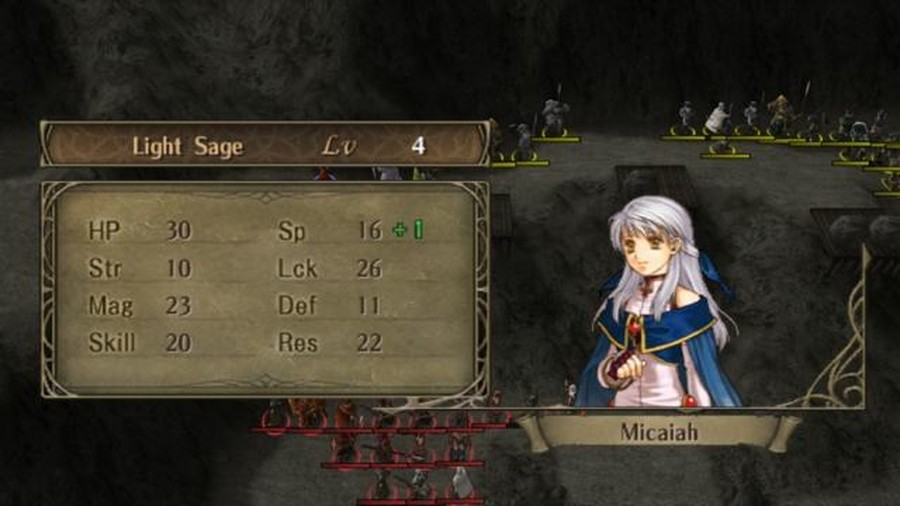
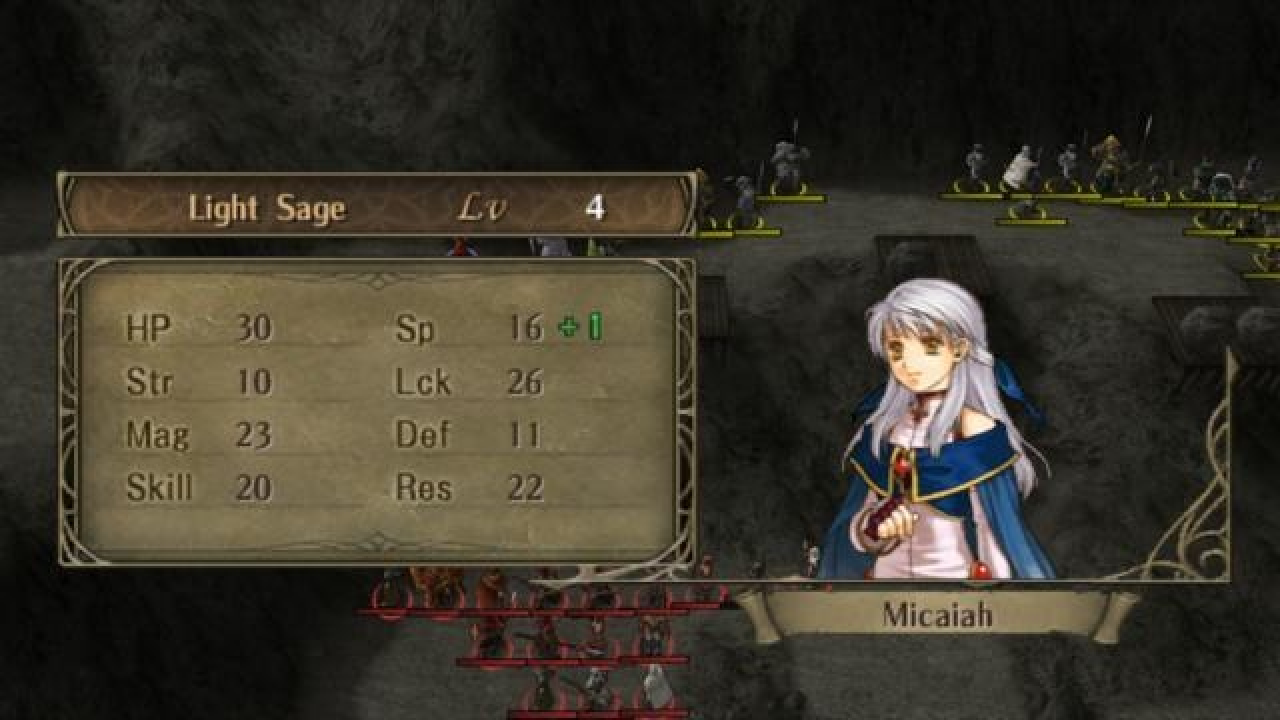
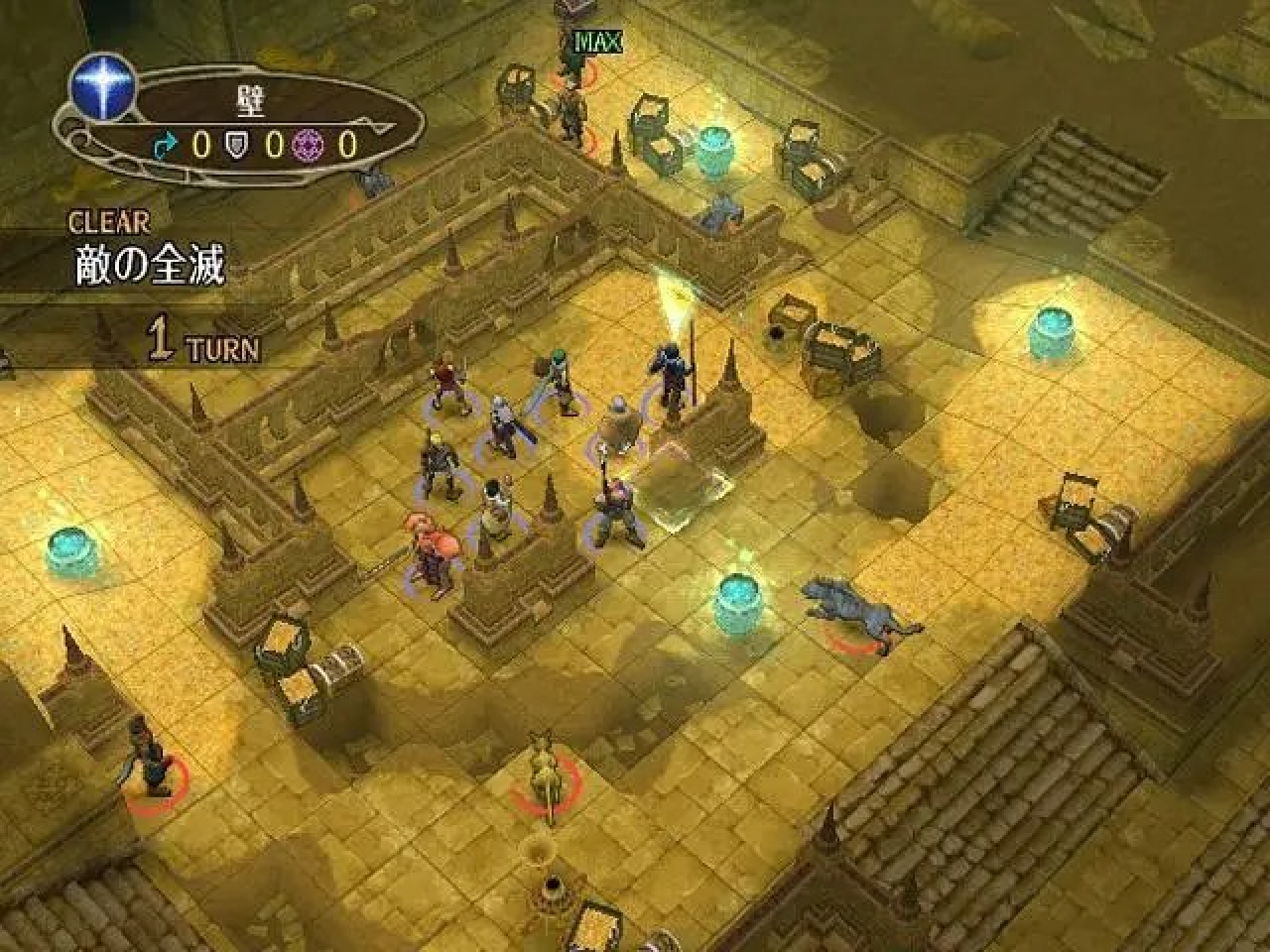
Two years into the Wii’s life, Intelligent Systems delivered the era’s monument. Radiant Dawn picked up Path of Radiance’s continent of Tellius three years on and told its story in four great acts, shifting armies and allegiances until former heroes stood across the field from each other. Its ambitions were novelistic: a dawn brigade of underdogs, laguz politics, a plot that kept widening until the fate of gods was on the table. On a console famous for bowling, here was a hundred-hour meditation on war’s machinery, and it remains staggering.
It was also proudly uncompromising. Radiant Dawn launched without the difficulty mercy later entries would normalise – its localisation even renamed the difficulty tiers in ways that trapped the unwary – and its support system, so rich on GameCube, was pared to fragments, a flaw fans still debate. Yet its scale, its music and its willingness to make the player command both sides of a tragedy gave it a stature few strategy games attempt. Original copies now command collector prices, which is precisely why the series’ return through subscription libraries matters: this lineage deserves readers, not just owners.
Why subscription libraries suit Fire Emblem
Fire Emblem’s modern explosion – Awakening’s rescue of the series, Three Houses’ mainstream triumph – created millions of fans who have never legally touched the older games. The Wii and GameCube entries are trapped on expensive discs; the GBA trilogy lived on a handheld two decades gone. A Switch Online release breaks that logjam with almost no friction. Sacred Stones can be sampled on a commute, its first chapters teaching the grammar – weapon triangle, terrain, rescue, the arithmetic of a 97 percent hit that will absolutely miss – before a player commits to a full campaign.
There is a preservation argument braided through the convenience. Strategy RPGs are literature as much as software: branching supports, localised scripts, art that exists nowhere else. Every year a classic spends locked to decaying hardware and rising auction prices, its readership narrows to collectors. Putting Sacred Stones where any subscriber can reach it, and pathing interest towards the Radiant Dawn era behind it, is how a series keeps its own history alive – not in a vault, but in active play, arguments about best units and all.
The golden age, reassessed
Stack the era honestly and its quality startles. Between 2003 and 2007 the West received Fire Emblem, The Sacred Stones, Path of Radiance and Radiant Dawn – four major strategy RPGs in five years, each distinct, made by a studio at the height of its powers, for an audience that was, at the time, still being built from nothing. The GBA games had to teach the West what Fire Emblem was. The console pair then spent that trust on scale and sorrow. Modern entries, for all their polish and romance systems and tea parties, are still measured against the Tellius duology’s narrative nerve.
Sacred Stones’ role in that run is the diplomat. It kept one foot in the earlier, portable tradition – monster maps, branching promotions, a postgame to tinker in – while sharing its generation’s confidence. If Radiant Dawn is the era’s epic poem, Sacred Stones is its beloved novel, the one pressed into friends’ hands. Its Switch Online arrival is therefore perfectly chosen: not the rarest Fire Emblem, but the most persuasive, arriving with a whole golden age standing behind it, waiting for new readers to ask what else the family produced.
New readers, old disciplines
Arriving players should also know what Sacred Stones will not do for them, because its kindnesses have limits the modern series has since sanded away. There is no casual mode to disable permadeath, no rewind to unpick a misclick, no support system that doubles as a dating game. Help comes in older currencies: a wise pre-battle save, a healer kept one square out of danger, a lord protected like the game-over condition he and his sister genuinely are. Many newcomers discover, to their surprise, that they prefer it this way – that Fire Emblem’s emotions were engineered alongside its restrictions, and that a character’s death lands because the game will not negotiate.
That discovery is reshaping how the whole series is read. As the Radiant-era games circulate again through libraries and word of mouth, their reputation keeps climbing relative to glossier successors, the way certain novels outclimb the bestsellers of their own decade. Sacred Stones’ return is therefore more than catalogue maintenance. It is a canonical argument, conducted by players, about what Fire Emblem essentially is – and the Wii generation’s answer, forged between Magvel and Tellius, is currently winning.
Start the campaign
Practical advice for the returning and the new: choose Eirika’s route first for story, Ephraim’s for challenge; promote early rather than hoarding levels; let Seth, the great overpowered paladin, rescue mistakes but not steal the army’s experience; and accept, at least once, the full Fire Emblem sacrament of resetting a chapter because a 2 percent enemy critical ended someone you loved. That sting is not a flaw in these games. It is the authorial voice – the thing the Radiant Dawn generation did better than anyone, and the reason this lineage still recruits armies twenty years on.
Sacred Stones on Switch Online is, on its face, one catalogue addition among many. Underneath, it is a door into the years when Fire Emblem became legend: the GBA proving grounds, the GameCube return, and the Wii’s great war epic crowning them all. Walk through it. Tellius – and Magvel before it – are worth the march, and the march, as every Fire Emblem player learns, is where the attachment happens.