At a glance: Panzer Dragoon II Zwei · Sega Saturn · Team Andromeda / Sega, 1996 · Rail shooter · Score: 9.0/10
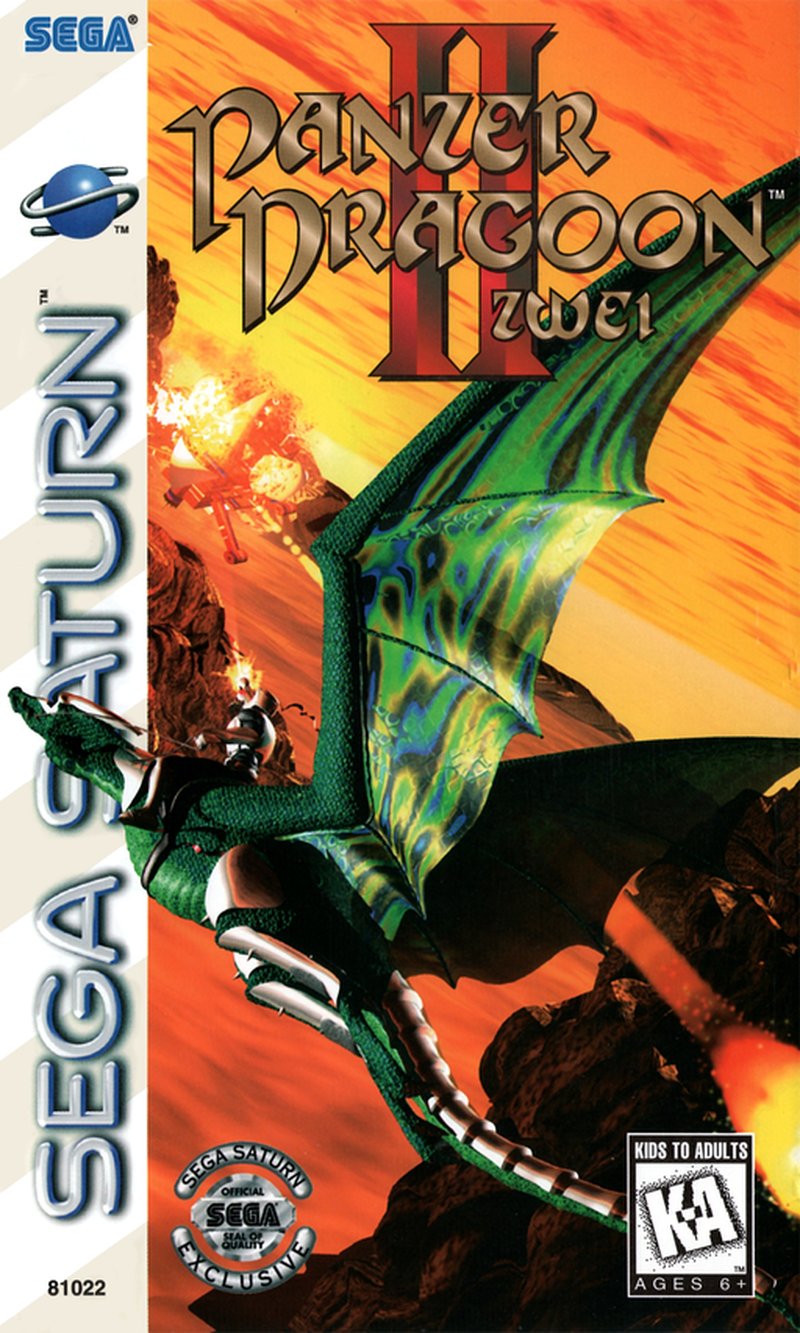
If the first Panzer Dragoon was a beautiful proof of concept, Zwei is the moment the concept grew teeth. Team Andromeda’s 1996 sequel takes everything the launch-window original sketched — the dragon, the post-apocalyptic waterworld, the 360-degree rail shooting — and rebuilds it faster, meaner and more generous. You get branching routes, a dragon that evolves with your performance, ground-level charges where your mount runs instead of flies, and boss fights that still hold up as set-piece design. On a console whose 3D was mocked from birth, Zwei is the rebuttal pressed onto a single disc: a rail shooter of genuine grandeur, and the Saturn’s finest hour in the genre until its own RPG sibling arrived.
The story is a prequel told with the series’ trademark economy. Jean-Jacques Lundi, a young rancher in a village that breeds mutant coolia for labour, spares a newborn with a glowing throat — a dragon, in a world where dragons are shot on sight. He names it Lagi, rides it in secret, and when the Empire’s ancient weapons burn his village to ash, the two of them go hunting the airship that did it. There is barely a line of fat on it. Cutscenes in Panzerese, landscapes that do the world-building, and a bond between boy and dragon that the mechanics keep deepening: how well you fly literally shapes what Lagi becomes.
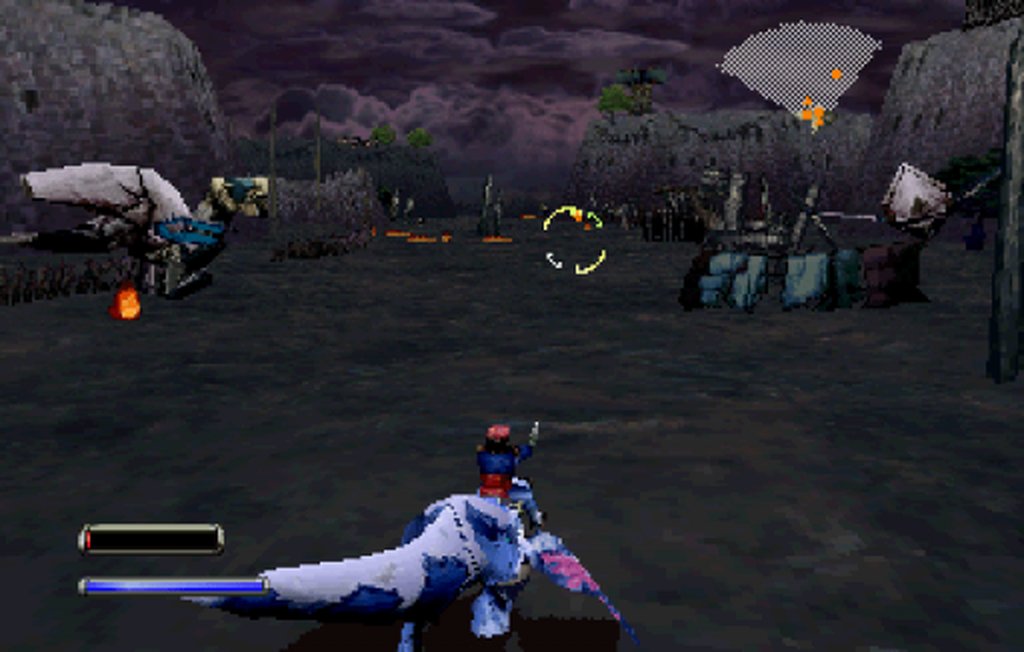
The shooting refines the original’s grammar into something fluent. You aim anywhere in a full circle around the dragon, lock on to whole formations with the homing laser, or tap out shots with the rider’s gun for precision work. Zwei’s great addition is the berserk attack: a screen-clearing storm of lasers earned by filling a gauge, saved for the moment a boss pattern or an ambush demands it, and all the more satisfying for the saving. The camera work is the other leap. The first game flew handsome corridors; Zwei swoops through a canyon at ground level with Lagi at a full gallop, trades shots across a flooded ruin, and dives through the guts of an imperial fleet, all while the Saturn — supposedly incapable — keeps the frame rate respectable and the horizon huge.
A dragon that grades you back
Route choice gives the six episodes their replay value. Most stages hide a fork — a canyon mouth, a tunnel, a decision taken at speed — and the path you choose changes the enemies, the scenery and the score attack that follows. At the end of each episode the game tallies your shot-down ratio and evolves Lagi accordingly: fly well and the dragon grows through sleeker, deadlier forms; scrape through and it stays graceless a little longer. It is a progression system wearing no UI at all, just a creature on screen becoming the record of how you play. Finish the game and Pandora’s Box opens: a vault of extras, cheats and curios that was generous by 1996 standards and feels like a love letter by today’s.
Zwei’s dragon does not level up because a menu says so. It levels up because you flew well, and you can see your own skill growing wings.
The bosses deserve their own paragraph, because they are the game’s set-piece soul. A guardian that fills a canyon and must be disarmed piece by piece. A fleet engagement where the dragon weaves between capital ships while their turrets track you independently. The final confrontation, which asks everything the game has taught — lock-on discipline, berserk timing, camera awareness — at once. Enemy design throughout follows the series’ beautiful logic: the Ancients’ bio-weapons are animals first and targets second, all wings, shells and dreadful grace, and shooting them down over those drowned landscapes carries the melancholy that defines the whole Panzer world. Saori Kobayashi’s score, all drums, winds and strange choral colour, makes every flight feel like a ritual.
Where it shows its age
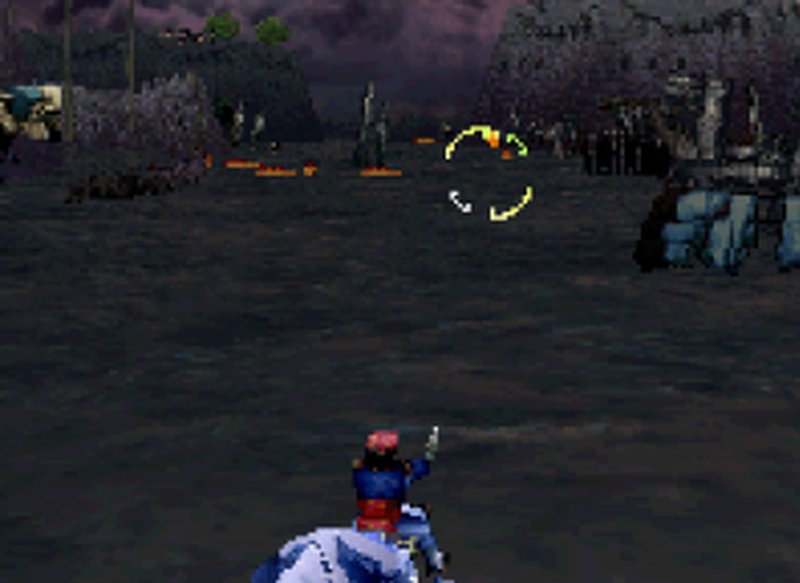
Honesty requires the usual Saturn caveats, sharpened. The draw distance wears a visible fog in the widest spaces, textures swim in the way of all 1996 3D, and the ground-running sections — thrilling as they are — expose the hardware’s flat-shaded earth at its plainest. A full run takes under two hours, which the branching and Pandora’s Box excuse but do not erase; players raised on longer campaigns should know they are buying intensity, not acreage. The lock-on can occasionally snag the wrong target in a crowded sky, and the difficulty spikes hard at the final boss for riders who have coasted on berserks. None of it is structural. All of it is the texture of a team at the edge of a difficult machine, winning.
As a Saturn artefact specifically, Zwei matters beyond its quality. It was the console’s early proof that the Panzer team understood this hardware like no one else — the twin processors, the quadrilateral geometry, the sprite planes pressed into service as distant sky. Where rival machines’ shooters of the moment look like tech demos now, Zwei’s art direction has carried it across the decades intact: those bone-white ruins, that rust-red light, the dragon’s silhouette against a huge and haunted sky. It is also, not incidentally, the ideal entry point to the series — more forgiving than the original, more focused than Saga’s sprawl, and complete in itself.
The ground war
Zwei’s boldest flourish deserves its own moment: the stages where Lagi cannot fly. Early in the game the young dragon’s wings are not ready, and later stages deliberately ground you — a canyon charge at full gallop, enemies attacking from the cliffs, the camera low in the dust behind a running animal with a boy on its back. In a genre defined by flight, these sequences should feel like deprivation. Instead they are the game’s signature thrill, because the shooting grammar does not change but the sensation transforms entirely: speed becomes physical, the ground rushes, and every near-miss with a canyon wall is felt in the stomach. It is also a flex of pure Saturn craft — the ground, the canyon, the running animation rendered with a solidity the machine’s reputation said was impossible in 1996. When Lagi finally takes to the sky for good, the game has made flight feel earned, which is a trick about story told entirely through mechanics. By the final episode, dragon and rider have grown up together in front of you, and the farewell the series is famous for has been prepared, quietly, since the first gallop.
Verdict
Panzer Dragoon II Zwei is a rail shooter with the confidence of a classic and the heart of a fable. Its branching skies, evolving dragon and berserk-fuelled boss fights build a two-hour campaign you will happily fly for twenty, and its Saturn engine work remains a standing argument about what this console could do in the right hands. If Saga is the series’ novel, Zwei is its perfect short story — and as a game to put in a Saturn today, it is close to compulsory.