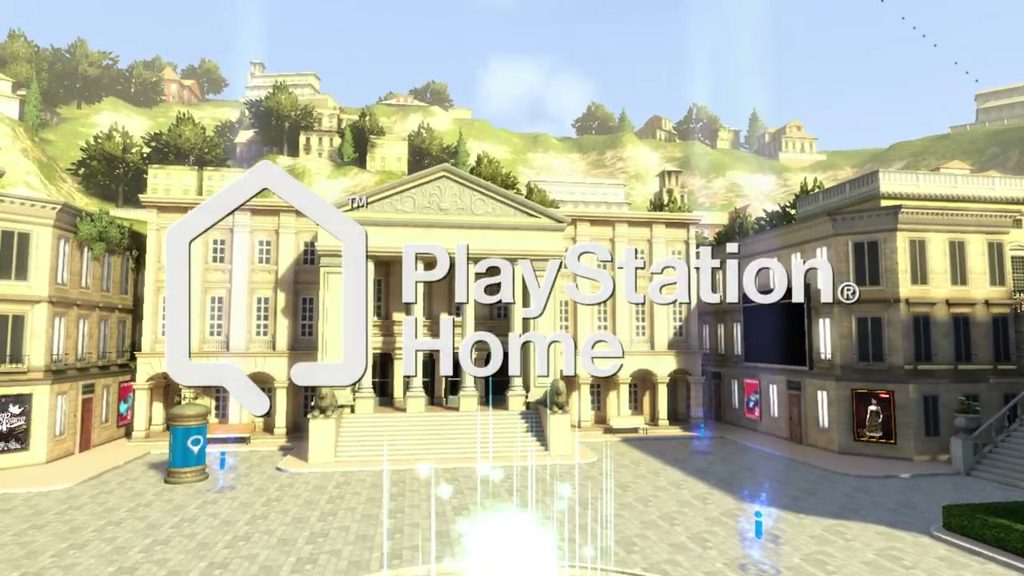
At a glance: PlayStation Home (2008–2015) — Sony’s virtual world inside the PS3, where two hundred million visits, a chess board in a plaza, and the strangest social experiment in console history happened.
Long before “the metaverse” became a boardroom incantation, Sony quietly built one inside the PlayStation 3 and gave it away free. PlayStation Home, announced by Phil Harrison in 2007 and launched into open beta in December 2008, was a full 3D social world bolted onto the XMB: an avatar, an apartment, a harbour, a plaza with chess boards and a bowling alley, shopping malls, game-themed spaces, live events, and at its height a population Sony counted in tens of millions of accounts. It closed on 31 March 2015, written off in most histories as an oddity. That verdict is too small. Home was Second Life for the console generation, a genuine society with its own economy, customs, celebrities and grief — and it predicted, with eerie accuracy, both the promise and the failure modes of every virtual world that has followed.

A world in the XMB
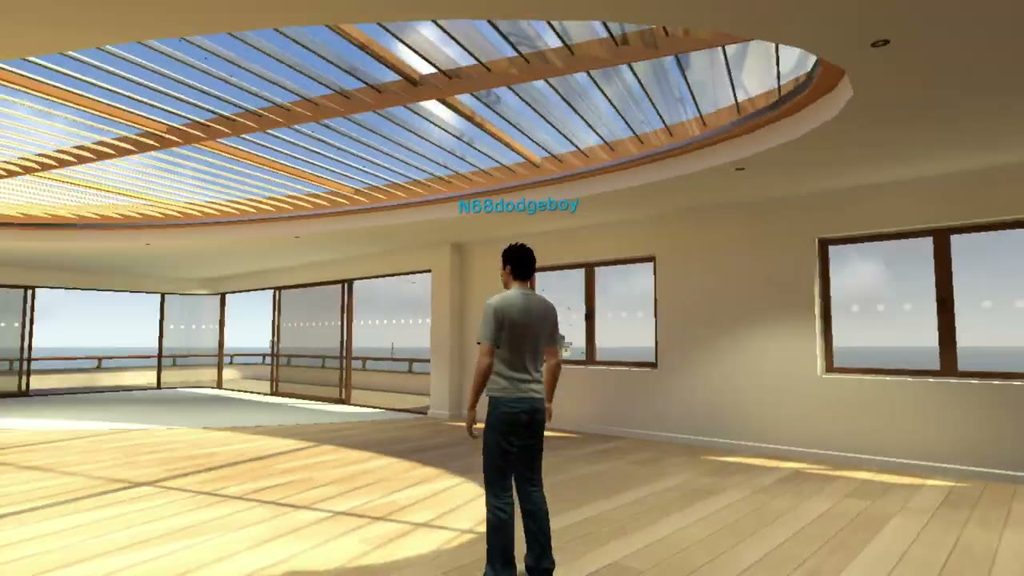
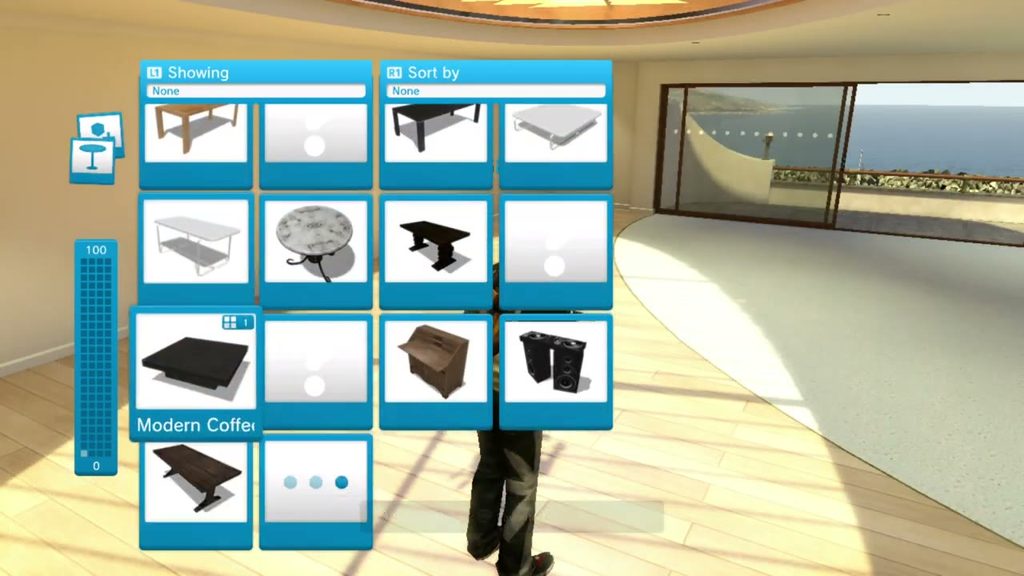
The pitch was disarmingly domestic. Every PS3 owner got a harbour-side apartment — Harbour Studio — which they could furnish with earned and bought furniture, hang their trophies in (the original plan had a dedicated trophy room; 3D trophy viewing was among the features promised early and trimmed), and invite friends back to. From the plaza you walked: to the bowling alley and arcade, to the mall where real brands and game publishers kept shops, to themed spaces that multiplied over the years — a Sodium salt-flat racing world, a Resistance bunker, an Uncharted jungle bar, Xi, an alternate-reality game woven through Home in 2009 that remains one of the most ambitious things a platform holder has ever staged inside a social space. Movement was famously stately; loading, between every space, was famously not. Home’s critics called it a lobby with loading screens, a solution looking for a problem, a shopping centre pretending to be a world. Its residents called it home, and meant it literally enough that the distinction matters.
The society that formed anyway
Give tens of millions of people avatars, dance emotes, chat bubbles and nowhere in particular to be, and sociology happens. Home developed districts and customs: the plaza regulars, the chess philosophers, the harbour romantics; clans that treated certain spaces as territory; fashion economies built on limited-run virtual clothing that Sony sold in staggering quantities (the business press eventually noticed that Home was quietly, substantially profitable — the “failed” world was making money from sofas and hairstyles); griefers in identical default outfits forming conga lines of menace; and, threaded through all of it, the particular loneliness-and-company of early social gaming. For many PS3 owners, especially younger ones, Home was their first social network in 3D — before voice chat was normal, before streaming, there was standing in a virtual plaza learning how to be a person among strangers, with a dance button. Its moderation struggles, its harassment problems and Sony’s evolving responses were early rehearsals for everything social platforms now wrestle with, conducted in public, in fancy dress.
Home’s real feature was never bowling or shopping. It was the discovery — a decade before it became an industry slogan — that players will simply hang out in a world, if you give them one, and call that the game.
The content machine
What is easy to forget is how much there came to be. By its maturity Home had hundreds of spaces and a small industry of developers building for it: full mini-games, quest lines spanning districts, virtual item design as a profession. Sony’s own events team ran seasonal festivals; a virtual E3 booth let Home users “attend” the show the press was covering, years before virtual conferences were a necessity. Game-launch spaces functioned as playable trailers; some publishers built better games inside Home than the ones they were advertising. The apartment system grew into estates, clubhouses and personal spaces by the dozen. Underneath, the technology strained — the PS3’s memory ceiling made every space a negotiation, crowds turned to slideshows, and the world could never quite hold as many people as its premise wanted. Home was a 2018 idea running on 2006 hardware, which is both its tragedy and its claim on history.
The closing, and the keeping
Sony announced the end in 2014 and closed the doors on 31 March 2015, to genuine mourning: residents held last-night gatherings in the plaza, a tradition social worlds have repeated since. Because Home lived on servers, its closure was total in a way disc games never suffer — the world was not delisted but demolished. What survives is archaeological: thousands of hours of resident-shot video, the fan wikis’ maps of a place that no longer exists, and a dedicated preservation community that has worked for years to rebuild and re-host the world privately, restoring spaces from archived data so the harbour can be walked again. Sony’s own successor service never materialised; the company’s social ambitions moved to streams and shares. But every live-service hangout since — every concert held inside a shooter, every virtual graduation, every lobby where the hanging-out became the point — is living in a house whose foundations Home poured, on a console that cost $599, in a plaza with chess boards.
Why it matters to the PS3’s story
The PS3 was Sony’s maximal era: the most expensive console, the strangest processor, the biggest bets. Home was the bet that looks most prescient now — not because it won, but because it mapped the territory first, profitably, at scale, on hardware that could barely contain it, and learned the lessons the current industry is relearning at a thousand times the budget. Boot a PS3 today and the Home icon is gone from the XMB; what remains is the shape of the future it was pointing at. Two hundred million visits is a lot of people to have been early.
The apartment you can still picture
Ask anyone who lived there about Home and they will not describe the mall or the bowling first. They will describe their apartment: the harbour view, the first sofa they earned, the poster they won in a game space in 2010 and arranged at an angle they can still see with their eyes shut. That specificity of memory — a rented arrangement of polygons on a demolished server — is the strongest evidence that Home was a place and not a product, because products are remembered by their features and places are remembered by their furniture. Virtual worlds since have spent billions chasing that exact feeling with better technology and thinner results. The residents of the plaza had a word for what the industry now calls its future. They called it Tuesday. The servers are gone, the harbour is dark, and the word is still theirs.
A postscript on numbers
Sony’s own figures, offered over the years, put Home’s registered accounts above forty million and its lifetime visits in the hundreds of millions — numbers that would constitute a triumph for most services, attached to a world most retrospectives describe as a failure. The gap between those two sentences is the whole lesson. Success, it turns out, is a story told afterwards, and Home’s story is still being retold.
Further reading on this shelf
Home’s world is best understood alongside the machine that hosted it — see our buying guide for the hardware it ran on, and the Cell feature for the processor that made its crowds such hard work to render.