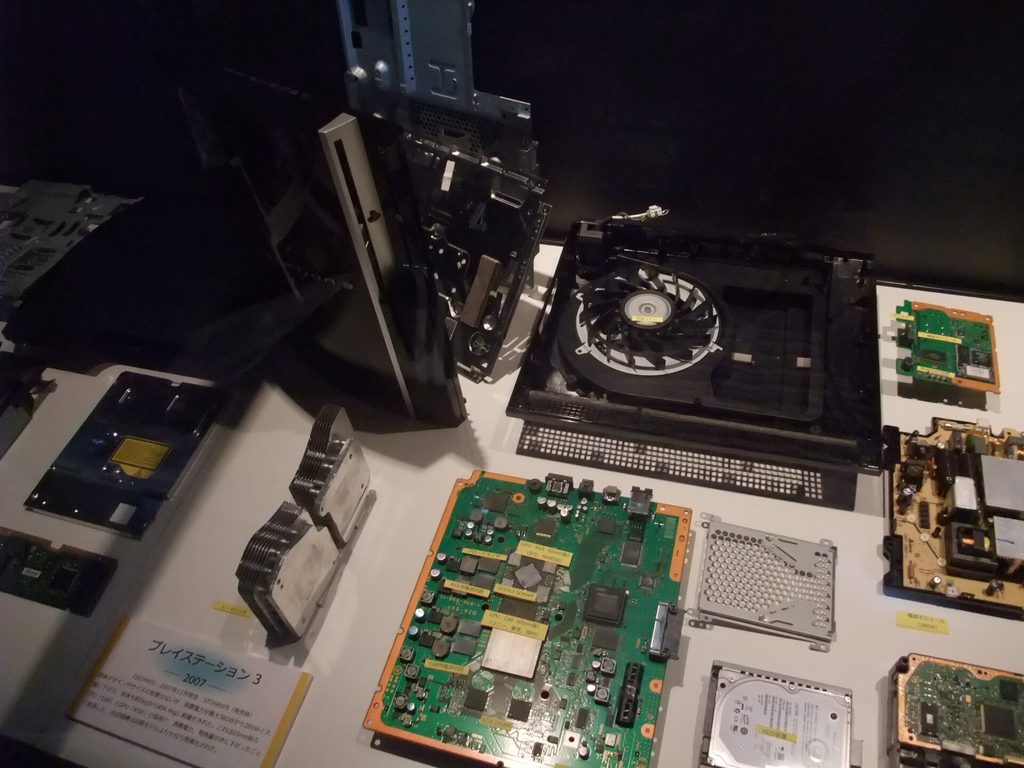
At a glance: The Cell Broadband Engine — one PowerPC core, eight specialist helpers, a decade of developer tears, and the strangest, boldest processor ever put in a games console.
Every games console is a compromise wearing a marketing slogan, but only one was designed like a supercomputer and sold like a toy. The Cell Broadband Engine at the heart of the PlayStation 3 was a joint project of Sony, Toshiba and IBM — the STI alliance — led by legendary chip architect Ken Kutaragi, who imagined it not merely powering a console but networking across homes, appliances talking to appliances in a distributed “cellular” future. The future declined. What the industry got instead was the most argued-about processor in gaming history: a chip that was simultaneously years ahead of its time and a trap for the developers asked to feed it. This is the story of the Cell — what it was, why it hurt, what it could do in the right hands, and why its ghost still haunts processor design.
One conductor, eight soloists
The architecture sounds simple until you try to use it. The Cell contains one PPE — a PowerPC processing element, a fairly conventional dual-threaded core that runs the operating system and the main thread of a game — and eight SPEs, synergistic processing elements. The SPEs are the exotic part: small, ferociously fast vector processors, each with its own 256KB of local memory and no direct access to the console’s main RAM. Work reaches an SPE by DMA transfer — data is explicitly posted into its local store, processed at terrifying speed, and posted back — orchestrated across a ring bus with bandwidth figures that read like misprints in 2006. On paper, the chip’s floating-point performance dwarfed anything in a rival console or a typical PC of the day. Sony’s supercomputing claims were not invented: IBM built a Cell-based supercomputer, the Roadrunner, that broke the petaflop barrier in 2008, and PS3s were famously clustered by universities, hospitals and the US Air Force, which built a research supercomputer from 1,760 consoles because nothing else offered that compute per dollar.
Why developers wept
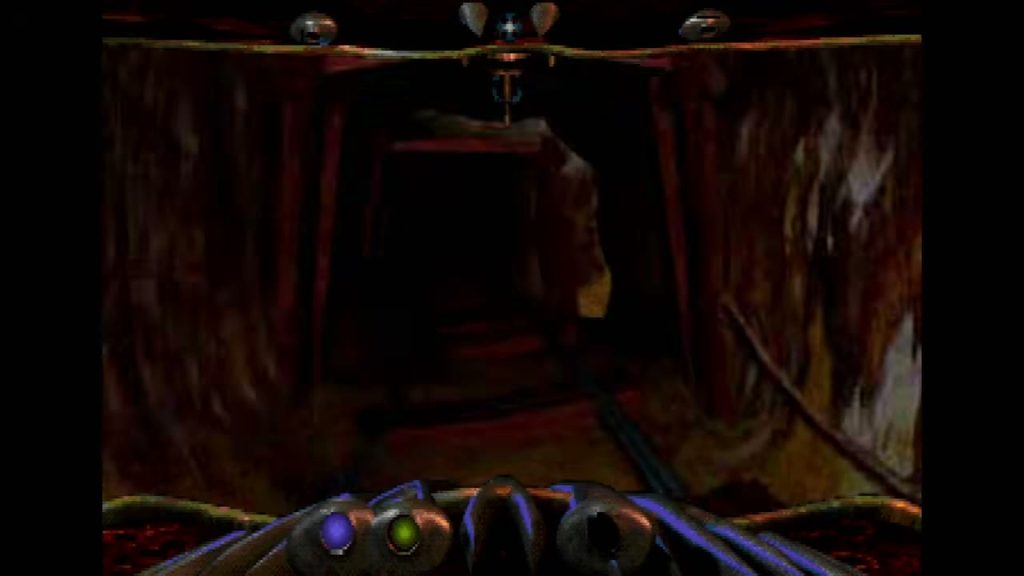
The catch was total: the Cell rewarded only those who rebuilt their thinking around it. A conventional engine, written for a normal multicore PC-style processor, would run on the PPE, ignore the SPEs, and perform worse than the same code on the Xbox 360’s three friendly general-purpose cores. To use the SPEs you had to decompose your game — physics, animation, geometry decompression, audio, post-processing, AI sub-tasks — into parcels of work, small enough for 256KB, scheduled by hand, with data laid out for DMA like freight. Memory was the other trap: the PS3’s 512MB arrived as two pools of 256MB, one for the CPU and one for the graphics chip, each awkward to borrow from. Launch-era multiplatform games, built PC-first, routinely ran worse on the more powerful paper machine, and “the PS3 version” became a phrase with a wince in it. Studios that survived the education — Naughty Dog, Guerrilla, Santa Monica, Insomniac, who shared their findings with a generosity the industry still talks about — described the same arc: hatred, comprehension, and then a kind of pride. The Cell was not a bad processor. It was a strict teacher in an industry on deadlines.
The Cell did not ask developers to optimise. It asked them to emigrate — to a country where memory is posted by hand, work travels in parcels, and the old ways simply do not run.
What the right hands did with it
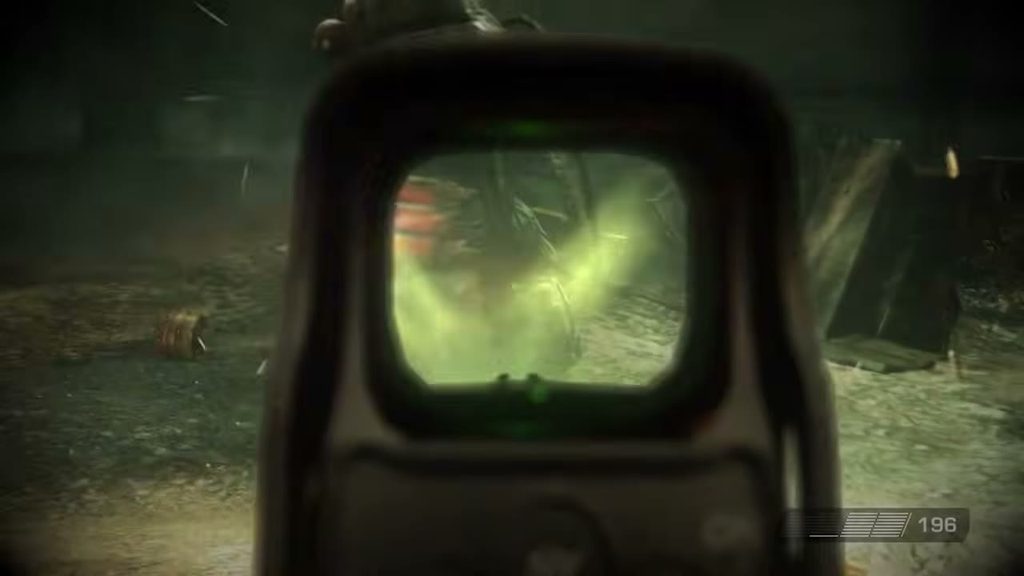
The proof is on this shelf. Uncharted 2’s physics, cloth, water and effects ran substantially on SPEs, freeing the renderer to draw Nepal falling down. Killzone 2’s deferred engine used the SPEs as a post-processing farm — depth of field, motion blur, lighting passes — to achieve its filmic murk. God of War III put its animation and geometry through the chip to stage boss fights on a walking mountain. The Last of Us, arriving seven years in, shows total fluency: by 2013 Sony’s first parties were using the Cell the way it had dreamed of being used, and the console’s final exclusives embarrassed hardware that was easier to develop for. The lesson took a generation to learn and was obsolete the moment it was mastered: the PS4 abandoned the architecture entirely for PC-style parts, Kutaragi’s cellular future folded into history, and an entire discipline of SPE programming became a dead language spoken fluently by a few hundred engineers.
The seventh SPE, the eighth, and other mysteries
The Cell invites folklore, and some of it is true. Each chip was manufactured with eight SPEs but ships in the PS3 with one disabled — a yield strategy, so that chips with a single defective SPE could still be sold; a second SPE is reserved for the operating system’s security and services, leaving six for games, a number every PS3 programmer can recite in their sleep. The hypervisor and the console’s security chain, rooted in the Cell’s isolation mode, kept the PS3 uncracked for years, until a catastrophic Sony key-management failure in 2010 handed the keys to the world in an algebra mistake that remains the most famous in console security. Even the machine’s failures were on a grander scale than other consoles managed.
The verdict of history
Was the Cell a mistake? As a business decision for a games console, the evidence is heavy: it raised the PS3’s price, delayed its games, handicapped its multiplatform catalogue for years, and its performance crown was real only in laboratories and first-party flagships. As engineering, it was a preview: modern processors — the heterogeneous chiplets, the accelerator farms inside every phone and graphics card, the way a modern console feeds its GPU compute units — live in a world the Cell described early and eccentrically. The chip’s ideas won; the chip did not. There is a fitting coda in emulation: the RPCS3 project has spent years teaching ordinary PCs to impersonate the Cell, core by core, and the fact that emulating this one console processor remains a summit of the field is the final proof of what Sony built. Too clever for its own good is the standard verdict. Playing its best games, in full SPE-throated cry, feels more like: too early, too proud, and — just occasionally — absolutely magnificent.

The $599 connection
The Cell also explains the most famous number in console history. The PS3’s launch price was not one decision but a pile-up — a new Blu-ray drive, exotic memory, backwards-compatibility hardware — and the Cell, a gigantic chip on an immature manufacturing process, was among the heaviest items in the pile, expensive to make and expensive in the engineering years it consumed. Sony’s console business spent the generation digging out of that hole, and the Slim redesign of 2009 — smaller chip, smaller bill — is the moment the arithmetic finally closed. The processor that was meant to network the world’s appliances ended up teaching its own maker the oldest lesson in hardware: the best chip is the one developers can use and accountants can afford. Its brilliance was never the question. Its timing, its price and its demands were.
Further playing
To feel the Cell’s learning curve in your hands, play the library in order: Resistance (2006) for the launch era, Killzone 2 (2009) for the breakthrough, and The Last of Us (2013) for mastery. The story of the PS3 is the story of its processor, and you can play it.