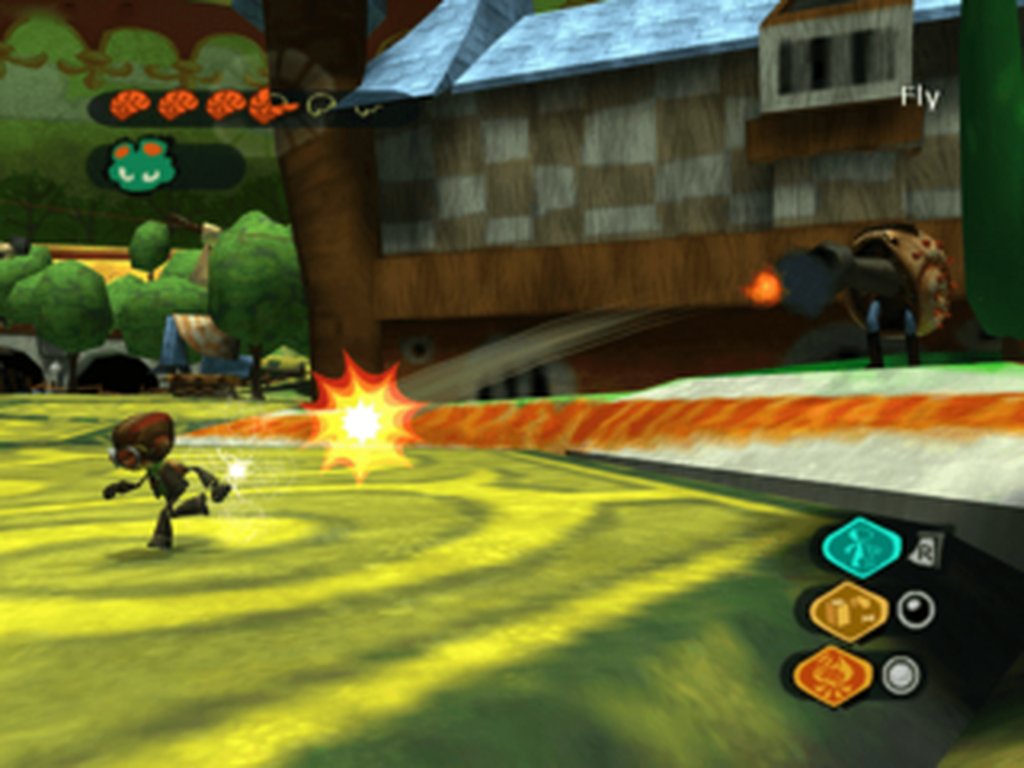
At a glance: Psychonauts · Xbox · Double Fine Productions / Majesco, 2005 · Platform adventure game · Score: 9.0/10
Psychonauts is the funniest, kindest and most inventive platform game on the original Xbox — a commercial disappointment in its day that the years have correctly reclassified as a classic. Tim Schafer’s Double Fine built a summer camp for psychic children, Whispering Rock, and then did the thing only they would think of: made every level a journey inside a human mind, each one designed as a physical expression of a personality. A paranoid conspiracy theorist’s brain is a suburb of twisted streets and shadowy watchers. A washed-up actress’s mind is a theatre where her life is restaged nightly. A gentle giant’s is a black-velvet painting. The platforming is good. The imagination is peerless, and it has not been matched since — including, honestly, by most of the films it resembles.
You play Razputin — Raz — a circus runaway with goggles, a backpack and a family curse about water, who sneaks into Whispering Rock to train as a Psychonaut and stumbles into a conspiracy stealing campers’ brains. The camp hub, explored freely between minds, is a masterclass in density: every camper kid has a name, a subplot and dialogue that updates as the story darkens; the coaches — Oleander, Sasha Nein, Milla Vodello — are written and voiced to perfection. Richard Horvitz gives Raz an earnestness that carries the whole game. Inside minds, Raz earns psychic powers — telekinesis, pyrokinesis, levitation (the game’s signature, a thought-ball you ride and bounce on), clairvoyance that lets you see the world through any character’s eyes, a gag with a hundred punchlines the game actually wrote.
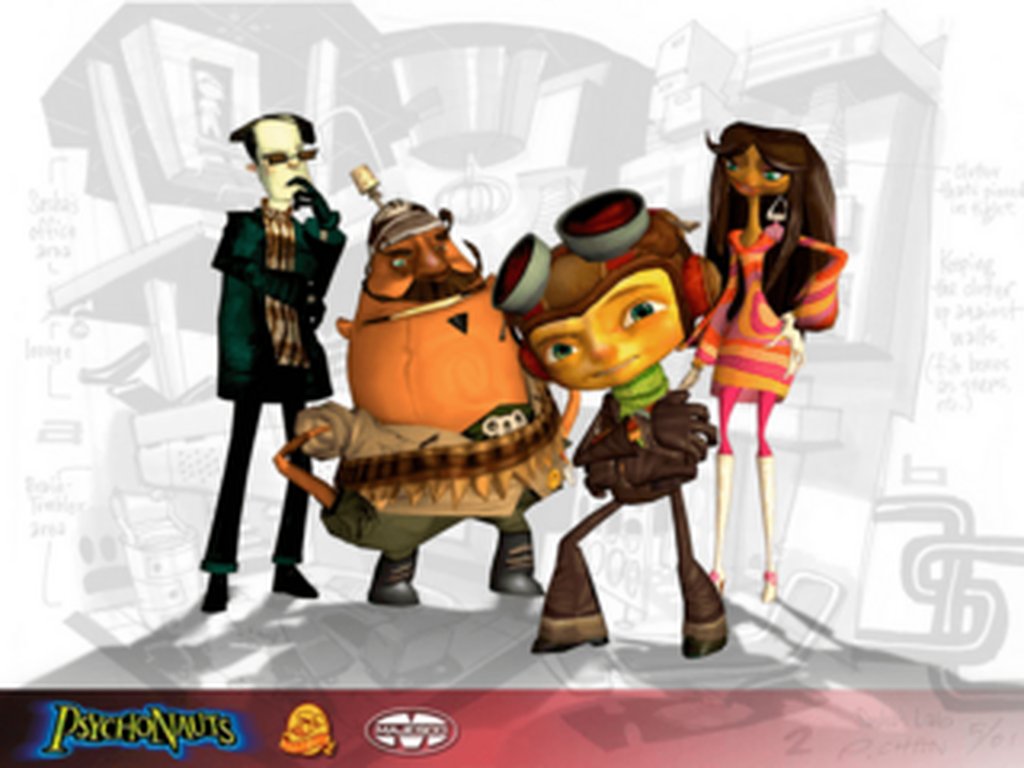
Level by level, the design keeps topping itself. The Milkman Conspiracy — a suburban mindscape bent by paranoia, where Raz poses as a series of increasingly absurd professionals to pass G-men who all look identical and speak in deadpan surveillance poetry — is routinely and correctly called one of the greatest levels ever made. Lungfishopolis casts you as a giant monster in a tiny city of lungfish. Waterloo World shrinks a war-game board into a battle against a Napoleon fixation. The Meat Circus finale, infamously, spikes the difficulty with an escort gauntlet that the original release never balanced kindly — the game’s one true flaw, and honesty requires naming it up front: budget patience, or dignity, for the last hour.
Why the Xbox version
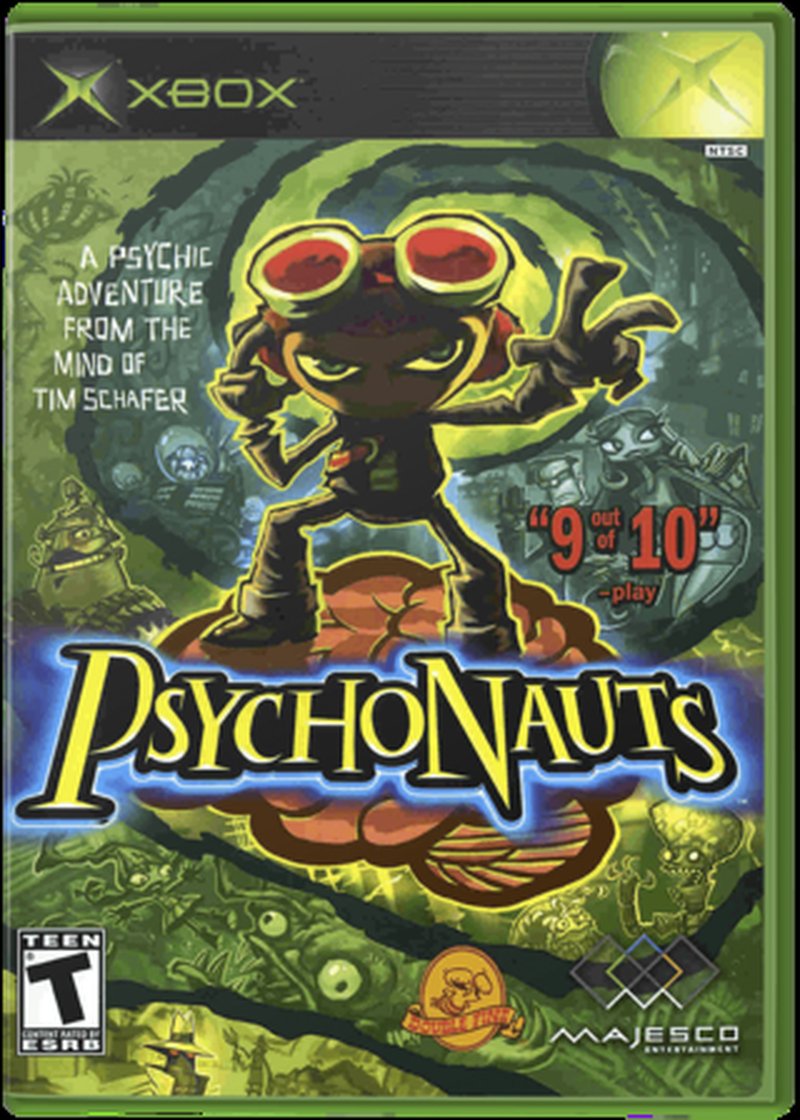
Psychonauts launched first and best on the Xbox: it is the lead console version, built for the controller and the hardware, with the sharpest image of its generation’s editions and performance that holds where other ports compromise. The game’s art direction — Tim Burton by way of a 1960s summer-camp brochure, all elongated heads and watercolour skies — scales beautifully through component output, and the save system is generous everywhere except where the Meat Circus tests you. For collectors, the Xbox disc is the original artefact of a game whose afterlife (fan campaigns, a sequel funded by its believers) became industry folklore. Owning the platform of origin matters here the way a first edition does.
Every game has levels. Psychonauts has people — you just happen to platform through them.
The supporting systems deserve praise for serving the fiction: figments to collect because imagination is littered, emotional baggage — literal crying bags you reunite with their tags — mental cobwebs burned for currency, memory vaults that play silent-film reels of each mind’s defining sorrow. The jokes are load-bearing; so are the sorrows. Psychonauts treats children’s fears and adults’ damage with a gentleness that never turns solemn, and its central idea — that empathy is a skill you practise by entering other people’s heads and helping tidy up — has only grown more resonant. Schafer’s writing peaks in the asylum sequence, where four minds in one tower build to an emotional payoff most “serious” games never approach.
Debits beyond the finale: the combat is serviceable rather than good, a few minds are more admired than enjoyed (the theatre’s boss mechanics run long), and collectible completion demands backtracking the game does not always signpost kindly. Against the whole, they are footnotes. This is a game whose worst level would headline most rivals’ trailers, whose best level is a permanent exhibit, and whose heart is exactly where its reputation says it is.
The camp, the kids, the craft
Whispering Rock itself deserves a paragraph of pure appreciation, because hub worlds are rarely this alive. The camp runs on a day-night story clock — free exploration by day, plot by night — and its corners hide a scavenger hunt, a levitation racecourse, a shooting gallery, and dozens of camper conversations that evolve as the conspiracy deepens. Ford Cruller, the camp’s janitor, handyman and much more, anchors a mystery the game doles out with patience. The psychic powers interlock with the camp as cleverly as with the minds: levitation reopens old areas, clairvoyance turns every NPC into a tiny point-of-view joke, pyrokinesis is a personality test the game administers to you personally. Even the collectibles are characterised — the figments are imagination, the baggage is grief, the vaults are memory — so that completionism feels like understanding rather than hoarding.
Performance and presentation on the Xbox original seal the recommendation. The watercolour art direction, the theatrical lighting inside minds, Peter McConnell’s score shape-shifting from surf-rock camp themes to each mind’s private orchestra — the production design is film-quality at every level, and the hardware serves it at a steadiness the game’s other contemporary ports could not match. This was, remember, a game that famously under-sold on release and was rescued by word of mouth — the first great cult campaign of the internet era. Playing the original disc today is participating in that rescue, retroactively. The campers would approve. Sasha Nein would pretend not to care, which in his language is the same thing.
One last thing the game gets right, which its imitators keep missing: it is never cruel about the people whose minds you enter. The asylum’s residents, the camp’s bullies, even the villains arrive as puzzles of damage rather than targets of mockery, and Raz’s job is never to defeat them — it is to sort the baggage, literally, and leave each mind tidier than he found it. A platform game about tidying up other people’s heads, with jokes. The industry has had twenty years to steal that idea properly. It is still waiting, goggles on, by the lake.
Verdict
Psychonauts on Xbox is an essential, singular classic: a platform adventure whose levels are characters, whose comedy is matched by its compassion, and whose imagination remains unmatched two decades on. Survive the Meat Circus and everything else is gift. If your collection tells the story of what the original Xbox could do when a visionary studio got the keys, this disc is one of its most important chapters — the one written in thought-bubbles and heart.