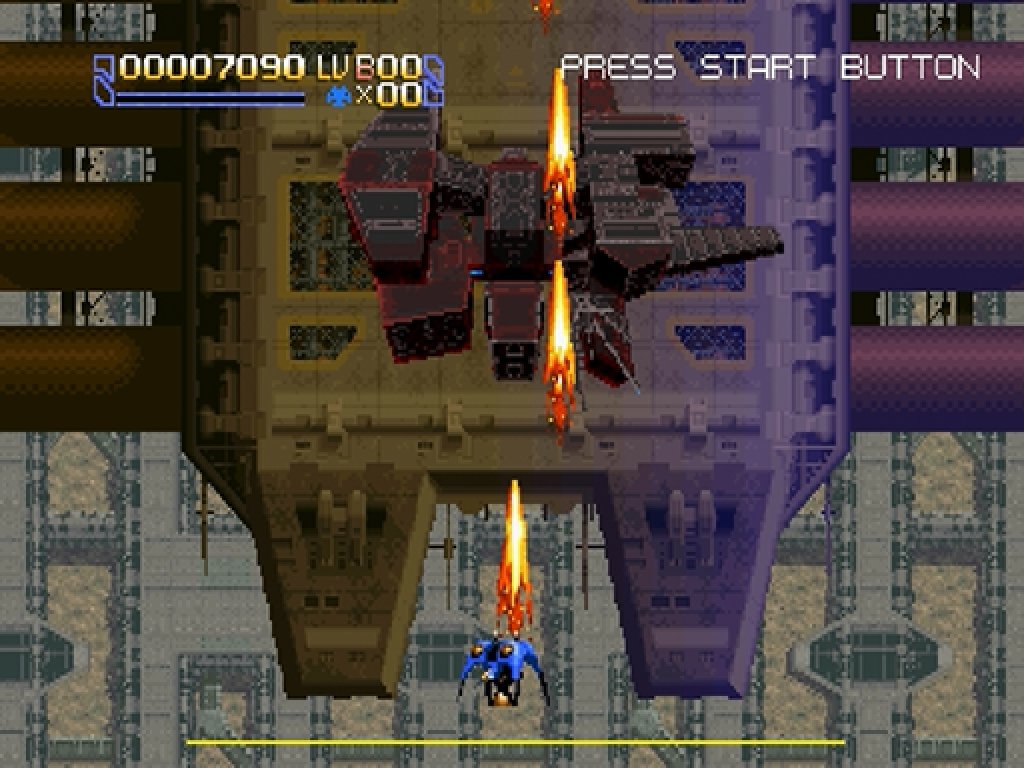
At a glance: Radiant Silvergun · Sega Saturn · Treasure / ESP, 1998 · Shoot ’em up · Score: 9.5/10
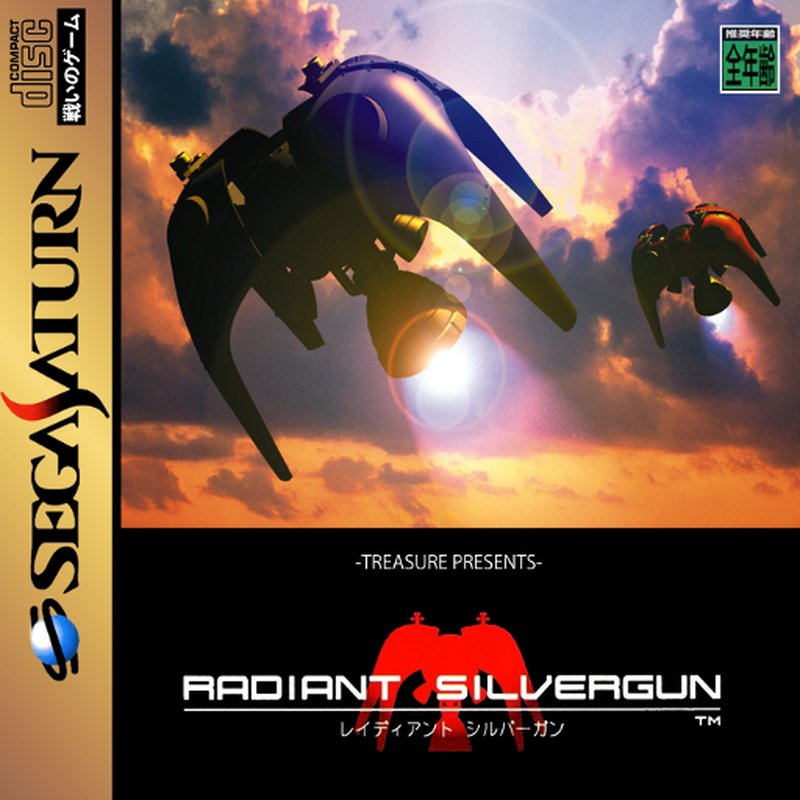
Radiant Silvergun is the shoot ’em up as graduate thesis. Treasure’s 1998 Saturn swansong — an import-only release in its day, developed alongside the ST-V arcade board — hands you seven weapons at once, every one mapped to its own button combination, and then builds an entire game around the question of whether you can think in seven directions at the same time. Enemies arrive in colour-coded chains. Bosses arrive in pieces, dozens of them, each piece a decision. Nothing about it is casual, and everything about it is deliberate. It is routinely called the greatest shooter ever made. Played on the Saturn, the machine it was composed for, the case is not hard to make.
The seven weapons are the whole argument. Vulcan fire ahead, homing lasers that bend, spread shots behind, a sword — an actual sword, swung in an arc, which sweeps enemy bullets out of the air and charges your hyper weapon — and combinations that produce locking beams and rear-firing spreads. Every enemy in the game was placed to be answered by one of these, and the scoring system pays you for answering in chains: destroy red, then red, then red, and the chain multiplies; break the colour order and the bonus collapses. Add the Merry bonuses — hidden point dogs scattered through the stages, because Treasure cannot help itself — and a weapon-level system that grows your guns with use across the whole campaign, and you have a shooter that is really three games braided together: survival, scoring, and slow, deliberate armament.
The campaign structure is pure Treasure confidence. In the Saturn mode you may take the stages in a chosen order, carrying your weapon levels between attempts, so the game becomes a long campaign of growth rather than a coin-op’s cliff face — a structure years ahead of its genre. The story, told in voiced and subtitled scenes between stages, is a looping apocalypse: an excavated stone-like artefact, the end of the world, a crew of pilots flung twenty years into the past to watch it happen again. It is melancholy, strange and far more serious than a shooter needs to be, which is exactly the point. Hitoshi Sakimoto’s score — orchestral, urgent, haunted — treats every stage like the end of the world it depicts.
Bosses, in pieces
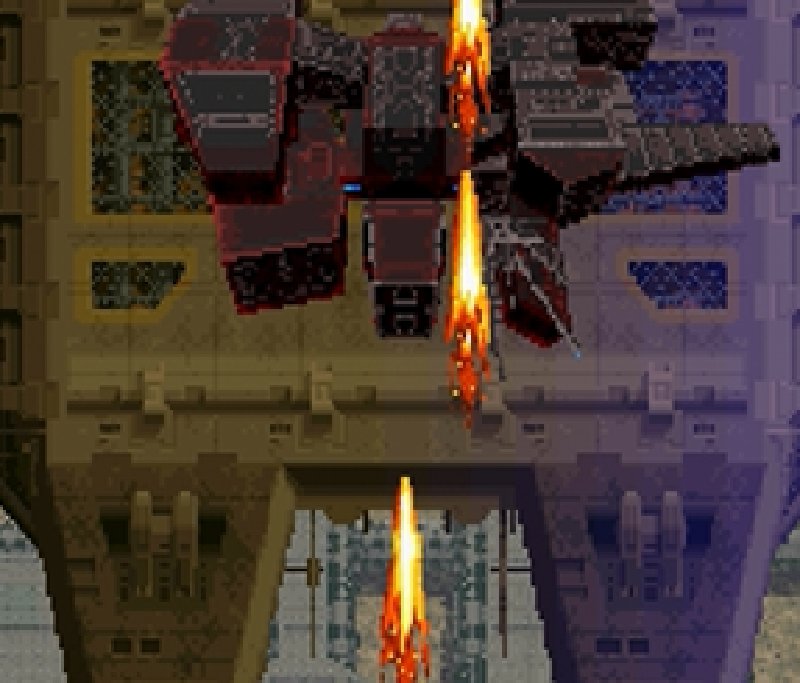
Then there are the bosses, and there are so many that the game keeps a percentage counter for how much of each one you destroyed. Silvergun’s bosses are not enemies so much as machines for generating decisions: rotating cores wrapped in turret rings, battleships that shed gun pods, geometric nightmares that fill the screen in sections. Every component can be targeted and destroyed separately, and the game grades your thoroughness — 100% destruction is a run-defining achievement — while the clock and the bullet density argue for simply killing the thing and living. The sword complicates everything gloriously: sweeping away curtains of fire feels like cheating until the game builds patterns that require it, at which point it feels like literacy. This is the Saturn’s sprite and rotation hardware being played like an organ, layers of scaling machinery and bullet lace, with slowdown that arrives rarely and, when it does, reads as emphasis.
Radiant Silvergun does not ask for faster reflexes. It asks for a better plan — seven weapons, three colours, one sword, and the discipline to use the right one.
The honest difficulties are part of the design and should be stated plainly. The opening hour is a wall: seven weapons is five too many for a new player, the chain system punishes improvisation, and the game explains itself in the brisk, minimal dialect of 1998. The Saturn mode’s persistent weapon levels soften the blow — persistence was a mercy the arcade never offered — but there is no configuration in which Silvergun becomes gentle. The visuals, for all their ingenuity, are dark and industrial; players who want the bright carnival of a Cave shooter will find a sterner palette here. And the import-only history means the Saturn original still speaks Japanese in its story scenes, though the game’s systems, thankfully, speak fluent shooter.
The Saturn as instrument
Judged specifically as a Saturn game, Silvergun is the hardware’s 2D valediction and its most complete technical showcase. Treasure had spent the console’s life learning its planes and processors — Guardian Heroes’ sprite storms, Silhouette Mirage’s polarity — and everything converges here: multi-layer scaling backgrounds, rotation effects rival consoles could not do at all, hundreds of sprites orchestrated without flicker. The Saturn pad’s six buttons turn out to be the controller the seven-weapon system needed; the standard three weapon buttons plus combinations sit under the fingers as if designed together, because the ST-V and Saturn shared a soul. This is also why the game stayed an import legend for thirteen years: the West’s Saturn died before it could receive the system’s most demanding masterpiece, and the legend grew in the telling. The telling, unusually, did not exaggerate.
Its influence is the final exhibit. The chain-scoring, the weapon that deletes bullets, the boss-as-percentage, the campaign persistence — Ikaruga, Treasure’s own spiritual sequel, carried the polarity idea to fame, but Silvergun’s fuller arsenal remains the deeper game, and modern shooter design still mines it. Every few years a new indie shooter announces a sword that cancels bullets, and every time, the Saturn faithful smile. The original did it in 1998, at higher stakes, with Sakimoto conducting.
The discipline of colour
The chain system repays one more examination, because it is the game’s moral centre disguised as arithmetic. Enemies come in red, blue and yellow, and the scoring pays escalating bonuses for destroying one colour in sequence — ten reds, then a hundred, the counter climbing toward riches — while a single stray kill of the wrong colour resets the chain to nothing. This turns every screen into a negotiation between survival and greed: the blue enemy is shooting at you now, but killing him costs you the red chain that funds your next extend. Masters route entire stages like railway timetables, herding colours, holding fire through patterns that beg for a trigger pull. The weapon-level system braids into it, since underused weapons stay weak and the late game audits your whole arsenal. It is a scoring architecture of genuine elegance, and it means Silvergun can be learned for years — survival first, then chains, then the Merry dogs, then the percentages — each layer revealing a game that was there all along, waiting underneath the one you thought you were playing. Few shooters have depths arranged in such orderly strata. None arranges them better.
Verdict
Radiant Silvergun is not the friendliest game on the Saturn, and it might be the best. Seven weapons deep, chain-scored to the last enemy, boss by boss and piece by piece, it rewards study the way few games reward anything — completely. On the Saturn hardware it was written for, with the pad it was written around, it remains the shoot ’em up against which the genre is measured. If you learn one shooter properly in your life, learn this one.