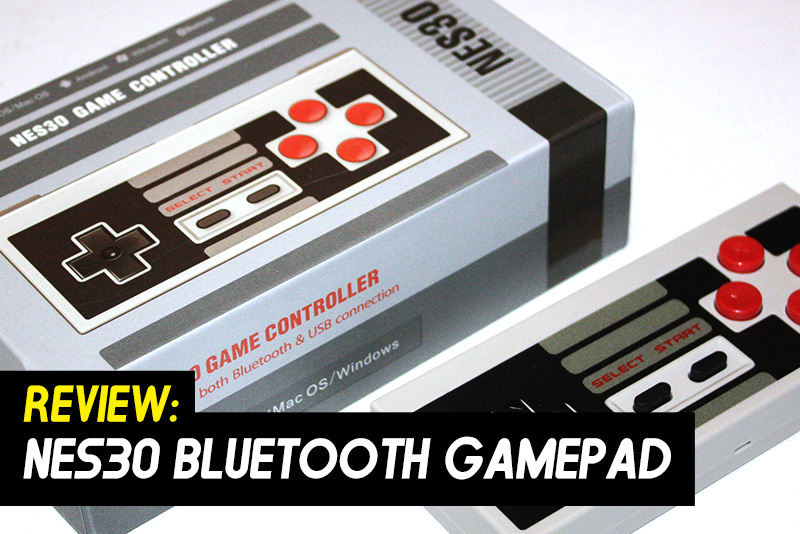
At a glance: 8BitDo NES30 Bluetooth gamepad (2014) · Wireless pad styled on the NES controller · Bluetooth, multi-platform, firmware-updatable · Reviewed then — and reassessed now · Score: 8.0/10
In 2014, playing games on a phone meant choosing your poison. Touchscreen controls covered the glass in thumbs and good intentions, while the Bluetooth pads of the day tended to be lumpy, anonymous things with mushy buttons and product names like stock codes. The NES30 was 8BitDo’s answer to the whole sorry situation, and it was disarmingly simple: what if a modern wireless controller simply looked, and felt, like the most beloved pad ever made? A decade on, with 8BitDo grown into the default name in retro controllers, the NES30 deserves a second look — because this unassuming little rectangle is where the empire started.
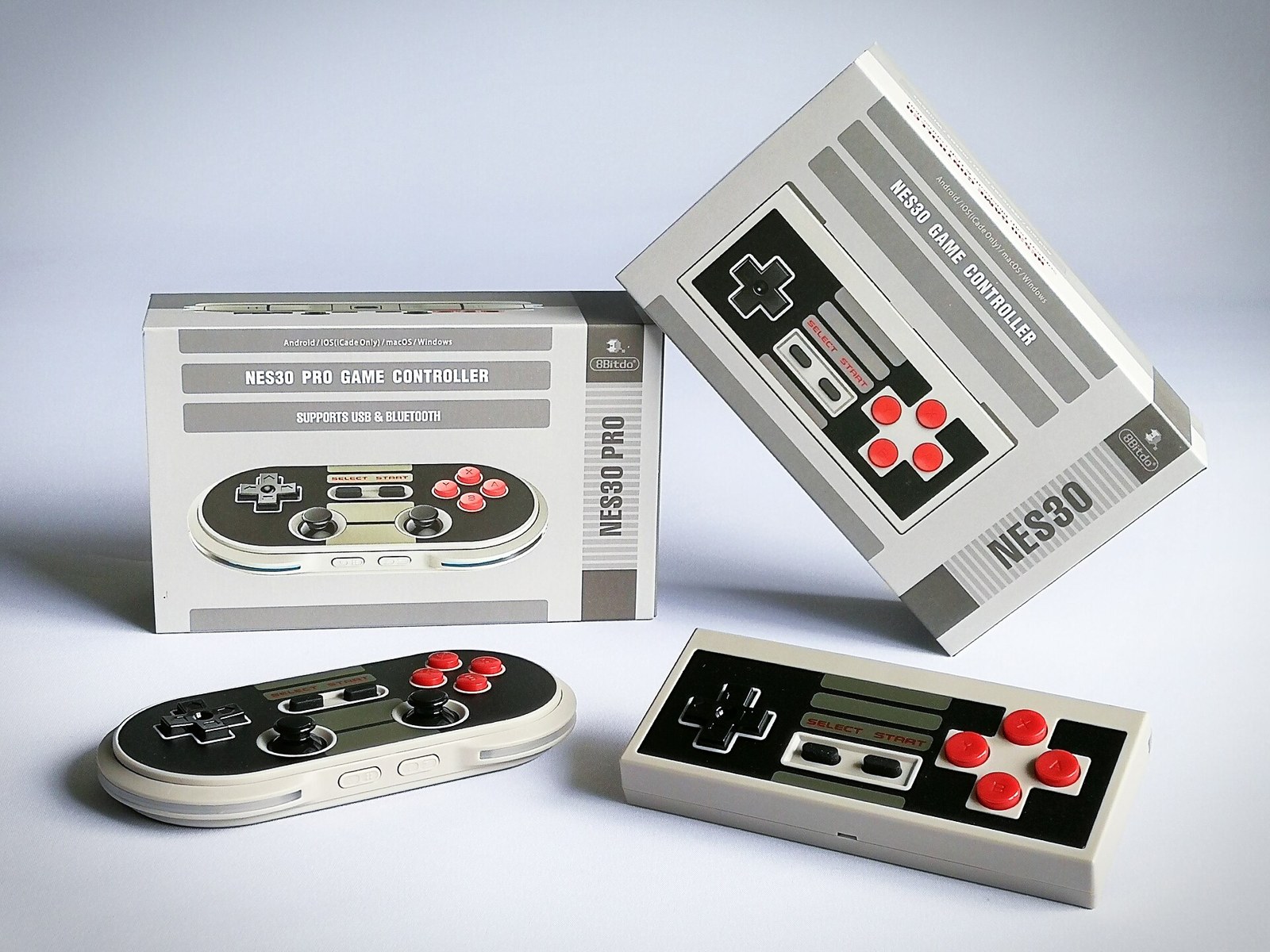
2014: a NES pad, minus the wire
The homage is thorough to the point of cheek. The NES30 reproduces the original NES controller’s grey shell, black panel and red buttons at close to original scale, then quietly modernises the brief: shoulder buttons along the top edge, a rechargeable battery inside, and Bluetooth where the cable used to be. Its sibling, the FC30, did the same trick in Famicom colours. Pick it up and the first surprise is that it is not a novelty item — the shell has a satisfying solidity, the buttons have a proper spring behind them, and the d-pad, the component every retro player inspects first, is credibly close to the real thing: a firm pivot, clean diagonals, no mush.
The second surprise was how much homework 8BitDo had done on the invisible parts. The pad connected to iOS, Android, Windows and Mac, and offered several personalities to do it with: a standard gamepad mode, a keyboard mode for stubborn software, and touch-emulation modes aimed at the era’s mobile games. Firmware updates arrived over USB — an almost unheard-of courtesy in a budget accessory in 2014 — and an optional phone stand clipped the pad into service as a proper mobile controller. None of this was glamorous. All of it was exactly what the category had been failing to do.
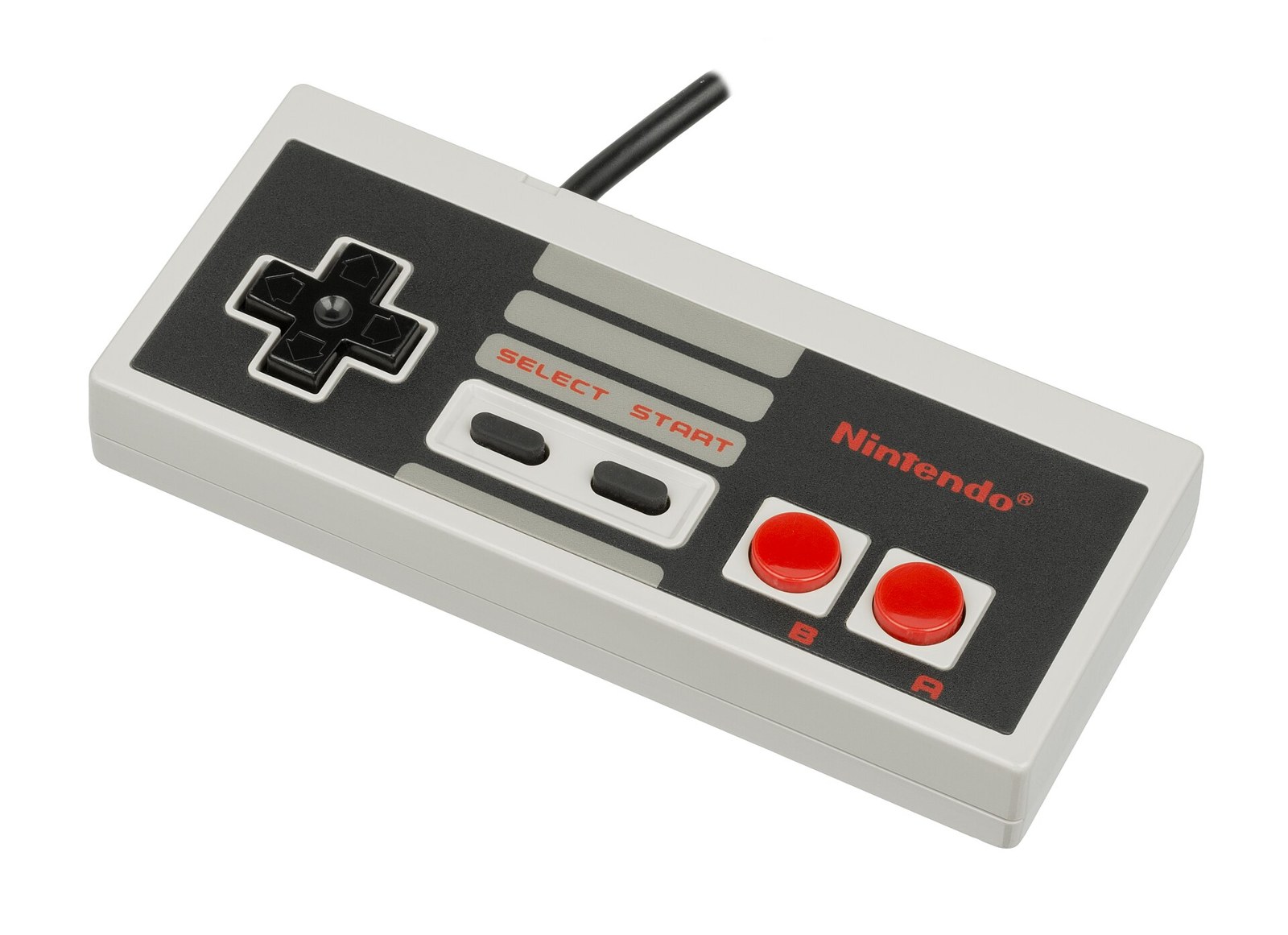
How it played then
For the games it was designed for — 8-bit and 16-bit titles, platformers, shooters, puzzlers — the NES30 was a genuine pleasure. Latency over Bluetooth, the era’s great anxiety, was well controlled in gamepad mode; platforming felt platforming, and the d-pad held up through the kind of punishment only Contra auditions. The compromises were structural rather than hidden. Two face buttons plus shoulders suits the NES and Game Boy libraries it was styled for, but SNES layouts crowd it, and the flat, grip-free profile that makes it so faithfully NES also makes it tiring across very long sessions. Pairing, too, belonged to its Bluetooth generation: each mode change could mean a small ceremony of unpairing and reconnecting that modern pads have thankfully forgotten.
Living with the pad day to day strengthened the impression. Battery life was the quiet triumph: where rival pads seemed to need a cable every other evening, the NES30 ran and ran, its rechargeables measured in weeks of casual play rather than hours of anxious monitoring, and the whole unit carried the faint but unmistakable aura of having been designed by people who intended to use it themselves. The little status light, the positive click of the pairing button, the way the shell’s seams sat flush — trivia, individually, and collectively the difference between an accessory and a product. Reviewers at the time kept reaching for the same surprised conclusion: the retro pad from the new company in Shenzhen was, somehow, the best-built object in its category. The surprise has not survived the decade. The build quality *was* the business plan.
The thirty in the name
The name was a mission statement. 8BitDo launched in 2013, the thirtieth anniversary year of Nintendo’s Famicom, and its first products — the FC30 for the Famicom and the NES30 for its Western twin — were conceived as anniversary pieces as much as accessories: the most important controller silhouette in the medium’s history, rebuilt with modern innards while the candles were still lit. That framing explains the care that contemporaries noticed and could not quite account for at the price. Anniversary merchandise is expected to be a paperweight with a logo. The NES30 was instead a working tool that happened to be beautiful, and the market’s double-take was the sound of a category being reset.
The company’s subsequent behaviour deepened the same lesson. Where rival accessory makers treated each product as disposable, 8BitDo issued firmware updates that added platforms and fixed quirks, published manuals and button-mapping tools, and — in the detail that best symbolises the whole enterprise — later sold Bluetooth receivers that let collectors use wireless pads on original NES and SNES hardware itself. Think about what that means as a philosophy: a controller styled on 1985, connecting in 2014 to a phone, and by the end of the decade connecting instead to the actual console it imitated, closing the loop entirely. The NES30 was the first sentence of that argument.
Now: the family it founded
Assessed today, the NES30’s spec sheet is a period piece — early Bluetooth, micro-USB charging, a feature set modern buyers get in a keyring. But the then-versus-now story of this pad is really about what it proved. 8BitDo demonstrated that retro players would pay for quality as well as nostalgia: faithful industrial design, serious firmware support, and compatibility treated as a feature rather than a footnote. The company spent the following decade building directly on those foundations — the SN30 and its Pro descendants with sticks and grips, the Pro 2, officially licensed pads for modern platforms, arcade sticks, and the Ultimate line aimed squarely at contemporary gaming. Walk into retro gaming anywhere in 2026 and 8BitDo’s design language, the language this pad speaks fluently, is the house accent.

Its second life deserves noting, too. When the Raspberry Pi emulation scene exploded in the middle of the decade, the NES30 became a fixture of a thousand RetroPie builds — the pad that forum threads recommended to newcomers who wanted wireless play without surrendering the period feel, paired to a plastic box under the television in a neat echo of the Eagle Box era happening in parallel. Few accessories get two careers. The NES30’s second one arguably reached more players than its first, and it bridged the product’s identity from phone accessory to retro-gaming furniture without changing a single screw.
Verdict
The NES30 is no longer the pad we’d hand a newcomer — its own descendants are better in every measurable way, and that is rather the point. As a 2014 product, it was the first retro-styled controller built by people who clearly respected both the source material and the customer. As a historical object, it is the founding artefact of the modern retro-controller industry. If one turns up in a drawer sale, pick it up: it still pairs, it still plays, and it still has that d-pad.
One final test settles most arguments about the NES30: hand it, without explanation, to someone who grew up with the original pad. The recognition is instant, the smile is involuntary, and then — the important part — they keep playing. Nostalgia got them to pick it up. Competence is what kept it in their hands.
Score: 8.0/10