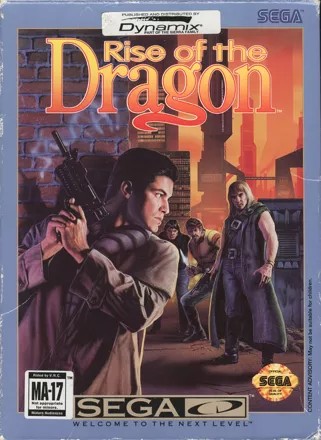
At a glance: Rise of the Dragon · Sega CD · developed by Dynamix · published by Sierra On-Line (Sega CD edition by Sega) · PC original 1990, Sega CD 1993 · first-person point-and-click adventure · three in-game days · single player
Sierra’s famous families — the Quests, Leisure Suit Larry — tend to hog the company’s history, but its Dynamix studio spent the early nineties quietly experimenting at the edges, and Rise of the Dragon was the experiment that pointed furthest forward. First released for PC in 1990, this cyberpunk detective adventure reached the Sega CD as a full “talkie”, with every line voiced, at a moment when the add-on was crying out for adventures with some substance. The port giveth voices and CD music; the port also taketh away colour, which is why this Los Angeles of 2053 is the greenest city in games. Both facts define the experience, and the surprising thing is how well the game survives its own repainting.
Blade Runner, by Way of Blade Hunter
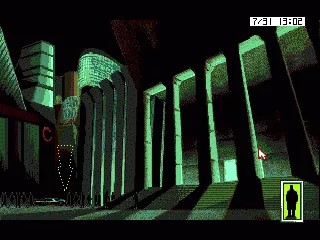
The debt to Blade Runner is worn openly — your hero is an ex-policeman turned private investigator called William “Blade” Hunter, in a rain-slick 2053 Los Angeles of brutalist towers and neon grime, and the subtitle “A Blade Hunter Mystery” is a gag the game never tires of repeating. The case is proper pulp: a new street drug leaves the mayor’s daughter dead and horribly mutated in an alley, and with an election looming the mayor hires Blade discreetly to find out who supplied it. The trail leads through clubs, factories and city offices towards a syndicate whose ambitions run well beyond narcotics, and the whole story plays across three days, against a clock that genuinely runs.
Everything is presented in hand-drawn, comic-panel stills viewed in first person, navigated by steering a cursor with the joypad. In practice the pad-as-mouse compromise works better than feared: the cursor changes shape to suggest what it can do, three buttons cover looking, using and opening your inventory, and the two brief arcade shooting interludes are the only moments where the arrangement truly strains patience. Objects you collect wait in a holding strip beside the screen until you file them into Blade’s inventory or apply them to the world; nothing combines with anything else, so detection here means finding the right thing and delivering it to the right person, in the right order.
A Clock, Four Bombs and Several Ways Through
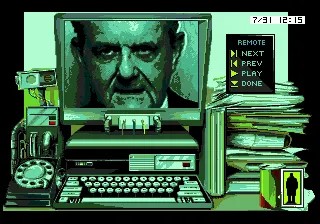
What lifts Rise above period point-and-click routine is its structure. Time passes in real terms — minutes tick by as you travel, appointments happen whether or not you attend them, and if the third day ends without the conspiracy unravelled, so do you. Within that frame the game is unusually forgiving about method. Help can be accepted or refused, items found or missed, and several obstacles admit more than one solution, the neatest being Blade’s little stock of mini-bombs: a jammed door can be opened with a key found honestly, or, if you missed the key, blown off its hinges — provided you have not wasted your explosives on earlier conveniences. It is a small, elegant insurance policy against the dead ends that plagued contemporary adventures, and it still feels modern.
It also keeps the game short. There is exactly as much city as the plot requires and not a location more: every room, person and prop exists to be used, with no archives to browse, no optional conversations that deepen the world, and long stretches of each day that a competent detective simply sleeps through while waiting for the next event to fire. The writing compensates with confidence — Blade’s world feels lived-in before you arrive, his relationship with Karyn in the records office arrives pre-frayed and genuinely useful — and Cam Clarke voices Blade throughout, attempting a hard-boiled growl that sits oddly on the actor animation fans know as Leonardo and stealth fans as Liquid Snake. The result is sleazier and shiftier than the PC’s written Blade, a rat among rats rather than a hero, though the performance grows on you, and his wisecracking “look” descriptions are worth clicking on everything for. The CD soundtrack, meanwhile, is a clear step up, moody and unobtrusive.
“Three days, one clock, four little bombs and a dozen ways to be almost right: a small adventure engineered with unusual intelligence.”
Context flatters it further. This was Dynamix, a studio known for flight sims and action games, stepping into adventures almost as an experiment after Sierra bought the company in 1990 — and the experiment won a Special Award for Artistic Achievement from Computer Gaming World the following year, an honour the comic-book presentation fully earns. The first-person view, the contextual cursor and the refusal to pad the investigation with combination-lock inventory puzzles all read like a deliberate break from the house style of its new parent. That a sequel was plainly intended — the subtitle promises a series of Blade Hunter mysteries — and never arrived remains one of the period’s quieter losses, because the foundations here, the clock, the city and the man, were built to be revisited.
About That Green
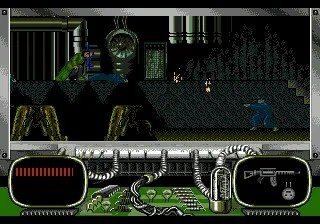
Now the port’s bill comes due. Converting the PC’s 256-colour artwork into the Sega CD’s restricted palette was handled by letting a green cast wash across practically every frame — a decision later rationalised as style, though the leaner 16-colour PC edition manages to look handsome without it, which rather gives the game away. You do adjust; the art direction underneath is strong, faces are distinct, locations memorable, and the near-future technology stays plausible rather than fantastical. But side by side with the original, this edition is plainly diminished, and content cuts compound the sense of a compromised port: blood reduced, sexual material removed entirely, in a game still carrying an adults-only rating. Add the enforced arcade sections — optional escape hatches on PC, mandatory here — and the Sega CD version is best described as the most convenient way to play Rise of the Dragon in 1993, rather than the best one.
A note for modern players, since it affects which Rise you should hunt down: the PC original is the one sold digitally today, in full colour and with its sharper edges intact, while this Sega CD edition survives as the talkie curiosity — the only version where Blade, Karyn and the whole doomed city actually speak. Treat the two as companion pieces rather than rivals and the green edition keeps a real claim on your time: an evening’s entertainment, finished in a sitting or two, that respects the clock it sets you.
The Verdict
None of which overturns the verdict on the game itself. This is a compact, confident, genuinely well-designed detective story: real-time pressure without cruelty, multiple solutions, a world sketched in bold strokes, and a talkie presentation that was a legitimate event on this hardware. It is also short, undemanding for seasoned adventurers, and dressed by its porters in a green suit it never asked for. Adventure-starved Sega CD owners in 1993 were right to welcome it, and cyberpunk fans remain right to visit — ideally with the PC version’s colours in mind and this version’s voices in their ears.
Verdict: a smart, atmospheric little mystery, docked for its port’s tint and trims — 7.0.
Keep reading: The 25 Best Sega CD Games of All Time · the Sega CD system archive