The Pico’s hidden gems hide in two different places. In America they hide in plain sight: a twenty-book library is small enough that every solid title without a blockbuster licence got filed as filler, including literacy, music and curiosity books that play as well as anything on the shelf. In Japan they hide behind language and sheer numbers — a library in the hundreds, where cooking books, Lego books and Pokémon counting books sat unnoticed by a Western audience that had declared the console dead in 1998. These ten Storyware titles are deliberately none of the eighteen books reviewed elsewhere in this package. Each is verified as a genuine Pico release, each does something its shelf-mates do not, and each can still be found for sensible money by a patient collector.
1. Adventures in Letter Land with Jack & Jill
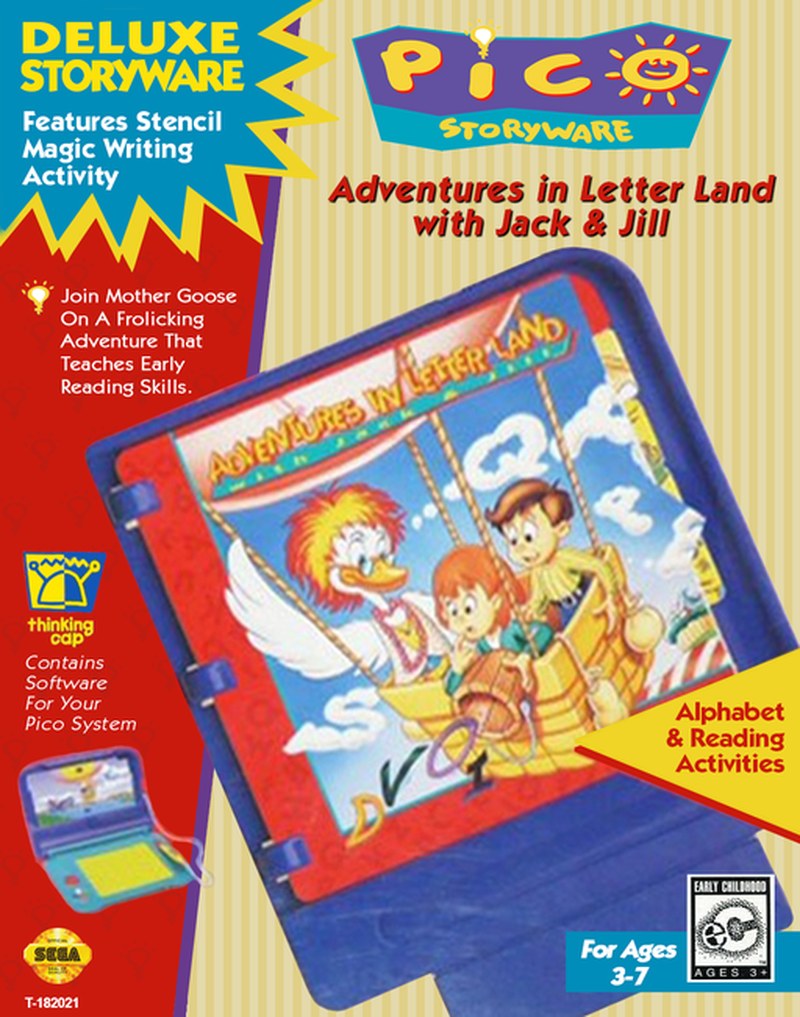
Smart Alex and Smart Alice aside, this is the other American literacy book collectors overlook: Jack and Jill climb their hill through letter country in a 1995 Thinking Cap production. It lacks a television licence entirely, which is precisely why it slid under the shelf — and why it charms. The nursery-rhyme frame gives letters a journey, the games are honest early-reading work, and the whole book has the hand-made feel of the Pico’s independent Western publishers. For a system whose American library is only twenty books deep, a solid, unlicensed, rhyme-driven literacy title is a genuine hidden gem by any definition.
2. Smart Alex and Smart Alice: Curious Kids
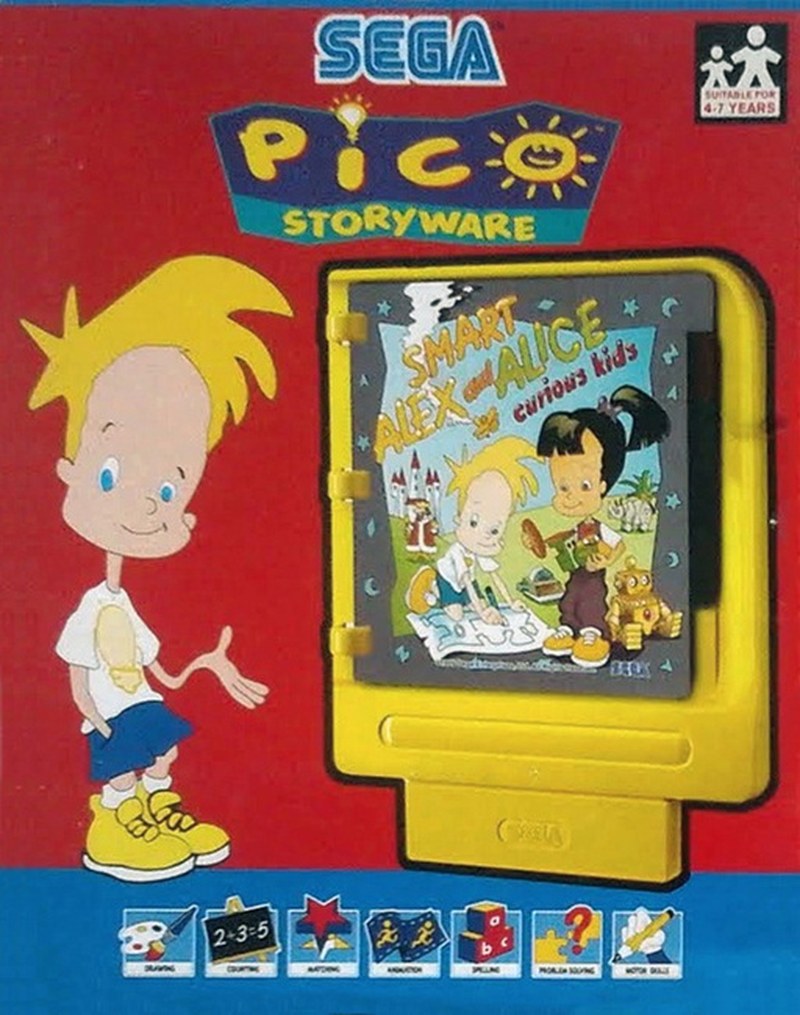
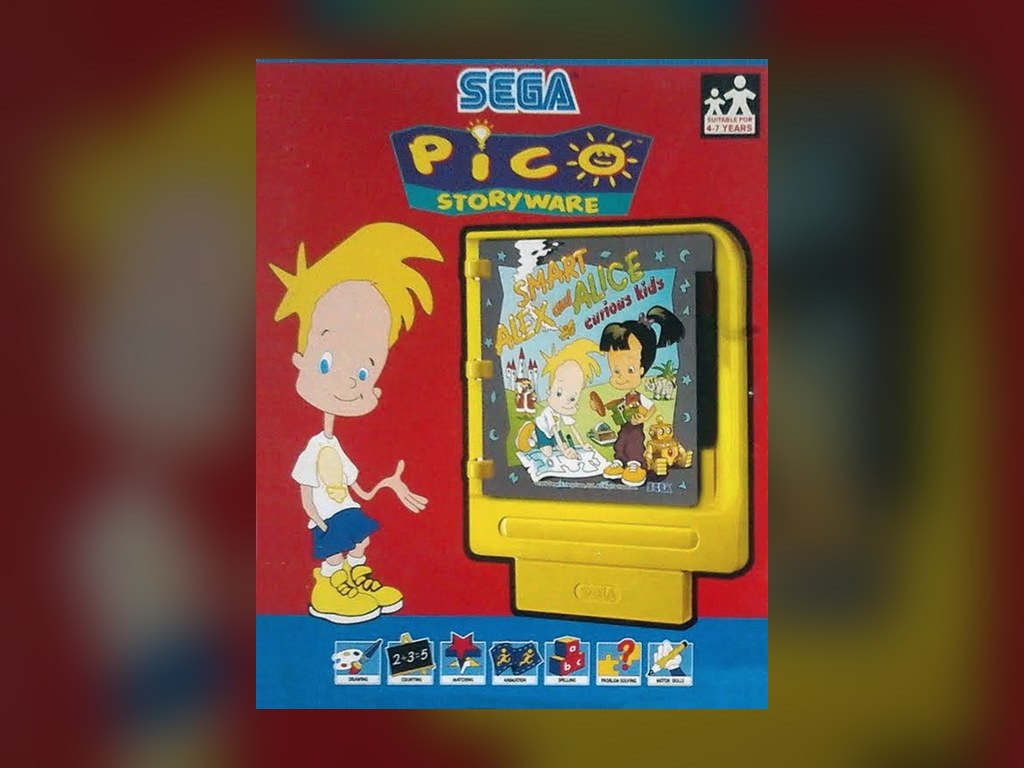
Novotrade’s 1995 curiosity book stars two original children — Alex and Alice — rather than a licence, and builds its pages around the questions curious kids actually ask. Why, what, how many, what happens if: the activities follow a child’s nosiness through science-flavoured scenes, matching and sorting games. It is the Pico’s Mister Rogers impulse in cartridge form, rewarding asking over knowing. Because the twins never fronted a television show, the book sold quietly and is remembered quietly, but play it beside the licensed titles and its warmth and variety stand up remarkably well.
3. The Muppets On The Go!
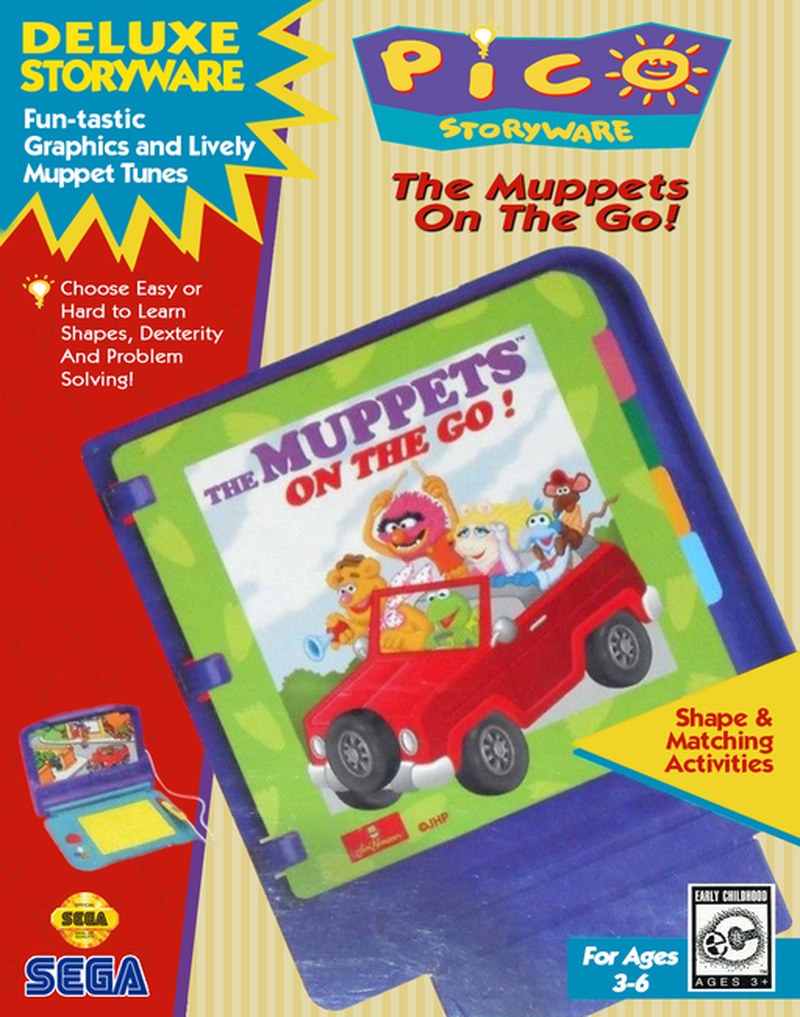
The last big American licence, from Climax in March 1996, and a melancholy one: the Muppets deserved a bigger Pico stage than the platform’s closing season allowed. Kermit and company take the child travelling — vehicles, journeys, places — with the troupe’s variety-show energy squeezed into travel games and scenes. The humour lands differently from every other Pico book, drier and sillier at once, because the Muppets were always written for the adults in the room too. A Pico collection with a hole where 1996 should be needs this book in it.
4. Musical Zoo
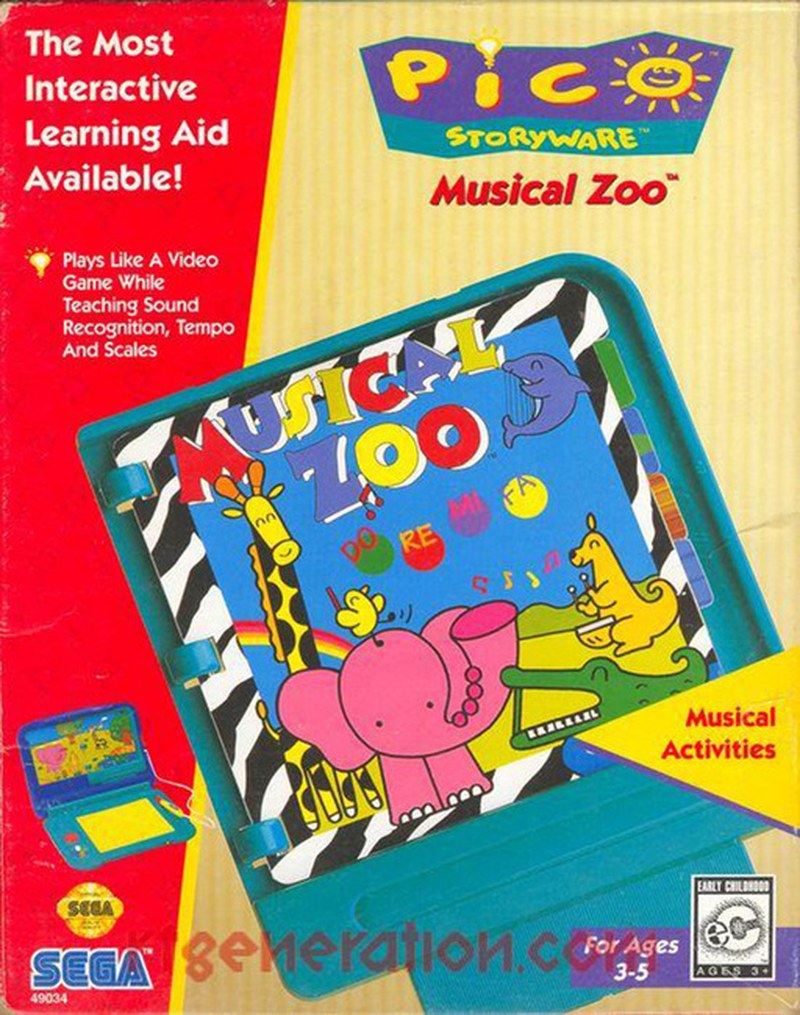
Not to be confused with Tails’ music book: Musical Zoo — Do Re Mi Fa Animals in Japan — is the younger child’s music title, a January 1995 American release in which zoo animals front the instruments. Where Tails teaches, the Zoo introduces: this sound is a drum, this animal plays it, now tap along. For three and four-year-olds it is arguably the better first music book, simpler and more playful, and its animal-instrument pairings are the kind of cheerful nonsense that sticks in a small child’s memory for decades. Two music books in a twenty-book library seems a luxury until you play both and see how carefully they aim at different ages.
5. Lego Fun to Build
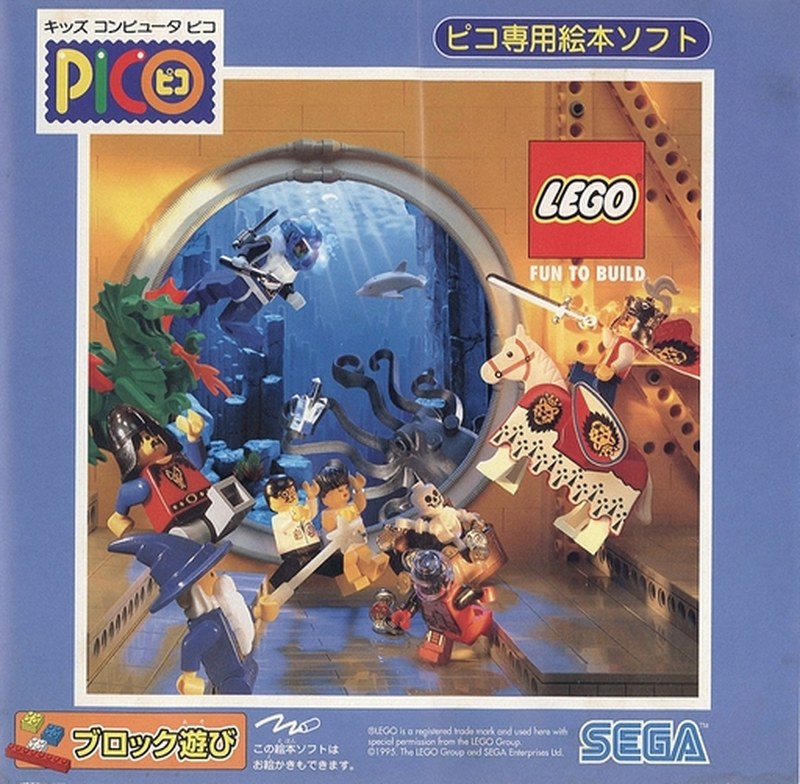
Yes, that Lego — a 1995 Japanese Pico book in which the world’s most famous bricks meet Sega’s book console, and two great toy systems shake hands. Building prompts replace battle or story: look at the model, find the pieces, follow the steps, then play with what the page builds. The fit is inspired, because the Pico’s page-turn structure is an instruction booklet, which is Lego’s native literature. It never came West, which keeps it a true import gem, and as a piece of paper-free building instruction for pre-readers it was quietly ahead of every screen that followed.
6. Bishoujo Senshi Sailor Moon S
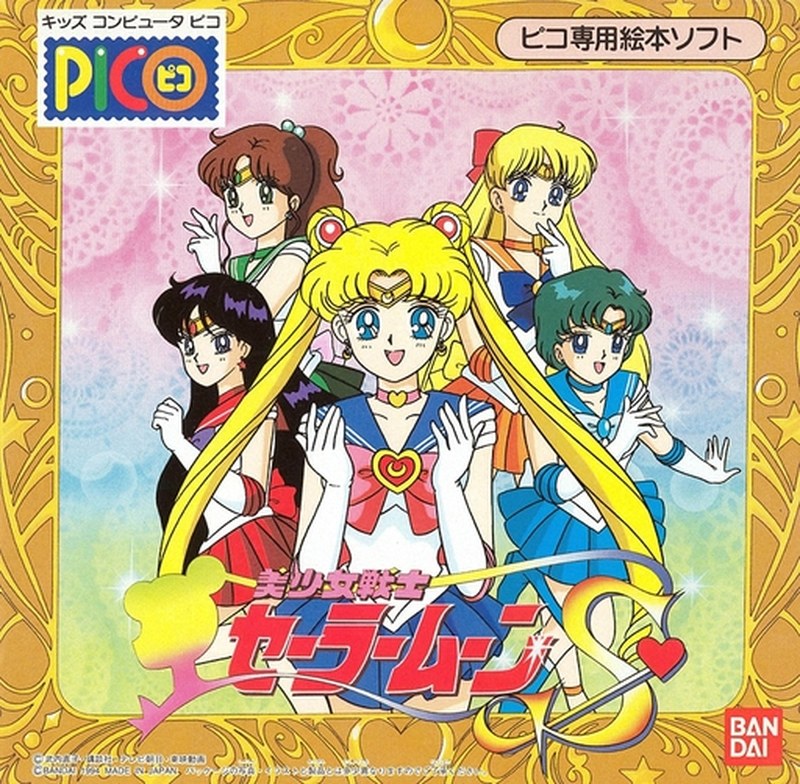
Bandai’s July 1994 Sailor Moon S book is the Japanese library’s star power in miniature: the biggest girls’ anime of its era, on the toy console its audience actually owned. Doremi’s later book is slicker, but Sailor Moon S is earlier, rarer in Western hands, and historically important — proof, a year into the Pico’s life, that Bandai intended to treat the platform as a first-class home for anime licences. The activities are standard Pico fare under exceptional dressing; the dressing, for the generation it served, was the entire point.
7. Anpanman Pico: Waku Waku Pan Koujou
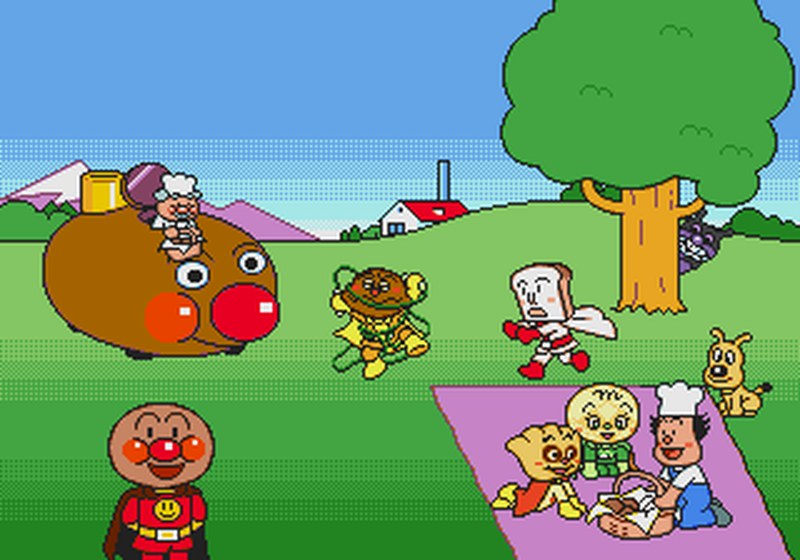
Anpanman — the bread-headed hero whose face is food — fronted more Pico books than any character alive, and the 2001 Waku Waku Pan Koujou, the Exciting Bread Factory, may be the most purely delightful: a working bakery adventure from Fupac and Bandai, all dough, ovens and hungry friends. Anpanman’s whole moral universe is feeding people, which makes a bread-factory book a perfect marriage of character and activity. It is also a fine specimen of the mature Japanese library — confident, dense and entirely uninterested in anything the Western market thought about the Pico in 2001.
8. Hello Kitty no Suteki na o-Tanjoubi
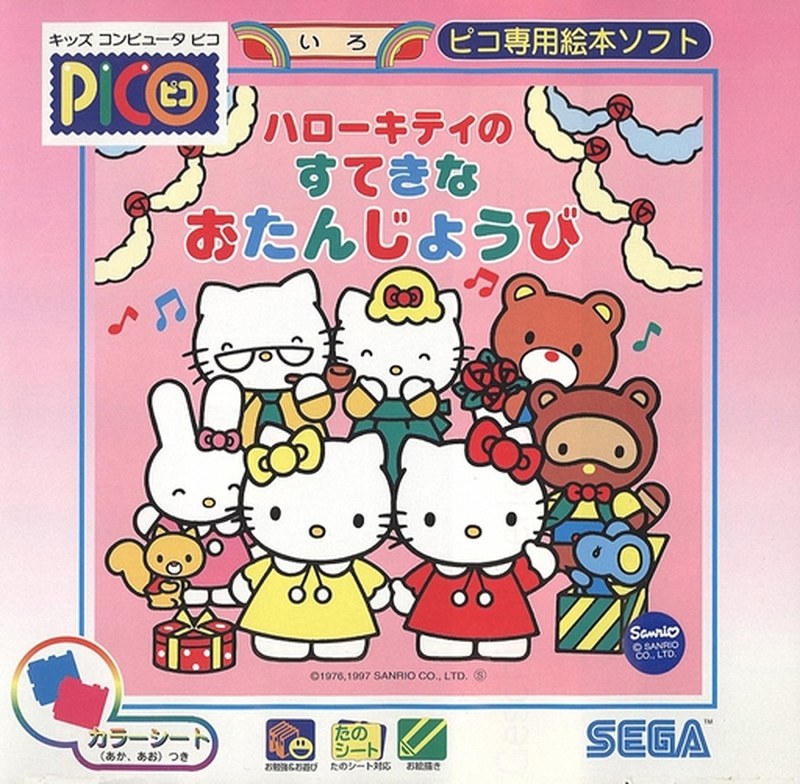
Hello Kitty hosted several Pico books, and the 1997 birthday title — Suteki na o-Tanjoubi, A Lovely Birthday — is the sweetest: party preparation as curriculum, with shopping, decorating, music and friends arriving page by page. Sanrio’s Pico output generally understood something the games industry kept forgetting, that celebration is a genre small children understand completely. Kitty’s books are gentle even by Pico standards, language-simple, and beautifully representative of the Japanese library’s Sanrio wing. As an import for a Western shelf it is also one of the most approachable: parties need little translation.
9. Pocket Monsters: Suuji o Tsukamaeyou!
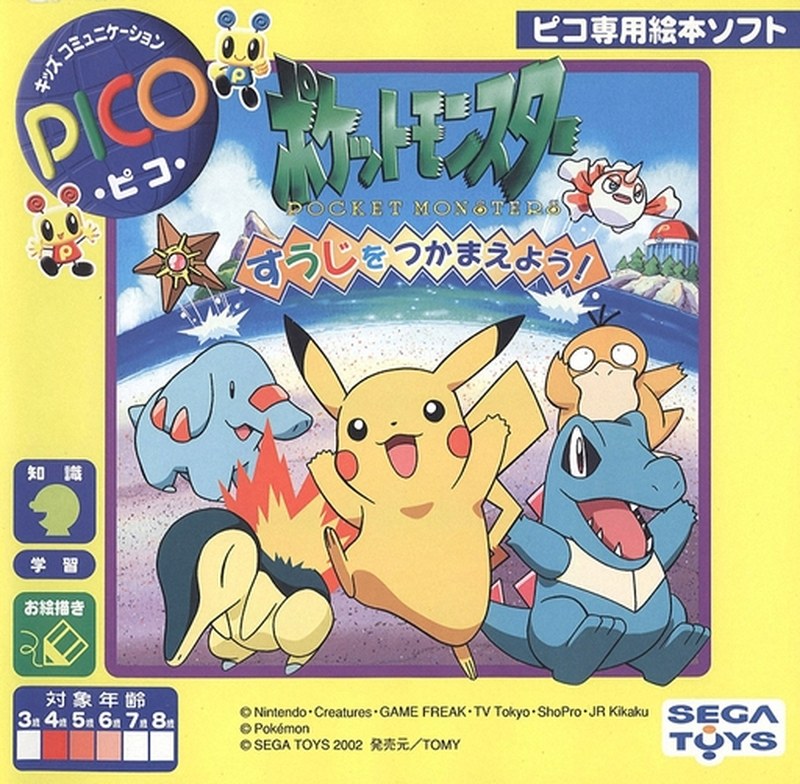
Catch the numbers: a July 2002 Pokémon Pico book from Sega, in which the biggest property in children’s entertainment teaches counting on its rival’s descendant hardware. The novelty value is obvious and real — Pokémon on a Sega system remains a double-take in cartridge form — but the book itself is a competent, cheerful numbers title that uses monster-collecting motivation for arithmetic practice, an idea with a long future ahead of it. For Western collectors this is the Japanese Pico’s party piece: affordable, playable, and guaranteed to start conversations no other cartridge on the shelf can start.
10. Cooking Pico: Minna to Issho ni Hajimete Cooking!
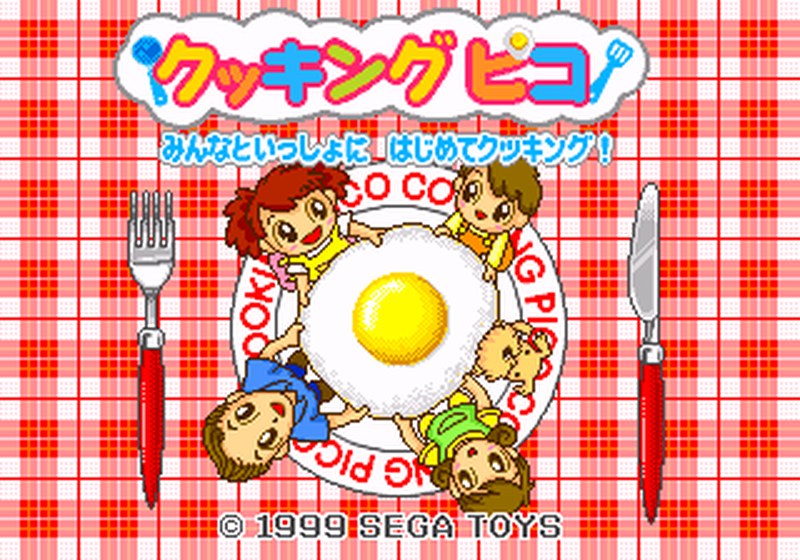
First cooking, together: Sega’s 1999 Cooking Pico turns the book console into a recipe book, with ingredients, sequences and kitchen tasks a child can rehearse safely on screen before graduating to real toast. Sequencing is the stealth curriculum — first this, then that, in the right order or the recipe fails — and cooking gives it the tastiest possible wrapper. Japan’s Pico went places the Western library never imagined, and a dedicated cooking book with its own follow-up in the Kitchen Pico line is the proof collectors cite first. Delicious, educational, and utterly unavailable in English: a hidden gem with a spatula.
Collecting the gems: what to know before you hunt
The American four on this list — Letter Land, Smart Alex and Smart Alice, the Muppets and Musical Zoo — live in the friendliest collecting territory in retro gaming: a twenty-book library where even the overlooked titles surface regularly, usually loose, usually for modest money, and where patience beats budget every time. Condition is the whole game. Check that every page is present and that the spine connector is sound, because a gem with three spreads missing is a picture of a game rather than the game. The Japanese six ask a little more of a hunter: auction proxies and Japanese marketplace services are the normal route, shipping often costs more than the book, and bundling several titles into one parcel is the difference between a bargain shelf and an expensive hobby. None of the six is a famous rarity; all six are common in Japan and merely invisible in the West, which is the best kind of gem there is — priced by obscurity, not by scarcity.
Language deserves an honest word, because half this list speaks Japanese. For an adult collector, that is barely a barrier at all: Pico design is visual, pen-driven and generous with demonstration, and a cooking sequence or a Lego build explains itself in pictures. For a child actually learning from the books, language is the curriculum, and the Japanese gems should be bought as exploration toys and cultural artefacts rather than as teachers — pair them with the English-language books reviewed elsewhere in this package for the real lessons. Played that way, a mixed shelf is a feature, not a compromise: the American books teach, the Japanese books fascinate, and a child who has cooked in Cooking Pico and built in Lego Fun to Build has had a small, cheerful lesson in the fact that other children, elsewhere, grew up with the same machine saying different words.
One more practical pleasure unites all ten: they demonstrate beautifully. A Pico on a shelf invites the question every retro collector loves being asked — what on earth is that? — and the gems answer it better than the famous titles do. Sonic’s Gameworld shows a visitor the licence machine working; Waku Waku Pan Koujou shows them a bread factory run by a hero whose head is bread, Pokémon’s counting book shows them the great rival on Sega hardware, and the Muppets show them 1996 closing the American show with a joke. Five minutes each, and a sceptic understands the whole system. That is what hidden gems are for in a collection: not the most valuable objects on the shelf, but the ones that make the shelf worth explaining.
A final word on value, in both senses. None of these ten books needs a child to justify it in 2026, and none needs a collector either — but each rewards both at once, which is rarer in retro gaming than it should be. The gems are the Pico at its least guarded: no flagship licence to protect, no launch window to survive, just designers in two countries using a book, a pen and a television to make counting feel like a caper, letters feel like a journey, and dinner feel like a game worth rehearsing. Hunt them for the shelf by all means. Play them, though, for the reminder of what the shelf is actually for.
Read together, the ten make the Pico’s real argument: this was never a one-idea console. A book that knows its page, a pen that talks back through a television, and licences from Lego to Pokémon gave designers a small, sturdy stage — and on that stage, in two languages, they built counting bakeries, travelling Muppets, musical zoos and birthday parties. The flagship titles got the shelf space in 1995. These are the ones worth the shelf space now.