
History sometimes fits in a single cartridge. Sonic Advance, released in 2001 in Japan and 2002 in the West, developed by Dimps with Sonic Team, was the first Sonic the Hedgehog game on a Nintendo system — an event that would have been unthinkable during the 16-bit console wars, when Sega and Nintendo fought for the playground with exactly these mascots. But Sonic Advance is more than a trivia answer. It is a deliberate, loving return to the Mega Drive formula after the 3D Adventure era: 2D, momentum-based, four playable characters, and fast in the way Sonic is supposed to be fast. It remains the best of the Advance trilogy and one of the finest 2D Sonics outside the Mega Drive canon.
Back to momentum
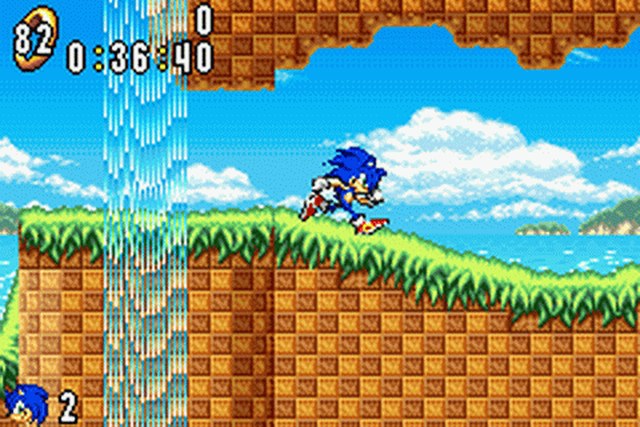
The design brief was clearly ‘remember what made Sonic Sonic’. Levels are built in the classic two-act structure with a boss at the end of every second act, and the physics honour the old religion: speed is earned downhill, spin momentum carries you up impossible slopes, and the best routes sit high, rewarding players who can stay on the top path at full tilt. Sonic, Tails, Knuckles and Amy are all playable with genuinely distinct kits — Tails flies, Knuckles glides and climbs, Amy trades the spin-dash for a hammer moveset that changes how you fight everything (she cannot simply roll into enemies, a risk-reward twist fans still debate fondly). Stages riff on the heritage without merely copying it: Neo Green Hill gives the obligatory green opener a beach-resort brightness, Secret Base and Casino Paradise handle the industrial and pinball traditions, and Ice Mountain’s underwater sections dare to be the good kind of Sonic water level.
Small screen, full speed
Dimps understood the hardware’s traps. The GBA’s small screen could have made high speed lethal — the infamous ‘blind jump’ problem — but the level design keeps sightlines honest, telegraphing hazards and rarely killing you for the crime of going fast. The sprite work is superb: Sonic’s Advance-era design, leaner and more expressive than the Mega Drive original, animates beautifully, and the backgrounds layer parallax with real confidence. Music, by Yutaka Minobe and Teruhiko Nakagawa, pastiches the Masato Nakamura tradition with catchy, loopable stage themes. Special stages — entered via springs in the acts, played as a pseudo-3D skydiving chase for the Chaos Emeralds — are charming and, in the series’ tradition, entirely optional for the standard ending and mandatory for the true one; completionists also get the Tiny Chao Garden, a link-cable companion to the GameCube’s Sonic Adventure 2 Battle Chao-raising, which was a delightful piece of cross-system theatre in 2002.
The fair criticisms
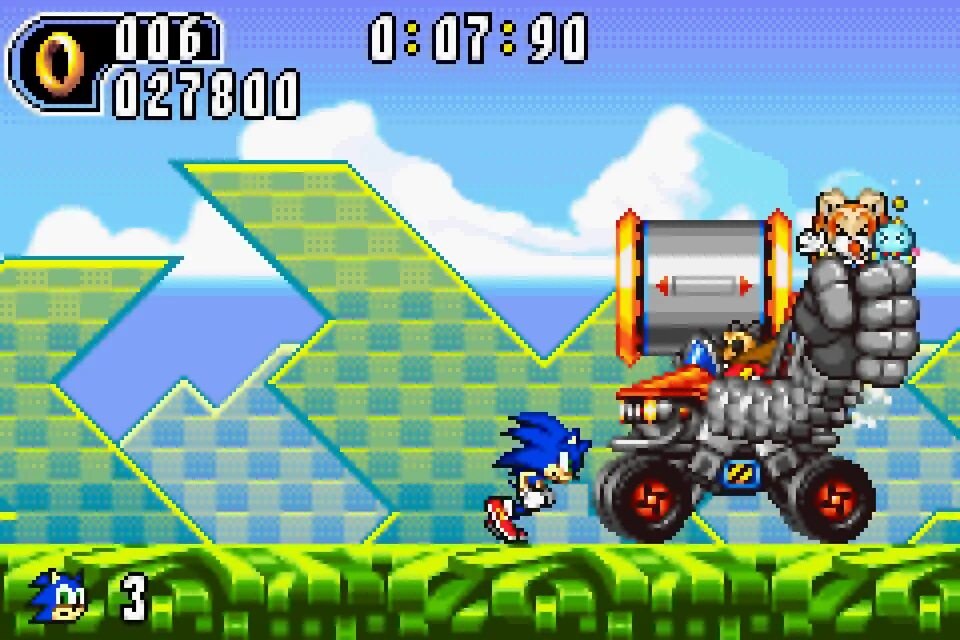
Sonic Advance is not the Mega Drive games’ equal in length or ambition. Six zones is a lean offering, an experienced player will see the credits in an afternoon, and the boss encounters — mostly variations on Eggman’s swinging and jumping contraptions — are the weakest part of the package, functional rather than memorable. The bottomless-pit frequency creeps up in the late zones (Angel Island’s sky setting makes falling the default punishment), and the final X-Zone boss rush tests patience as much as skill. Amy’s hammer-only combat, while distinctive, makes her campaign noticeably harder for newcomers — a feature for veterans, a caveat for the young audience the cover invites.
The trilogy question, and playing it now
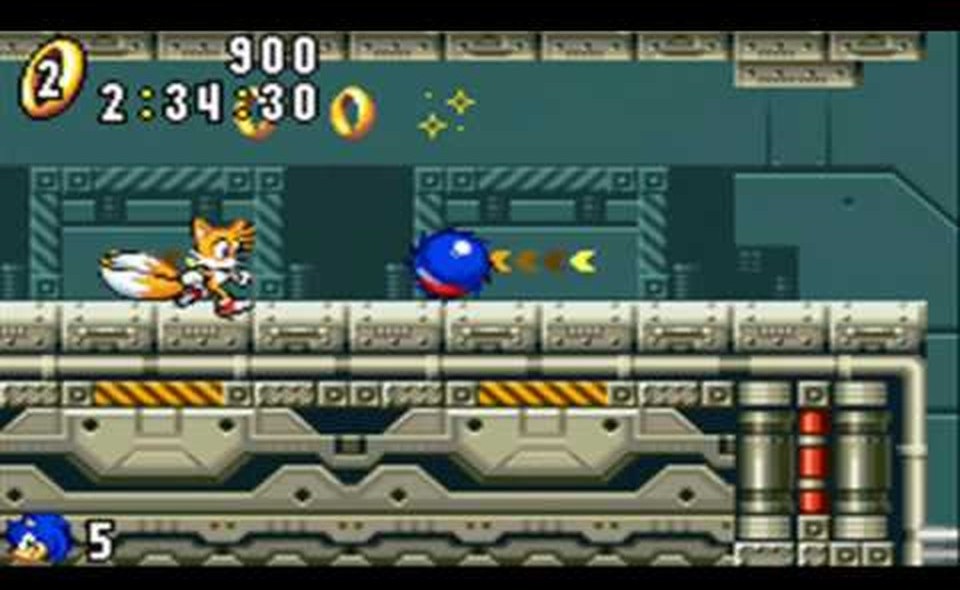
Sonic Advance launched a trilogy, and a review should place it. Advance 2 (2002) pushed speed harder and accessibility lower — longer stages, a controversial boost-forward design and a legendarily gruelling method for reaching its special stages — while Advance 3 (2004) added partner pairings and hub worlds to mixed effect. The first game remains the consensus favourite precisely because it is the most faithful: it trusts the Mega Drive formula instead of arguing with it. For modern players, that makes it the easiest classic Sonic to recommend after the 16-bit originals themselves — a ‘lost’ 2D Sonic of near-top quality that many series fans, raised on the 3D era, have still never played. Its zones are short enough to learn properly, its four characters genuinely change the routing, and its Chaos Emerald hunt (special stage springs hidden in the acts, in the classic tradition) is demanding without the cruelty its sequel specialised in.
A footnote for collectors and the curious: Sonic Advance was also an early citizen of Nintendo’s handheld connectivity era — the Tiny Chao Garden could raise a Chao on the GBA and transfer it to Sonic Adventure 2 Battle on the GameCube, a small marvel of 2002 cross-play that made the cartridge feel bigger than itself. Even without a GameCube, the Garden is a charming distraction. The package as a whole — four characters, seven zones counting the finale and the true-last-story Moon Zone for emerald collectors, link-cable versus play — is compact but complete, a launch-window game that understood its assignment exactly: prove Sonic belonged on this machine. He did. He does.
The special stages merit one more honest paragraph, because emerald-hunting divides the fanbase. Entered by finding the giant springs hidden in each act, they reimagine the Sonic 2 half-pipe as a skydiving pursuit — Sonic free-falls after a fleeing Eggman machine, collecting rings through gates at speed. They are charming, short and, at the seventh emerald, genuinely demanding in a way that will test your affection for the format. The reward structure is classic Sonic: the true final boss and best ending for collectors, a complete and satisfying game for everyone else. That balance — mastery rewarded, never required — is the game’s philosophy in miniature, and it is why Advance has outlasted louder Sonics. It asks to be played well, not suffered through. Dimps would go on to define handheld Sonic for a decade (the Rush games on DS are its direct descendants), and the DNA is all here already: momentum respected, routes layered, speed as a skill rather than a cutscene. Start the Advance story where it starts.
Performance and polish, finally, are everything a mascot game needs and many lack: the frame rate holds under full-speed chaos, the controls answer instantly, checkpoints are placed by people who understood the player’s blood pressure, and the whole cartridge has the bright, confident finish of a flagship rather than a licence-fulfilling spinoff. It was, remember, made under historic circumstances — Sega’s mascot debuting on the rival machine that had just won the war — and all parties involved chose to mark the occasion with quality rather than a shrug. That choice is why Sonic Advance is remembered as more than a trivia answer. The trivia is delightful. The game is better.
That historic weight cuts both ways, and the game shrugs it off completely — which may be its most impressive trick of all. It never plays like a concession or a cameo. It plays like Sonic, at home, on a machine he had no business fitting this well. The console war ended; the hedgehog kept running. On this evidence, everybody won.
Verdict
Sonic Advance is both a historical milestone and a genuinely excellent platformer: the moment Sonic came to Nintendo, delivered as a faithful, fast, beautifully animated love letter to the Mega Drive era. It is leaner and safer than the 16-bit classics, which keeps it at a strong eight rather than among the immortals — but as the GBA’s essential Sonic, and the best place to start with the Advance trilogy, it earns its place on any shelf. Hell froze over in 2001. It turns out hell is a great place to run.
Score: 8.0/10