A note on method before we start: a hidden gem has to pass two tests. It must be genuinely good — not fondly remembered dross — and genuinely hidden, meaning a Spectrum owner of forty years’ standing can still plausibly never have played it. That second test ruled out some excellent games you will miss here: Head Over Heels, The Great Escape and Lords of Midnight are masterpieces, but they are canon now, not gems in the rough. What survives the filter is more interesting — games from smaller publishers, odder genres and stranger imaginations, several of them by two of the most under-credited names in British games, Gargoyle Games and Julian Gollop. Between them they account for six of these ten entries, and that is not favouritism. It is the shape of the Spectrum’s buried treasure.
The Spectrum charts were a loud place — film licences, arcade conversions and whatever had the biggest advert that month. Underneath the noise, though, British developers were quietly making some of the most original games on any home computer: wizard duels, squad tactics, Celtic otherworlds and text-driven cities, published by small houses, reviewed kindly and then largely forgotten by a market that moved at cassette speed. This is our recovery job: ten Spectrum games the charts forgot, every one of them verified, playable and still worth your evening. No Ultimate, no Matthew Smith, no chart hits in disguise — just the good stuff that slipped.
Notice, too, what kinds of games these are. The charts rewarded speed — the arcade conversion, the joystick-waggler, the licence you could finish in a weekend — and so the buried layer of the catalogue is disproportionately thoughtful: turn-based tactics, simulated cities, typed-spell adventures, an astral-projection dungeon crawl. These were games designed for the bedroom strategist rather than the arcade sprinter, made by small teams who assumed their players were clever and patient, and they aged accordingly. Several of them do not merely anticipate later genres; in the cases of Gollop’s pair, they directly fathered them. If your Spectrum education consisted of the top ten, this list is the rest of the syllabus — the part where the machine stopped imitating the arcade and started inventing things of its own.
1. Chaos: The Battle of Wizards (1985)
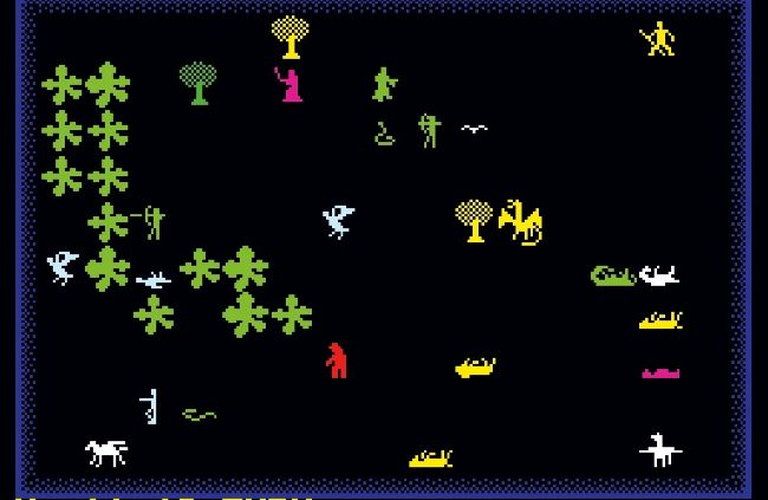
Julian Gollop’s first great game is a wizard duel for up to eight players — human or computer — on a single arena that fills, turn by turn, with summoned eagles, gooey blobs, magic fire and the undead. Every spell has a casting chance shaped by the cosmic balance of Law and Chaos, so the game’s drama is in the gambles: do you spend your turn on a safe skeleton or reach for the dragon that might fizzle into nothing? Games Workshop published it, the presentation is spartan even by 1985 standards, and none of that matters once a golden dragon changes sides. Chaos is British strategy in embryo — the same mind would go on to Laser Squad and X-COM — and as a pass-the-keyboard multiplayer game it remains, honestly, close to perfect.
2. Rebelstar (1986)
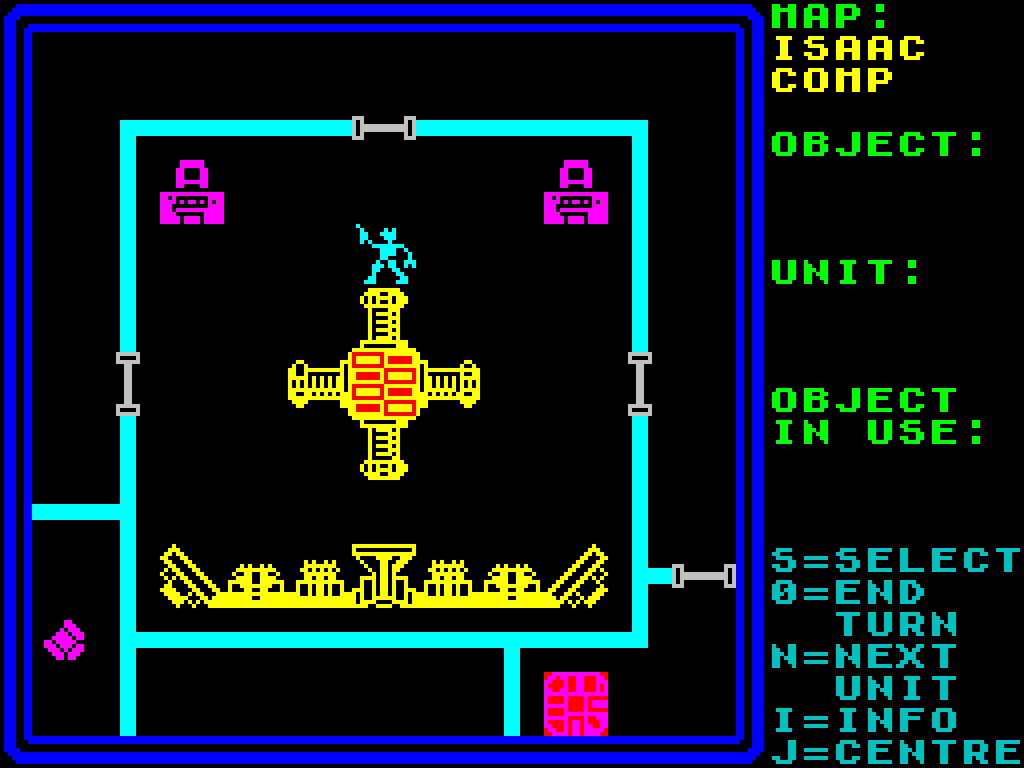
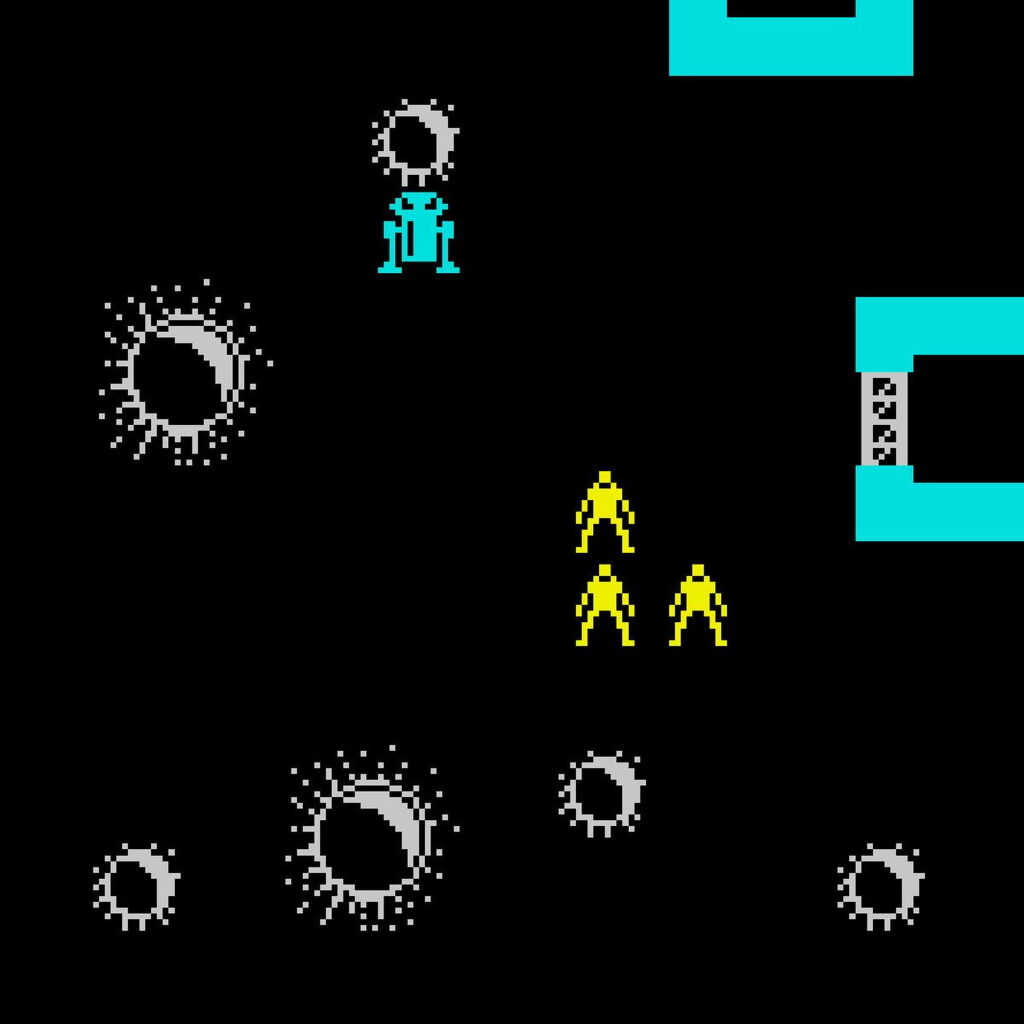
Gollop again, a year later and a universe away: a squad of raiders storms an orbital station defended by robots, in the turn-based tactical game that leads in a straight line to X-COM. Action points, opportunity fire, destructible cover, soldiers with names you start protecting — it is all here, in 1986, sold at a budget price on Firebird’s label, which may be why history undervalued it. Where Chaos is a duel, Rebelstar is a heist, and its tension is procedural: every doorway is a decision, every spent action point a small debt. If you play one tactics game on the Spectrum, this is the one — a masterpiece that happened to cost less than lunch.
3. Tir Na Nog (1984)
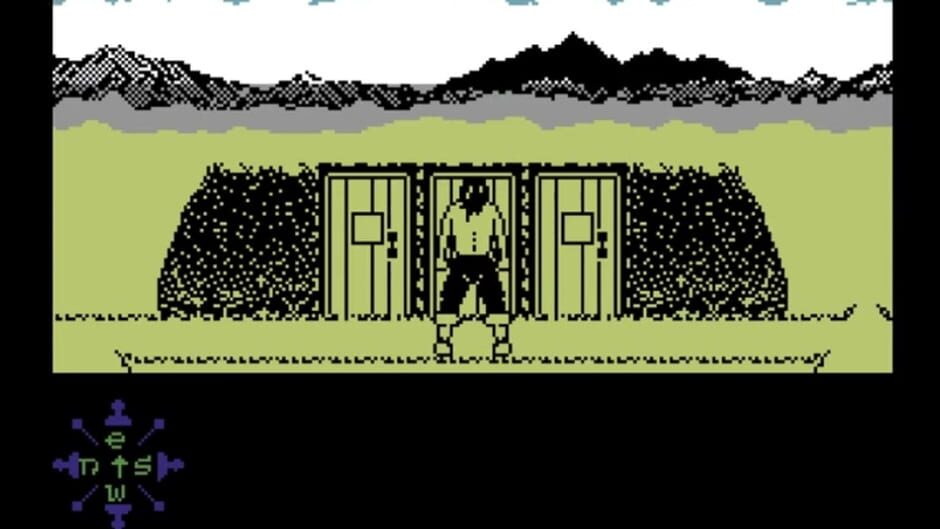
Gargoyle Games built their reputation on atmosphere, and Tir Na Nog is the purest dose: the hero Cuchulainn walks a scrolling Celtic otherworld of standing stones, mist and sidhe, in a game that pointedly declines to behave like an arcade adventure. The landscape scrolls sideways in layered depth — genuinely novel in 1984 — and the quest, to reunite the four fragments of the Seal of Calum, is pursued at walking pace, through conversation, trade and the occasional fight you were probably wise to avoid. Modern players call this kind of thing a walking simulator like it is an insult; Tir Na Nog proves it was always a compliment waiting to happen. Slow, strange and beautiful, with a map that rewards simply wandering it.
4. Dun Darach (1985)
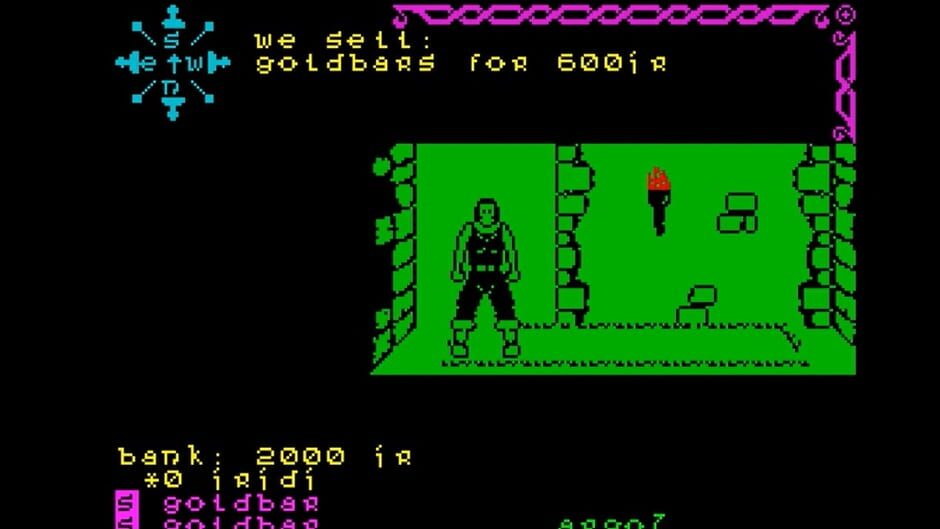
Gargoyle’s follow-up keeps Cuchulainn but changes everything else: Dun Darach is a living city — shops that open and close, citizens on errands, guards, thieves, a working economy of buying low and selling across town — rendered with a rotating viewpoint that swings the street around you as you turn. Your friend Loeg is imprisoned somewhere in it, and springing him is a problem of money, information and nerve rather than swordplay. As an early attempt at the simulated city that games like Shenmue would later chase, it is astonishingly assured; as a game it is a slow-burn delight, the Spectrum’s most convincing argument that a world matters more than a score.
5. Marsport (1985)
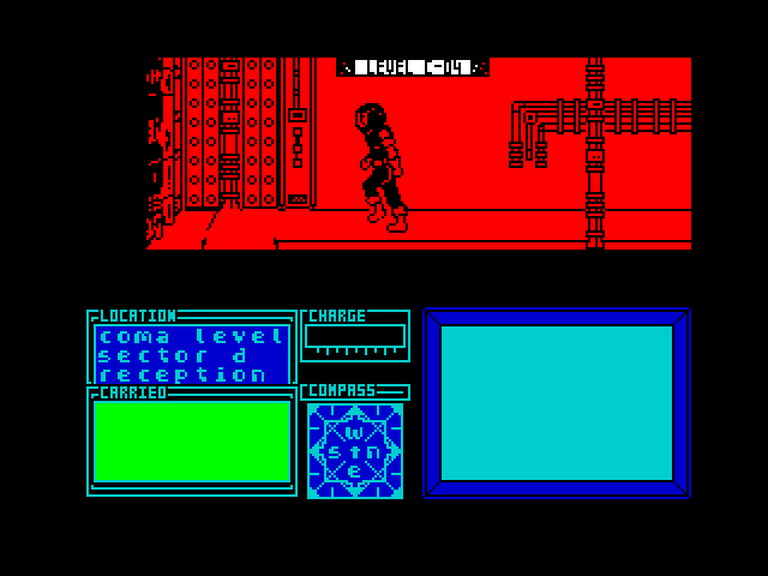
The third of Gargoyle’s great science-fiction-tinged adventures swaps mythology for a sealed Martian city in the grip of alien occupation, and it is the most game-like of the three: part exploration, part puzzle-box, with a whole civic infrastructure — power, supplies, security systems — to understand before you can subvert it. The rotating-viewpoint engine reaches its best form here, the city feels engineered rather than drawn, and the design trusts you to read, experiment and take notes. Marsport is the one Spectrum owners most often cite as the game they never finished and never forgot. Finish it for them; it holds up as a genuinely intelligent piece of world-building.
6. Heavy on the Magick (1986)
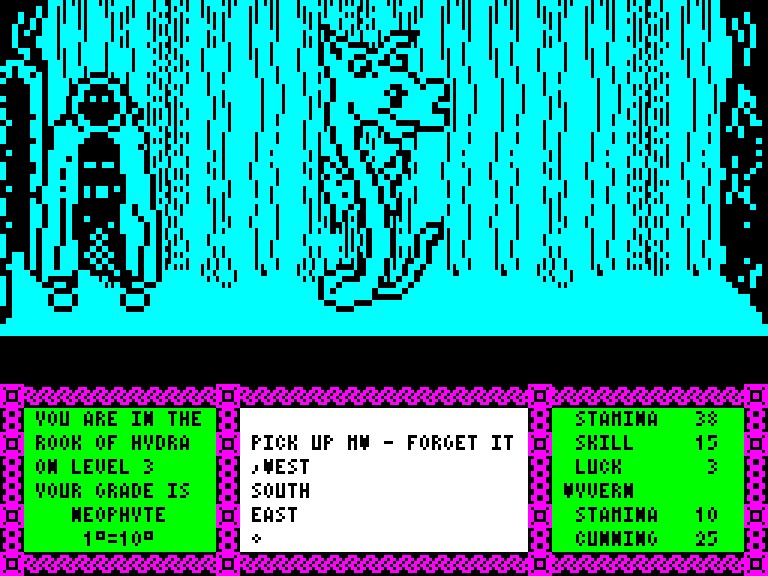
An apprentice wizard, a dungeon full of monsters, and a spell system operated by typing — Heavy on the Magick is Gargoyle doing interactive fiction with graphics, attitude and a sense of humour about its own genre. Your commands are parsed from text, the world is illustrated in big, characterful scenes, and progress means learning the personalities of creatures as much as the spell list: some monsters can be talked past, bribed or outwitted, and the game grades your wizardry as you climb from Neophyte towards something grander. It is the most accessible of Gargoyle’s adventures and the funniest — a bridge between the text adventure and the graphical RPG that deserved a far bigger audience than the late-era Spectrum market gave it.
7. Nodes of Yesod (1985)

Odin Computer Graphics sent an astronaut to the Moon with a robot mole for company, and produced the Spectrum’s most charming exploration platformer. The surface gives way to a vast cave system; your mole can be sent through walls to scout and fetch, which turns mapping into a two-character puzzle, and the whole thing has a polish — animation, colour, a genuinely likeable hero sprite — that recalls Ultimate at their friendliest. Nodes of Yesod was admired on release and then filed under ‘also-ran’ in a year crowded with classics. Revisit it and you find a game with no wasted ideas and one of the great unsung partnerships in 8-bit gaming: spaceman and mole, against the Moon.
8. Avalon (1984)
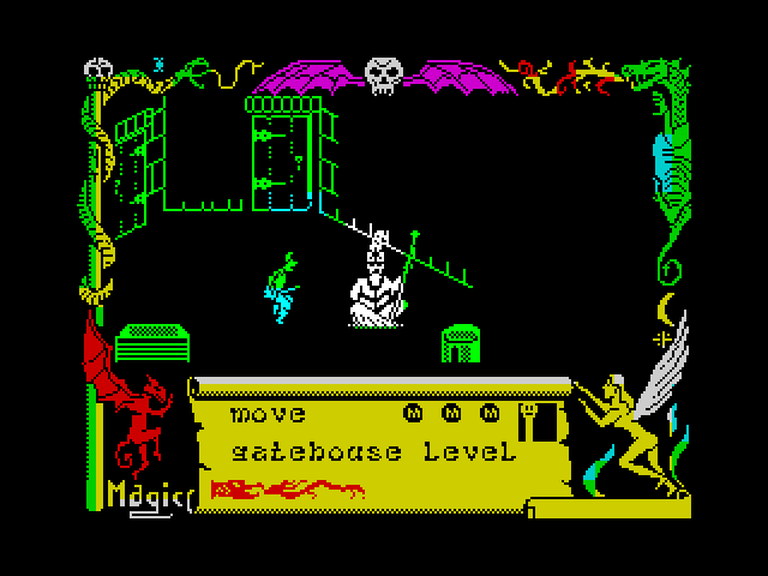
Steve Turner’s Avalon, for Hewson, casts you as Maroc the mage, who never physically enters the dungeon at all: you project an astral form, steer it through hundreds of rooms, and fight by lining up spells against guardians while your real body sits vulnerable elsewhere. It is a concept a decade ahead of its market — remote presence as the core mechanic — executed with Turner’s usual technical elegance and a spell system (movement, missiles, servants, sight) that turns every excursion into resource management. Avalon won its admirers among reviewers and then vanished behind flashier releases. Of all the games on this list, it is the one that most feels like it arrived from the future by mistake.
9. Three Weeks in Paradise (1986)
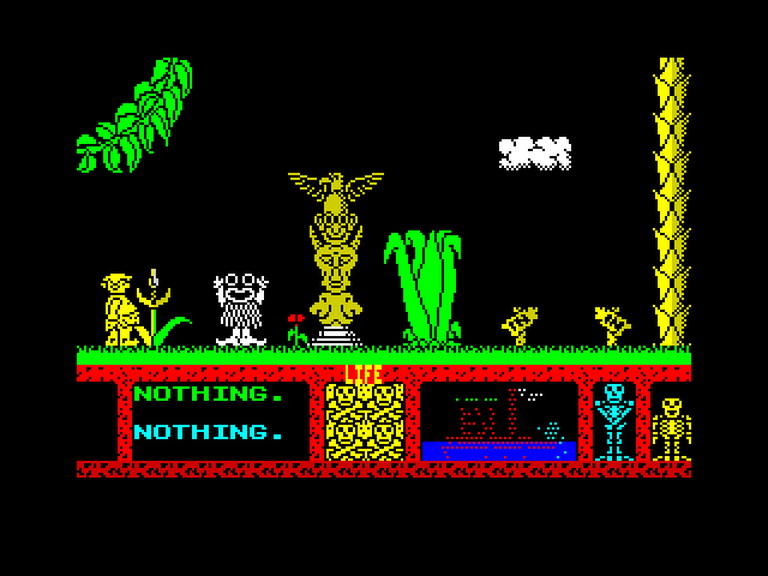
The last and best of Mikro-Gen’s Wally Week games sends the whole family into the hands of cannibals on a tropical island, and Wally — pyjamas, hangdog expression and all — must rescue them one puzzle at a time. The Wally games were the Spectrum’s great object-puzzle tradition: pick things up, carry two at a time, work out which absurd combination unlocks which screen. Three Weeks in Paradise is the tradition at its biggest and most colourful, with the largest cast, the sunniest graphics the machine could manage and jokes that still land. It charted respectably and is remembered fondly by those who played it, but in lists it is always crowded out by its own predecessors. On merit, it is the one to play.
10. Fairlight II (1986)
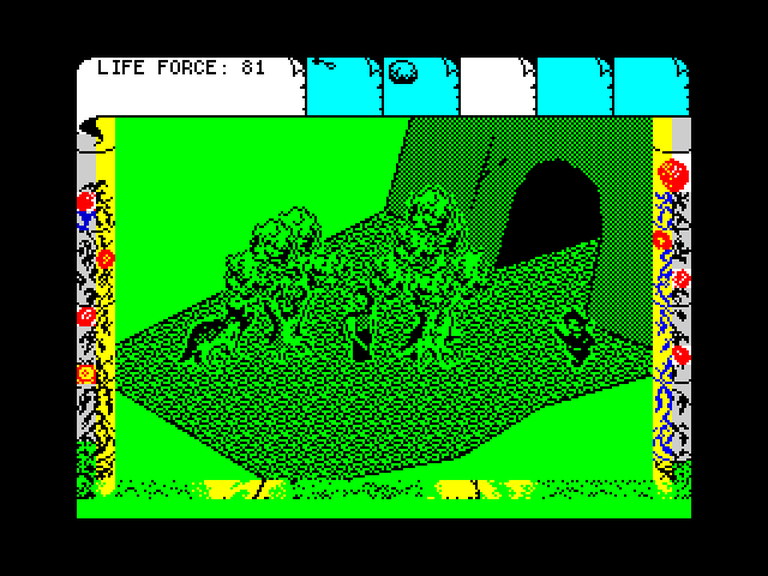
Bo Jangeborg’s Fairlight had proven an isometric adventure could be painterly; its sequel, subtitled Trail of Darkness and published by The Edge in 1986, is the bigger, darker and far less played game. Isvar returns to a castle where light itself is a resource, objects have convincing weight and behaviour, and the world simulates small physics — stacking, pushing, carrying — with a consistency the genre rarely matched. Fairlight II arrived late, troubled in development, and was half-buried by its predecessor’s legend; played now, its ambition is startling, a systems-driven adventure wearing an isometric costume. The charts forgot it because history had already picked its isometric heroes. History picked too few.
Ten games, four small publishers’ worth of risk-taking, and not a licence or conversion among them — that, in the end, is the Spectrum story the charts never told. Load any of these tonight and you are not doing archaeology. You are catching up on games that were simply ahead of the audience available to them, waiting in the dark of the catalogue for the rest of us to arrive.
One last practical word, because hidden gems reward a particular kind of playing. Most of these games come from the years when the manual mattered and the tutorial did not exist: give Chaos a living room full of rivals rather than a solo run, take notes in Dun Darach and Marsport the way their first players did, read Avalon’s spell list before you project so much as an astral toe into its dungeon, and let Tir Na Nog be slow at you. They were built for evenings, not for content. Played on those terms, every one of them stops being a curiosity and becomes what it always was — a great game that happened to ship quietly. The charts have had their say for forty years. Consider this list the appeal hearing, and the verdict, we hope, is obvious: case reopened, gems recovered, go and play them.