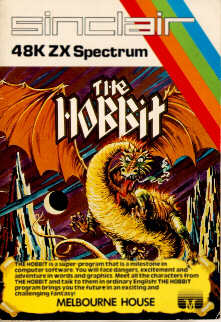
Some time in 1983, in thousands of British bedrooms, the same small drama kept unfolding. A player would type a command into Melbourne House’s The Hobbit, get distracted, and return to find that the game had gone on without them — that Gandalf had wandered off with the map, or that Thorin, the proud dwarf prince, had sat down where he stood and begun, for reasons known only to himself, to sing about gold. That sentence — “Thorin sits down and starts singing about gold” — became the most quoted line in British home computing, and the game behind it became a landmark: a text adventure that behaved less like a puzzle box and more like a tiny, unruly world. It was built in Melbourne, Australia, by a university student who had been ordered to write the best adventure ever, and a programmer who spent a year teaching a computer to understand English. This is how Middle-earth learned to talk back.
“Write the Best Adventure Ever”
Veronika Megler was studying at Melbourne University and working grinding late shifts as a computer operator when she answered a bulletin-board advertisement from Alfred Milgrom, co-founder of Melbourne House and its development arm Beam Software. Milgrom hired her part-time, and his brief for her first game was the kind of sentence managers say and programmers remember forever: write the best adventure ever. Megler had form with the competition. She loved Colossal Cave, the original text adventure, but it had gone stale for her — a solved game is a dead game, identical forever — while the home-grown adventures of the day were hard-coded in BASIC, so rigid that the era’s standard cheating technique was to dump the program’s memory and simply read its messages. Her ambition was the opposite of hard-coded. On her first day, in roughly two hours, she sketched the whole architecture of what The Hobbit would become: a game built not from bespoke code but from replaceable data — a network of locations, a population of characters, each one playing its own part — so that swapping the database would, in principle, produce a different game entirely. Three university friends of hers were hired on her recommendation, and Philip Mitchell emerged as co-author, taking the language side of the machine.
A World in a Database
Milgrom supplied the subject within the first weeks: Tolkien’s The Hobbit, whose computer rights Beam had secured in 1980. Megler, who had read the whole legendarium repeatedly, went through the novel harvesting the places and encounters that could become interactions — the trolls, the barrels, the lonely mountain — while the engine took shape underneath. The game was written in assembler, a debugging torment that bought speed and room the BASIC competition could not match. The text database was encoded, ending the memory-dump cheat at a stroke, and stored as a dictionary of words with sentences assembled from pointers, so the game could slot any subject, object or verb into its descriptions as events demanded. Locations wore illustrations in the Spectrum version’s famous style — line drawings, designed by Kent Rees, stored as outlines and flood-filled on screen over several seconds, so that arriving somewhere felt like a picture developing.

Learning to Speak Inglish
Mitchell’s half of the project consumed about as long as everything else combined. Working with an English major on the grammar, he built a parser — christened Inglish — that could take a typed sentence apart properly: subjects, verbs, objects, pronouns, adverbs, prepositions, whole instructions chained together. Where rival games accepted GET SWORD, The Hobbit could be told to ask Gandalf about the curious map, then take the sword and kill the troll with it — and understand. The engine on the other side of that interface was Megler’s: a simulation in which objects had size and weight and solidity, could be put inside one another, tied together with rope, carried, broken. Sit in a barrel and be thrown through a trapdoor, and the physics simply worked it out. Between them, parser and simulation produced the effect players had never met before: a game that took general instructions and resolved them by general rules, so solutions the designers never imagined were still solutions.
Characters With Lives of Their Own
The masterstroke was the cast. In Megler’s design, every character in the game — Gandalf, Thorin, Elrond, the trolls, the spiders — ran on the same clock as the player, taking a turn whenever the player took one. Each began the game in a randomised state and cycled through simple behaviours: pick something up, wander off, hand an object to whoever was near, put something down. None of it was scripted, and all of it collided. Behaviour emerged. Characters met, fought, stole from each other, got themselves captured or killed in the next county while the player was reading a map. The world ran in real time, too — idle too long and the game would pass your turn for you, events ripening elsewhere.
The cost was a development process Megler remembers as a nightmare of untraceable crashes, where a catastrophe in one room had been set in motion by an animal three rooms and fifty turns away. The cost in play was steeper still: a character essential to the plot could die before you ever met them, leaving a game that could not be finished — something you might discover only hours in. Megler made no attempt to prevent it. She thought it was cool, and she was right: the unpredictability is the game. It also taught players to improvise in ways no walkthrough could fully tame. The standard advice for dealing with the Bard — an archer whose cooperation the endgame requires and whose obedience is unreliable — is simply to pick him up and carry him there. The game’s devoted bug reports, meanwhile, were often nothing of the kind: they were the simulation, working as designed, producing combinations its own authors never foresaw. Melbourne House’s manual conceded the point with legendary honesty, warning that a game of this size and complexity could never be guaranteed entirely error-free.
The Book in the Box
The Hobbit reached the ZX Spectrum in December 1982 after some eighteen months of development, at a then-startling £14.95 — a price explained by the box’s other contents: by arrangement with Tolkien’s publishers, every copy of the game came with a copy of the novel. Britain forgave the price instantly. The game topped the charts through 1983, sold more than 100,000 copies in its first two years and over half a million across Europe, and collected the 1983 Golden Joystick Award for strategy game of the year. Versions spread across the home computers of the age, and Beam built a small industry on the foundations: The Lord of the Rings trilogy across the later eighties, and the Inglish parser redeployed for Sherlock in 1984. The aftercare was an education in itself. A first patch release, version 1.1, fixed a batch of faults and — in the way of patches everywhere — introduced a new bug that could make the game unwinnable, forcing a version 1.2. By 1984 there was an official guidebook to playing it, which, given a simulation that could kill its own plot before you arrived, was less a cheat sheet than a survival manual.
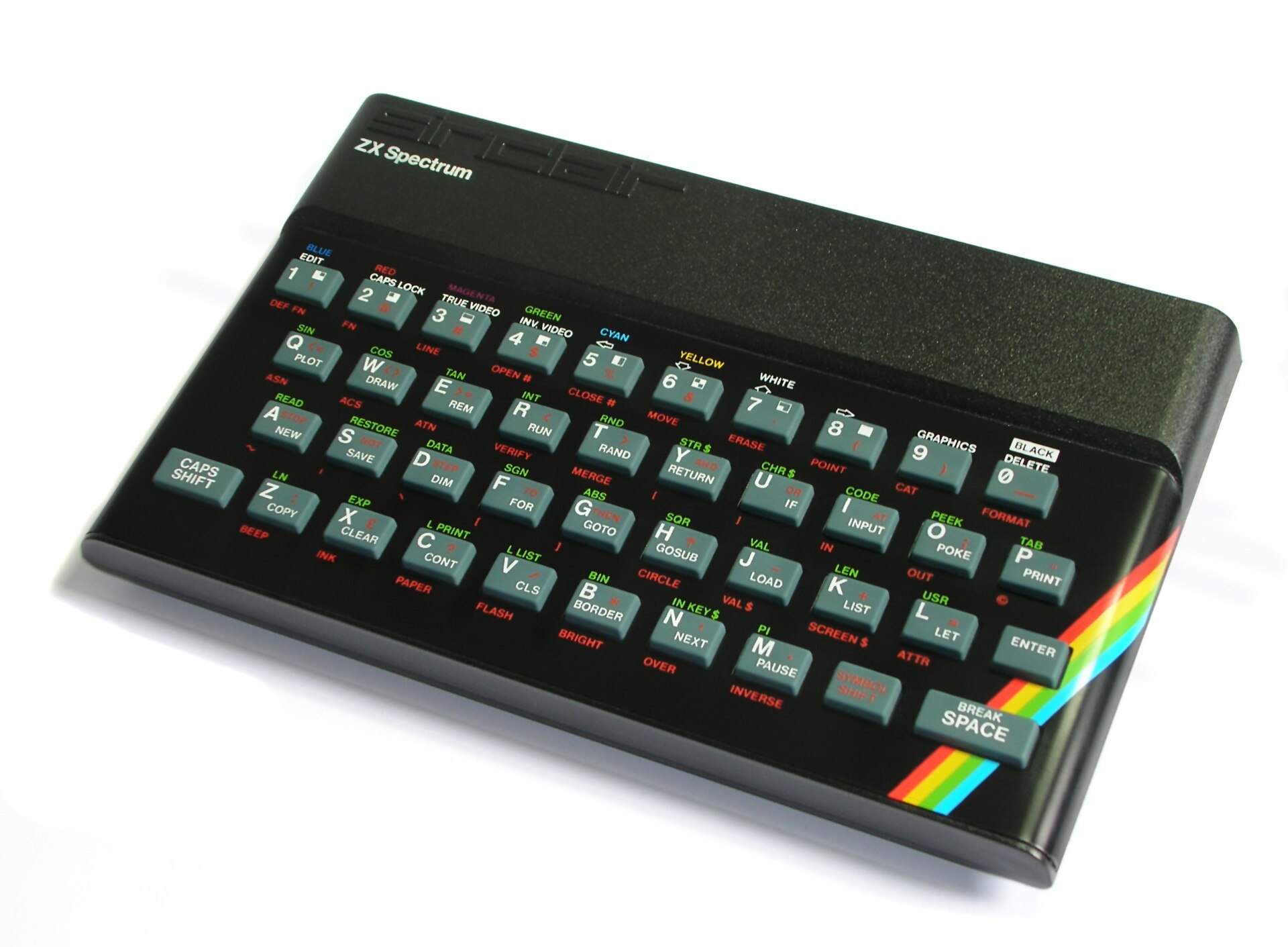

Games historians now reach for The Hobbit when they need an early exhibit for emergent gameplay — systems producing stories their authors didn’t write — decades before the term existed. The culture kept the receipt: Thorin’s gold song became a running gag of British computing folklore, nodded to years later in games as distant as Discworld Noir, while magazine polls kept the adventure near the top of all-time lists long after the Spectrum itself was history. Megler herself carried the data-driven gospel into a career in very large databases, eventually working on data systems at Amazon. Mitchell’s Inglish remains a high-water mark of the parser era. And Thorin still sits down, in emulators and reissues and the memories of everyone who ever typed WAIT too many times, and starts singing about gold. The best adventure ever? It was the brief. For an entire generation of players, it may simply have been the truth.
Keep reading: One Life to Live: The Making of Treasure Island Dizzy · the ZX Spectrum system archive